 Anacortes
 Why March Point Siding Wears Differently Than Siding Inland
March Point sits close to the water on the edge of Fidalgo Bay, which means homes here take a different kind of beating than a house twenty miles inland in Skagit County. Salt-laden air corrodes fasteners and finishes faster than dry air does. Wind-driven rain off the bay doesn't just wet the surface of a wall — it pushes moisture sideways, testing every seam, lap, and penetration in the siding system. And the long, gray moss season that defines this part of Washington keeps north- and shade-facing walls damp for weeks at a stretch, which is exactly the environment that wood-based and wood-fiber siding products struggle with most.
None of this means March Point is a uniquely harsh place to live. It means the siding on a March Point home is doing more work than a spec sheet written for a national market usually accounts for. A replacement job here should be planned around these specific conditions, not treated as a generic re-side.
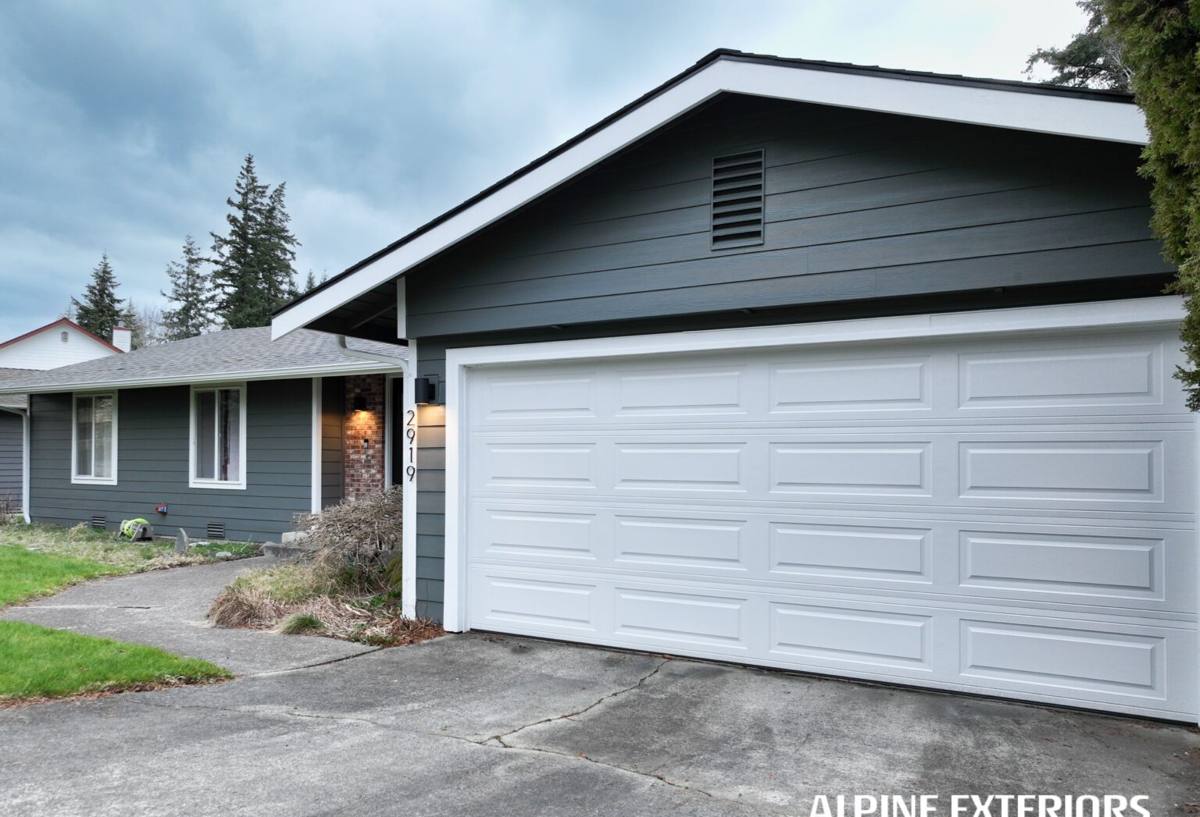
Signs a March Point Home Needs Replacement, Not Just Repair
Not every siding problem calls for a full tear-off. But there's a point where patching stops being cost-effective and starts being a way to delay the inevitable while water keeps getting behind the wall. Some signals we look for on walk-throughs in this area:
- Soft or spongy spots when you press on the siding, especially near the bottom courses or below windows
- Paint that's bubbling, peeling, or needing repainting every 3-4 years instead of holding for a decade
- Persistent moss or algae growth that comes back within weeks of cleaning, particularly on shaded or north-facing walls
- Visible gaps, cupping, or warping in lap siding boards
- Rust streaking from fasteners, a sign the nails or screws are corroding under the finish
- Musty smell or visible staining on interior walls that share an exterior wall with problem siding
If you're seeing two or more of these at once, that's usually a sign the water management behind the siding has already failed in more than one place, and repair work would just be chasing symptoms.
What a Correct Siding Replacement Actually Involves
Tear-Off and Wall Inspection
Replacement starts with removing the old siding down to the sheathing, not just installing over what's there. This is the step that gets skipped by crews trying to save a day of labor, and it's the step that matters most in a coastal, high-moisture area. Once the wall is exposed, we check the sheathing for rot, soft spots, or prior water damage, and we check that framing hasn't been compromised. Anything found gets addressed before a single new board goes up — covering damaged sheathing with new siding just hides the problem for a few more years.
Weather Barrier and Flashing
This is the part of the job that determines whether the new siding lasts 30 years or 10. A properly installed weather-resistant barrier, correctly lapped and taped, combined with flashing at every window, door, and roof intersection, is what actually keeps wind-driven rain out of the wall assembly. Siding itself is the visible layer — the flashing and barrier underneath it are what do the real work during a March storm coming off the bay.
Fiber Cement Installation
James Hardie fiber cement is installed with specific fastener patterns, gapping, and clearances from grade and roof lines, all of which are spelled out in the manufacturer's installation guide. Getting these details right isn't optional — it's what the warranty is actually conditioned on, and it's what prevents moisture from wicking up into board ends or collecting at improperly caulked joints.
Trim, Caulking, and Finish Details
The last stage is where a job looks finished or looks rushed. Corner boards, trim around openings, and caulking at joints all need to be done with materials rated for the exposure, not whatever was left over on the truck. In a salt-air environment, fastener and hardware choice at this stage also matters more than most homeowners realize.
Why We Install Only James Hardie Fiber Cement
We don't install vinyl, LP SmartSide, primed spruce, cedar, or other fiber cement brands. That's a deliberate standard, not a lack of options. Vinyl siding can crack in freeze-thaw cycles and tends to fade unevenly under UV exposure over time. Wood-based products, including engineered wood siding, are more sensitive to sustained moisture exposure than fiber cement — and sustained moisture is exactly what a moss-season wall in Anacortes deals with for months at a time. Cedar and primed wood siding can look excellent when new, but they demand a maintenance schedule most homeowners underestimate, especially on shaded or bay-facing elevations.
James Hardie fiber cement is non-combustible, holds paint and factory-applied ColorPlus finish far longer than wood-based alternatives, and is engineered in HZ5 and HZ10 product lines specifically for climates like ours — freeze-thaw cycles, sustained moisture, and coastal exposure. It comes with a strong transferable warranty when installed to spec, which is part of why correct installation (not just correct material) is something we don't cut corners on.
Material Comparison for a Coastal Skagit County Home
| Factor | James Hardie Fiber Cement | Vinyl | Wood / Engineered Wood |
|---|---|---|---|
| Moisture tolerance | Engineered for sustained damp exposure | Doesn't absorb water, but seams can trap it | Prone to swelling, rot in prolonged moisture |
| Salt air / coastal durability | Strong, factory finish resists fading | Can become brittle and discolored over time | Finish breaks down faster near salt air |
| Moss / algae resistance | Resists moisture retention that feeds growth | Growth sits on surface, harder to fully clean | Absorbs moisture, feeds growth in shaded areas |
| Fire resistance | Non-combustible | Combustible, can melt/deform near heat | Combustible |
| Repaint interval | Long-lasting factory finish, decades before repaint needed | Doesn't repaint well; color is baked in | Typically every 3-7 years |
| Maintenance burden | Low once installed correctly | Low, but cracks/warps are not repairable | High — regular sealing, painting, inspection |
Cost Factors for a March Point Siding Replacement
Every home is different, so we won't quote a number without seeing the house, but the same handful of factors drive most of the cost variation we see on jobs in this area:
| Factor | Why It Affects Cost |
|---|---|
| Extent of sheathing/framing repair | Water damage found during tear-off adds labor and material before new siding can go up |
| Home size and wall complexity | More corners, dormers, and roof intersections mean more flashing and cutting |
| Siding profile chosen | Lap, shingle-style, and panel Hardie products vary in material and labor cost |
| Trim and accessory scope | Full trim replacement adds cost versus reusing sound existing trim |
| Access and site conditions | Slopes, tight setbacks, or landscaping near the foundation affect staging and labor time |
The honest range for a full siding replacement varies widely based on these factors — which is exactly why we walk the whole exterior before giving a number, rather than pricing off square footage alone.
Our Process, Start to Finish
- On-site walk-through: we inspect the current siding, look for signs of water intrusion, and talk through what you're seeing from the inside of the house
- Written estimate: a clear scope of work and price, with no pressure to sign on the spot
- Tear-off and inspection: old siding comes off, sheathing gets checked, and any damage found gets flagged before we proceed
- Weather barrier and flashing installation: the part of the job that determines long-term performance
- Hardie siding installation: installed to manufacturer spec for fastening, gapping, and clearances
- Trim, caulking, and cleanup: finish details completed and the site cleared of debris and old material
- Final walk-through: we go over the finished job with you before calling it done
Why a Crew That Already Works March Point Matters
A lot of siding problems in this area come down to details that only show up when a crew has actually worked on homes near the water. Knowing which elevations take the worst of the wind-driven rain, how much moss buildup to expect on shaded walls by the following winter, and how salt air affects fastener choice isn't something you learn from a manufacturer's spec sheet — it's something you learn from doing the work here repeatedly. A crew that's replaced siding elsewhere in Skagit County but hasn't worked this specific stretch near the bay may still do competent work, but they're guessing at some of these calls instead of knowing them.
We also know the practical side: permitting expectations locally, how weather windows tend to run through the fall and winter here, and how to sequence a job so a home isn't left exposed to a driving Anacortes rainstorm mid-tear-off.
Protecting Your Investment After Installation
Correctly installed Hardie siding is low-maintenance, but "low" doesn't mean "none." A short seasonal routine goes a long way in this climate:
- Rinse the exterior once or twice a year to keep salt residue and moss spores from building up, especially on shaded elevations
- Check caulking at trim joints and window/door surrounds annually for cracking or separation
- Keep gutters clear so overflow isn't running down the wall face during heavy rain
- Trim back vegetation that keeps a wall shaded and damp longer than the rest of the house
- Address any small paint chips or impact damage promptly rather than letting exposed edges sit through a wet season
None of this is heavy upkeep — it's the kind of maintenance that takes an afternoon a year and keeps the siding performing the way it's designed to for decades.
Get a Free, No-Pressure Estimate
If your March Point home is showing signs of siding failure, or you just want an honest read on how much life is left in what's on the walls now, we're glad to come take a look. Use the form below to request a free estimate — no pressure, no obligation, just a straight assessment from a crew that already knows this stretch of the Anacortes waterfront.