 Anacortes
 Siding Replacement Built for Cap Sante's Waterfront Exposure
Cap Sante sits close enough to the water that its homes take a different kind of weather beating than houses even a few miles inland. Salt-laden air off the marina and Guemes Channel, wind-driven rain that comes at walls sideways rather than straight down, and a long, damp moss season all work on exterior siding year-round. If your siding is original to the house or was installed decades ago with a product not suited to this kind of exposure, you're probably seeing the results already: chalky or peeling paint, soft spots near the bottom courses, streaking, or moss creeping up from ground level and out from under trim.
This page is about one thing: replacing siding on a Cap Sante home the right way, with a product and installation approach that actually holds up to this specific microclimate. We install James Hardie fiber cement exclusively, and we'll explain why below — but the bigger point is that a siding replacement in this neighborhood needs to be planned differently than the same job forty miles inland in the Skagit Valley.
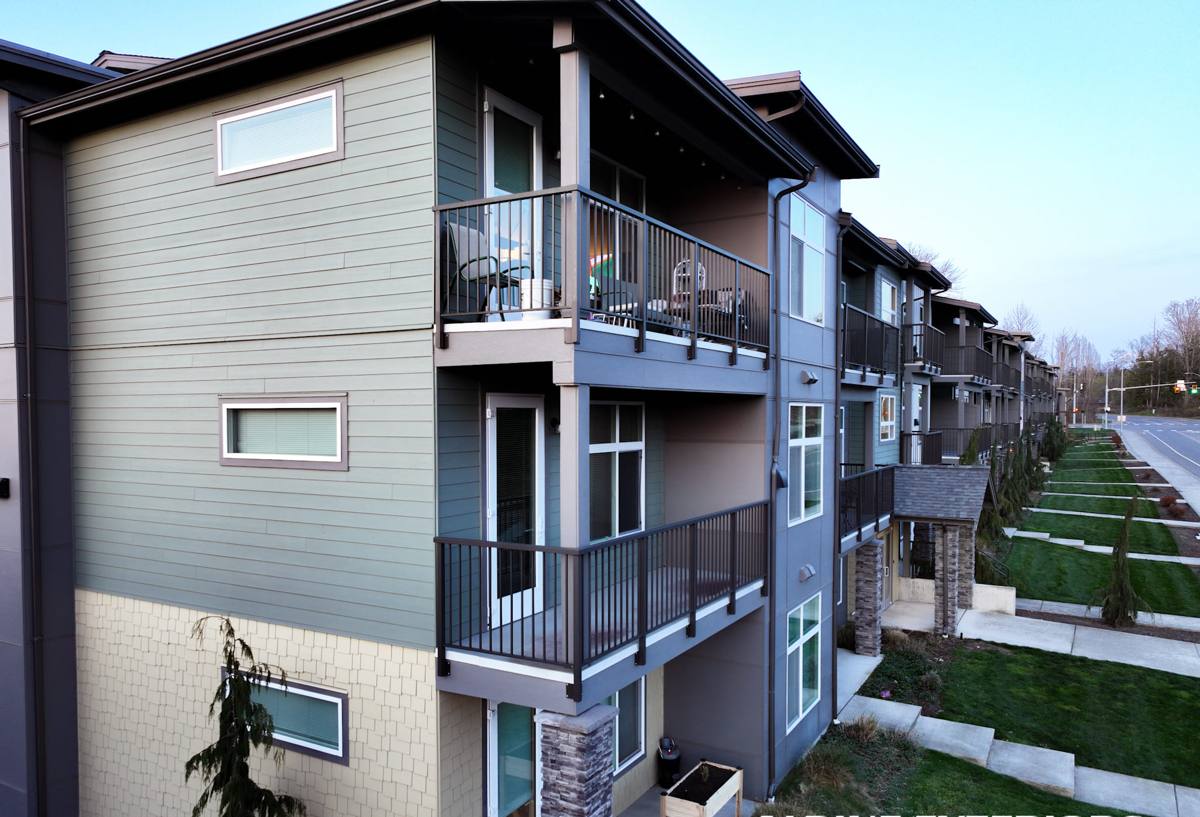
What Cap Sante's Climate Actually Does to Siding
Salt Air and Marine Moisture
Homes near Cap Sante's shoreline and marina are exposed to airborne salt that settles on exterior surfaces, accelerates corrosion of fasteners and metal flashing, and breaks down paint films faster than the same product would fail on a home a few miles inland. Salt exposure doesn't just affect the siding face — it goes after every exposed nail head, hinge, and piece of trim hardware if those materials aren't specified correctly.
Driving Rain Off the Water
Wind off the water doesn't just bring rain, it drives it. Instead of falling straight down and running off a wall, wind-driven rain gets pushed sideways and upward under laps, around window trim, and into any gap in the water-resistive barrier. This is a wall-assembly problem as much as a siding-material problem — a product that resists moisture but is installed with tight, unvented laps and no drainage plane will still trap water behind it.
Moss, Mildew, and the Skagit County Damp Season
Anacortes and the rest of Skagit County get a long stretch of overcast, wet weather, and Cap Sante's proximity to the water keeps humidity and surface dampness elevated even on days it isn't actively raining. That combination is exactly what moss and mildew need. Shaded elevations, north-facing walls, and anywhere siding sits close to landscaping or ground level are the areas that show growth first — and once moss gets a foothold on absorbent siding, it holds moisture against the wall and speeds up whatever decay process is already underway.
Why Product Choice Matters More Here Than Elsewhere
Every siding material handles moisture, salt, and organic growth differently, and in a marine-exposed neighborhood like Cap Sante those differences show up faster and more visibly than they would on a sheltered lot inland. This is why we standardized on James Hardie fiber cement rather than offering a menu of options:
- Fiber cement doesn't rot. It's cement, sand, and cellulose fiber — there's no wood substrate to absorb water and break down over time, which matters directly under a moss layer or behind a poorly flashed trim board.
- It's non-combustible. Not a factor unique to Cap Sante, but a real advantage of the material itself.
- ColorPlus factory finish resists the coastal fade and chalk cycle that field-applied paint struggles with under repeated salt and UV exposure.
- Hardie's HZ5 product line is engineered for wetter, harsher climates — relevant for a waterfront-adjacent installation like this one.
- The warranty is transferable and backed by a large, established manufacturer, which matters on a coastal property where a homeowner wants confidence the product was built for conditions like these, not just fair-weather ones.
We don't install LP SmartSide, vinyl, Cemplank, Allura, primed spruce, or cedar. Each of those has legitimate applications elsewhere, but for a marine-exposed Skagit County property, we'd rather put our name behind one product system we trust completely than offer options we'd have reservations recommending for this exposure.
What a Correct Siding Replacement Involves
Replacing siding is not just stripping old material and nailing up new boards. On a home this close to the water, the assembly behind the siding matters as much as the siding itself.
1. Tear-Off and Wall Inspection
Once the old siding is off, we inspect the sheathing for rot, soft spots, or water staining — especially at wall penetrations, past window and door openings, and near ground level where moisture tends to concentrate. Any damaged sheathing gets replaced before anything else happens; covering rotten sheathing with new siding just hides the problem for a few more years.
2. Water-Resistive Barrier and Drainage Plane
A weather-resistive barrier goes over the sheathing, properly lapped shingle-style so water sheds down and out rather than working its way behind seams. Given how much wind-driven rain a Cap Sante wall can see, we pay particular attention to a drainage gap behind the siding so any moisture that does get past the cladding has somewhere to go instead of sitting against the wall.
3. Flashing at Every Penetration
Windows, doors, hose bibs, light fixtures, and vents all need proper flashing integrated with the water-resistive barrier — not caulk alone. Caulk fails; correctly lapped flashing sheds water regardless of what the sealant is doing years later. This step is where a lot of failures in older installations trace back to.
4. Fastening and Fastener Selection
In a salt-air environment, fastener corrosion is a real consideration. We use fasteners appropriate to fiber cement siding and to this exposure, set to manufacturer spec so panels aren't over-driven or under-driven — both of which cause long-term problems with a fiber cement product.
5. Installing to Hardie's Clearance and Gapping Specifications
James Hardie siding has specific requirements for ground clearance, roof-line clearance, panel gapping, and caulking at butt joints. These specs exist precisely to manage the kind of moisture exposure Cap Sante homes deal with — skipping them is one of the most common ways a Hardie installation underperforms.
6. Trim, Caulk, and Paint Detail Work
Corner boards, trim, and caulk joints get finished to shed water rather than trap it. ColorPlus panels come factory-finished, so touch-up work uses matched touch-up paint rather than a full field coat, which helps the finish hold up evenly over time.
Signs Your Cap Sante Home Needs Siding Replacement Now
- Paint that's chalking, peeling, or blistering, especially on water-facing elevations
- Soft or spongy siding when pressed near the bottom courses or under windows
- Moss or dark streaking that returns quickly after cleaning
- Visible gaps, warping, or buckling in siding boards or panels
- Interior signs — peeling paint, musty smell, or staining on walls that back up to exterior siding
- Siding that's original to a home built more than 20-25 years ago and has never been replaced
Cost Factors for a Cap Sante Siding Replacement
Every home is different, but the same factors tend to drive cost on jobs in this neighborhood. We won't quote a number without seeing the house, but here's what typically moves the estimate:
| Factor | Why It Matters |
|---|---|
| Home size and wall complexity | More corners, dormers, and roof lines mean more cutting, flashing, and labor time |
| Sheathing condition | Rot discovered during tear-off adds repair work before new siding can go up |
| Existing siding material | Removal difficulty varies — old cedar, aluminum, or vinyl all come off differently |
| Trim and detail work | Corner boards, window trim, and fascia detail add labor beyond flat wall panels |
| Access and site conditions | Waterfront lots, slopes, and tight side yards can affect scaffolding and staging |
| Product line and color | Hardie's HZ5 line and ColorPlus finish options vary in material cost |
Why a Crew That Already Works Cap Sante Is Worth Choosing
A contractor who has done siding work in this specific area understands things that don't show up in a generic estimate. They know which elevations on a waterfront-adjacent home tend to take the worst of the wind-driven rain, where moss shows up first, and how much clearance and drainage detail actually matters here versus a sheltered inland lot. They've likely already dealt with the coastal-specific issues — corroded fasteners, salt-degraded trim, moisture trapped behind old cladding — that a crew unfamiliar with this exposure might not anticipate.
That local experience also shows up in scheduling and sequencing. Skagit County's wet season is long, and a crew that knows Anacortes weather patterns plans tear-off and dry-in work around it, rather than leaving open wall sections exposed longer than necessary.
Our Process for a Cap Sante Siding Replacement
- On-site assessment. We walk the exterior, check for moisture and rot indicators, and look at how the home is currently exposed to wind and rain off the water.
- Written estimate. A clear scope covering tear-off, any sheathing repair allowance, water-resistive barrier, flashing, Hardie product line and color, and finish detail.
- Tear-off and inspection. Old siding comes off, sheathing gets inspected and repaired as needed before anything new goes up.
- Weather barrier and flashing installation. Drainage plane and flashing detail done to spec at every penetration.
- Hardie installation. Panels or lap siding installed to manufacturer clearance, gapping, and fastening requirements.
- Final trim, caulk, and touch-up. Detail work finished and inspected before we walk the job with you.
A Few Things Worth Checking Before You Hire Anyone
- Ask specifically how they handle water-resistive barrier and flashing detail — not just what siding brand they install
- Ask whether they follow James Hardie's clearance and gapping specifications, and why those matter
- Ask what happens if they find rotten sheathing during tear-off, and how that's handled in the estimate
- Ask about fastener type and corrosion resistance if you're close to the water
- Confirm they're licensed and insured for exterior work in Washington
If your Cap Sante home is showing signs of siding wear — peeling paint, moss that won't stay gone, soft spots, or siding that's simply reached the end of its service life — we're glad to take a look. Reach out for a free, no-pressure estimate using the form below.