 Anacortes
 West Anacortes Siding Takes a Different Kind of Beating
West Anacortes sits close to the water, and that proximity shapes everything about how siding ages here. Salt-laden air off the surrounding channels and straits works on exposed fasteners, trim, and any weak seam in a home's exterior. Add Skagit County's long wet season — driving rain that comes in sideways during winter storms — and a moss season that can stretch from fall through spring on shaded north- and west-facing walls, and you have a climate that finds every gap in a siding system faster than it would inland. A crack that might sit dormant for a few seasons in a drier part of the state can become a real moisture path here within a single winter.
That's the context we bring to every repair call in this neighborhood. Siding repair isn't just patching what's visible — it's understanding why that spot failed in the first place, given the specific exposure of a West Anacortes lot, and fixing it so the same failure doesn't reappear next storm season.
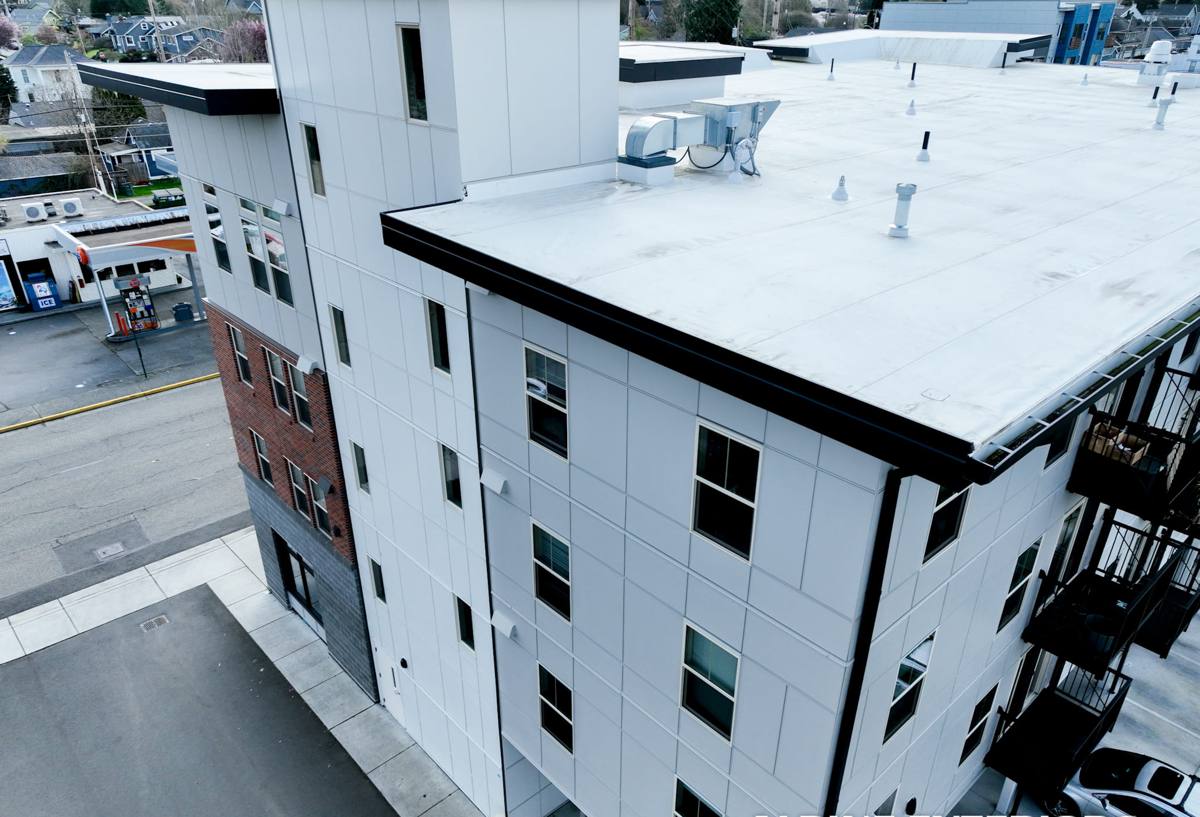
Signs West Anacortes Homeowners Should Watch For
Because of the marine exposure here, siding problems often start small and stay hidden behind trim, at corner boards, or up under eaves where nobody looks regularly. A short seasonal check — ideally after the first hard fall storms and again at the end of moss season — catches most issues while they're still cheap to fix.
- Soft or spongy spots when you press on siding near the ground, around windows, or below roof valleys
- Visible cracking, chipping, or bubbling paint, especially on the side of the house facing prevailing wind and rain
- Dark streaking or green-black moss buildup at panel seams and behind downspouts
- Rust bleed around nail heads or fasteners, a common sign of salt air corrosion on the wrong hardware
- Gaps opening up at butt joints, corner boards, or trim where caulking has shrunk or failed
- Warping, buckling, or panels that no longer sit flush against the wall
- A musty smell or visible staining on interior walls that back up to exterior siding
Why These Signs Show Up Faster Here
Salt air is mildly corrosive to unprotected metal, which is why fastener quality and placement matter more on a home in this part of Anacortes than they would thirty miles inland. Driving rain finds horizontal seams and poorly sealed penetrations — hose bibs, light fixtures, vents — and pushes moisture behind the cladding rather than just running off the surface. And moss doesn't just look bad; a thick mat holds water against the siding surface for days after a storm has passed, which is exactly the kind of prolonged dampness that rots wood-based products and stains even durable materials.
What a Correct Siding Repair Actually Involves
A repair that only addresses the surface — filling a crack, caulking a gap, replacing one visibly damaged board — often fails again within a season if it doesn't deal with what's happening behind the siding. We treat every repair call as a two-part job: diagnose the moisture path, then fix both the symptom and the cause.
Diagnosis First
Before any material comes off the wall, we check the water-resistive barrier and flashing at the affected area, look for rot in the sheathing or framing behind the damaged section, and trace how water is actually getting in — because the entry point and the visible damage aren't always in the same place. This step is what separates a lasting repair from a cosmetic one.
Correct Repair Sequence
- Remove only the affected siding and trim, working carefully to avoid damaging adjacent sound material
- Inspect and repair the underlying weather barrier, house wrap, and flashing
- Address any rot or soft sheathing found behind the siding before anything goes back on
- Install new material with correct fastening, spacing, and clearances for this climate
- Reseal and finish so the repair blends with surrounding siding rather than standing out as a patch
Skipping the middle steps is the most common shortcut in siding repair, and it's the reason homeowners sometimes pay for the same repair twice.
Repair or Replace: How We Help You Decide
Not every damaged section needs a full re-side, but not every repair is worth doing either if the underlying siding is near the end of its useful life. We look at the scope of damage, the age and condition of the rest of the exterior, and whether the same failure is likely to show up elsewhere on the home before recommending either path.
| Factor | Favors Repair | Favors Replacement |
|---|---|---|
| Extent of damage | Isolated to one or two areas | Recurring or spread across multiple walls |
| Underlying structure | Sheathing and framing sound | Rot found in multiple locations |
| Age of existing siding | Under 15-20 years, in generally good shape | Nearing or past expected lifespan |
| Material match | Discontinued but close match available | No reasonable color or profile match exists |
| Root cause | Localized flashing or seam failure | System-wide moisture or installation issues |
If a home is showing damage in more than a couple of spots, that's often a signal the original installation or an aging product is failing as a system, not as isolated incidents — worth a full evaluation rather than chasing patches.
Our Process for West Anacortes Repair Calls
We keep the process straightforward and honest, especially since repair work often involves finding out the scope is larger or smaller than a homeowner expected.
- On-site inspection of the damaged area and a broader walk-around of the exterior, since one visible problem often points to a related issue elsewhere
- A plain-English explanation of what we found, what's causing it, and what it will take to fix properly
- A written estimate that separates the repair scope from any optional or recommended additional work, so you're never guessing what you're paying for
- Careful removal and repair using materials matched to your existing siding wherever possible
- A final walk-through so you can see the completed work and ask questions before we consider the job done
Why We Repair With James Hardie Materials
When a repair calls for new siding material — whether it's a few boards or a full section — we use James Hardie fiber cement. It's the only siding product we install, for repairs and full re-sides alike, and that consistency matters in a climate like this one. Hardie's HZ5 formulation is engineered for the kind of wet, moderate-humidity conditions the Pacific Northwest sees, and it doesn't absorb and swell with moisture the way wood-based or composite products can. That matters directly for repair work: a patch that swells or shrinks differently than the surrounding siding creates a new gap, which creates a new moisture path.
Hardie's ColorPlus factory finish also gives us a real shot at matching existing color when we're patching rather than replacing an entire wall — something that's much harder to do well with field-painted or vinyl siding, where sun fading and material differences make new sections stand out. And because fiber cement is non-combustible and doesn't provide moss and mildew the same organic surface that wood-based siding does, a Hardie repair tends to hold up better through the next moss season, not just look good the day we finish.
Why It Matters That We Already Work This Neighborhood
A repair crew that regularly works West Anacortes has already seen how the local exposure plays out on real homes — which walls take the worst of the wind-driven rain, where moss builds up fastest, which older installations tend to develop the same recurring issues. That local pattern recognition speeds up diagnosis and helps us anticipate problems that aren't obvious yet, rather than just responding to what's visible today.
It also means we're not guessing at appropriate fastening, flashing details, or clearances for this climate — we're applying what consistently holds up on homes with the same salt air and rain exposure as yours. For a repair, that local track record is often the difference between a fix that lasts and one you're calling about again in a year or two.
What Drives the Cost of a Siding Repair
Every repair is different, but a few factors consistently move the price up or down. Knowing them ahead of time makes the estimate easier to understand.
| Factor | Why It Matters |
|---|---|
| Extent of hidden damage | Rotted sheathing or framing behind the siding adds labor and material beyond the visible patch |
| Accessibility | Second-story, steep-roof, or tight-clearance areas take longer and require additional equipment |
| Material matching | Matching an older or discontinued color or profile can require sourcing time or a broader section replacement |
| Scope of moisture intrusion | A single seam failure is a much smaller job than a compromised weather barrier across a wall |
| Trim and flashing condition | Failed flashing or trim often needs replacing alongside the siding itself to actually stop the leak |
Get an Honest Look Before Small Damage Becomes a Bigger Problem
If you're seeing cracked, soft, or moss-covered siding on a West Anacortes home, it's worth having it looked at before the next storm season pushes a small issue further behind the wall. We'll give you a straightforward, no-pressure estimate — what we're seeing, what's causing it, and what it will actually take to fix it right. Fill out the form below to schedule a free evaluation.