 Anacortes
 Guemes Island Siding Takes a Different Kind of Beating
Guemes Island sits just off Anacortes in Skagit County, and while it shares the same Puget Sound weather pattern as the mainland, the exposure is often more direct. Homes here face open water, wind that carries salt spray onto exterior walls, and long stretches of gray, wet weather that keep siding damp for days at a time. Add in the shade from mature evergreens on many island lots, and you get a climate that's genuinely tougher on siding than a typical inland neighborhood.
Siding repair on Guemes Island isn't just about patching a damaged board. It's about understanding why that board failed in the first place — usually some combination of trapped moisture, salt-driven fastener corrosion, or moss and algae holding water against the surface longer than the material was built to handle. A repair that ignores the cause just buys a few more years before the same spot fails again.
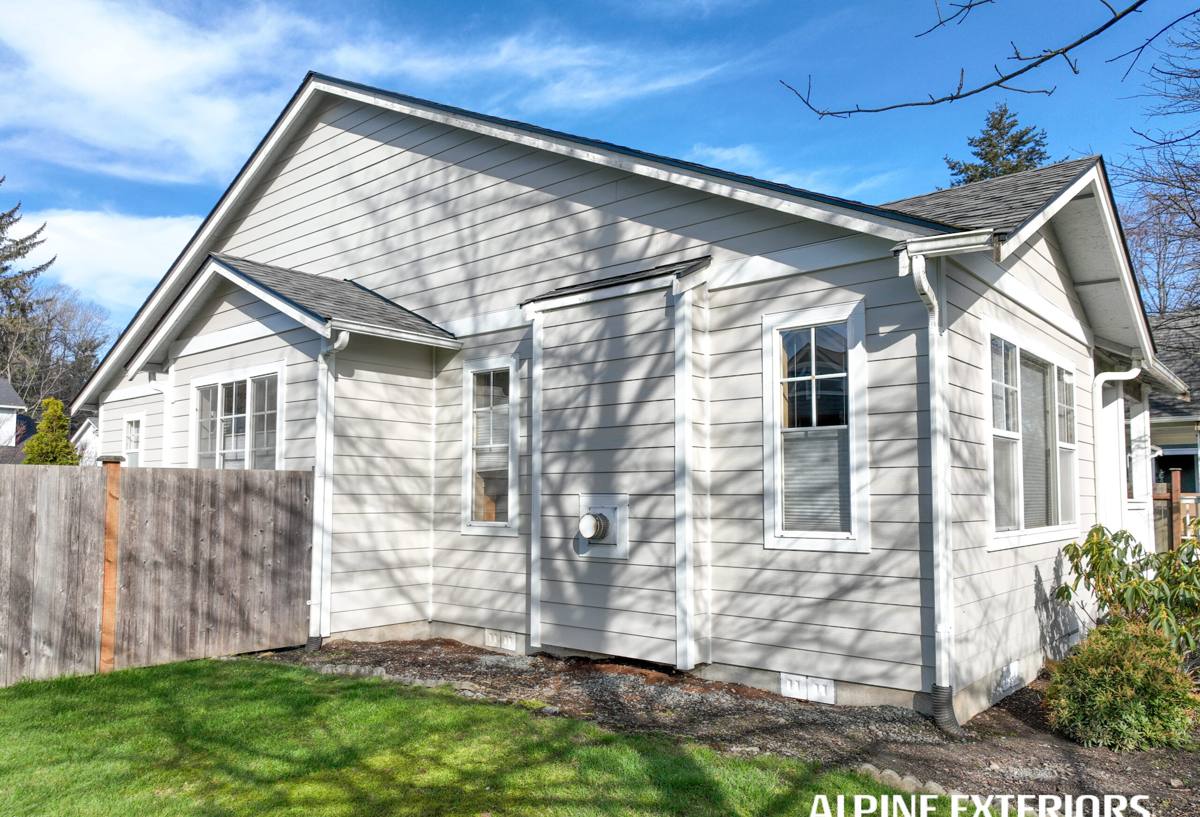
Common Signs Your Siding Needs Repair
Most siding problems don't announce themselves with a hole in the wall. They show up as smaller warning signs that get ignored until the damage spreads underneath. On Guemes Island, we typically see these issues show up first on north- and west-facing walls, where salt air and shade combine to keep surfaces damp longest.
- Soft or spongy spots when you press on a wall, especially near the bottom courses
- Visible cracking, splitting, or buckling in individual boards or panels
- Persistent black or green streaking that keeps returning after cleaning
- Paint that's peeling, bubbling, or failing faster than it should
- Gaps opening up at seams, corners, or around window and door trim
- Rust staining around nail heads or fastener locations
- A musty smell near exterior walls inside the house
- Visible daylight or drafts at trim edges from inside a garage or attic
Any one of these on its own might be minor. Several together, or any sign paired with softness underneath, usually means moisture has already gotten past the surface and into the structure behind it.
What's Really Going On Underneath
Salt Air and Fastener Corrosion
Coastal salt spray doesn't just dull paint — it accelerates corrosion on nails, screws, and any exposed metal trim. Once a fastener rusts and loses its grip, the board it's holding starts to work loose, which opens a gap for water to get behind the siding. This is a slow process, which is why homes on Guemes Island often show fastener failure years before the siding material itself would otherwise need attention.
Moss, Algae, and Trapped Moisture
The long moss season here means shaded and north-facing walls stay damp far longer after a rain than a wall in full sun. Moss and algae growth isn't just cosmetic — it holds moisture directly against the siding surface, and over time that constant dampness breaks down paint film, softens some siding materials, and creates the ideal conditions for rot to take hold in the wall assembly behind it.
Driving Rain and Failed Flashing
Wind-driven rain doesn't fall straight down — it gets pushed sideways into laps, seams, and trim joints. If flashing was installed poorly or has failed over time, water finds its way behind the siding at exactly those points. This is one of the most common root causes we find when we pull a damaged section and look at what's happening underneath.
What a Correct Repair Actually Involves
A siding repair that's done right isn't just about matching the color and nailing a new piece over the old spot. It starts with finding out how far the damage actually spreads, because visible damage is almost always smaller than what's happening behind the surface.
- Remove the damaged section and inspect the water-resistive barrier and sheathing behind it
- Check for rot, soft framing, or damaged insulation and address any of it before closing the wall back up
- Correct the underlying cause — failed flashing, a missing kick-out, poor caulking, or a fastening error — not just the symptom
- Replace with matching material, properly primed and finished on all cut edges
- Re-flash and seal correctly so the repair sheds water the way the rest of the wall does
- Match paint or factory finish as closely as possible so the repair blends in rather than standing out
Skipping steps 1 through 3 is the single biggest reason siding repairs fail again within a year or two. A patch over hidden rot is a patch that's already failing.
Repair vs. Replacement: How We Make the Call
Not every damaged section needs a full re-side, and not every repair is worth doing instead of planning for replacement. The right call depends on how much of the wall is affected, how old the existing siding is, and what's causing the damage.
| Situation | Usually Repair | Usually Replace |
|---|---|---|
| Damage is isolated to one or two boards or panels | Yes | — |
| Rot or moisture damage found in multiple wall sections | — | Yes |
| Siding material is nearing or past its expected service life | — | Yes |
| Damage traces to one clear, fixable cause (a leak, a bad flashing detail) | Yes | — |
| Recurring moss, staining, or paint failure across most of the home | — | Yes |
| Matching material or finish is still available | Yes | — |
We'll always tell you honestly which side of that table your home falls on. A well-executed repair can add years of life to siding that's otherwise sound, but we won't recommend patching a wall that's showing widespread failure just to avoid a bigger conversation.
Our Process for Guemes Island Repairs
Working on Guemes Island means planning around the ferry schedule, so we treat every visit as a full, self-contained job rather than something we chip away at over multiple trips. Before we ever step onto the island, we want to know exactly what materials, tools, and crew size a job needs.
- Initial assessment, either in person or from photos and a phone conversation, to scope the likely extent of damage
- A scheduled site visit where we open up the damaged area and confirm what's actually happening behind the siding
- A clear, honest explanation of what we found and what it will take to fix it correctly
- Repair work completed with all needed materials on hand, so the job doesn't stall waiting on a supply run and a return ferry trip
- A final walk-through so you can see the completed repair before we leave
That kind of trip planning isn't a minor convenience on an island job — it's the difference between a repair finished in one visit and one that drags out over weeks because someone forgot a part of trim or a tube of the right sealant.
Why We Only Work With James Hardie Siding
When a repair calls for replacing a section with new material, or when a homeowner decides a full re-side makes more sense than patching an aging wall, we install James Hardie fiber cement exclusively. We don't install vinyl, LP SmartSide, or cedar, and that's a deliberate standard, not a limitation of convenience.
In a salt-air, high-moisture environment like Guemes Island, the material matters as much as the workmanship. Hardie's fiber cement is non-combustible and doesn't absorb and swell with moisture the way wood-based products can, which matters directly for the rot and softness issues we see most often out here. Its ColorPlus factory finish is baked on and formulated to resist the fading and staining that salt air and constant damp shade cause faster than they would inland. Hardie also builds climate-specific HZ product lines, and the version engineered for the Pacific Northwest's wet climate is what we specify on Guemes Island homes.
None of that means Hardie is maintenance-free — no siding is, especially in this climate. It means that when we do a repair or a replacement, the material we're putting up is built for the exact conditions the wall is going to face, backed by a strong transferable warranty if the home changes hands.
Keeping Repaired Siding in Good Shape
Once a repair is done right, a little upkeep goes a long way toward making sure it stays that way — especially in an environment that keeps throwing salt, moisture, and moss at every wall.
- Rinse salt residue and grime off exterior walls a couple of times a year, especially on sides facing open water
- Keep gutters clear so overflow doesn't run down and pool behind siding at corners
- Trim back vegetation and tree cover where it's keeping walls shaded and damp longer than necessary
- Deal with moss and algae growth promptly rather than letting it build up over a season
- Have any soft spots, gaps, or recurring stains checked before they turn into a bigger repair
Catching a small issue during a routine check is a fraction of the cost and disruption of fixing a wall section after rot has spread through the framing.
Get an Honest Look at Your Siding
If you're seeing soft spots, persistent staining, or failing paint on a Guemes Island home, it's worth getting an honest assessment before the damage spreads further. We'll tell you plainly whether you're looking at a straightforward repair or something bigger, and what it will take to fix it right. Reach out for a free, no-pressure estimate using the form below.