 Anacortes
 Flounder Bay's Waterfront Setting Is Hard on Exterior Materials
Flounder Bay sits on the water side of Fidalgo Island, and homes here live with conditions that inland Anacortes properties rarely see to the same degree. Salt-laden air off the water settles on every exterior surface, wind-driven rain gets pushed sideways into wall assemblies during winter storms, and the combination of shade, moisture, and mild temperatures makes this stretch of Skagit County prime territory for moss and algae growth on anything that holds dampness. Siding here isn't just a cosmetic choice — it's the first line of defense for the wall assembly behind it, and it needs to be installed with that reality in mind from day one.
We've installed siding across Anacortes and the surrounding waterfront neighborhoods long enough to know that a job that looks fine on a dry August afternoon can fail quietly over a few wet winters if the material or the installation wasn't matched to the exposure. Flounder Bay homes need a siding system and an installation approach that accounts for salt exposure, sustained moisture, and biological growth — not a generic install that would work fine forty miles inland.
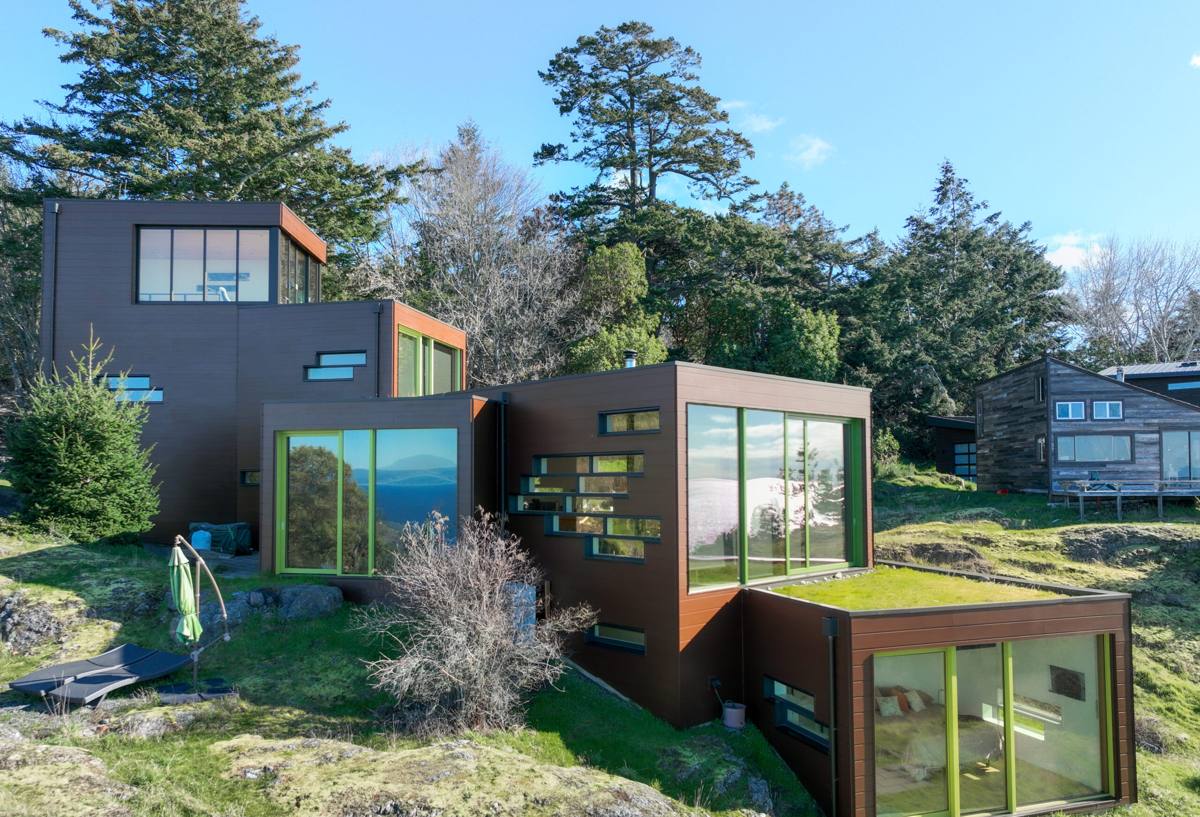
What Salt Air, Rain, and Moss Actually Do to Siding
Each of these three stressors attacks siding differently, and understanding the mechanism helps explain why material choice matters so much on a property like this.
Salt air
Airborne salt is corrosive to metal fasteners, flashing, and trim accessories, and it can accelerate the breakdown of certain coatings and adhesives over time. Any siding system installed near the water needs corrosion-resistant fasteners and flashing details, plus a factory finish that's engineered to hold up under sustained salt exposure rather than a field-applied paint job that starts thinning within a few seasons.
Driving rain
Wind off the water doesn't just wet the surface of a wall — it can drive moisture up and under lap siding, through gaps at trim and penetrations, and into seams that weren't properly flashed or caulked. Once water gets behind siding, the sheathing, framing, and insulation behind it are all at risk, and problems can develop for months before they show up as a soft spot or a stain on the interior.
Moss and algae
Shade, moisture, and mild year-round temperatures are exactly what moss and algae need to establish themselves. Materials that absorb moisture or have a porous, paintable surface give these organisms something to grip onto, and once established, moss holds water against the siding surface even longer, compounding the problem it started.
| Material | Salt Air Behavior | Moisture Behavior | Moss/Algae Resistance |
|---|---|---|---|
| Vinyl | Can become brittle and discolor with UV and salt exposure over time | Panels can warp or gap, opening paths for wind-driven rain | Moderate; surface film can still support growth in shaded, damp areas |
| Primed wood / spruce | Coatings degrade faster near salt air, exposing raw wood | Absorbs moisture readily; prone to swelling and rot if finish fails | Poor; wood is a food source once damp |
| Cedar | Natural oils help initially, but weathering accelerates near water | Absorbs and releases moisture with seasonal cycles; needs regular refinishing | Poor to moderate without consistent maintenance |
| James Hardie fiber cement | Non-combustible, dimensionally stable material with a factory-applied ColorPlus finish engineered for harsh exposure | Resists moisture-driven warping and swelling when installed to spec | Good; dense, stable surface resists the conditions moss needs to establish |
Why We Install Only James Hardie Fiber Cement Here
We don't install vinyl, LP SmartSide, Cemplank, Allura, primed spruce, or cedar. That's not a marketing position — it's a decision we made because of what we've seen play out on homes in exactly this kind of environment. Every one of those alternatives asks a homeowner to accept a trade-off that gets harder to live with the closer a property sits to the water: a finish that needs recoating, a substrate that swells when it gets wet, fasteners and seams that are more sensitive to installation error, or a warranty that doesn't hold up the way homeowners expect it to.
James Hardie fiber cement is engineered specifically to resist the things that punish siding on a site like Flounder Bay. It's dimensionally stable, so it doesn't expand and contract the way wood-based products do with humidity swings. It's non-combustible, which matters given the dry summer wildfire risk that has become a bigger part of Pacific Northwest planning in recent years. And the ColorPlus factory finish is baked on under controlled conditions, giving it far better resistance to fading and wear than a field-applied paint job — which matters a lot when the siding is facing salt spray and near-constant rain exposure for months at a time. Hardie also offers HZ5 product lines engineered for wetter, harsher climate zones, which is a meaningful advantage for a waterfront property in this part of Skagit County.
We stand behind Hardie because we've installed it correctly, repeatedly, and we've seen it perform. That's the whole reason we standardized on one product line instead of offering a menu of options with different trade-offs attached.
What a Correct Installation Involves
Material choice only gets you halfway there. The other half is installation detail, and on a property exposed to driving rain and salt air, these details matter more than they would on a sheltered inland lot.
Drainage plane and rain screen
Water that reaches the back of the siding needs somewhere to go. A properly installed weather-resistive barrier, correctly lapped and sealed at every penetration, combined with a drainage gap behind the siding, lets any moisture that gets past the surface drain and dry out instead of sitting against the sheathing.
Flashing at every transition
Windows, doors, decks, roof-to-wall intersections, and any other penetration are where wind-driven rain finds its way in. Correct flashing — not just caulk — at each of these transitions is non-negotiable on a site this exposed.
Fastening and clearances
Hardie siding has specific fastener spacing, penetration depth, and clearance requirements from grade, roof lines, and other surfaces. Getting these wrong doesn't just void the manufacturer's warranty — it creates the exact gaps and moisture traps that lead to problems in a few winters.
Caulking and joint treatment
Butt joints and trim seams need to be treated correctly for the exposure level. On a waterfront lot, we err toward the more weather-resistant detailing options Hardie's installation guidelines allow for, rather than the minimum spec.
Our Process, Start to Finish
- Site walk and assessment — We look at sun exposure, prevailing wind and rain direction, existing moisture damage, and any moss or algae staining on the current siding before we recommend anything.
- Detailed estimate — You get a clear scope of work, product line and color selection, and a straightforward cost breakdown — no vague allowances.
- Tear-off and inspection — Once old siding comes off, we inspect the sheathing and framing underneath for any moisture damage that needs to be addressed before new siding goes on.
- Weather barrier and drainage plane installation — This step gets done to spec, not rushed, since it's the part that's invisible once the job is finished.
- Hardie installation — Fastened, flashed, and jointed to manufacturer specification and matched to this site's exposure level.
- Final walkthrough — We review the finished job with you before we call it done.
Signs a Flounder Bay Home May Need New Siding
- Visible moss, algae, or persistent green/black staining that returns shortly after cleaning
- Cupping, warping, or gaps in existing siding boards or panels
- Soft spots, bubbling, or discoloration near window and door trim
- Paint that's peeling or failing faster than it should between repaints
- Visible fastener corrosion or staining running down from nail heads
- A musty smell or interior moisture signs on exterior-facing walls
Living With Hardie Siding in a Marine, Moss-Prone Climate
One of the practical advantages of switching to James Hardie in an environment like this is how little ongoing maintenance it asks for compared to wood-based or vinyl alternatives. The factory ColorPlus finish holds its color without the repainting cycle that wood and primed products require, and the material's density and stability make it far less hospitable to moss and algae than porous or absorbent substrates. That doesn't mean zero maintenance — periodic gentle washing to keep salt residue and organic growth from building up is still worthwhile on any waterfront property — but it's a fraction of the upkeep a homeowner would sign up for with cedar or primed spruce in the same location.
Why a Crew That Already Works Flounder Bay Matters
Siding installation guidelines are written for a range of climate conditions, and a crew that mostly works drier, more sheltered sites can install a product technically "to code" while still missing the judgment calls that matter on a waterfront lot — where to tighten up flashing details beyond the minimum, how to sequence work around this area's weather windows, and which failure patterns to watch for during tear-off. We work sites across Anacortes and the surrounding Skagit County waterfront regularly enough to know what this specific exposure does to a wall assembly over time, and we build that knowledge into every installation rather than treating each job as generic.
What Installation Typically Involves Cost-Wise
Every home is different, and the only way to get an accurate number is a site visit — but these are the main factors that drive cost on a project like this.
| Factor | Why It Matters |
|---|---|
| Square footage and home shape | More corners, gables, and trim detail mean more labor and material cuts |
| Condition of existing sheathing | Moisture-damaged sheathing found during tear-off adds repair scope |
| Siding profile and accessories | Lap width, trim style, and color selection affect material cost |
| Site access and exposure | Waterfront and hillside lots can affect staging and installation logistics |
| Existing moisture or moss damage | Extent of remediation needed before new siding goes on |
If you're weighing new siding for a home in Flounder Bay, we're glad to walk the property, look at what your current siding is telling us, and put together a straightforward, no-pressure estimate. There's a form below — reach out and we'll get you scheduled.