 Anacortes
 Siding Installation in Burlington: Built for the Skagit County Climate
Burlington sits in the same weather system that shapes the rest of Skagit County and the greater Anacortes area — marine air pushing in off the water, long stretches of steady rain, and short, mild summers that never fully dry the north side of a house. That combination is exactly why siding installation done right here looks different from siding installation done in a drier inland climate. It's not just about nailing panels to a wall. It's about managing water and moisture over decades, not months.
We're based in Anacortes and do siding work throughout Skagit County, and Burlington is a regular stop for us. That matters more than it sounds like it should. A crew that's worked on homes a few miles apart, in the same wind exposure and the same rain patterns, already knows where water tends to find its way in and where the old shortcuts on a house tend to fail first.
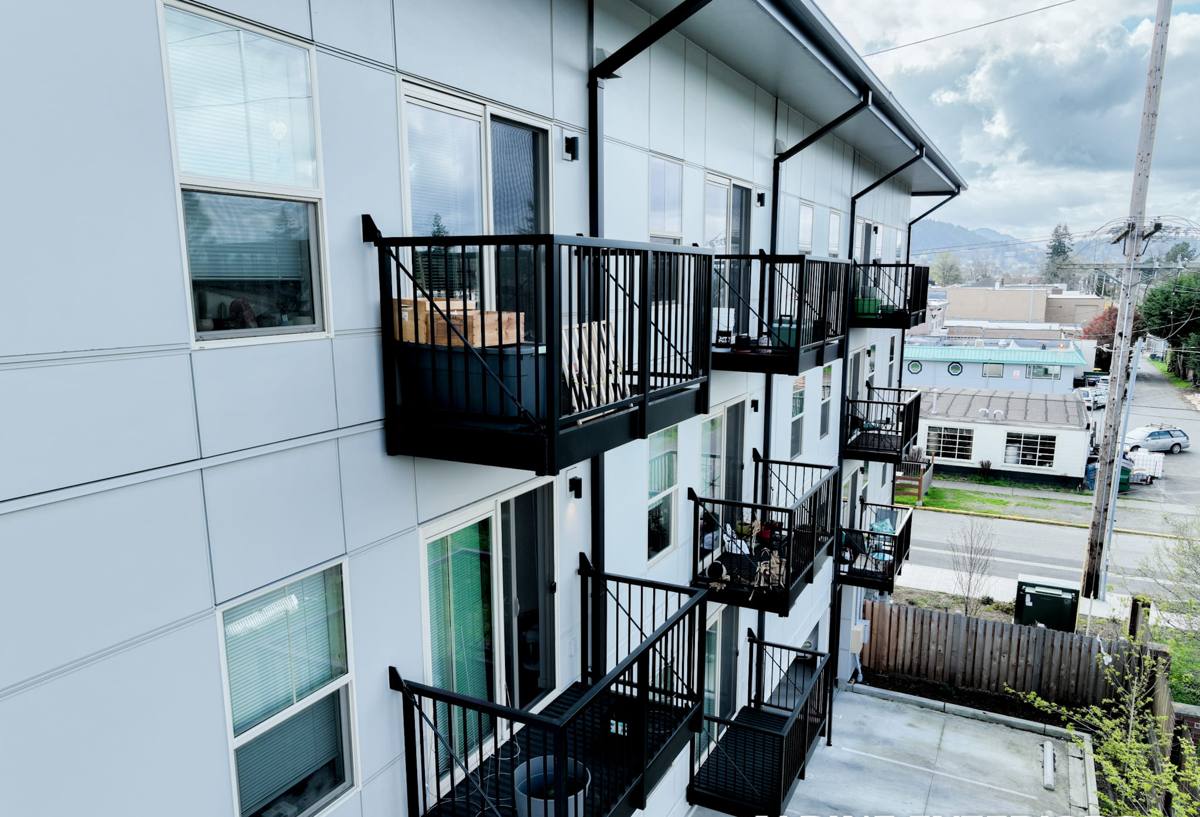
What Salt Air, Rain, and Moss Actually Do to Siding
Three things drive most of the siding problems we see on homes in and around Burlington, and they compound each other over time.
Salt-laden marine air corrodes exposed metal fasteners, flashing, and hardware faster than it would inland. Once a fastener head starts to rust, it can telegraph a stain through paint or leave a small point where water gets a foothold behind the siding.
Driving rain in this part of Washington isn't always straight-down rain — wind pushes it sideways and up under laps, trim, and butt joints. Siding that relies on caulk alone to stay dry in that kind of weather, instead of proper flashing and drainage, tends to fail from the inside out, long before it looks bad from the street.
Moss and algae get a long growing season here because siding on shaded or north-facing walls rarely dries out completely between rain events. Moss doesn't just look bad — it holds moisture against the surface, and on materials that swell or that aren't rot-resistant, that constant dampness is what eventually causes real damage.
None of this means Burlington is a uniquely harsh place to build. It means siding installation here has to account for moisture management as a first-order concern, not an afterthought.
What a Correct Siding Installation Actually Involves
A siding job is only as good as what's underneath it and how it's fastened. Here's what we consider non-negotiable on every installation.
Tear-off and sheathing inspection
Once the old siding comes off, we inspect the sheathing underneath for soft spots, rot, or water staining — especially around old window flashing, deck ledgers, and anywhere trim previously relied on caulk instead of proper drainage. Any damaged sheathing gets replaced before a single new panel goes up. Installing new siding over compromised sheathing just hides a problem that will resurface.
Weather-resistive barrier and flashing
We install a continuous weather-resistive barrier and correctly lapped flashing at every penetration — windows, doors, hose bibs, vents, and roof-to-wall transitions. The barrier and flashing, not the siding itself, are what keep incidental water out of the wall assembly. In a climate with sustained wind-driven rain, this layer is arguably more important than the siding material sitting on top of it.
Fastening, clearances, and gaps
Fiber cement siding has specific fastening requirements — nail type, spacing, and penetration depth all affect long-term performance. We also hold proper clearance between the bottom of the siding and grade, decks, patios, and roof lines, so water and soil moisture can't wick directly into the material. Panel-to-panel and panel-to-trim gaps are set correctly to allow for expansion without opening a path for water.
Trim, caulking, and finish details
Corner boards, trim, and joints get detailed with quality sealants rated for exterior exposure, applied at the manufacturer-specified joints — not as a substitute for good flashing, but as the last line of defense. This is where a lot of lower-bid installations cut corners, because it's the least visible part of the job once it's finished.
Why We Install Only James Hardie Fiber Cement
We made a decision as a company to install James Hardie fiber cement siding exclusively. We don't install vinyl, LP SmartSide, Cemplank, Allura, primed spruce, or cedar. That's not a marketing position — it's a standard we settled on after weighing how each of those products actually performs against Pacific Northwest weather over the long run, including the maintenance burden, moisture behavior, and installation sensitivity that come with each one.
The ColorPlus factory finish
James Hardie's ColorPlus finish is baked on at the factory under controlled conditions, rather than field-painted after installation. That matters in a climate where field-applied paint has less time to cure properly between rain events and where repainting every several years is a real, recurring cost. A factory finish holds color and resists fading and chipping more consistently than most site-applied paint jobs, and it comes with its own finish warranty.
Climate-engineered HZ5 formulation
Hardie's HZ5 product line is engineered specifically for regions with significant moisture exposure and freeze-thaw cycling — which describes western Washington well. It's formulated to resist moisture-related damage that plain fiber cement or wood-based products are more vulnerable to. Combined with a non-combustible core, correct installation, and a strong transferable warranty, it's the product we're willing to stand behind on homes we install.
Comparing Siding Materials for Burlington's Climate
Homeowners comparing bids often see very different materials proposed. Here's an honest look at how the common options stack up against the conditions Burlington actually sees.
| Material | Moisture performance here | Maintenance | Our take |
|---|---|---|---|
| James Hardie fiber cement (HZ5) | Engineered for wet, moderate climates; non-combustible | Repaint on a much longer cycle with ColorPlus; minimal upkeep | What we install |
| Vinyl | Can warp or gap with temperature swings; seams are a water path | Low, but fading and brittleness are common over time | We don't install it |
| LP SmartSide (engineered wood) | Wood-based core is vulnerable if moisture gets past the finish | Depends heavily on correct, ongoing sealing at cuts and joints | We don't install it |
| Cedar | Attractive but absorbs moisture and is a food source for moss/mildew | Regular staining/sealing required to hold up | We don't install it |
| Primed spruce / other primed wood | Prone to swelling, cupping, and rot without diligent maintenance | High — repainting and inspection on a short cycle | We don't install it |
This isn't a claim that every one of these products is defective — some are perfectly serviceable when maintained closely. It's a statement of what we're willing to put our name behind on a house that has to survive Skagit County winters for decades with minimal upkeep.
Our Installation Process, Start to Finish
- On-site assessment: We look at your current siding, trim, window flashing, and any problem areas — moss growth, soft spots, past water intrusion — and talk through what's driving them.
- Written estimate: You get a clear scope of work and price before anything is scheduled, including what's included in tear-off, sheathing repair allowances, and trim work.
- Tear-off and inspection: Old siding comes off, sheathing is inspected and repaired as needed, and we flag anything we find before covering it back up.
- Weather barrier and flashing installation: The moisture management layer goes in first, correctly lapped at every window, door, and penetration.
- Hardie panel installation: Panels are fastened to manufacturer spec, with correct clearances at grade, decks, and rooflines.
- Trim and finish detail: Corner boards, trim, and joints are finished and sealed.
- Final walkthrough: We go over the finished work with you before calling the job done.
Cost Factors for a Burlington Siding Project
Every home is different, so we won't quote a number without seeing the house — but the main variables that move a siding installation estimate are consistent from job to job.
| Factor | Why it affects cost |
|---|---|
| Amount of sheathing repair needed | Discovered once old siding is removed; hidden rot adds labor and material |
| Home size and wall complexity | More corners, dormers, and trim details mean more labor per square foot |
| Siding profile and accessories | Lap width, trim style, and soffit/fascia work all factor into material cost |
| Access and site conditions | Tight lots, second-story work, or landscaping to protect can add time |
| Existing moisture damage | Homes with a history of leaks or moss buildup often need more prep work |
We'll walk your specific home and give you a real number, not a range pulled from a website.
Signs Your Burlington Home Needs New Siding
A lot of siding problems in this climate develop quietly. Watch for these signs:
- Persistent moss or algae growth that comes back within weeks of cleaning
- Soft or spongy spots when you press on the siding, especially near the bottom courses
- Visible warping, cupping, or gaps opening up at seams and joints
- Paint that's peeling, bubbling, or failing faster than it used to
- Rust streaks below fasteners or trim
- Rising energy bills that suggest the wall assembly isn't insulating or sealing the way it should
- Interior signs like musty smells, staining, or bubbling drywall on exterior walls
Any one of these is worth a look. Several together usually mean the siding is past the point where patching makes sense.
Why Hiring a Crew That Already Works in Burlington Matters
Siding installation isn't just a spec sheet — it's judgment calls made on-site, house by house. A crew that regularly works Burlington and the surrounding Anacortes area has already seen how the local wind exposure, rain patterns, and moss growth play out on real homes, and knows which details are worth extra attention here versus somewhere drier. That local familiarity, paired with sticking to one material system we understand thoroughly rather than juggling several, is how we keep installation quality consistent from house to house.
If your Burlington home's siding is showing its age, or you're planning ahead for a replacement, we're happy to take a look and walk you through what we'd recommend — no pressure, no obligation. Reach out using the form below to schedule a free estimate.