 Anacortes
 Siding Installation for Bow, Washington Homes
Bow sits in a stretch of Skagit County where farmland runs down to saltwater, and that combination shapes what a house needs from its exterior. Homes here deal with a mix most siding products were never engineered for: salt-laden air drifting in off Samish Bay, wind-driven rain that doesn't just fall but gets pushed sideways into wall assemblies, and long stretches of shade and dampness that turn into a moss and algae season lasting most of the year. A siding installation in Bow isn't a cosmetic upgrade — it's a decision about how well your walls will hold up against a specific, demanding coastal-rural climate.
We install James Hardie fiber cement siding exclusively, and we've done enough work in and around Bow to know what actually fails out here versus what holds up. This page covers what local homes need from a siding install, what correct work looks like, and how we run the job from first visit to final walkthrough.
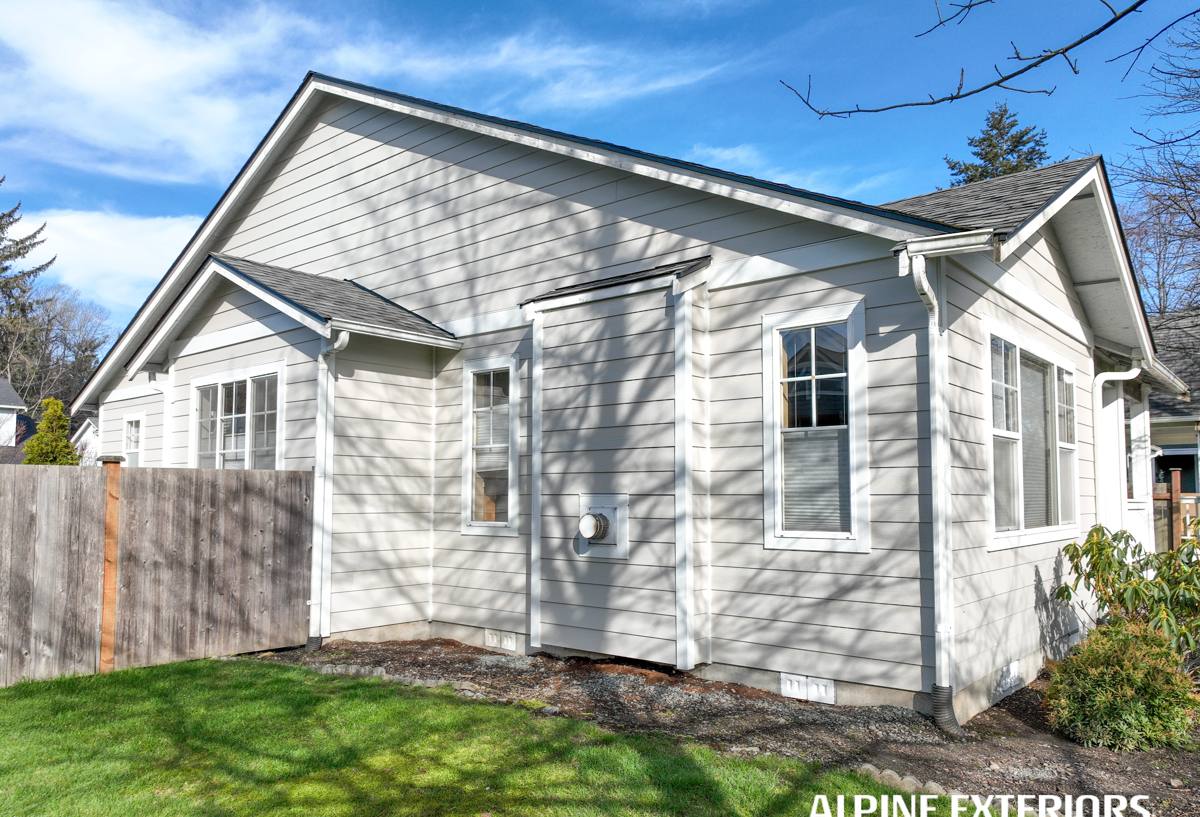
What Bow's Climate Actually Does to Siding
Salt Air and Corrosion
Proximity to Samish Bay means airborne salt is a real factor for homes in Bow, especially on the sides that face open water or take the prevailing wind. Salt doesn't just sit on a surface — it works into fasteners, trim joints, and any exposed edge where a coating has thinned or chipped. Over years, that accelerates corrosion on lower-grade fasteners and speeds up the breakdown of finishes not designed to resist it.
Driving Rain
Skagit County gets plenty of rain, but the version that matters most for siding is the kind that comes in at an angle during a windstorm. Driving rain finds every gap — a poorly lapped seam, a missing piece of flashing, a caulked joint that should have been mechanically flashed instead. Once water gets behind the cladding, the sheathing and framing underneath are what actually pay the price, often long before anyone notices a problem from the outside.
Moss and Algae Season
Between tree cover, damp ground, and long overcast stretches, many Bow properties stay shaded and moist for much of the year. That's ideal growing conditions for moss and algae on any surface that holds moisture — north-facing walls, areas under eaves with poor airflow, and low sections near grade or landscaping. Wood-based and wood-look products are especially vulnerable because moss and mold can use the material itself as a food source, not just a surface to sit on.
Why We Only Install James Hardie in This Climate
We don't install vinyl, LP SmartSide, Cemplank, Allura, primed spruce, or cedar. That's not a marketing position — it's a standard we hold because we've seen what each of those products struggles with in a climate like Bow's, and we'd rather turn down a job than install something we don't think will perform.
- Non-combustible: Fiber cement doesn't feed a fire the way wood-based products can — a meaningful factor as wildfire smoke and drought stress become more common even west of the Cascades.
- ColorPlus factory finish: The color is baked on in a controlled factory process rather than field-applied, which means better UV and moisture resistance than a job-site paint job, and no need to repaint every several years.
- Climate-engineered HZ product lines: James Hardie makes region-specific formulations, and the HZ5 line is engineered for wetter, harsher climates like ours — it handles moisture cycling differently than the version sold in dry inland regions.
- It doesn't feed moss and mold: Fiber cement is not an organic material in the way wood is, so it doesn't break down or feed biological growth the way wood siding or wood-fiber composites can over time.
- Transferable warranty: A strong, transferable warranty matters to resale value in a market where buyers increasingly ask what the siding is and how old it is.
We're upfront that fiber cement costs more upfront than vinyl and requires a crew that knows how to cut, fasten, and flash it correctly. We think that trade-off is worth it for a house that has to survive salt air, driving rain, and moss season year after year.
What a Correct Installation Actually Involves
The siding itself is only part of the system. Most siding failures we get called to inspect trace back to something behind the panels, not the panels themselves. A correct install includes:
- A properly lapped, continuous weather-resistant barrier behind the siding — no gaps, no shortcuts at penetrations
- Flashing at every window, door, and roof-to-wall intersection, installed to shed water outward and downward
- Correct fastener type, spacing, and depth — James Hardie specifies this precisely, and it's not optional
- Proper clearance between the bottom of the siding and grade, decks, patios, and roof lines to avoid wicking moisture
- Butt joints and seams sealed or flashed per manufacturer spec, not just caulked as an afterthought
- Factory-cut edges used wherever possible, with field cuts sealed to protect the fiber cement core
Skip any one of these and the siding can look fine for a while, then fail from behind — which is exactly the failure mode Bow's rain and moisture load tends to expose over time.
Our Process, Start to Finish
1. Site Visit and Assessment
We walk the exterior, check the current siding and what's underneath where accessible, note problem areas — moss buildup, staining, soft spots, prior water intrusion — and talk through what you actually want out of the project.
2. Product and Color Selection
We go over James Hardie's plank profiles, panel options, and ColorPlus palette, and talk through what holds up best given your home's sun and shade exposure and its position relative to prevailing wind and rain.
3. Written Estimate
You get a clear, itemized estimate — materials, labor, and any prep work like sheathing repair or moisture barrier replacement called out separately, not buried in a lump sum.
4. Prep and Tear-Off
We remove the old siding, inspect the sheathing and framing for hidden rot or damage (common on older Bow homes with a history of moisture problems), and repair anything compromised before a single new panel goes up.
5. Installation
Weather barrier, flashing, and siding go on to manufacturer spec, with attention to the details that matter most in this climate — sealed penetrations, correct clearances, and fastening that won't loosen or corrode prematurely.
6. Final Walkthrough
We walk the finished job with you, point out anything you should know about caring for it, and make sure you're satisfied before we call it done.
Problems We Commonly See on Bow Homes
Rural and semi-rural properties around Bow often have older siding that was never built for how the site actually behaves — heavy shade from mature trees, low airflow around the foundation, or a wall orientation that catches the worst of the weather. The recurring issues we run into include:
- Moss and algae staining concentrated on shaded, low-airflow walls
- Rot at the base of wood or wood-composite siding near grade, decks, or landscaping beds
- Caulk-dependent seams that were never properly flashed, now failing and letting water in
- Faded or chalking paint finishes on field-painted siding that was never designed for factory-grade UV resistance
- Fastener corrosion on lower-grade hardware exposed to salt-influenced air
Cost Factors for a Bow Siding Project
| Factor | Why It Matters in Bow |
|---|---|
| Home size and wall complexity | More corners, dormers, and trim details mean more cutting, flashing, and labor time |
| Condition of existing sheathing | Hidden rot from years of moisture exposure adds repair costs discovered during tear-off |
| Siding profile and finish | Lap plank, panel, and shingle-style profiles carry different material and install costs |
| Access and site conditions | Tree cover, long driveways, and rural lot layouts can affect staging and labor time |
| Trim and detail work | Windows, corners, and fascia detailing add labor beyond flat wall footage |
| Tear-off and disposal | Removing and hauling old siding, especially failing wood or vinyl, is a separate cost line |
We don't quote a number without seeing the house — anyone who does is guessing, and guesses tend to turn into change orders later.
Why a Crew That Already Works Bow Matters
Bow isn't downtown Anacortes, and it isn't Burlington either — it's a rural, spread-out community where lot layouts, tree cover, and site access vary a lot from one property to the next. A crew that already works this area knows to plan for long driveways and limited staging space, understands how Skagit County permitting works for exterior projects, and has seen firsthand how a given wall orientation performs against the bay-influenced weather here over multiple seasons, not just on install day.
That local track record also means we're not guessing about which details matter most on your specific property. We know which orientations tend to hold moss, which wall assemblies we keep finding rot behind, and which fastening and flashing choices actually hold up here versus in a drier, more sheltered part of the county.
Caring for Your Siding After Installation
James Hardie siding installed correctly needs relatively little upkeep, but a few habits go a long way in a climate like Bow's:
- Rinse off moss and organic debris periodically, especially on shaded, north-facing walls
- Keep gutters clear so overflow doesn't run down the siding face
- Trim back vegetation that keeps a wall section damp and shaded
- Have caulking and trim joints checked every few years, since sealant is the one component that does wear over time
- Address any impact damage or cracking promptly so moisture can't get behind the panel
If you're planning a siding project in Bow, we're happy to come take a look at your home, walk you through what we see, and put together a straightforward, itemized estimate — no pressure, no obligation. The form below is the easiest way to get started.