 Anacortes
 Why Ship Harbor Siding Takes a Different Approach
Ship Harbor sits close enough to the water that homes here deal with a different set of pressures than siding just a few miles inland in Anacortes. Salt-laden air moves through the neighborhood on a regular basis, driving rain comes in sideways off the strait during fall and winter storms, and the shaded, moisture-heavy stretches of the year keep moss and algae growth going longer than most homeowners expect. Siding that isn't built and installed for that combination doesn't fail overnight — it fails slowly, in ways that are easy to miss until the damage is already behind the wall.
We've replaced siding on enough homes in this part of Skagit County to know what actually holds up here and what doesn't. This page is about one job specifically: full siding replacement for Ship Harbor homes, done with materials and methods that match the climate instead of fighting it.
What Ship Harbor's Climate Actually Does to Siding
Salt Air and Corrosion
Proximity to saltwater accelerates corrosion on fasteners, flashing, and any metal trim tied into the siding system. Cheaper fastener packages and untreated trim pieces show pitting and rust streaks years before they should. This is one of the most overlooked failure points in coastal siding jobs — the siding panel itself can look fine while the fasteners holding it up are quietly deteriorating.
Driving Rain and Wind-Driven Moisture
Ship Harbor's exposure means rain doesn't always fall straight down — it gets pushed sideways into wall assemblies, especially on the water-facing and west-facing elevations of a home. Any gaps in the water-resistive barrier, any undersized or missing flashing, or any siding product that absorbs and holds moisture will show problems at butt joints, penetrations, and low corners first.
Extended Moss and Algae Season
Shade, moisture, and mild temperatures add up to a long growing season for moss and algae on north-facing walls and anywhere siding stays damp longer than it should. Beyond looking bad, sustained moss growth holds moisture against the surface, which is exactly the condition that causes rot, coating failure, and premature aging in siding that isn't built to resist it.
Why We Only Install James Hardie Fiber Cement Here
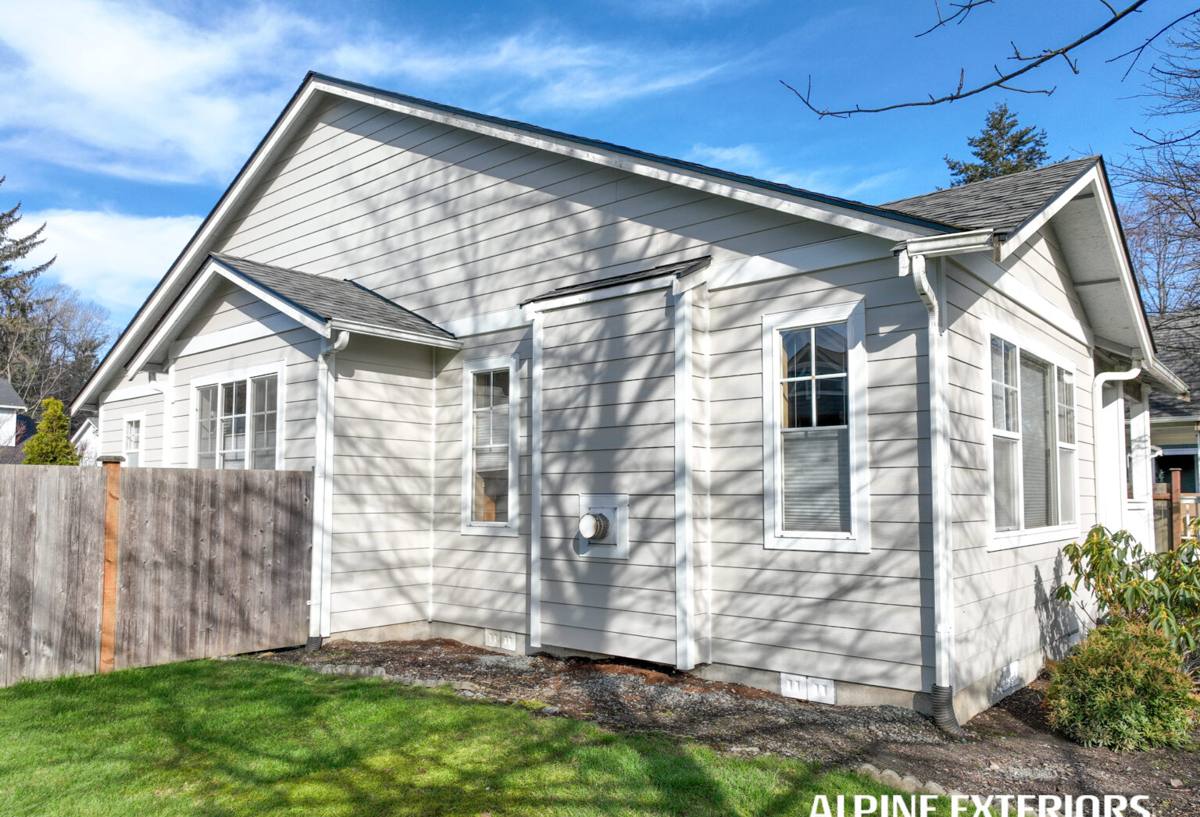
We standardized on James Hardie fiber cement siding for every home we work on, including Ship Harbor, and the reasoning is straightforward. Fiber cement is dimensionally stable and doesn't absorb and swell with moisture the way engineered wood products can, it's non-combustible, and Hardie's ColorPlus factory finish is baked on and warranted against fading in a way that field-applied paint jobs aren't. In a coastal, high-moisture, moss-prone environment like this one, those properties aren't cosmetic extras — they're the difference between siding that needs attention every few years and siding that doesn't.
We don't install vinyl, LP SmartSide, Cemplank, Allura, primed spruce, or cedar. Each of those products has legitimate uses somewhere, but none of them hold up as consistently as Hardie does under sustained salt exposure, driving rain, and long wet seasons — which is the exact combination Ship Harbor deals with every year.
Hardie Product Lines Suited to This Area
- HardiePlank lap siding — the standard horizontal siding choice, available in several exposure widths and finishes, engineered for moisture resistance in wet coastal climates (Hardie's HZ10 product line is specifically formulated for the Pacific Northwest).
- HardiePanel vertical siding — often used for accent sections, gables, or a modern board-and-batten look.
- HardieTrim — matched trim boards that resist the same moisture and rot pressure as the field siding, so trim doesn't become the weak point in an otherwise solid installation.
- HardieSoffit — vented or non-vented soffit panels that hold up in damp, shaded eave areas prone to moss and mildew.
What a Correct Siding Replacement Involves
Replacing siding on a Ship Harbor home is not just stripping old material and nailing up new panels. Done right, it's a full envelope job:
- Tear-off and inspection. Old siding comes off and the sheathing underneath gets inspected for rot, soft spots, or existing moisture damage — common around window heads, deck ledgers, and lower wall sections closest to grade.
- Sheathing repair. Any damaged sheathing is replaced before anything new goes on. Siding installed over compromised sheathing fails regardless of what product is used.
- Water-resistive barrier. A continuous, correctly lapped weather barrier goes on next, sealing the wall assembly against wind-driven rain before siding is even a factor.
- Flashing at every penetration. Windows, doors, hose bibs, vents, and any other wall penetration get properly integrated flashing — this is where most coastal siding failures actually originate.
- Corrosion-resistant fasteners and trim. Given the salt air here, fastener selection matters more than it does inland. We use fasteners and flashing components rated for coastal exposure, not standard-grade hardware that corrodes early.
- Hardie panel installation to manufacturer spec. Correct nailing patterns, gapping, and clearances (including ground clearance and clearance from decks and roof lines) — this is what Hardie's warranty is actually contingent on, and it's frequently done wrong by crews that don't install fiber cement regularly.
- Caulking, touch-up, and final finish. Factory-finished ColorPlus panels need minimal field paint, but joints, cut ends, and touch-up areas are sealed and finished correctly so the finish performs as designed.
Siding Options Compared for Ship Harbor Conditions
| Factor | James Hardie Fiber Cement | Vinyl | Engineered Wood (LP-type) | Untreated Wood (cedar, primed spruce) |
|---|---|---|---|---|
| Moisture absorption | Very low | Not absorbent, but seams/panels can trap moisture behind them | Moderate — vulnerable at cut edges and joints | High — needs ongoing maintenance to manage |
| Salt air / corrosion resistance | High (material itself doesn't corrode) | High (material), fasteners still a factor | Moderate | Moderate, maintenance-dependent |
| Moss/algae resistance | Good, especially with factory finish | Moderate | Moderate | Low without frequent cleaning/treatment |
| Fire resistance | Non-combustible | Combustible | Combustible | Combustible |
| Finish longevity | Factory-baked, long warranty | Color molded in, can fade | Field or factory paint, repaint cycles needed | Field paint/stain, frequent recoating needed |
| Typical maintenance | Low | Low | Moderate | High |
Cost Factors for a Ship Harbor Project
Every home is different, so we don't quote pricing sight unseen, but the main variables that move the cost of a siding replacement here are consistent:
- Total square footage of siding and how much trim, soffit, and fascia is included
- Condition of the existing sheathing — hidden rot repair adds cost that's hard to estimate until tear-off starts
- Home complexity — number of stories, roof lines, dormers, and wall penetrations
- Whether the water-facing or wind-exposed elevations need extra flashing or detailing work
- Panel profile and finish selection within the Hardie product line
- Access — homes with limited equipment access or steep sites take longer to stage and complete
Broadly, siding replacement is a mid-to-upper-range exterior project, and Hardie's material cost sits above vinyl but below most premium wood systems — the value case is in reduced maintenance and longevity over the life of the home, not the lowest possible upfront number.
Why Hire a Crew That Already Works Ship Harbor
Siding installation quality varies enormously by crew, and the details that matter most in a coastal Skagit County neighborhood — fastener selection, flashing integration, clearances, and moisture management — are exactly the details that get skipped by installers who mostly work inland or mostly work with easier materials. A crew that already understands Ship Harbor's exposure knows to spend extra attention on the water-facing walls, knows which corners tend to collect moss, and isn't guessing at how to detail a wall assembly for driving rain.
Fiber cement is also less forgiving of shortcuts than vinyl — improper nailing, wrong gapping, or skipped flashing details can void the manufacturer's warranty and cause real performance problems, even though the material itself is excellent. Hiring a crew with specific, repeated experience installing Hardie in this climate is what turns a good product into a job that actually performs for decades.
Signs Your Ship Harbor Home May Need Siding Replacement
- Visible warping, buckling, or soft spots when pressed
- Persistent moss or algae growth that returns quickly after cleaning
- Peeling or bubbling paint, especially on wood or engineered wood siding
- Rust streaking near fasteners or trim
- Rising energy bills that suggest the wall assembly is no longer sealing well
- Visible gaps, cracking, or separation at seams and corners
- Interior signs of moisture — musty smells, stained drywall, or peeling interior paint near exterior walls
If you're seeing any of these signs, or you're simply due for a proactive replacement before small problems become structural ones, we're happy to take a look. We offer free, no-pressure estimates for Ship Harbor homeowners — walk the property with us, get a straight assessment of what your siding actually needs, and decide from there.