 Anacortes
 Ship Harbor Siding Takes a Different Kind of Beating
Ship Harbor sits right where Fidalgo Island meets the water, close enough to Guemes Channel and Rosario Strait that wind-driven salt spray is simply part of the weather here — not an occasional event. Homes near the ferry terminal and the harbor's open water frontage take airborne salt on their walls almost year-round, and that salt does more than leave a haze on windows. It settles into seams, laps, and fastener heads, holds moisture against the wall longer than plain rain would, and speeds up corrosion on anything metal that isn't well protected.
Layer on Anacortes's long wet season and the moss and algae growth that comes with it, and siding in this pocket of Skagit County works harder than siding almost anywhere else in the region. Rain here doesn't always fall straight down — wind off the water drives it sideways into butt joints, window trim, and corner boards, which is exactly where poorly caulked or poorly flashed siding starts to fail first. Add shaded, north-facing walls common on lots with mature tree cover near the harbor, and you get long stretches where siding simply never dries out between storms. That combination — salt, wind-driven rain, and near-constant dampness — is why siding repair around Ship Harbor tends to show up sooner and in different spots than it would on a home a few miles inland.
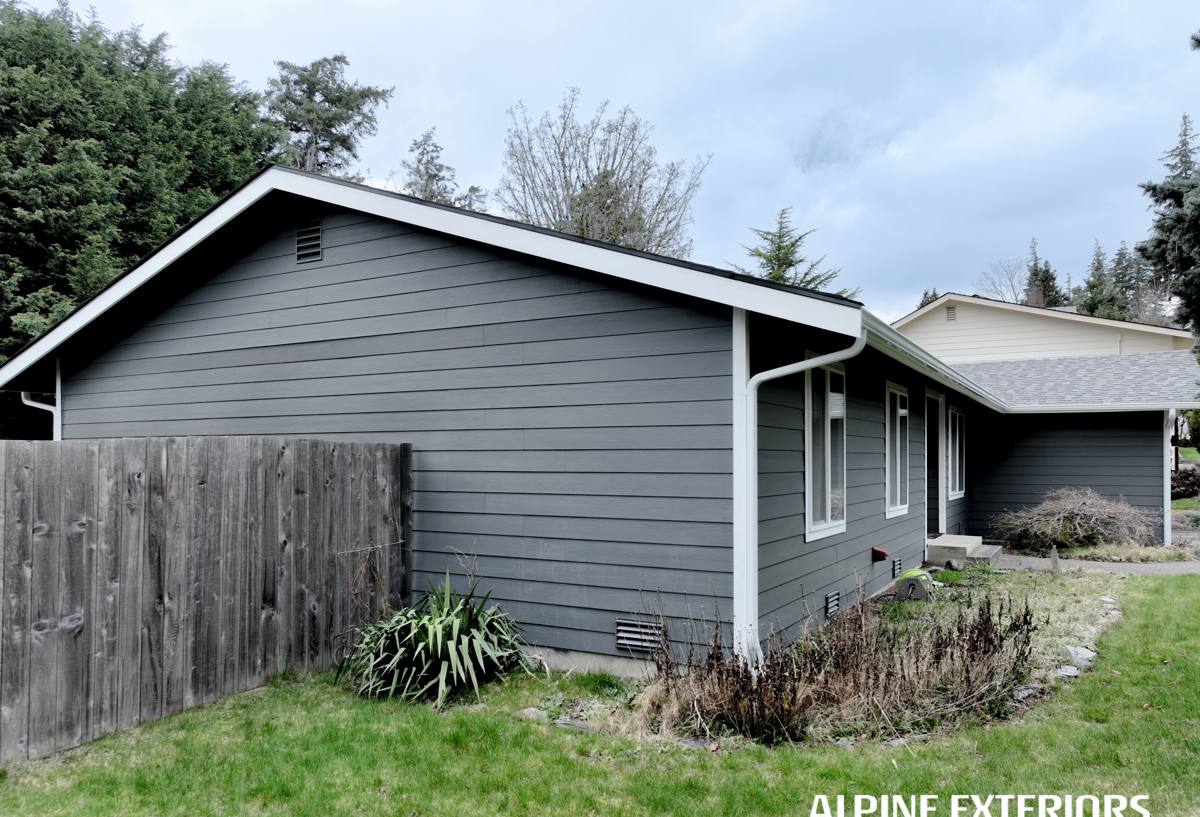
Signs Your Ship Harbor Home Needs Siding Repair
Most siding problems don't announce themselves with a hole in the wall. They show up as small, easy-to-dismiss details that quietly point to moisture getting where it shouldn't. Worth walking your exterior for these before the wet season sets in:
- Dark staining or streaking at horizontal seams, butt joints, or under window sills
- Paint that's bubbling, peeling, or cracking — especially on wood or older engineered wood siding
- Moss or algae patches that stay green through the dry months, not just in winter
- Fasteners that are rusted, popped, or leaving a rust streak down the board
- Boards that feel soft, spongy, or give slightly when you press on them
- Gaps opening up at corners, trim boards, or where siding meets window and door casings
- A hollow or "papery" sound when you tap a section that used to sound solid
- Warping, cupping, or visible buckling along a run of siding
- Discoloration in a band near ground level, which often points to splash-back or poor grading rather than a siding defect itself
Any one of these on its own might be minor. Several showing up in the same area, especially on a wall exposed to prevailing wind and salt spray, usually means water has been getting behind the siding for a while.
What a Correct Repair Actually Involves
Finding the Water Path, Not Just the Symptom
The single biggest difference between a repair that lasts and one that fails again in a year or two is whether the crew actually traced where water is entering before they started cutting and patching. A stained board is a symptom. The cause might be a failed caulk joint eighteen inches away, a piece of trim without proper flashing, or a gap where two siding types meet. Replacing the visibly damaged board without finding the actual entry point just buys a little time before the same stain reappears.
Checking What's Behind the Siding
Any time siding is opened up for a repair, it's worth looking at what's underneath — the weather-resistive barrier, the flashing around windows and doors, and any kickout flashing where a roofline meets a wall. On a lot of older homes in this area, that layer was installed to a lower standard than current practice calls for, or it's simply degraded after decades of salt-laden weather. Patching the visible siding over a compromised moisture barrier is a short-term fix at best.
Matching What's Already There
A lot of homes near Ship Harbor were originally sided in cedar, older vinyl, or engineered wood products long before fiber cement became the standard choice it is today. A clean repair means either sourcing a genuine match for the existing material and profile, or — where the damage is widespread enough that a patch would look obviously mismatched — having an honest conversation about whether a full section replacement makes more sense than chasing a color and texture match that may not be achievable anymore.
Repair or Replace? How We Help You Decide
Not every problem area needs a full re-side, and not every damaged board is worth patching. The right call usually comes down to a few practical factors:
| Factor | Points Toward Repair | Points Toward Replacement |
|---|---|---|
| Extent of damage | Isolated to one or two boards or a single wall section | Spread across multiple elevations or recurring in the same spots |
| Moisture behind the wall | Barrier and framing are dry and sound once opened up | Sheathing is soft, discolored, or shows rot |
| Age and material of existing siding | Newer material still under warranty or in good general condition | Original material is at or past its practical service life |
| Ability to match | Matching material and color are still available | Discontinued product, faded color, or profile no longer manufactured |
| Cost over time | Repair cost is a small fraction of a full re-side | Repeated repairs are adding up close to replacement cost |
We'll walk the exterior with you, explain what we find in plain terms, and give you a straight recommendation — not the most expensive option by default.
Why We Steer Repairs Toward James Hardie, Even on Patch Jobs
Our crews install exclusively James Hardie fiber cement siding — we don't install vinyl, LP SmartSide, Cemplank, Allura, or primed wood products, on new work or as repair material. That's a deliberate standard, not a sales preference. When a repair calls for new siding material — whether it's a few boards on a damaged wall or a full elevation — we bring in Hardie product rather than trying to source a match in a discontinued vinyl or engineered wood line that may not hold up the same way going forward.
There's an honest trade-off here worth naming: matching Hardie into an existing wall of a different material means the repaired section won't be a perfect, invisible blend — the color, texture, or reveal may differ slightly from what's original to the house. We'll tell you that up front rather than overselling a seamless match that isn't realistic. What you gain is a repaired section that's non-combustible, engineered for exactly this kind of coastal exposure, and backed by a real transferable warranty — instead of patching failure-prone material with more of the same.
Our Ship Harbor Siding Repair Process
- On-site inspection of the damaged area and a broader check of the rest of the exterior, since one visible problem often has a sibling starting elsewhere
- Opening up the affected section to check the moisture barrier, flashing, and framing behind the siding
- A clear, written scope: what's failing, why, and what it will take to fix it correctly
- Repair or replacement of the damaged material, correcting any flashing or sealant issues found along the way — not just covering them back up
- Site cleanup and a final walkthrough so you know exactly what was done and why
Why Hiring a Crew That Already Works Ship Harbor Matters
Siding repair on this stretch of Fidalgo Island isn't the same job as siding repair on a sheltered inland lot. A crew that already works around Ship Harbor knows which elevations take the brunt of wind off the water, where salt buildup accumulates fastest, and which older construction eras in this part of Anacortes tend to have thinner moisture barriers or minimal flashing at penetrations. That local pattern recognition means less time spent guessing and more time spent fixing the actual cause.
It also matters for the practical side of the job — knowing how Anacortes and Skagit County permitting and inspection requirements apply to exterior repair work, and scheduling around the wet-season weather windows that this area actually gets, rather than working off a generic regional forecast.
Keeping Repaired Siding Ahead of Moss Season
A good repair should buy you years, not months — but siding near Ship Harbor still needs some seasonal attention to make that hold true. A few habits go a long way:
- Keep gutters and downspouts clear so runoff isn't sheeting down the wall face
- Trim back vegetation and branches that keep a wall shaded and damp longer than it needs to be
- Rinse visible moss or algae buildup before it establishes on caulked joints and seams
- Do a quick visual check of caulking at windows, doors, and trim once a year, before the heaviest rain sets in
- Watch the same problem spots that led to the original repair — they're often the first place a new issue will show up
If you're seeing staining, soft spots, or persistent moss on your home's siding, we're happy to take a look and give you a straightforward assessment — no pressure, no upsell, just an honest read on what's going on and what it would take to fix it. Request a free estimate through the form below and we'll get a time on the calendar.