 Anacortes
 Why Ship Harbor Roofs Take More Punishment Than Most
Ship Harbor sits on the west side of Fidalgo Island, facing open water with almost nothing to break the wind coming off the Strait of Juan de Fuca and Rosario Strait. That exposure matters more for a roof than most homeowners realize. Salt-laden air corrodes exposed metal faster than it does even a few miles inland. Wind-driven rain doesn't just fall straight down here — it gets pushed sideways under shingle edges, into ridge caps, and around chimney flashing that would stay dry on a calmer site. And because Skagit County's wet season runs long, roofs in this area spend more months of the year damp than dry, which is exactly the condition moss and lichen need to take hold.
None of that means a Ship Harbor roof is doomed to fail early. It means the materials, the flashing details, and the ventilation have to be right for this specific exposure, not just installed to a generic minimum. A roof that would perform fine in a sheltered inland neighborhood can wear out years ahead of schedule out here if it was built without accounting for salt, wind, and standing moisture.
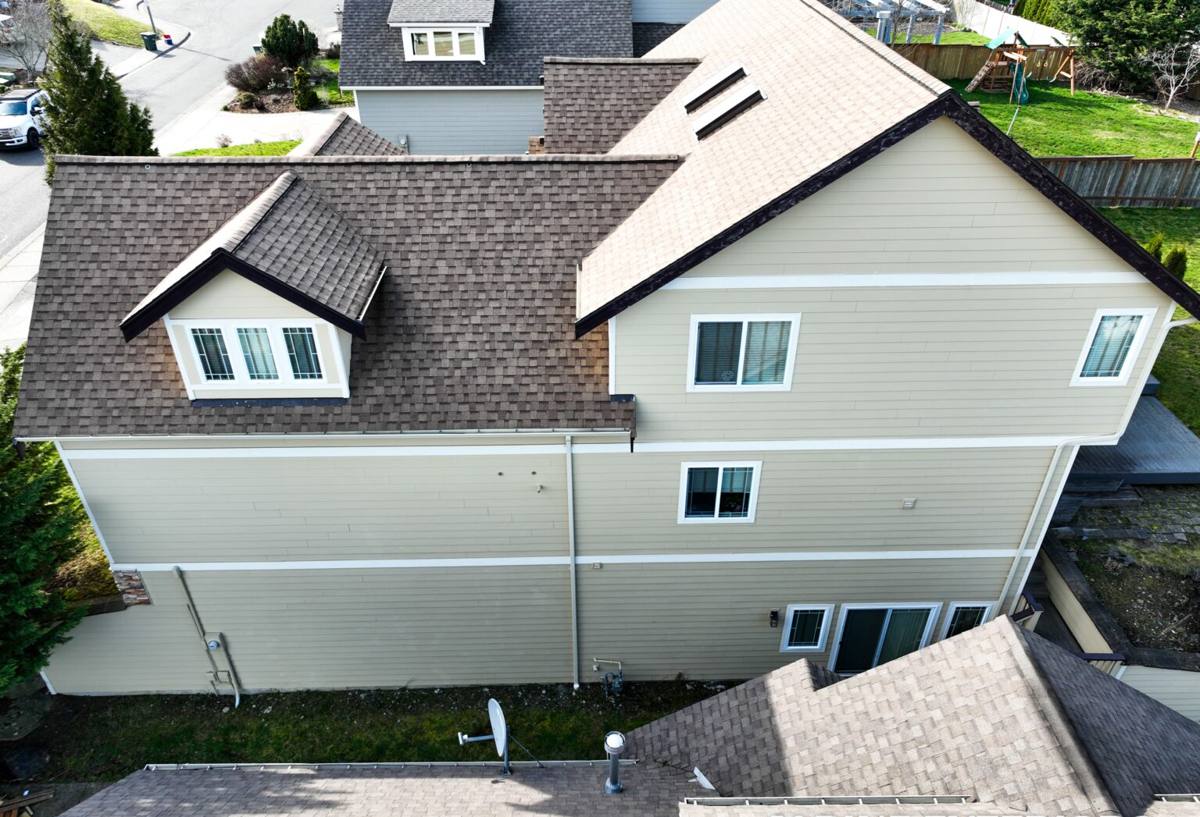
The Warning Signs a Ship Harbor Roof Is Done, Not Just Due for a Repair
Homeowners often call us for a repair and find out the roof has actually moved past the point where patching makes sense. A few patches can buy time, but they don't fix a roof that's failing across its whole surface. Here's what tells us replacement, not repair, is the right call:
- Granule loss heavy enough that you can see bare, shiny asphalt on multiple slopes, not just one worn spot
- Shingles curling, cupping, or cracking across large sections rather than isolated tabs
- Moss mats thick enough to lift shingle edges, trapping moisture against the roof deck underneath
- Soft or spongy spots when walked on, which usually means the decking has already absorbed water
- Daylight visible through the roof deck from inside the attic, or damp insulation below a valley or chimney
- Leaks that keep returning near the same flashing point no matter how many times it's sealed
- A roof at or past 20–25 years old on standard asphalt shingles, which is a realistic ceiling given this exposure
If you're only seeing one or two of these and the roof is otherwise mid-life, a repair is often the honest answer and that's what we'll tell you. Replacement makes sense once the underlying materials — not just the surface — are compromised.
What a Correct Roof Replacement Actually Involves
Tear-Off and Deck Inspection
We remove the old roofing down to the deck rather than layering a new roof over the old one. Layering hides problems and voids most manufacturer warranties, and it also skips the one chance you get to actually see the plywood or plank decking underneath. In a wet climate like this, that inspection matters — soft, delaminated, or water-stained decking needs to be replaced before anything new goes down, not covered up.
Underlayment and Water Barrier
The underlayment is what protects your home if wind ever drives water past the shingles themselves, which happens more often here than in sheltered locations. We use synthetic underlayment across the field of the roof and self-adhering ice-and-water membrane at the vulnerable points — eaves, valleys, and around any roof penetration — where wind-driven rain is most likely to find a way in.
Flashing Details
Flashing failure is the single most common cause of "mystery leaks," and it's almost always a workmanship issue rather than a material one. Step flashing at walls and chimneys, valley metal, and vent boot flashing all get replaced as part of a proper roof replacement, not reused from the old roof. Reused flashing is one of the most common shortcuts that leads to a callback within a year or two.
Ventilation Correction
A lot of older Ship Harbor homes have roof ventilation that was adequate when the house was built but doesn't match current insulation or attic conditions. We check intake and exhaust balance as part of every replacement, because ventilation directly affects how long the new roofing will last — more on that below.
Material Options for a Ship Harbor Home
There's no single "best" roofing material — the right choice depends on your budget, how the house is exposed to wind and salt, and how much long-term maintenance you're willing to do. Here's how the common options compare for this specific location:
| Material | Salt Air Resistance | Moss Resistance | Typical Lifespan Here | Trade-Offs |
|---|---|---|---|---|
| Standard 3-tab asphalt | Fair — exposed fasteners are the weak point | Low without treatment | 15–20 years | Lowest upfront cost, shortest lifespan in this exposure |
| Architectural (laminate) asphalt | Good with corrosion-resistant fasteners | Better with algae-resistant granules | 20–25 years | Best balance of cost and durability for most homes |
| Standing seam metal | Very good with marine-grade coatings and fasteners | High — sheds moisture, little surface for moss to grip | 40+ years | Higher upfront cost; installation quality matters more than with shingles |
| Cedar shake | Fair — needs regular treatment near salt air | Low — organic material is prone to moss and rot without upkeep | 20–30 years with maintenance | Traditional look, but the highest ongoing maintenance burden in this climate |
We install all of these, but we'll tell you honestly if a material is a poor match for your specific roof. Cedar shake, for example, can look great and last a long time — but only if the homeowner is committed to periodic cleaning and treatment. If that upkeep isn't realistic for your household, we'll say so rather than sell you a roof that needs more attention than you're planning to give it.
Our Process, Start to Finish
- On-site inspection. We walk the roof, check the attic from inside where accessible, and look at flashing points, ventilation, and deck condition — not just the shingles.
- Written estimate. You get a clear scope of work and price before any commitment, including what material and underlayment system we're recommending and why.
- Scheduling around the weather. Roofing in this area means working around rain windows. We schedule tear-off in sections and keep the deck protected if weather turns mid-job.
- Tear-off and deck repair. Old roofing comes off, decking is inspected, and any damaged sections are replaced before anything new is installed.
- Underlayment, flashing, and roofing installation. Installed in the order and to the spec that actually protects the home in this exposure, not the fastest sequence.
- Ventilation check. Intake and exhaust are verified as part of the same job, not treated as a separate add-on.
- Cleanup and magnetic sweep. Debris and stray fasteners are cleared from the yard and driveway before we consider the job finished.
- Final walkthrough. We go over the finished roof with you and answer any questions before closing out the job.
Ventilation and Moisture — The Part You Don't See on the Surface
A roof that looks perfect from the ground can still be failing from underneath if the attic isn't ventilated correctly. Poor airflow traps moisture against the underside of the decking, which shortens the life of even a well-installed roof and can lead to rot that isn't visible until it's serious. In a climate with as much sustained moisture as Skagit County sees, this is not a minor detail — it's one of the biggest factors in how long a new roof will actually last.
Balanced ventilation means enough intake at the eaves and enough exhaust at or near the ridge to let air move continuously through the attic space. We check this on every replacement because it's often the difference between a roof that hits its full expected lifespan and one that needs premature attention at the deck level, regardless of how good the shingles or metal on top were.
What Drives Cost on a Ship Harbor Roof
We don't quote prices without seeing the roof, because the honest range on a home in this area depends on real, specific factors — not a flat per-square rate. The main ones are:
| Factor | Why It Matters Here |
|---|---|
| Roof pitch and access | Steeper roofs and homes with limited equipment access take longer and require more safety setup |
| Deck condition | Water damage found during tear-off means replacing sections of decking, which isn't known until the old roof is off |
| Material choice | Asphalt, metal, and cedar carry very different material and labor costs, as shown above |
| Number of penetrations | Chimneys, skylights, and vents each need individual flashing work, adding labor |
| Layers to remove | A roof with one existing layer costs less to tear off than one with two |
| Ventilation upgrades needed | Correcting inadequate intake or exhaust airflow adds scope but protects the investment |
We'll walk through which of these apply to your specific roof during the estimate, so the number you get reflects your actual house, not a generic average.
After the Install: Keeping Moss and Salt From Shortening Its Life
A correctly installed roof still benefits from basic upkeep in this climate. None of this requires special equipment or a professional visit every time — a little consistency goes a long way:
- Keep gutters clear so water isn't backing up under the lowest course of shingles
- Trim back tree limbs that shade sections of the roof, since shaded areas stay damp longer and grow moss faster
- Rinse visible moss or algae growth gently rather than scraping or pressure-washing directly on the surface
- Have exposed metal flashing and fasteners checked periodically for early corrosion, especially on homes closest to the water
- Schedule a roof check after major windstorms, since wind-driven rain events are when small flashing gaps tend to show themselves
These habits won't replace a professional inspection, but they meaningfully extend the life of any roof material installed correctly in the first place.
Why a Crew That Already Works Ship Harbor Matters
Roofing crews that mostly work inland don't run into salt air corrosion, sustained wind-driven rain, or a moss season that stretches most of the year — so those factors don't shape how they detail a roof by default. A crew that regularly works this specific stretch of Anacortes has already seen which flashing details hold up out here, which fasteners corrode too fast, and which ventilation setups actually keep moisture out of the attic in this exposure. That local pattern recognition is the difference between a roof that's technically up to code and one that's actually built for where it sits.
If you're planning a roof replacement in Ship Harbor, we're glad to come take a look and give you a straight assessment — no pressure, no inflated urgency, just an honest read on where your roof actually stands. Reach out using the form below to schedule a free estimate.