 Anacortes
 Building Decks for the Ship Harbor Environment
Ship Harbor sits on the water side of Fidalgo Island, close enough to the ferry terminal and the shoreline that homes here catch a different kind of weather than properties further inland in Skagit County. Salt-laden air moves off Rosario Strait and the San Juan Islands year-round, wind-driven rain hits decks at an angle instead of falling straight down, and the shaded, damp winters here grow moss on almost any horizontal surface that isn't treated to resist it. A deck built the way you'd build one in a dry inland climate simply doesn't hold up the same way out here.
We've built and repaired decks throughout the Anacortes area long enough to know which shortcuts show up as problems in year three, not year one. This page walks through what a Ship Harbor deck actually needs, what a correct build involves, and how we approach the job so it's still solid a decade from now.
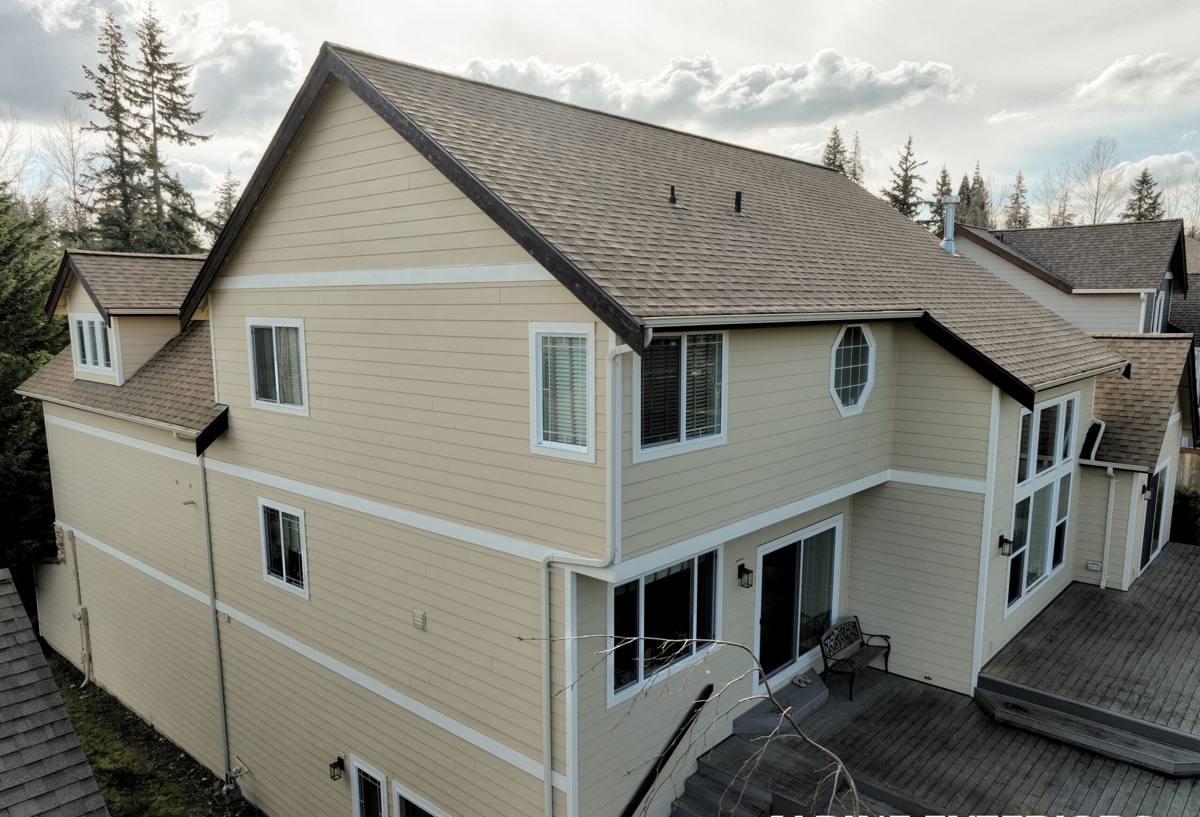
What Salt Air and Coastal Exposure Actually Do to a Deck
Salt air is corrosive to metal, and a deck is held together by a lot of metal — joist hangers, structural screws, bolts, post bases. On an inland deck, standard galvanized hardware can last decades. Closer to the water, that same hardware can start showing surface rust and pitting in a fraction of the time, especially where salt spray combines with our long wet season. Once corrosion sets into a fastener or hanger, it's not a cosmetic issue — it's a structural one, because that hardware is what's carrying the load of the deck and everyone standing on it.
Driving rain is the other factor. Wind off the water pushes rain sideways and up under railings, ledger boards, and stair stringers in ways that vertical rain never does. Any gap, seam, or fastener point that wasn't properly sealed becomes a place for water to get in and stay in, which is exactly how rot starts in framing that's supposed to last 25-plus years.
Then there's moss. Skagit County's wet, mild winters are ideal moss-growing conditions, and a deck with poor drainage, deep wood grain, or shaded northern exposure will grow it faster than most homeowners expect. Beyond looking bad, moss holds moisture against the decking surface and turns walking surfaces slick — a real slip hazard on stairs and near door thresholds.
The Short Version
Coastal exposure shortens the life of anything not specifically chosen and installed to handle it. The fix isn't complicated, but it does mean making different material and hardware choices than a standard inland deck build.
Choosing the Right Decking Material for a Ship Harbor Property
There's no single "best" decking material — the right choice depends on how much maintenance you want to do, your budget, and how close your lot sits to the water. Here's how the common options actually compare under coastal conditions.
| Material | Salt Air / Moisture Performance | Moss & Slip Resistance | Maintenance |
|---|---|---|---|
| Pressure-treated wood | Good if properly sealed and re-coated on schedule | Needs regular cleaning; grain holds moisture | Annual cleaning, re-sealing every 1-2 years |
| Cedar | Naturally decay-resistant, but softer and needs upkeep near salt spray | Similar upkeep needs to treated wood | Regular oiling/sealing to keep it from graying and cupping |
| Composite decking | Very good — doesn't absorb moisture or rot | Textured surfaces resist slip better; still needs periodic washing | Occasional cleaning, no sealing or staining |
| PVC/capped polymer | Excellent — fully moisture-sealed, won't rot or corrode | Best slip resistance of the group when textured | Lowest maintenance; occasional wash-down |
Composite and PVC decking cost more upfront but remove the moisture-absorption problem entirely, which matters more here than in a dry climate. Real wood is a legitimate choice too — it's less expensive and can look great — but it demands a real maintenance commitment on a property that's getting hit with salt spray and long wet seasons. We'll talk through the honest trade-offs for your specific lot and budget rather than pushing one material across the board.
Framing, Fasteners, and Footings: Getting the Structure Right
Corrosion-Resistant Hardware
For decks in coastal exposure, we build with stainless steel or high-grade coated fasteners and connectors rated for corrosive environments, not standard galvanized hardware. It costs more per piece, but the framing is what everything else depends on, and it's the one part of the deck nobody wants to be replacing in five years.
Footings on Sloped and Variable Ground
A lot of Fidalgo Island terrain isn't flat, and Ship Harbor lots are no exception — many sit on sloped or uneven ground as you move toward the water. Footings need to be sized and set to local frost depth and soil conditions, not just poured to a generic minimum. On a slope, that often means deeper or additional footings, proper drainage around each post base, and sometimes engineered plans depending on deck height and span. Skipping this step is one of the most common causes of a deck that develops a lean or soft spot years later.
Joist Spacing for Your Decking Choice
Composite and PVC decking often require tighter joist spacing than standard lumber decking to avoid flexing over time — a detail that's easy to miss if a crew frames the deck before finalizing the surface material. We frame to match the decking product, not the other way around.
Ledger Boards and Moisture Management
The ledger board — where the deck attaches to your house — is the single most important waterproofing detail on the whole project, and it's also the most common source of hidden rot when it's done wrong. Water that gets behind a poorly flashed ledger board doesn't just damage the deck; it works its way into your home's rim joist and wall framing, where it can sit unnoticed for years.
A correct ledger attachment includes proper flashing that sheds water away from the house, a water-resistant barrier between the ledger and the siding, and fasteners sized and spaced to carry the structural load without over-penetrating the wall assembly. In a driving-rain environment like Ship Harbor's, we treat this detail as non-negotiable — it's the difference between a deck that protects your house and one that slowly damages it.
Railings, Slip Resistance, and View Deck Considerations
A lot of Ship Harbor properties are built to take advantage of water and island views, which often means elevated decks, and elevated decks mean railings matter both for looks and for code-required safety. We build railing systems sized to current guardrail height and baluster spacing requirements, using hardware that matches the same corrosion-resistant standard as the rest of the structure — a railing post that loosens because of rusted fasteners is a real safety issue, not just an inconvenience.
For the decking surface itself, especially on stairs and any shaded area prone to moss, we favor textured composite or PVC boards or grooved wood decking that gives better footing when wet. Combined with a drainage plan that doesn't let water pool on the surface, this cuts down significantly on the moss buildup that makes coastal decks slick through the winter months.
Our Process for a Ship Harbor Deck Project
- On-site assessment: We look at your lot's slope, sun/shade exposure, wind direction, and proximity to the water to understand what conditions the deck will actually face.
- Design and material selection: We walk through decking material, railing style, and layout options based on your budget and how you'll use the space.
- Permitting: We handle the permit process with the appropriate local jurisdiction and make sure footings, railings, and structural spans meet current code.
- Framing and structure: Footings, posts, beams, and joists go in first, built with corrosion-resistant hardware and spacing matched to your decking material.
- Decking, railings, and finish details: Surface material and railings are installed with attention to fastening patterns, drainage, and slip resistance.
- Final walkthrough: We go over the finished deck with you, including what maintenance it will (and won't) need going forward.
Keeping a Coastal Deck in Good Shape
Even a well-built deck needs some seasonal attention in this climate. A short annual routine goes a long way toward avoiding bigger repairs later.
- Sweep or hose off surface debris regularly, especially in fall when leaves and needles trap moisture against the decking
- Check and clean gaps between boards where debris and moss like to build up
- Inspect railings and stair connections once a year for any looseness at fastener points
- Look at the ledger board area near the house for staining, gaps, or soft trim — early signs of water intrusion
- Re-seal or re-stain wood decking on the schedule recommended for the product you have
- Clean moss off walking surfaces promptly rather than letting it establish, since it's much easier to remove early
- Confirm drainage isn't pooling water anywhere on or under the deck after heavy rain
Why Hire a Crew That Already Works Ship Harbor
Building a deck that holds up here isn't about a different skill set than building one anywhere else — it's about knowing which details actually matter for this environment and not treating them as optional. A crew that hasn't dealt with Skagit County's salt air, driving rain, and moss season on a regular basis may not think twice about standard galvanized hardware or a stock ledger flashing detail, and that's exactly the kind of oversight that turns into an expensive repair five or ten years down the road.
We've worked on homes throughout Anacortes and the surrounding Fidalgo Island area, so we're not guessing at what this climate does to a deck over time — we've seen it, and we build accordingly from the first footing to the last railing baluster.
If you're planning a new deck or replacing one that's showing its age, we're happy to come take a look at your property and talk through what makes sense for your site, your budget, and how you want to use the space. Fill out the form below for a free, no-pressure estimate.