 Anacortes
 Deck Building in Sedro-Woolley Has to Answer to the Weather First
Sedro-Woolley sits inland from the coast but still lives under the same marine weather pattern that shapes the rest of Skagit County — salt-tinged air pushing in off the Salish Sea, long stretches of driving rain from fall through spring, and enough shade and dampness in most yards to keep moss growing nearly year-round. A deck built here isn't just outdoor furniture. It's a wood or composite structure that sits exposed to standing moisture, freeze-thaw cycles, and biological growth for most of the calendar year. The decks that hold up in this area aren't the ones with the fanciest railing design — they're the ones where the framing, fasteners, and flashing were chosen and installed with this specific climate in mind.
We build decks for homeowners throughout Sedro-Woolley and the surrounding Skagit County area, and the same climate factors show up on every job: moisture that never fully leaves the substructure, moss and algae that colonize any shaded or north-facing surface, and hardware that has to resist corrosion for decades, not years. This page covers what that actually means for material choice, framing, and long-term maintenance — and how our process is built around it.
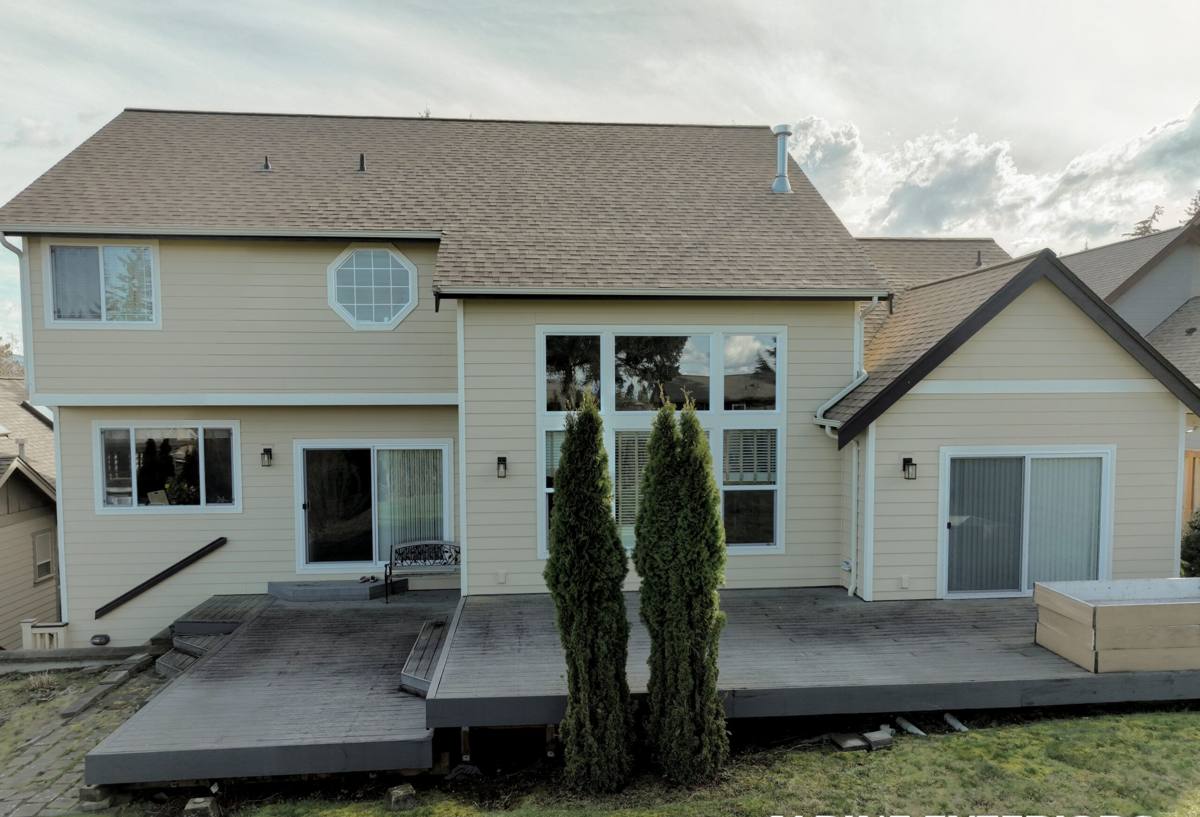
What Skagit County's Climate Does to an Unprotected Deck
Most deck failures we get called out to inspect aren't dramatic. They're slow, moisture-driven problems that started small and went unnoticed because they were hidden under decking boards or behind railing posts.
Moss and Organic Growth
Moss needs shade and moisture, and Sedro-Woolley's tree cover and rainfall provide both in abundance. On a deck, moss doesn't just look bad — it holds water against the wood surface, keeps boards from drying out between rain events, and accelerates rot underneath the growth. Decking that's laid tight with poor drainage between boards, or built low to the ground with limited airflow underneath, will grow moss faster than a deck built with proper board spacing and ventilation.
Fastener Corrosion
Salt-tinged marine air corrodes standard steel fasteners faster than most homeowners expect, even well away from the immediate waterfront. Once a nail or screw starts rusting, it weakens, stains the surrounding wood, and can eventually fail structurally. This is one of the most common problems we find on older decks in this area — galvanized fasteners that were adequate decades ago but weren't rated for the corrosion this climate produces over 15-20 years.
Ledger Board and Flashing Failure
The ledger board — where the deck attaches to the house — is the single most common point of structural failure in decks built in wet climates. If flashing wasn't installed correctly, or wasn't installed at all, water works its way behind the ledger and into the rim joist and house framing. This kind of rot is invisible from the deck surface and often isn't found until the deck is already unstable.
Choosing Decking Material for This Climate
There's no single "right" decking material — the right choice depends on budget, maintenance tolerance, and how much shade and moisture the specific location gets. Here's how the common options compare for a Skagit County property:
| Material | Upfront Cost | Maintenance in This Climate | Moss/Moisture Resistance |
|---|---|---|---|
| Pressure-treated wood | Lowest | Annual cleaning and re-sealing recommended | Moderate — needs upkeep to resist moss and checking |
| Cedar | Moderate | Periodic cleaning and finish renewal | Naturally rot-resistant, but still needs care in shaded areas |
| Composite decking | Higher | Occasional washing, no sealing/staining | Good — resists rot, but can still grow surface moss if shaded and unwashed |
| PVC/capped composite | Highest | Minimal — periodic washing only | Best moisture resistance; least prone to trapping water at the board core |
Composite and PVC decking (brands like Trex, TimberTech, and AZEK are common examples) have become popular in this region specifically because they hold up to years of damp shade without the sealing and staining schedule that wood requires. That said, we still see moss and algae growth on composite boards that sit in constant shade with poor airflow underneath — no decking material is maintenance-free in a climate this wet, it's a question of how much upkeep it needs and how forgiving it is when upkeep gets skipped for a season.
Framing and Substructure — Where the Real Work Happens
The decking surface is what homeowners see, but the framing underneath is what determines whether the deck lasts 10 years or 40. In a climate like ours, we treat the substructure as the priority.
Footings and Post Bases
Footings need to be sized and set to local frost and soil conditions, and posts need to sit on bases that keep end grain up off concrete and standing water — wood in direct, prolonged contact with wet concrete rots from the bottom up regardless of treatment level.
Ledger Flashing Done Right
Proper ledger attachment means flashing that directs water out and away from the house structure, not just a bead of caulk behind the board. This is the detail we spend the most time on during framing, because it's the detail that's most expensive to fix later.
Joist Protection and Airflow
Joist tape or a comparable moisture barrier on top of the joists keeps water from wicking into end grain where fasteners penetrate. Combined with adequate under-deck ventilation, this slows the moisture cycling that drives rot and moss growth in the substructure — the part of the deck nobody sees until something goes wrong.
Fasteners and Hardware Built for Marine Air
Given how much fastener corrosion drives deck failure in this region, hardware selection isn't a place to cut costs. We use stainless steel or high-corrosion-rated coated fasteners and structural connectors rated for exterior, coastal-adjacent exposure — not general-purpose galvanized hardware. The cost difference over the life of a deck is small compared to the cost of replacing rusted fasteners and repairing the wood damage they leave behind.
Hidden fastener systems, common with composite decking, also reduce the number of exposed fastener heads sitting in standing water on the board surface — one more small detail that adds up over a couple of decades of Skagit County winters.
Our Deck Building Process
- On-site assessment of the yard's drainage, sun/shade exposure, and how the deck will tie into the house
- Material and layout discussion based on your budget, maintenance preference, and the site's specific moisture exposure
- Permitting and structural planning, sized correctly for the footings, spans, and attachment method the site requires
- Framing with proper ledger flashing, joist protection, and corrosion-rated hardware throughout
- Decking, railing, and finish work installed with drainage and airflow built in, not added as an afterthought
- Final walkthrough covering how to maintain the specific materials we installed
We don't treat any of these steps as optional shortcuts, because in this climate, the steps that get skipped are exactly the ones that show up as expensive repairs five or ten years down the road.
Maintenance Checklist for Sedro-Woolley Decks
Whatever material you choose, a little seasonal attention goes a long way in a climate this wet. A basic maintenance routine looks like:
- Sweep debris and standing leaves off the deck surface regularly, especially in fall
- Wash the deck at least once a year to remove moss, algae, and organic buildup before it takes hold
- Check and clear gaps between boards so water can drain instead of pooling
- Inspect the ledger board area and post bases annually for staining, softness, or corrosion
- Re-seal or re-stain wood decking on the schedule the product calls for — don't stretch it another season
- Trim back vegetation and tree cover that's keeping the deck in constant shade, where practical
Why Local Experience Matters for This Job
Deck building looks similar on paper anywhere in the country, but the details that make a deck last in Sedro-Woolley are specific to this climate — how much airflow the substructure needs, which fastener grade actually holds up to years of marine air, and how aggressively moss will take over a shaded section if the drainage isn't right. A crew that already works decks throughout Skagit County has already made the adjustments that generic framing specs don't account for, and has already seen which shortcuts turn into callbacks two winters later.
That local track record also matters for permitting and inspection — knowing what the local process expects for footings, attachment, and structural sizing means fewer surprises and delays once the project is underway.
Let's Talk About Your Deck
If you're planning a new deck or replacing one that's showing its age, we're happy to take a look and talk through what makes sense for your yard's sun, shade, and drainage situation. Fill out the form below for a free, no-pressure estimate — there's no obligation, just a straight assessment of what your property needs.