 Anacortes
 Roof Repair Built for Oak Harbor's Marine Climate
Oak Harbor sits close enough to the water that its roofs take a different kind of beating than homes further inland. Salt-laden air off the Salish Sea works on exposed metal fasteners and flashing year-round. Driving rain off Puget Sound doesn't just fall straight down — wind pushes it sideways and up under shingle edges, valleys, and anywhere a seal has started to fail. And the mild, damp winters that make this part of Washington so livable are also exactly what moss, moss spores, and algae need to take hold on a roof and stay there for most of the year. None of this means a roof here is doomed to fail early. It means the repair work has to account for conditions that a roofer trained on drier-climate work often misses.
We repair roofs for homeowners in Oak Harbor and the surrounding Fidalgo and Whidbey Island area, and we build every repair around what actually causes roofs to fail in this specific climate — not a generic checklist.
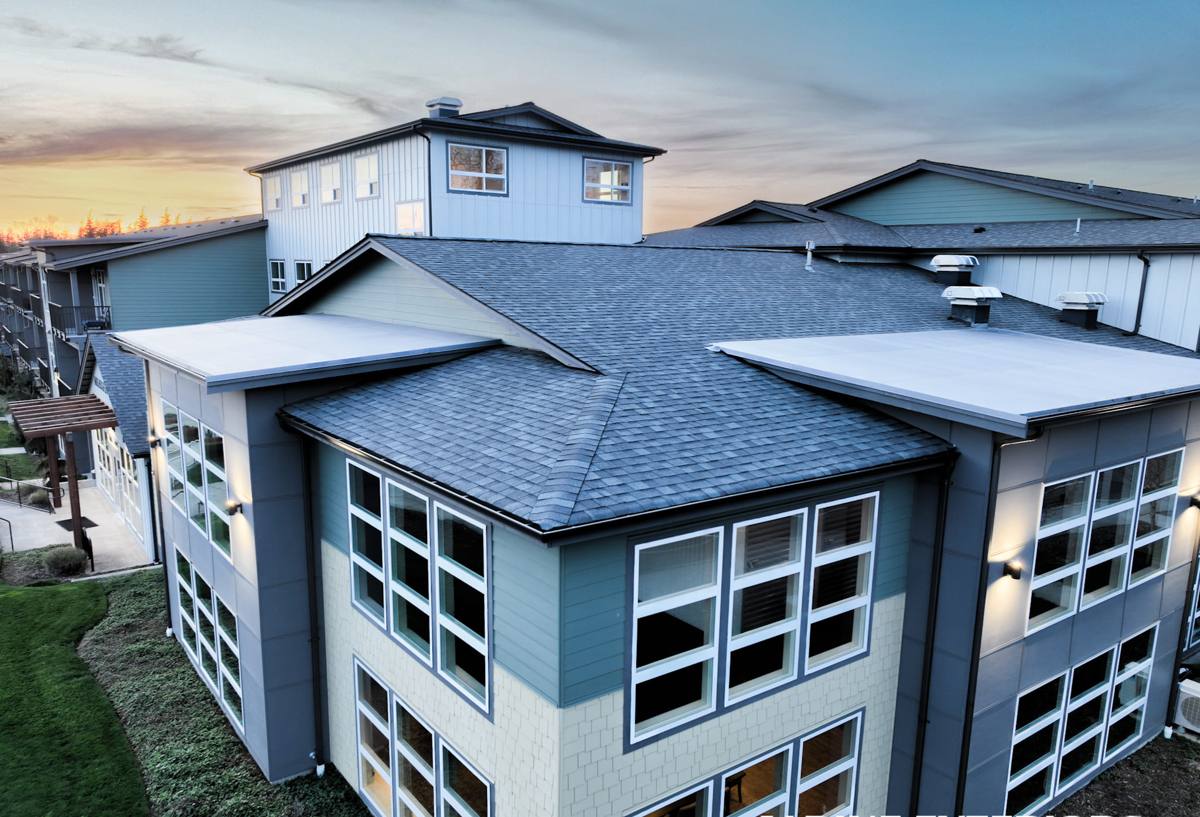
What Local Homes Need From a Roof Repair
A correct roof repair in this area has to do three things at once: stop the current leak or damage, address the underlying cause so it doesn't recur in six months, and hold up to another wet season of wind-driven rain. That third part is where a lot of quick patch jobs fall short. A repair that would be fine in a drier, calmer climate can fail here within a year or two because it wasn't built to handle sustained moisture exposure and wind uplift.
The Big Three Culprits We See
- Moss and organic growth — holds moisture against the roof surface, lifts shingle edges over time, and accelerates granule loss
- Failed or corroded flashing — around chimneys, skylights, vent pipes, and roof-to-wall transitions, often the actual source of a leak that shows up somewhere else in the attic
- Wind-driven rain intrusion — at valleys, eaves, and any spot where a seal or nail has loosened, letting water travel sideways under the roofing material
Signs You Need a Roof Repair, Not Just a Look
Some of these are obvious. Others show up as small clues long before you get a ceiling stain.
- Water stains on ceilings or upper interior walls, especially after a windy rainstorm
- Visible moss buildup along the north-facing slopes or roof valleys
- Shingles that are curling, cracking, or missing granules in patches
- Dark streaking that looks like dirt but is actually algae growth
- Rusted, lifted, or visibly gapped flashing around chimneys and vents
- Sagging areas or soft spots when walking the attic decking
- Daylight visible through the roof deck from inside the attic
- Granules collecting in gutters after storms — a sign of accelerated shingle wear
If you're seeing any of these, the roof is telling you something now, not just cosmetically but structurally. Catching it at the repair stage is almost always less expensive and less disruptive than waiting for it to become a full replacement.
What a Proper Roof Repair Actually Involves
A roof repair done right isn't just slapping a shingle or a bead of sealant over the spot where water is showing up inside. Water travels — it can enter at the ridge and show up as a stain three feet away, following a rafter or piece of decking before dripping. Our repairs start with tracing the water back to its actual entry point.
Our repair scope typically includes:
- Interior and attic inspection to trace the leak path, not just treat the visible symptom
- Removal of damaged shingles, decking, or underlayment back to sound material
- Flashing repair or replacement at chimneys, skylights, vent boots, and wall transitions
- Fresh underlayment and ice-and-water membrane at vulnerable areas before new roofing goes down
- Matching replacement shingles as closely as possible to the existing roof
- Moss and debris removal from the repair area and adjacent roof sections
- A final water test or close inspection of the repaired area before we call it done
Roofing Materials We Commonly Repair in Oak Harbor
Most homes in this area are covered in asphalt composition shingle, with a smaller number of metal, cedar shake, and flat or low-slope membrane roofs on additions and outbuildings. Each material fails differently and needs a different repair approach.
| Roof Type | Common Failure Point Here | Repair Consideration |
|---|---|---|
| Asphalt composition shingle | Granule loss, curling, wind-lifted tabs | Matching shingle age/color; resealing tabs; replacing in full courses, not single shingles, when damage is spread out |
| Metal roofing/flashing | Fastener corrosion, seam separation from salt air | Corrosion-resistant fasteners and sealants rated for coastal exposure |
| Cedar shake | Moss intrusion, splitting, moisture retention | Requires moss removal and often deck inspection underneath before patching |
| Low-slope/flat membrane | Seam failure, ponding water | Seam-specific repair materials; ponding issues often need slope correction, not just patching |
Our Roof Repair Process
1. On-Site Inspection
We look at the roof from the ground and, where safe, walk it directly. We also check the attic from inside, since that's often where the real story is — staining patterns, damp insulation, and daylight gaps tell us more than the shingles do.
2. Honest Diagnosis
We explain what's actually failing and why, in plain terms. If it's a contained, repairable issue, we say so. If the damage is widespread enough that a repair would just be a short-term patch on a roof nearing the end of its service life, we tell you that too, along with the reasoning.
3. Written Estimate
You get a clear scope of work and price before anything starts — no surprise add-ons once the tarps come off.
4. The Repair
We work efficiently to minimize how long your roof deck is exposed to weather, which matters more here than in drier climates. Materials, flashing details, and sealants are chosen for sustained wet-weather performance, not just a quick fix.
5. Cleanup and Walkthrough
We clear debris and nails from the yard and gutters, and walk you through what was done and what to watch going forward.
Repair or Replace? How We Help You Decide
Not every roof problem needs a full replacement, and not every leak should just be patched. We look at the roof's age, the extent of the damage, and how much of the roof is still performing well.
| Factor | Leans Toward Repair | Leans Toward Replacement |
|---|---|---|
| Roof age | Under 15 years, no widespread wear | Nearing or past expected material lifespan |
| Damage extent | Localized — one valley, one flashing point, a small section | Spread across multiple slopes or recurring leaks in different spots |
| Shingle condition elsewhere | Rest of roof still has good granule coverage and flexibility | Widespread curling, brittleness, or granule loss |
| Decking condition | Solid, no rot found during inspection | Soft, delaminated, or water-damaged decking in multiple areas |
We'll never push a full replacement when a repair genuinely solves the problem — that's not a good long-term way to build trust with homeowners in a community we work in year after year. We'll also never recommend a repair we don't think will actually hold.
Why It Matters That We Already Work in Oak Harbor
A crew that regularly works this stretch of Skagit and Island County isn't guessing at how the local climate treats a roof — we've seen how moss establishes on north-facing slopes here, how salt air chews through unprotected fasteners, and which flashing details actually hold up to wind-driven rain off the water versus which ones look fine on installation day and fail two winters later. That local track record shapes every material choice and every repair detail we use, not just the sales pitch.
It also means faster response. When you're dealing with an active leak during a storm, a contractor who's already in the area and familiar with local permitting and building requirements can get to you and get the work scoped without the delays of a crew traveling in from far outside the region.
Maintenance That Extends the Life of a Repair
A repair holds up longer with a little routine attention, especially in a climate this wet.
- Keep gutters and downspouts clear so water isn't backing up under roof edges
- Remove moss buildup before it spreads across a whole slope, not after
- Trim back overhanging branches that keep roof sections shaded and damp
- Have the roof looked at after major windstorms, even if nothing looks obviously wrong
- Address small leaks immediately — they rarely stay small in this climate
Get a Straight Answer on Your Roof
If you're dealing with a leak, visible moss, or damaged shingles on an Oak Harbor home, we're happy to come take a look and give you an honest read on what it needs — repair or otherwise. There's a free, no-pressure estimate form below whenever you're ready.