 Anacortes
 Why Decks Wear Out Faster in Old Town Anacortes
Old Town is one of the older residential pockets of Anacortes, and it shows in the housing stock — mature trees, established landscaping, and homes that have weathered decades of Skagit County winters. That combination is hard on a deck. Salt-laden air off the surrounding water corrodes fasteners and hardware faster than it would inland. Mature tree cover keeps decks shaded through much of the year, which sounds pleasant until you realize shade means slow-drying wood, and slow-drying wood means moss, algae, and rot get a head start every single season.
Add in Anacortes's long stretch of driving rain — arriving sideways off the water more often than it falls straight down — and you get moisture working its way into joints, fastener holes, and ledger connections that a drier climate would never stress. None of this means a deck in Old Town is doomed. It means the materials, fasteners, and detailing have to be chosen for this specific environment, not for a catalog spec written somewhere in the Midwest.
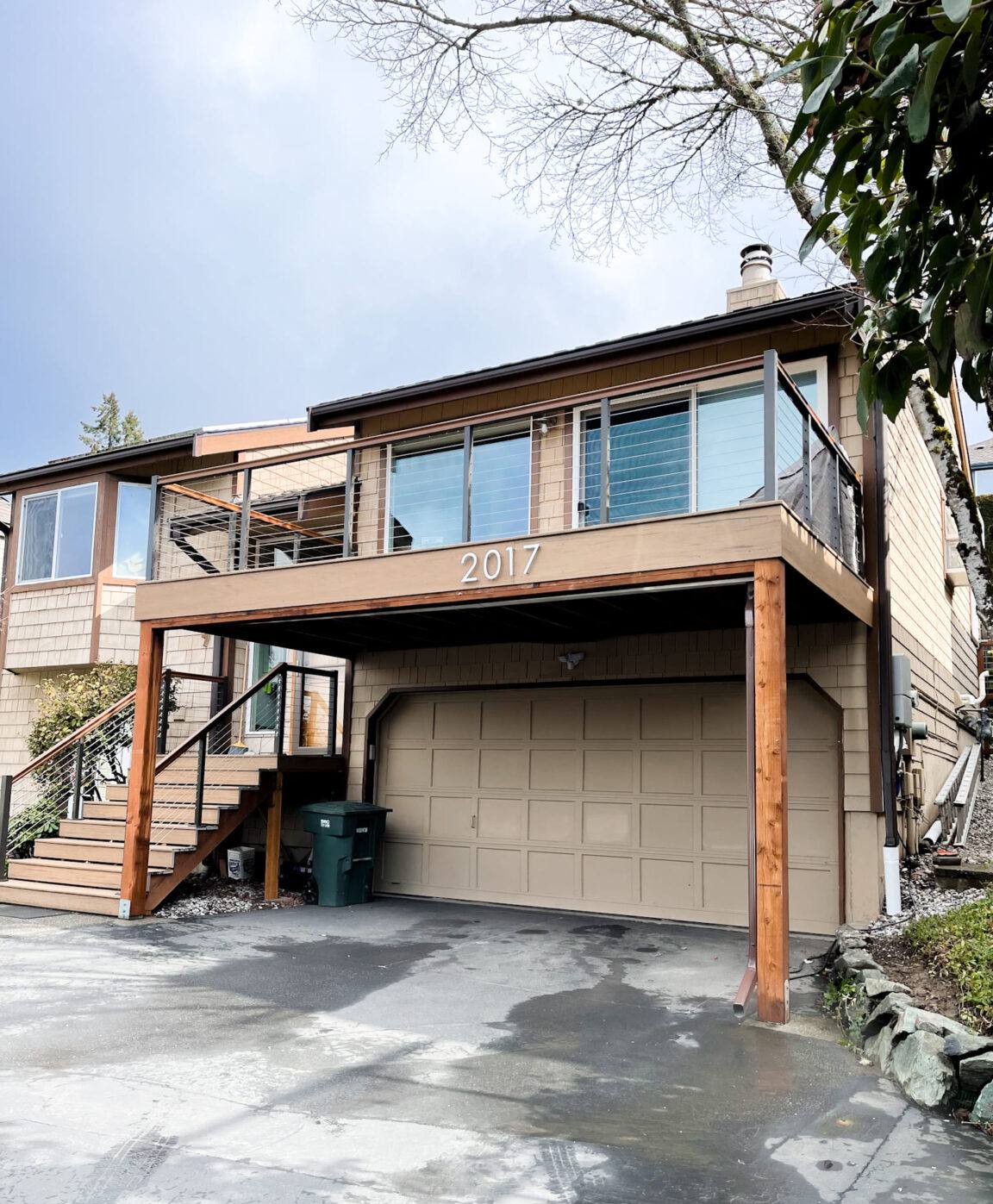
Signs a Deck Needs Replacing, Not Just Repairing
Homeowners often call us wanting a quote on "a few boards" and end up needing a full replacement once we're underneath the structure. Here's how to tell the difference before we ever show up.
Repair-level problems
- A handful of cupped or splintering boards on an otherwise sound frame
- Surface moss or algae without soft or spongy wood underneath
- Loose railing balusters or a handrail that's come free from its posts
- Isolated fastener pops or nail heads backing out
Replacement-level problems
- A screwdriver sinks into the ledger board, joists, or posts with light pressure
- The deck feels bouncy or springy when you walk across it
- Rust streaking down from fasteners or metal connectors
- Gaps opening between the ledger board and the house
- Footings that have shifted, heaved, or were never properly poured to begin with
Structural issues almost never stay isolated. If the ledger connection or a support post has failed, the rest of the frame is usually not far behind — even if the decking on top still looks fine from a few feet away.
What a Correct Deck Replacement Actually Involves
A deck replacement is more than swapping old boards for new ones. Done right, it's a full evaluation and rebuild of everything that carries load and everything that keeps water out of places it shouldn't be.
Structure first
Footings get inspected or replaced to current frost-depth and bearing requirements. Posts, beams, and joists are sized for the actual span and load, not just matched to what was there before — older decks in this area were often built to standards that have since been tightened up.
The ledger connection is the make-or-break detail
Where a deck attaches to the house is the single most common failure point in this climate, because it's the one spot where wood, fasteners, and water all meet at once. Proper flashing — installed so water sheds down and away from the house framing rather than pooling behind the ledger — is non-negotiable. We treat this connection as the most important few feet of the entire project, because a beautiful deck built on a poorly flashed ledger is a problem waiting to surface behind your siding.
Fasteners and hardware
Salt air corrodes standard hardware faster than most homeowners expect. We use corrosion-resistant, code-rated connectors and fasteners rated for the treated lumber or composite substructure being used, not whatever happens to be cheapest at the time.
Choosing a Decking Material for This Climate
There's no single "best" decking material — there's a best material for your budget, your maintenance appetite, and how much shade and moisture your specific lot deals with. Here's how the common options actually perform in an Old Town Anacortes setting.
| Material | Moss/Algae Resistance | Maintenance | Typical Lifespan |
|---|---|---|---|
| Pressure-treated wood | Low without regular cleaning | Annual cleaning, periodic staining/sealing | 10–15 years |
| Cedar | Moderate, natural oils help | Regular sealing to maintain resistance | 15–20 years |
| Composite decking | Good, varies by brand/grade | Periodic washing, no staining | 25–30 years |
| PVC/capped polymer | Best of the common options | Occasional washing | 25–30+ years |
In a shaded, damp lot like much of Old Town, we lean toward recommending composite or capped polymer decking more often than not — not because wood is a bad product, but because wood in constant shade requires a maintenance commitment most homeowners underestimate when they're standing in a showroom in July. If you want the look and feel of real wood and are willing to stay on top of cleaning and sealing, cedar remains a solid, honest choice — we'll tell you straight what that upkeep actually looks like rather than downplaying it to close the sale.
Our Deck Replacement Process
- On-site evaluation. We get underneath the existing deck, check the ledger, footings, and framing, and tell you honestly whether you're looking at repair or full replacement.
- Design and material selection. We walk through decking, railing, and fastener options based on your budget, sun/shade exposure, and how you actually use the space.
- Permitting. Deck replacements in Anacortes and Skagit County typically require a permit, especially when footings, framing, or ledger attachment are involved. We handle that process rather than leaving it to you.
- Demolition and structural rebuild. Old decking, framing, and any compromised footings come out. New structure goes in to current code, sized correctly for the span.
- Flashing and waterproofing. Ledger flashing and any house-side waterproofing details get done before a single deck board goes down — not patched in afterward.
- Decking, railing, and finish work. Final surface material, railing system, stairs, and any trim or skirting.
- Final walkthrough. We go over maintenance expectations specific to your material choice and your lot's sun/shade situation.
Cost Factors Worth Understanding Upfront
Every deck is different, so we won't throw out a number that doesn't mean anything until we've seen your project. What we can tell you is what actually moves the price.
| Factor | Why It Matters |
|---|---|
| Deck size and shape | More square footage and complex angles mean more material and labor |
| Height above grade | Taller decks need more substantial framing, posts, and often stairs |
| Decking material | Composite and PVC cost more upfront than wood but less over the deck's lifetime |
| Footing condition | Replacing failed or undersized footings adds cost but isn't optional if they've failed |
| Railing system | Cable, glass, and metal railings cost more than standard wood or composite balusters |
| Access to the site | Tight side-yard access or a steep grade to the backyard adds labor time |
As a broad range, most full deck replacements in this area land somewhere in the low-to-mid five figures once footings, framing, and finish material are all accounted for — but the honest answer is that it depends heavily on the factors above. We'll give you a firm number after seeing the site, not a phone-quote guess.
Permits and Working with Older Home Framing
A lot of Old Town homes were built well before current residential codes existed, which means the house-side framing your new deck ties into may not match what a modern ledger attachment expects. Part of a proper evaluation is checking what's actually behind the siding at the ledger location — sometimes that means additional blocking or reinforcement before the ledger can be safely attached, and it's far better to find that out during planning than after the deck is built. We pull the required permits and coordinate inspections as part of the project, so you're not left navigating the City of Anacortes permitting process on your own.
Maintaining Your New Deck in Old Town's Climate
Whatever material you choose, a few habits go a long way toward getting the full lifespan out of a new deck in a shaded, damp environment like this one.
- Sweep leaves and debris off the deck surface regularly, especially in fall — trapped debris holds moisture against the boards
- Rinse or wash the deck surface at least once or twice a year to slow moss and algae buildup, more often in heavy shade
- Keep gutters and downspouts near the deck clear so water isn't dumping directly onto or under the structure
- Trim back overhanging branches where practical to improve airflow and sun exposure
- For wood decking, stay on the sealing/staining schedule recommended for your specific product — skipping a cycle in this climate shows up fast
- Check railing and stair connections annually for looseness or corrosion, particularly on hardware exposed to the weather
Why It Matters That We Already Work in Old Town Anacortes
A crew that already works this neighborhood knows what a deck built in the 1970s or 80s typically looks like underneath, how the shade patterns from mature trees tend to sit on these lots, and what the ledger flashing situation usually is on homes of this age. That's not a substitute for a real inspection of your specific deck — every house is different — but it means fewer surprises and a more accurate estimate the first time around, instead of change orders once demolition starts.
We're a Skagit County-based crew that treats deck replacement the same way we treat any exterior work here: build for the climate that's actually going to hit the structure, not the mildest-case scenario. Salt air, shade-driven moss, and driving rain aren't edge cases in Anacortes — they're the baseline, and your deck should be built with that in mind from the footings up.
If your deck is showing its age or you're just not sure whether you're looking at a repair or a full rebuild, we're happy to take a look. Reach out using the form below for a free, no-pressure estimate — we'll tell you honestly what your deck needs and why.