 Anacortes
 Roofing in a Place Where the Weather Comes Off the Water
Oak Harbor sits right on the water, and that changes what a roof has to deal with compared to a house twenty miles inland. Salt-laden air off the Sound works on metal fasteners and flashing year-round. Driving rain off Puget Sound doesn't fall straight down — it comes in sideways during winter storms, which means every lap, seam, and flashing detail has to shed water under wind pressure, not just gravity. And the long stretch of overcast, damp months each year gives moss and algae plenty of time to take hold on any roof that isn't shedding water and drying out properly. None of this is unique to one street or one subdivision — it's the baseline condition for roofs across Whidbey Island and the wider Puget Sound region, including our home base in Anacortes over in Skagit County.
A roof replacement done right here isn't just "put new shingles on." It's a system that accounts for how water actually moves across a roof in this specific climate, and how long different materials realistically hold up once the salt air and moss season start working on them year after year.
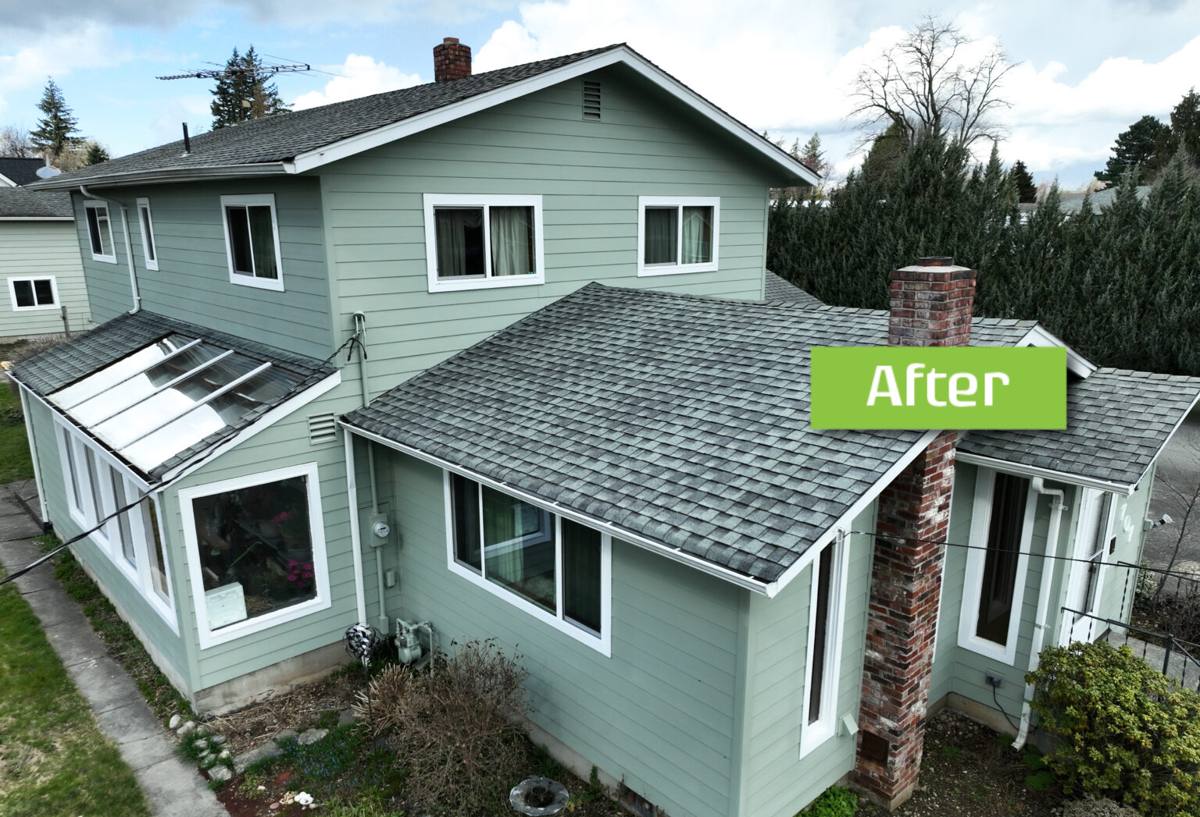
What Salt Air, Wind, and Moss Actually Do to a Roof
Salt Air and Metal Components
Roofs aren't just shingles — they're full of exposed metal: drip edge, step flashing, valley metal, vent boots, nail heads. In a coastal environment, unprotected or poorly coated metal corrodes faster than it would inland. Once flashing starts to pit or a nail head rusts through its coating, that's a direct path for water into the decking, even if the shingles above it still look fine.
Wind-Driven Rain
Wind off the water doesn't just add rain volume — it pushes water uphill under laps and around penetrations that would stay dry in a calmer climate. That's why fastening patterns, sealant at penetrations, and the quality of the underlayment matter more here than in a low-wind inland location.
Moss and Algae
Shade, moisture, and cool temperatures for much of the year are exactly what moss needs. Moss doesn't just look bad — its root structure holds moisture against the roofing material and can lift shingle edges over time, giving wind-driven rain a place to get underneath.
Signs a Roof Needs Replacement, Not Just Repair
Homeowners often ask us to look at a "leak" that turns out to be a symptom of a roof at the end of its service life. Repair makes sense when the problem is isolated — a cracked pipe boot, a section of lifted flashing, storm damage to one slope. Replacement is the honest recommendation when the underlying material is failing broadly. Signs we look for:
- Granule loss heavy enough to expose the asphalt mat on multiple slopes, not just one worn spot
- Shingles that are cupping, curling, or cracking across large areas rather than a single row
- Soft or spongy decking felt underfoot during inspection, indicating moisture has reached the sheathing
- Moss growth that keeps returning within a season or two of cleaning, suggesting the roof stays damp longer than it should
- Flashing and valley metal that's visibly corroded or was reused/patched during a prior repair instead of replaced
- Multiple past repairs in different spots — a pattern that usually means the roof as a whole is aging out
What a Correct Roof Replacement Actually Involves
Tear-Off and Decking Inspection
We remove the old roofing down to the deck rather than layering over it. That's the only way to actually see the plywood or plank sheathing underneath — soft, delaminated, or water-stained decking gets replaced, not covered up. Skipping this step is the single most common shortcut that leads to early failure in a wet climate.
Underlayment and Ice-and-Water Protection
Over bare decking, we install synthetic underlayment across the full roof, with self-adhering ice-and-water shield membrane at the eaves, valleys, and around every penetration — the places wind-driven rain is most likely to find a way in. This is a detail that matters more here than in drier climates, and it's not optional in our process.
Flashing and Metal Work
New step flashing at walls and chimneys, new valley metal, and new drip edge — all in materials suited to salt air exposure. Reusing old flashing to save time is a shortcut we don't take, because corroded flashing is one of the most common hidden causes of a "mystery leak" a few years after a reroof.
Ventilation
A roof that can't breathe traps moisture in the attic, which shortens the life of the decking and the shingles from underneath. We check intake and exhaust ventilation balance as part of every replacement, not as an upsell — it's part of doing the job correctly in a humid coastal climate.
Fastening for Wind
Correct nail placement, nail count, and pattern matter more in exposed, wind-prone locations. We follow manufacturer specifications for wind exposure rather than a generic fastening schedule, since under-fastened shingles are a common cause of wind-lift damage in storms off the water.
Choosing a Roofing Material for This Climate
There's no single "best" roofing material for every home — it depends on budget, roof style, and how much upkeep an owner wants to take on. Here's how the common options actually compare for a coastal, moss-prone climate like Oak Harbor's:
| Material | Salt Air / Moisture Resistance | Moss Resistance | Typical Lifespan Here | Relative Cost |
|---|---|---|---|---|
| Architectural asphalt shingle | Good with proper flashing | Moderate — benefits from algae-resistant granules | 20–30 years | $ |
| Standing seam metal | Very good with quality coating | Good — sheds moss more easily | 40–50+ years | $$$ |
| Synthetic (composite) shingle | Good | Good | 30–40 years | $$ |
| Cedar shake | Fair — needs ongoing maintenance | Poor without regular treatment | 20–30 years with upkeep | $$–$$$ |
Cedar can look great, but in a climate with this much moisture and moss pressure, it demands a maintenance schedule most homeowners underestimate before they commit to it — that's a trade-off we'll walk through honestly rather than talk anyone out of a look they want. Asphalt shingles with algae-resistant granules remain the most common choice for good reason: solid performance for the price, as long as the underlayment and flashing details are done right underneath them.
Our Process, Start to Finish
- Roof inspection — we assess the decking, flashing, ventilation, and current material condition, not just the surface
- Written estimate — scope, materials, and timeline laid out clearly before any work starts
- Material selection — we walk through the trade-offs above based on your roof, budget, and how long you plan to stay in the home
- Tear-off — full removal, with decking inspected and any damaged sections replaced
- Underlayment and flashing — installed to the standard described above, not shortcuts
- New roofing installed — following manufacturer wind and fastening specifications
- Final walkthrough — cleanup, gutter check, and a review of the finished roof with the homeowner
Why a Crew That Already Works Oak Harbor Matters
Oak Harbor sits across Deception Pass from our home base in Anacortes, and we already work that route regularly for both siding and roofing jobs across Whidbey Island. That matters for a few practical reasons: we're not learning this climate on your roof, we're not padding the estimate for an unfamiliar drive, and if a warranty question or a minor issue comes up after the job, we're not a crew that has to plan a special trip back. A contractor who treats Oak Harbor as a regular part of their territory — rather than an occasional stretch job — tends to price it straight and show up when they say they will.
Questions to Ask Before You Hire a Roofing Contractor Here
Roof replacement is a big-ticket, once-a-decade-or-more decision. A few questions separate a straightforward contractor from one who'll leave you guessing:
- Will the estimate specify decking replacement pricing, or is it a vague allowance?
- Does the quote name the specific underlayment and ice-and-water shield products, not just "underlayment"?
- Is flashing replacement included, or is reusing old flashing assumed unless you ask?
- Are they licensed and insured to work in Washington, and will they provide proof without being pushed?
- Do they have experience with roofs specifically on Whidbey Island or Fidalgo Island, where wind and salt exposure are higher than average?
- Is the manufacturer warranty tied to certified installation, and do they explain what voids it?
After the Roof Goes On: Keeping It Performing
A correctly installed roof still benefits from basic upkeep in this climate. Keep gutters clear so water isn't backing up under the eaves, especially during fall when trees are dropping debris. Have moss growth addressed before it spreads rather than after — a light annual treatment is far cheaper than dealing with lifted shingles later. And after any significant windstorm off the water, a quick visual check for lifted or missing shingles can catch a small problem before it becomes a decking issue.
If you're weighing repair versus replacement, or just want an honest read on where your roof actually stands, we're glad to take a look. The form below gets you a free, no-pressure estimate — no obligation, just a straight assessment of what your roof needs.