 Anacortes
 Guemes Island Roofs Work Harder Than Most
Guemes Island sits right in the path of Rosario Strait weather — open water on multiple sides, driving rain that comes in sideways during winter storms, and salt-laden air that settles on every exposed surface. A roof built the same way you'd build one on a sheltered inland lot in Skagit County simply won't last as long out here. We've replaced enough roofs on the island to know which details matter and which corners get cut when a crew isn't used to the conditions.
Three things define what a Guemes Island roof needs to survive: wind exposure, moisture, and time. Waterfront and bluff-facing homes take direct wind loading with nothing to break it up. Wooded, shaded lots — common across much of the island — hold moisture longer and grow moss faster than an open, sun-exposed roof would. And because materials and crews reach the island by ferry, any roof that's built wrong is more expensive and slower to fix than one on the mainland. Getting it right the first time matters more here than almost anywhere else in our service area.
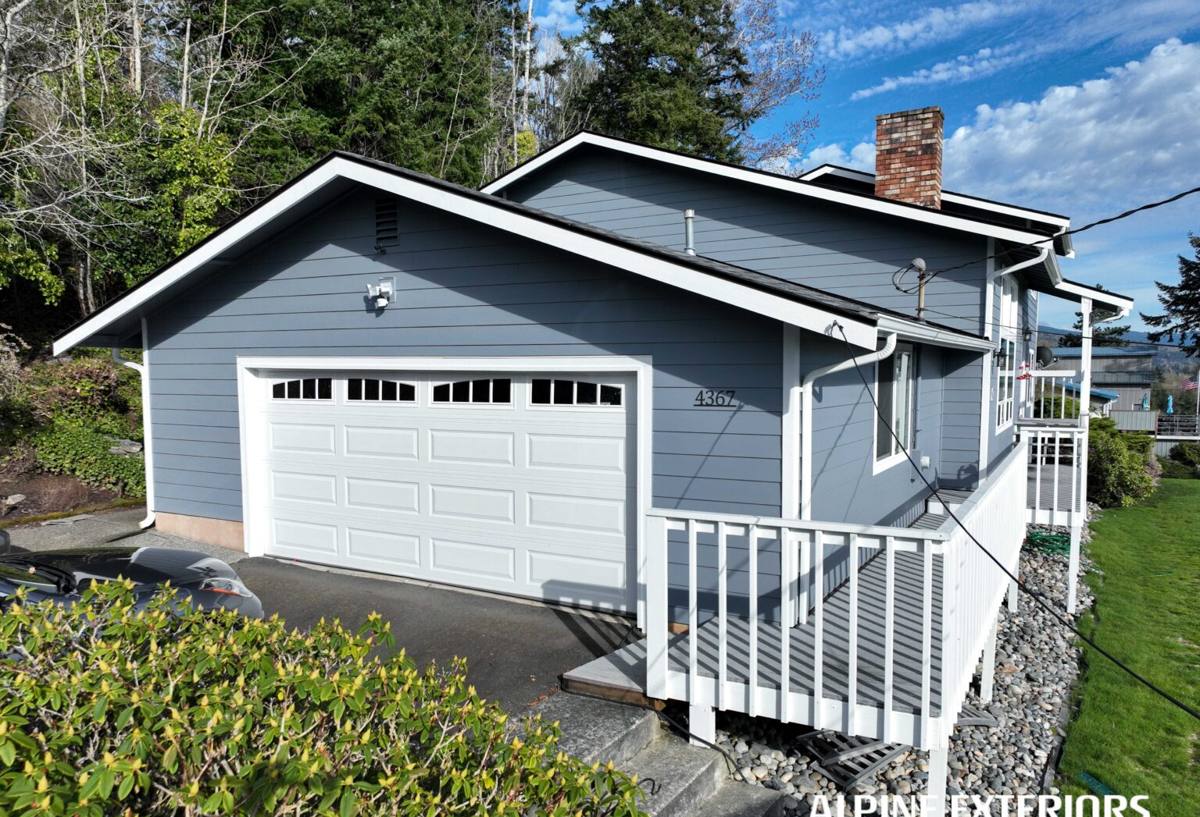
Signs a Guemes Island Home Needs a New Roof
Roofs on the island rarely fail all at once — they show warning signs first, usually after a hard winter or a few years of moss buildup nobody addressed. Watch for these:
- Moss mats thick enough to lift shingle edges, not just surface staining
- Granule loss leaving bald, shiny patches on south or west-facing slopes
- Shingles curling, cracking, or going missing after wind events
- Rust streaking or gaps at chimney, vent, or skylight flashing
- Soft or spongy spots underfoot on the roof deck
- Daylight visible through roof boards from inside the attic
- Water stains on ceilings or interior walls that appear during wind-driven rain specifically, not calm rain
- Gutters filling with granules or moss debris faster each year
Any one of these on its own might be a repair. Several together, especially on a roof past 18-20 years old, usually means it's time to plan a replacement rather than keep patching.
What a Correctly Installed Roof Actually Involves
Tear-Off and Deck Inspection
We remove the old roofing down to the deck rather than layering over it. That's the only way to actually see the plywood or plank decking underneath — and on shaded, moss-prone roofs, it's common to find soft or delaminated sections around valleys and eaves where moisture sat the longest. Any compromised decking gets replaced before anything new goes down. Roofing over rotten decking just hides a problem that gets worse.
Ice and Water Shield at Vulnerable Points
Along eaves, valleys, and around every roof penetration, we install a self-adhering waterproof membrane underneath the primary roofing. This matters more here than in drier climates because wind-driven rain doesn't just fall on a roof — it gets pushed sideways and up under shingle edges. A membrane barrier at these weak points stops that water before it reaches the deck.
Corrosion-Resistant Fasteners and Flashing
Standard fasteners and flashing corrode faster in salt air. We use stainless steel or hot-dip galvanized fasteners and flashing at chimneys, vents, and valleys rather than the lighter-duty hardware that's fine on an inland roof but starts rusting within a few years this close to the water.
Balanced Ventilation
Intake at the soffits and exhaust at the ridge need to work together, not against each other. Poor ventilation traps moisture in the attic, which shortens the life of the decking and roofing from underneath — a problem that shows up years later as premature failure that looks like a bad roofing job when it was actually a bad ventilation job.
Flashing Details at Every Penetration
Chimneys, skylights, dormers, and vent pipes are where the overwhelming majority of roof leaks start — not the open field of shingles. Getting step flashing, counter-flashing, and pipe boots installed and sealed correctly is where experience shows up most.
Choosing a Roofing Material for the Island Climate
Every material handles wind, salt air, and moss differently. There's no single "best" choice — it depends on the home, the budget, and how much maintenance you want to take on.
| Material | Wind Performance | Moss & Algae Resistance | Maintenance | Typical Lifespan |
|---|---|---|---|---|
| Architectural asphalt shingle (algae-resistant) | Good, when properly fastened and sealed | Good with algae-resistant granules; still needs periodic moss removal on shaded slopes | Low to moderate | 25-30 years |
| Standing seam metal | Excellent — among the best options for exposed, wind-heavy sites | Very good; sheds moss and debris far better than textured surfaces | Low | 40-50+ years |
| Cedar shake | Fair; requires careful installation to resist wind lift | Poor without diligent upkeep; retains moisture and grows moss faster in shaded, damp spots | High | 20-25 years with upkeep |
| Synthetic composite shingle | Good to excellent depending on product | Good; resists moisture absorption better than wood | Low to moderate | 30-40 years |
For heavily shaded, moss-prone lots on the island, we generally steer homeowners away from cedar shake unless they're committed to regular cleaning and treatment — the maintenance burden is real, and it's a matter of honest trade-offs rather than the product being unsuitable everywhere. Metal and algae-resistant asphalt tend to be the more practical choices for most island homes.
How We Handle the Ferry Logistics
Working on Guemes Island means planning around the ferry schedule, not just the weather. Material deliveries, dumpster drop-off and pickup, and crew transport all have to be timed so the job doesn't stall waiting on a boat. We build that lead time into scheduling up front rather than discovering it mid-project, and we stage materials so a full crew can work efficiently once they're on the island rather than making repeat trips.
We also pay close attention to weather windows. A tear-off exposes the deck to the sky, and on an island with fast-changing marine weather, we don't open more roof than we can dry-in and cover the same day. That's standard practice everywhere we work, but it takes on more importance where a surprise squall off the strait can move in faster than it would inland.
Cost Factors for a Guemes Island Roof Replacement
Every roof is priced individually after an on-site look, but the same handful of factors drive most of the difference between bids:
| Factor | Why It Matters |
|---|---|
| Roof size and pitch | More square footage and steeper slopes mean more material and labor time |
| Number of layers to remove | Some older homes have two or more layers of roofing that all need tear-off |
| Decking condition | Rot or soft spots found during tear-off require plywood replacement before installation continues |
| Material choice | Asphalt, metal, and composite carry different material and labor costs |
| Number of penetrations | Chimneys, skylights, and multiple vents add flashing labor |
| Ferry and logistics | Material delivery and crew transport add modest scheduling and transport costs versus mainland jobs |
We give a firm, itemized quote after walking the roof in person — not a phone estimate — because so much of the real cost on island jobs depends on what the tear-off reveals underneath.
Why Local Island Experience Matters
A crew that's worked Guemes Island before already knows which slopes hold moss year-round, which sites take the worst of the wind off the strait, and how to schedule around the ferry without losing a day of work. That experience shows up in fewer surprises, fewer callbacks, and a roof that's actually built for the site it's on rather than a generic install. It also means we're not learning the island's quirks on your project.
After Installation: Keeping a New Roof Performing
A properly installed roof still benefits from basic upkeep, especially on shaded island lots:
- Clear gutters and valleys of needles and debris at least once a year, more often under heavy tree cover
- Have moss growth treated or removed before it mats and holds moisture against the shingles
- Walk the attic occasionally for signs of moisture or daylight around penetrations
- Trim back overhanging branches to reduce shade, debris, and abrasion on the roof surface
- Address any flashing issues immediately rather than waiting for a visible leak
None of this is complicated, but it's the difference between a roof that hits its full expected lifespan and one that starts failing early because moisture and moss got ahead of it.
If you're seeing any of the warning signs above, or just want an honest look at where your current roof stands, we're happy to come out to Guemes Island and give you a straightforward, no-pressure estimate. Fill out the form below and we'll get in touch to schedule a time.