 Anacortes
 Building New in Similk Beach Means Building for the Water
Similk Beach sits close enough to the water that every new home going up there is, in effect, being built into a marine environment. Wind off the water, salt-laden air, and long stretches of wet, overcast weather are just part of the deal in this stretch of Skagit County. When a house is still framed and open, the window package you choose and how it gets installed will quietly determine how that home performs for the next 20-30 years — whether it stays dry, whether the frames hold up, and whether you're dealing with condensation, staining, or rot down the road.
New construction is the one point in a home's life where windows can be installed exactly right, with full access to the framing, the weather-resistive barrier, and the flashing planes. Get it right here and you avoid a lot of expensive problems later. Get it wrong, and those problems get sealed behind siding and trim where nobody sees them until there's a stain on the drywall.
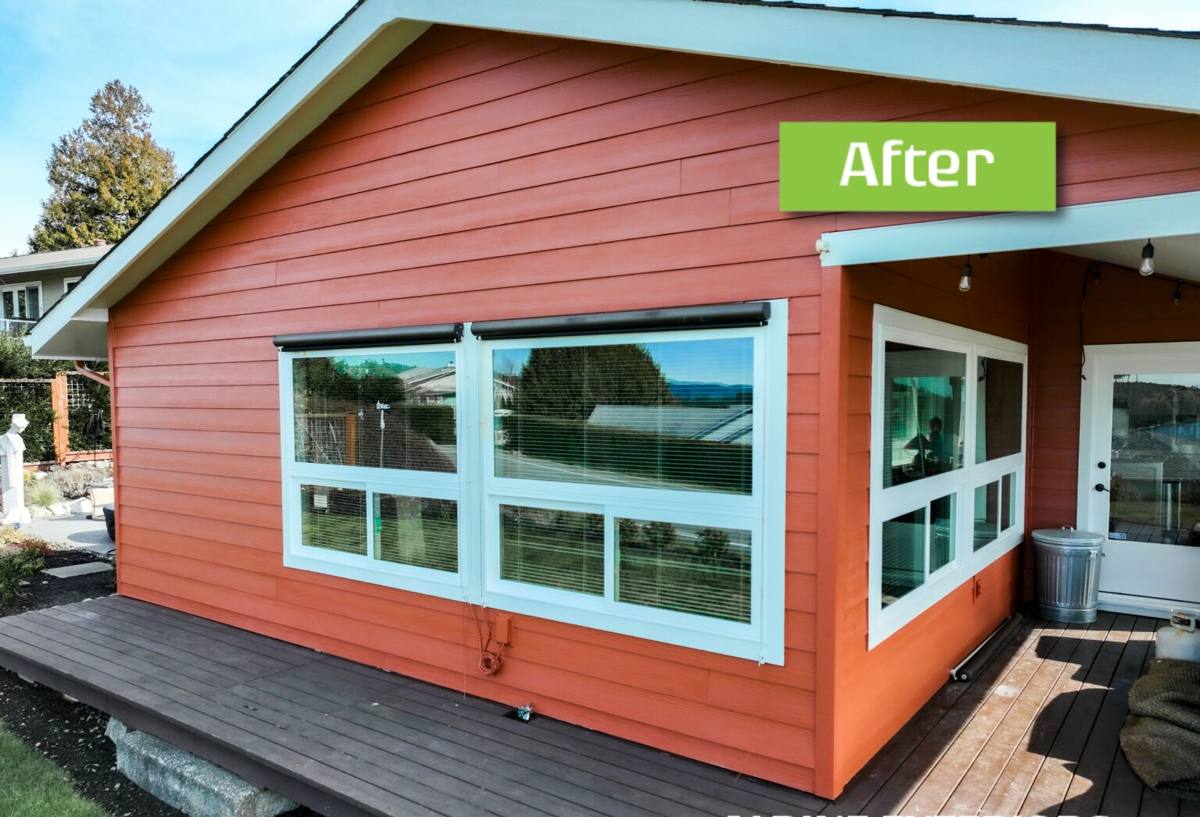
New-Construction Windows vs. Replacement Windows: Why the Distinction Matters
These are two different products installed two different ways, and mixing them up on a new build is one of the more common mistakes we see corrected later.
Nail-Fin (New-Construction) Windows
These have a flange around the perimeter of the frame that gets fastened directly to the sheathing before the weather-resistive barrier and siding go on. The flange is what lets the window get properly integrated into the wall's drainage plane — flashing tape and building paper lap over it in the correct shingle-style order so water sheds outward, not inward.
Block-Frame (Replacement) Windows
These are designed to fit into an existing rough opening after siding is already in place, without disturbing the exterior finish. They rely on interior and exterior trim and sealant for weatherproofing rather than a fully integrated flange. Using a replacement-style window on new construction — or the reverse — usually means fighting the product instead of working with it, and it shows up later as leaks or drafts.
On a Similk Beach new build, nail-fin windows installed while the wall is still open are the standard approach, and it's what lets us build a proper drainage system around every opening.
What This Climate Actually Demands From the Window Package
Anacortes and the rest of Skagit County get a lot of moisture, and shoreline lots like Similk Beach add wind-driven rain and salt exposure on top of that. Three things matter most here:
Driving Rain
Wind off the water pushes rain sideways into wall assemblies far more than it does on inland lots. That means flashing details and sill pan drainage aren't optional extras — they're the difference between a window that sheds water and one that eventually lets it in around the edges.
Salt Air
Airborne salt accelerates corrosion on hardware, fasteners, and some metal frame components, and it can dull or stain certain finishes faster than an inland home would see. Frame material and hardware finish choices matter more here than they would 20 miles inland.
Moss and Prolonged Dampness
Anacortes' long wet season means anything that traps moisture against wood — poor flashing laps, missing sill pans, caulk used as the primary water barrier instead of a backup — has months at a time to do damage before things dry out. Moss and algae growth on sills and trim is as much a sign of standing moisture as it is a cosmetic issue.
Getting the Rough Opening and Flashing Right
Most window failures we're called out to fix aren't the window's fault — they're an installation detail that got skipped or done out of order. On a new build, the installer has one shot to get this right before it's covered up.
- Sill pan flashing installed under every opening, sloped to drain outward, before the window ever goes in
- Weather-resistive barrier and flashing tape lapped in proper shingle order — nothing installed so water can run behind the layer below it
- Window set square, plumb, and level, with shims at load points so the frame doesn't rack over time
- Fasteners at every manufacturer-specified location, not just the corners
- Backer rod and exterior sealant used as a secondary water barrier — never as the only line of defense
- Interior air-sealing with low-expansion foam or backer rod, separate from the exterior water management
- Corrosion-resistant fasteners and hardware appropriate for near-shoreline exposure
Skip any one of these and the window can look perfectly installed for years before a leak shows up — usually as a stain, a soft spot in interior trim, or mold smell, long after the crew that installed it is gone.
Choosing Frame Material and Glass for a Shoreline Lot
There's no single "best" window for every home — it depends on budget, architectural style, and how exposed the lot is. Here's how the common options stack up for a Similk Beach build specifically.
| Frame Type | How It Handles Salt Air & Moisture | Maintenance | Typical Fit |
|---|---|---|---|
| Vinyl | Won't corrode or rot; performs well near water | Low — occasional cleaning | Budget-conscious builds, strong overall value |
| Fiberglass | Excellent stability in wet/salt exposure, minimal expansion-contraction | Low | Higher-end new construction wanting durability and slimmer sightlines |
| Wood-Clad | Cladding protects exterior, but any breach exposes wood core to moisture | Higher — finish and seals need monitoring | Traditional or high-end interior wood look, drier or more sheltered elevations |
| Aluminum | Prone to corrosion and thermal transfer in coastal salt air without specific coatings | Moderate to high | Generally not our first recommendation for direct shoreline exposure |
We're upfront with clients about trade-offs like these rather than pushing one product for every situation. On exposed shoreline elevations we'll often recommend vinyl or fiberglass for their resistance to moisture and salt; wood-clad can still make sense on more protected sides of the house where the architectural look matters and exposure is lower.
Glass Packages
For this area, dual-pane with low-E coating and argon fill is the practical baseline — it cuts heat loss during our long wet, cool stretches and helps control condensation on interior glass during cold snaps. Homes closer to the water or on wind-exposed elevations sometimes benefit from upgraded glass or hardware ratings; we'll walk through whether that's worth it for your specific lot rather than upselling it across the board.
Our Process for New-Construction Window Installs
1. Plan Review and Rough Opening Verification
We work from the framer's rough openings and confirm sizes, header heights, and egress requirements before ordering, so there are no surprise gaps or mismatches when windows arrive.
2. Product Selection Walkthrough
We go through frame material, glass package, and hardware finish with you, factoring in which elevations face the water and prevailing wind, so the choices match the actual exposure of the lot rather than a one-size-fits-all spec.
3. Sill Pan and Flashing Installation
Every opening gets sill pan flashing and properly sequenced flashing tape before the window is set — this is the step that determines long-term water management, and we don't skip it to save time.
4. Window Setting and Fastening
Windows are set square and plumb, shimmed correctly, and fastened per manufacturer spec at every required location.
5. Interior and Exterior Sealing
Interior air-sealing and exterior sealant beads are completed as a secondary barrier, not the primary one, matching the layered approach the flashing already established.
6. Final Walkthrough
We check operation, sealing, and finish on every unit before we consider the job done, and we're available if anything needs adjustment after the home is finished and settled.
What New-Construction Window Installation Typically Runs
Pricing depends heavily on window count, frame material, glass upgrades, and how many elevations face direct wind and water exposure. Rather than quote a flat number that won't apply to your specific plan, here's what tends to move the price:
| Cost Factor | Why It Matters |
|---|---|
| Frame material (vinyl vs. fiberglass vs. wood-clad) | Material cost and long-term maintenance differ significantly |
| Window count and size | Larger openings and more units mean more material and labor |
| Glass package upgrades | Impact-rated or upgraded coatings add cost but can add durability on exposed elevations |
| Number of shoreline-facing openings | May justify upgraded flashing detail or hardware for salt/wind exposure |
| Site access and framing schedule | Tight builder timelines or difficult site access can affect labor cost |
We'll give you a real, itemized number once we've seen the plans — not a rough guess that changes once material gets ordered.
Why It Matters That We Already Work in Similk Beach
A crew that regularly works this specific stretch of shoreline knows what the wind does to a west- or south-facing elevation here, what kind of moisture load a house near Similk Bay deals with compared to one further inland in Anacortes, and which details are worth the extra time versus which are overkill. That's not something you get from a general framing crew doing windows as one line item on a punch list — it comes from having installed and later serviced windows on homes with the same exposure, through the same wet Skagit County winters, more than once.
Working with builders and homeowners in this area also means we understand the practical side of new construction: coordinating around the framing and siding schedule, ordering windows with enough lead time to avoid holding up the job, and showing up when we say we will so your build doesn't stall waiting on one trade.
If you're planning a new build in Similk Beach and want windows specified and installed right the first time, we're happy to walk your plans, talk through frame and glass options for your lot's exposure, and put together a straightforward, no-pressure estimate — just fill out the form below.