 Anacortes
 Building New in Bow: What the Climate Asks of Your Windows
Bow sits in the rural stretch of Skagit County between Anacortes and Bellingham, close to Samish Bay and surrounded by open farmland. A house going up out here faces a mix of weather that doesn't show up the same way in drier parts of the state: salt-tinged wind off the water, rain that comes in sideways during fall and winter storms, and long gray stretches where everything outdoors stays damp far longer than it looks. Windows are among the first building components exposed to that weather, often sitting in the rough openings for weeks before siding, trim, and paint close everything up. Getting the opening, the flashing, and the unit itself right the first time matters more here than in a dry climate. A marginal install that might take years to cause a problem inland can start leaking, staining, or corroding within a season or two once it's living in Skagit County marine air.
That's the lens we bring to new-construction window work in Bow: not just setting units plumb and square, but building the water-management details around them so the house stays dry through its first winter and every one after.
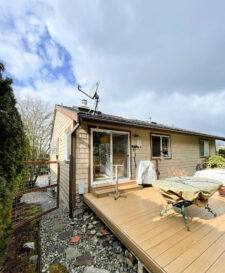
New Construction vs. Replacement: Why the Install Method Is Different
New-construction windows are installed before the siding goes on, using a nailing flange (fin) that gets integrated directly with the weather-resistant barrier (WRB) wrapping the house. That's a very different job from replacement work, where an installer has to work around existing siding and trim that's already in place. On a new build, we get to set the water-management sequence from scratch: housewrap laps correctly over the sill pan, flashing tape laps correctly over the housewrap, and the whole assembly sheds water downward and outward the way it's supposed to, with no old caulk joints or hidden gaps to work around.
That's an advantage, but only if it's done in the right order. New-construction openings are also less forgiving of mistakes than people assume — once siding closes the wall up, a flashing error at the sill or head is invisible until it shows up as a stain, rot, or a soft spot years later. On a home in a wet, wind-driven climate like this one, that gap in the timeline between "installed" and "problem visible" tends to be shorter than owners expect.
Choosing a Window Frame That Holds Up to Salt Air and Rain
Frame material matters more near the water than it does further inland. Salt air accelerates corrosion on hardware and fasteners, and constant dampness is unforgiving of any material that relies on paint or finish to stay protected. Here's how the common frame options compare for a Bow-area build:
| Frame Material | Salt Air / Corrosion Resistance | Moisture & Rot Risk | Maintenance | Where It Fits |
|---|---|---|---|---|
| Vinyl | Good — won't corrode or rust | Low; won't rot, but seams and welds need to be quality-made | Low; occasional cleaning | Most cost-effective option for full-house builds |
| Fiberglass | Very good — dimensionally stable, resists pitting | Low; holds paint well if factory-finished | Low to moderate | Homes wanting a narrower sightline or paintable exterior |
| Wood interior / clad exterior | Depends on cladding — aluminum or fiberglass clad performs well; exposed wood does not | Higher if cladding or seals fail; interior wood needs to stay dry | Higher — exterior clad needs inspection, interior wood may need refinishing over time | Homeowners prioritizing a wood look inside |
| Aluminum (uninsulated) | Poor without marine-grade coatings — prone to pitting and corrosion near salt air | Low rot risk but conducts heat/cold and can condensate | Moderate | Rarely our recommendation for this climate |
We steer most Bow-area new builds toward vinyl or fiberglass for the exterior-facing performance, not because other materials can't work, but because they demand less long-term upkeep to keep performing in salt air and standing rain. If you want a wood interior look, clad options let you get that without putting raw wood on the weather side of the wall.
Hardware and Glazing
Whatever frame material you choose, ask about the hardware finish — stainless or corrosion-resistant coated hardware holds up noticeably better near the water than standard-grade options. On glazing, dual-pane with a low-E coating is the baseline for this climate; it cuts down on both heat loss and condensation on cold, damp mornings, which are common here.
Meeting Washington's Energy Code Without Guesswork
Washington's energy code sets minimum performance requirements for new-home windows, expressed as a U-factor (how much heat the window loses — lower is better) and often paired with a Solar Heat Gain Coefficient depending on orientation and the compliance path your builder is using. On a new build, the window order has to match what's in the approved plans and energy compliance forms, not just "whatever looks nice in the showroom." We work from your builder's or architect's specified U-factor targets when we quote and order, and we flag it early if a preferred window style can't hit the required number, rather than after the units have already shown up on site.
Getting this wrong isn't just a performance issue — it can hold up your final inspection and occupancy if the installed windows don't match what was submitted for permit.
Flashing and Water Management: The Step That Actually Prevents Leaks
Most window leaks trace back to the flashing sequence, not the window itself. In a climate with regular driving rain, the margin for error is small. The sequence we follow on new construction:
- Sill pan flashing set first, sloped to drain outward, so any water that gets past the window has somewhere to go besides the framing.
- Housewrap integration in proper shingle-lap order — each layer overlapping the one below it, so water is always directed down and out, never into a seam.
- Jamb and head flashing taped and lapped over the housewrap at the top, so water running down the wall can't get behind the window at the head.
- Nailing fin fastened per manufacturer spec — the fastening schedule affects both structural performance and warranty coverage.
- Sealant at the interior for air sealing, kept separate from the exterior drainage plane so the wall can still shed any incidental water that does get in.
None of this is visible once siding goes on, which is exactly why it has to be right the first time. We photograph flashing details during rough-in on new-construction jobs so there's a record of what's behind the siding, in case it's ever needed for a warranty question down the road.
Our New-Construction Window Process
Here's how a typical new-construction window job runs for us, from order to close-in:
- Plan review and order verification — we confirm window sizes, egress requirements for bedrooms, and energy code U-factors against the approved plans before anything is ordered.
- Rough opening check — once framing is up, we verify each opening is square, plumb, and sized correctly before the windows arrive, catching framing errors early instead of forcing a window to fit.
- Sill pan and flashing prep — flashing and housewrap integration set up before the unit goes in.
- Setting the window — shimmed, squared, and checked for proper reveal and operation before fastening.
- Flashing tape and head flashing completed over the fin, integrated with the housewrap above.
- Interior air sealing and exterior sealant, kept to manufacturer specs so warranty coverage stays intact.
- Final walk with photos before siding closes the wall, documenting the install for the homeowner's records.
Working Alongside Your Builder or General Contractor
On a new build, we're one trade among several working on a schedule that isn't ours to set. That means clear communication with your GC or builder about framing tolerances, lock-up timing, and how our work sequences with siding, trim, and paint. We show up ready to work within the framing that's actually there, flag any rough-opening issues to the builder before they become a bigger problem, and keep our part of the schedule tight so we're not the reason siding gets delayed. If you're the homeowner acting as your own GC, we're used to working directly with owners too — we'll walk you through what needs to happen before we arrive and what to expect once we're on site.
A Homeowner's Checklist During the Window Install Phase
- Confirm final window sizes and styles match your approved plans before ordering — changes after ordering can mean delays or restocking costs.
- Ask what frame material and glazing package is being installed and why it fits a marine climate.
- Ask to see the flashing sequence before siding closes the wall — even a few photos is enough of a record.
- Confirm egress-sized windows are correctly placed in bedrooms per code.
- Get the manufacturer's warranty paperwork and registration completed, not just verbal assurance.
- Ask how the installer's fastening and sealing method aligns with the manufacturer's requirements — an off-spec install can void warranty coverage.
Why a Crew That Already Works Bow Makes a Difference
A lot of window performance in this area comes down to details that aren't in the manufacturer's install manual — how hard the wind-driven rain hits a west-facing wall near open farmland, how quickly moss and algae take hold on horizontal trim and sills in a climate that stays damp for months at a stretch, and which inspectors in Skagit County want to see what during rough-in. None of that is exotic knowledge, but it's the kind of thing you only pick up by doing this work in this area repeatedly. We'd rather set that up correctly from the first nail than have a homeowner deal with a stain, a soft spot, or a failed inspection because a detail got handled the way it would be handled somewhere drier and calmer.
If you're building new in Bow or elsewhere around Anacortes and want to talk through window selection, energy code requirements, or timing with your builder, we're happy to walk through it. Reach out for a free, no-pressure estimate — there's a form below.