 Anacortes
 Mount Vernon Sits in a Different Weather Pocket Than the Coast — and Its Siding Shows It
Mount Vernon sits inland along the Skagit River valley, a short drive from Anacortes and the salt water of Fidalgo Island. That distance from the coast changes the damage pattern we see on siding here. Homes right on the water take a steady beating from salt air and wind-driven spray. Mount Vernon homes get less of that direct salt exposure, but the valley brings its own problems: low-lying fog that sits on a property well into the morning, high humidity off the river and surrounding farmland, and the same driving rain and long moss season that hits all of Skagit County. The result is siding that can look fine from the street while quietly holding moisture against the wall for weeks at a time.
That's the piece homeowners miss. A siding problem in Mount Vernon isn't usually about a single storm — it's about repeated, low-grade moisture exposure that a lot of siding products simply weren't built to shed over and over, year after year.
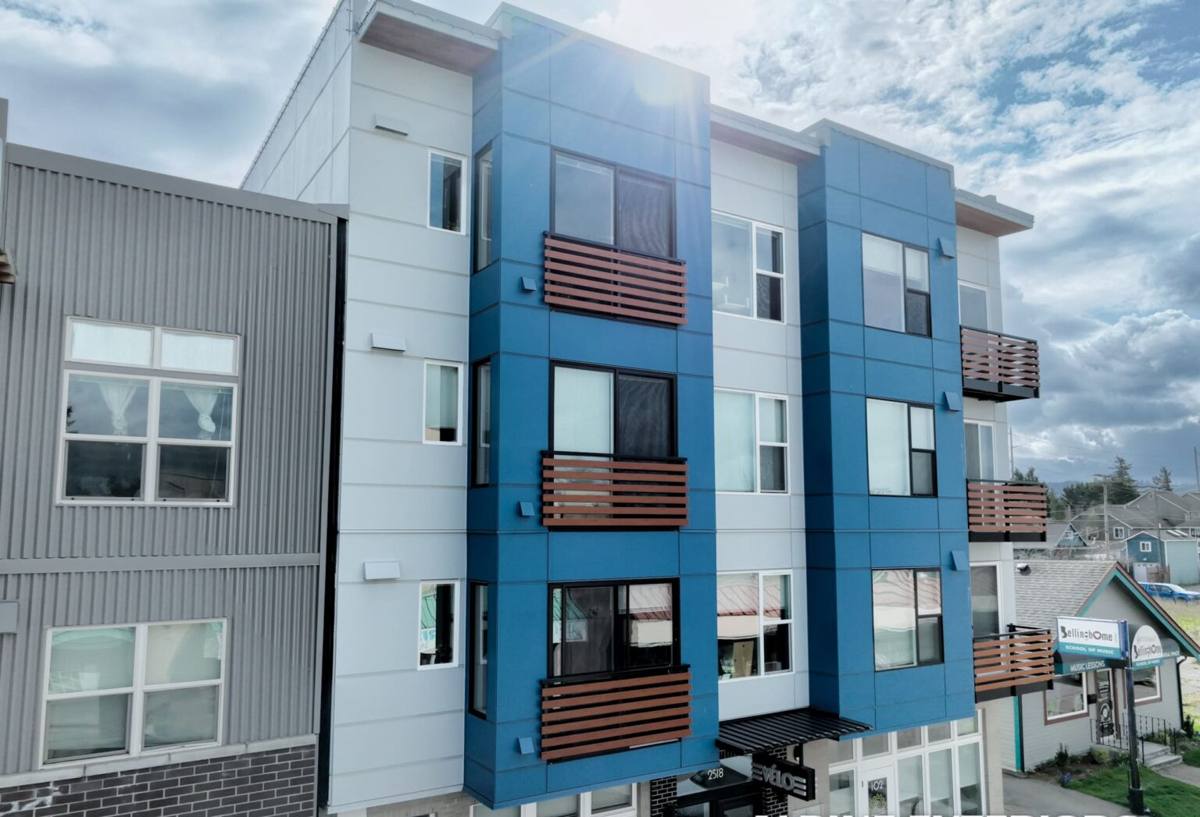
What Actually Damages Siding in This Part of Skagit County
Valley Moisture and Fog
Because Mount Vernon sits in the river valley rather than on open water, it holds fog and morning dampness longer than higher, more exposed ground. Siding, trim, and the caulked joints between them stay wet longer, which gives moss, algae, and mildew more time to take hold — especially on north-facing walls and anywhere shaded by mature trees or a neighboring structure.
Moss and Algae Growth
Moss doesn't just look bad. Once it establishes on a wall, it holds water against the siding surface far longer than bare siding would on its own. Over a full moss season — which in this part of Washington runs most of the fall, winter, and spring — that constant dampness works on paint, caulk, and any seam or fastener that isn't fully sealed.
Driving Rain and Wind
Skagit Valley storms often come with real wind behind the rain, which drives water sideways into laps, seams, and anywhere flashing is missing or under-lapped. This is less about volume of rain and more about direction — siding that's rated for vertical rain can still fail if it wasn't installed with the flashing details needed for wind-driven weather.
Temperature and Moisture Cycling
Cool, damp nights followed by warmer days mean siding and the materials behind it go through repeated expansion and contraction, and repeated wetting and drying. Caulk joints are usually the first thing to give under that cycling, followed by fastener heads and butt joints that were installed too tight.
Signs It's Time to Call Someone About Your Siding
Most siding damage is easy to catch early if you know what to look for. It's much cheaper to repair a section than to wait until moisture gets behind the siding and into the wall assembly.
- Soft or spongy spots when you press on the siding, especially near the bottom of walls or below windows
- Visible moss or dark green-black staining that keeps coming back after cleaning
- Cracked, chipped, or missing caulk at butt joints, corners, and window and door trim
- Paint that's peeling, bubbling, or chalking heavily in one area but not others
- Warped, buckled, or separating siding panels, particularly on walls that get the most weather
- Musty smell or visible staining on interior walls that back up to exterior siding
- Nail heads that have backed out, popped, or left rust streaks down the siding face
- Gaps opening up around window and door trim where caulk has failed
None of these on their own means you need to replace a whole wall. But every one of them means water is finding a way in, and the longer it sits, the more it costs to fix.
Repair or Replace? How We Make That Call
Not every damaged section needs full replacement, and not every "small" repair should be treated as small. The right call depends on how far the damage has spread and what's happening behind the siding, not just what's visible on the surface.
| Signal | Usually Points to Repair | Usually Points to Replacement |
|---|---|---|
| Damage location | Isolated to one or two panels or a single wall section | Spread across multiple walls or the whole elevation |
| Sheathing condition | Dry, solid wood behind the removed siding | Soft, delaminating, or discolored sheathing |
| Cause | Impact damage, failed caulk, one bad flashing detail | Widespread original installation errors |
| Siding age and material | Newer material, or a product we can still match | Old, discontinued, or a product with known long-term issues |
| Interior symptoms | None — problem is contained to the exterior | Staining, soft drywall, or musty smell inside |
The only way to know which side of that table you're on is to actually pull the damaged section and look at what's underneath. Guessing from the ground leads to repairs that look fine for a season and fail again the next.
What a Correct Siding Repair Actually Involves
A siding repair that only addresses what's visible from the driveway is a cosmetic patch, not a repair. Done right, the work looks like this:
Find the Real Source, Not Just the Symptom
Stained or buckled siding is usually a symptom of a moisture path somewhere else — a caulk failure at a window, a flashing detail that was never installed correctly, or a grade or gutter issue directing water at the wall. Replacing the siding without fixing that source just buys time before the same spot fails again.
Check What's Behind the Siding
Before any new siding goes up, we look at the water-resistive barrier and sheathing behind the removed section. If moisture has already gotten into the wall assembly, that has to be dried out and addressed before new siding goes on top of it — otherwise you've sealed a problem inside the wall.
Correct Flashing and Sealant Details
Most repeat siding failures we see trace back to missing or undersized flashing — at window heads, at deck ledgers, at roof-to-wall intersections. A proper repair rebuilds those details correctly, not just re-caulks over the same gap.
Match Material and Finish
A patch that doesn't match butt joint spacing, reveal, or color stands out and often becomes the next weak point because it wasn't integrated cleanly into the existing wall. Matching matters both for appearance and for how well the new section sheds water alongside the old.
Why We Only Repair and Install James Hardie Fiber Cement
We don't install or repair vinyl siding, LP SmartSide, Cemplank, Allura, or primed wood products, and we won't quote that work. That's a deliberate standard, not a limitation of what we're capable of doing. In a climate like Skagit County's — sustained dampness, long moss seasons, and driving rain — the products we've chosen not to install each carry trade-offs we're not willing to put our name behind: vinyl can warp and doesn't stop moisture at seams the way a properly installed fiber cement system does, engineered wood products are more sensitive to sustained moisture exposure if any detail is off, and unfinished wood products need an ongoing paint and maintenance commitment most homeowners don't want to keep up with for decades.
James Hardie fiber cement is non-combustible, holds its factory ColorPlus finish far longer than field-applied paint, and is engineered specifically for wet regional climates through its HZ5 product line. When a repair needs new material, we're matching into a system that's already proven to hold up in this exact kind of weather — not patching one product into a wall of something with different moisture behavior.
Our Repair Process
- Inspection — We look at the damaged area and the surrounding wall, not just the spot you called about, since related damage often sits just out of view.
- Diagnosis — We identify what's actually causing the failure: a flashing gap, failed caulk, grading, or an original installation error.
- Plan and quote — You get a clear explanation of what's being repaired, why, and what it will cost, before any work starts.
- Repair or replacement — We fix the source of the problem first, then repair or replace the affected siding to match the existing wall as closely as possible.
- Final check — We confirm seams, flashing, and caulk lines are sealed correctly before we call the job done.
Why It Matters to Hire a Crew That Already Works This Area
Skagit Valley conditions aren't identical to Anacortes proper, and they're not identical to inland Washington either. A crew that regularly works both the coastal edge of the county and inland valley communities like Mount Vernon knows the difference between salt-driven corrosion and valley-moisture damage, and repairs accordingly instead of applying a one-size-fits-all fix. That local pattern recognition is the difference between a repair that solves the actual problem and one that just looks fixed until the next wet season.
It also means faster, more accurate estimates. We're not guessing at how this region's weather behaves — we're seeing the same moss patterns, the same failed-caulk locations, and the same flashing shortcuts on a regular basis, which means less time spent diagnosing and more time spent fixing it correctly.
If you've noticed moss, soft spots, cracked caulk, or siding that just doesn't look right anymore, we're happy to take a look. We offer free, no-pressure estimates for Mount Vernon homeowners — you'll get a straight answer on whether it's a repair or something bigger, with no obligation to move forward.