 Anacortes
 Why Mount Vernon Roofs Wear Differently
Mount Vernon sits in the same weather system that shapes the rest of Skagit County — a mix of marine air pushing in from the Salish Sea, long stretches of steady rain, and short winter days that never quite dry a roof out before the next system rolls through. That combination is harder on a roof than most homeowners realize. It's not one dramatic storm that causes the damage; it's the slow, repeated cycle of saturation, low sun angle, and shaded rooflines that never get a chance to fully dry.
Salt-tinged air moving inland accelerates corrosion on exposed metal fasteners, flashing, and vent caps. Driving rain — the kind that comes in sideways during a windstorm — finds every weak seam in flashing or underlayment instead of just running off the surface. And a moss season that can stretch from fall through spring means organic growth gets a real foothold on any roof that isn't shedding water and light the way it should. A roof built or repaired without accounting for these conditions tends to fail years before its rated lifespan, usually starting at the details: valleys, flashing, and shaded north-facing slopes.
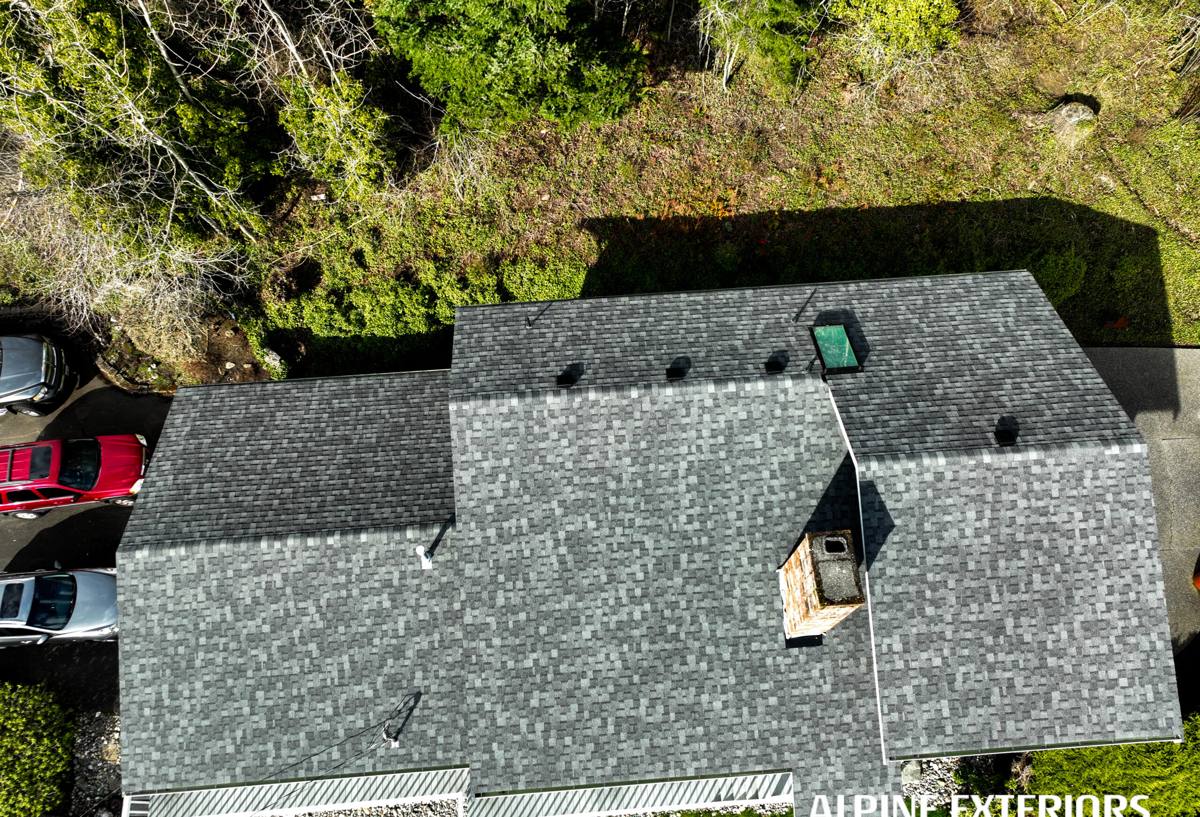
Signs a Mount Vernon Roof Needs Replacing, Not Patching
Not every roof problem calls for a full replacement — plenty can be solved with a targeted repair. But there's a point where patching becomes a temporary fix on a roof that's already failing underneath. Here's what tells us a full replacement is the honest recommendation:
- Shingles that are curling, cupping, or losing granules across large sections, not just one spot
- Moss established thick enough that it's lifting shingle edges rather than just sitting on the surface
- Daylight visible through the roof deck from inside the attic
- Soft or spongy spots underfoot when walking the roof, which usually means the decking has taken on moisture
- Recurring leaks in the same area even after repairs — a sign the underlayment or flashing system has broken down
- A roof at or past 20–25 years old for asphalt composition, especially with visible wear
- Missing or displaced shingles after a windstorm, particularly on multiple slopes
If a roof is only showing one or two of these on a small area, a repair is usually the right call and we'll tell you that. We don't push replacement on a roof that doesn't need it yet.
What a Correct Roof Replacement Actually Involves
Tear-Off and Deck Inspection
A proper replacement starts with a full tear-off down to the deck — not an overlay on top of existing layers. That's the only way to actually see the condition of the sheathing underneath. In this climate, deck damage often hides under shingles that still look intact from above, especially near valleys and eaves where water has been working its way in slowly. Any soft, delaminated, or rotted decking gets replaced before anything new goes down; skipping this step is one of the most common shortcuts that leads to early failure.
Underlayment and Water Protection
Given how much rain Skagit County sees, underlayment isn't a place to cut corners. Self-adhering ice-and-water membrane belongs at eaves, valleys, and around penetrations — the spots most likely to see wind-driven water get up under the shingle line. A synthetic underlayment across the rest of the deck adds a second line of defense if wind or age ever compromises the shingles themselves.
Ventilation
Attic ventilation matters as much as the shingles themselves. A roof that traps moist air underneath will rot decking from below regardless of how good the surface material is, and it also feeds moss and mildew growth. Balanced intake at the eaves and exhaust at the ridge keeps air moving and keeps the underside of the deck dry through our wetter months.
Flashing and Penetrations
Chimneys, vent stacks, skylights, and wall-to-roof transitions are where most leaks actually start — not the open field of shingles. Flashing should be replaced, not reused or caulked over, and step flashing at walls needs to be woven correctly with each course rather than relying on sealant to do the job long-term.
Choosing Roofing Materials for This Climate
Every material has trade-offs. Our job is to lay them out honestly rather than push whatever has the highest margin.
| Material | Typical Lifespan | Moss & Moisture Behavior | Maintenance |
|---|---|---|---|
| Asphalt composition shingle | 20–30 years (architectural grade) | Good with proper ventilation; algae-resistant granules help on shaded slopes | Periodic moss removal, gutter clearing |
| Standing seam metal | 40–60 years | Sheds water and moss very well due to slick surface and few seams | Low; occasional fastener/sealant checks |
| Cedar shake/shingle | 20–30 years with upkeep | Attractive but absorbs moisture; needs active moss and mildew management in wet, shaded areas | Higher; regular treatment and inspection |
We install all of these, but we're upfront that cedar roofing in a climate this damp requires a real maintenance commitment — it's a legitimate choice for homeowners who want the look and are willing to stay on top of it, not a fit for a "install and forget" roof. For most Mount Vernon homes, a quality architectural asphalt shingle with correct ventilation and flashing hits the best balance of cost, appearance, and durability. Metal earns its higher upfront cost back over decades for homeowners planning to stay long-term or wanting the lowest-maintenance option.
Our Roof Replacement Process
- On-site inspection — we walk the roof and attic, checking the deck, ventilation, flashing, and any problem areas you've noticed
- Honest scope and estimate — you get a clear breakdown of what's needed and why, with material options at different price points
- Scheduling around the weather — we plan tear-off days to avoid leaving a deck exposed overnight when rain is likely
- Tear-off and deck repair — full removal of old roofing, replacement of any compromised sheathing
- Underlayment, flashing, and ventilation installed correctly — the parts that actually determine how long the roof lasts
- New roofing material installed to manufacturer specification, which is also what keeps material warranties valid
- Cleanup and final walkthrough — magnetic sweep for nails, debris hauled off, and a walk-through so you know what was done
Moss, Algae, and Long-Term Roof Health
Moss deserves its own section because it's the issue most specific to this region. It's not just cosmetic — established moss holds moisture against the shingle surface, works into the tab edges, and can lift shingles enough for wind and rain to get underneath. North-facing slopes and anything shaded by trees are the highest-risk areas. A new roof reduces the problem through better granule technology and airflow, but it doesn't eliminate the need for periodic moss removal and gutter clearing, especially in a yard with mature trees. We're happy to talk through a simple maintenance routine as part of your estimate so the new roof actually reaches its full lifespan.
Cost Factors for a Mount Vernon Roof Replacement
Every roof is different, so we won't quote a number without seeing yours — but here's what actually moves the price:
| Factor | Why It Matters |
|---|---|
| Roof size and pitch | More surface area and steeper slopes mean more material and labor time |
| Number of existing layers | Removing multiple old layers takes more time than a single tear-off |
| Decking condition | Rotted or soft sheathing needs replacement, which adds material and labor |
| Material choice | Asphalt, metal, and cedar carry very different material costs |
| Ventilation upgrades | Adding or correcting intake/exhaust vents is worth the cost long-term |
| Roof access and complexity | Steep pitches, multiple valleys, and tight lot access add labor time |
Why Hiring a Crew That Already Works Mount Vernon Matters
A roof replacement is only as good as the details, and the details that matter here are specific to this climate — how much ice-and-water membrane to use at eaves and valleys, how to vent an attic so it doesn't trap moisture, which slopes in a given yard's tree cover need extra attention for moss. A crew that works Skagit County regularly has already seen what fails first in this weather and builds the roof to avoid it, rather than following a generic spec sheet written for a drier region. Local scheduling also matters — knowing when to push a tear-off date because rain is coming in, rather than leaving a deck exposed overnight.
If you're weighing a repair against a full replacement, or just want a straight answer on what your roof actually needs, we're glad to come take a look. Reach out for a free, no-pressure estimate using the form below.