 Anacortes
 Why Fidalgo Island Roofs Take a Different Kind of Beating
Fidalgo Island sits right where Skagit County meets the Salish Sea, and that location is a mixed blessing for roofs. The water views come with salt-laden air, wind-driven rain off Rosario Strait and Guemes Channel, and a moss season that can run eight or nine months out of the year. A roof that would hold up fine twenty miles inland can wear out early here if it wasn't chosen and installed with that exposure in mind.
We install metal roofing across Anacortes and the surrounding parts of Skagit County, and the calls we get from Fidalgo Island are pretty consistent: moss creeping under shingle tabs, gutters packed with organic debris every fall, and roofs that never quite get a chance to dry out between storms. Metal roofing doesn't solve every one of those problems automatically, but installed correctly with the right materials, it holds up to this climate better than most alternatives — and that's really what this page is about: what "correctly" means for a metal roof on Fidalgo Island specifically.
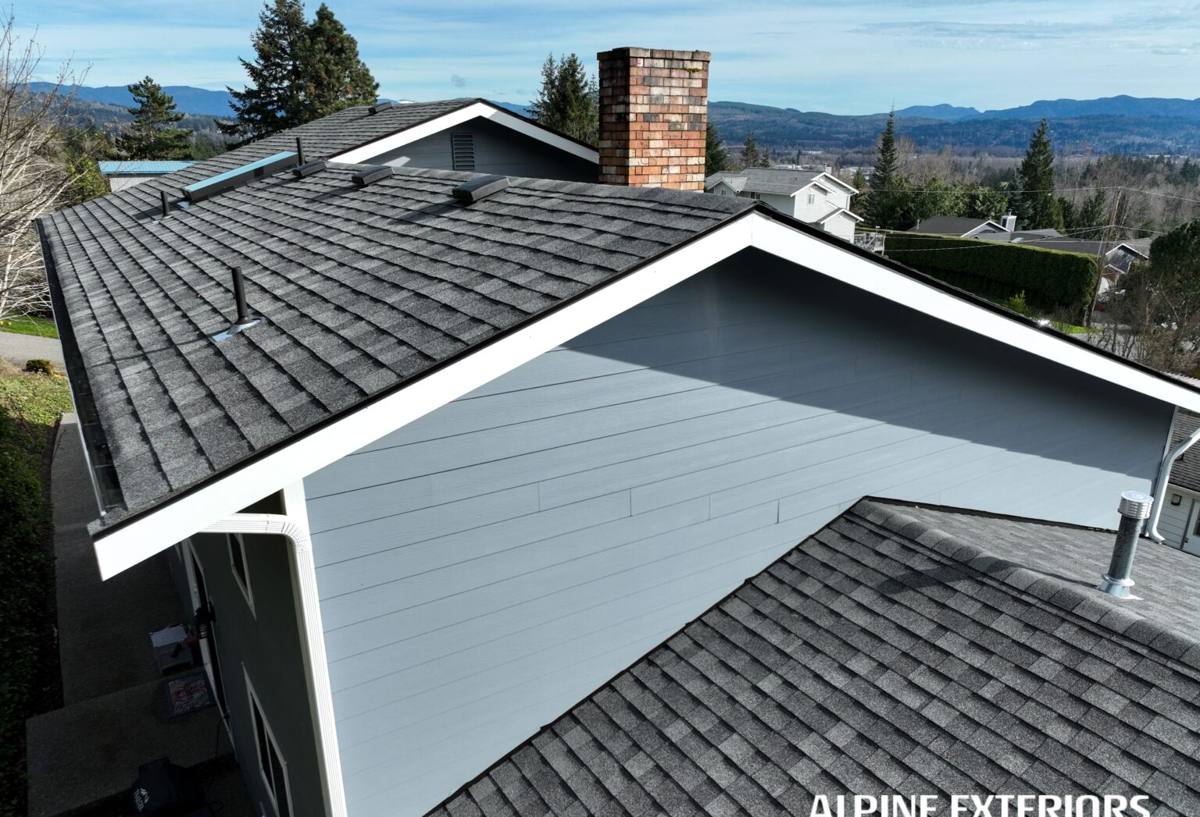
What Salt Air, Rain, and Moss Actually Do to a Roof
Salt Air and Coastal Corrosion
Homes closer to the shoreline see airborne salt that settles on every exterior surface, including the roof. On metal roofing, that means fasteners, cut edges, and any exposed steel need real corrosion protection — not just a painted finish that looks fine in the showroom. Cheaper coatings and mismatched fastener metals are where coastal metal roofs actually fail, usually starting at cut edges and screw penetrations rather than across the panel field.
Driving, Wind-Blown Rain
Anacortes doesn't get the heaviest rainfall totals in Western Washington, but wind off the water pushes rain sideways and up under laps, flashing, and ridge caps that would stay dry in a calmer climate. That makes underlayment quality, panel overlap, and flashing detail work more important here than the panel material itself.
Moss, Shade, and Slow Drying
Fidalgo Island's tree cover and marine humidity keep a lot of roof surfaces damp longer than homeowners expect, especially on north-facing slopes and anywhere shaded by conifers. Moss doesn't just sit on top of a roof — it holds moisture against the surface and, on shingle roofs, works its way under tabs over time. Metal sheds moss far more effectively than asphalt because there's no rough surface for spores to grab onto and no organic material (the granules on shingles) for moss to feed on, but it isn't moss-proof in deep shade with poor airflow, and gutters still need to stay clear.
Why Metal Roofing Fits This Climate
- Sheds moisture fast: steep-enough metal panels drain quickly instead of holding water the way granulated shingles can.
- Nothing for moss to root into: a smooth painted or coated metal surface gives moss spores far less to grip, especially compared to shingle granules.
- Handles wind well: properly fastened metal panels resist uplift better than shingles in the gusty conditions that come off the water.
- Long service life: a correctly installed metal roof with a quality coating routinely outlasts asphalt by decades, which matters on a roof exposed to salt air year-round.
- Low ongoing maintenance: less granule loss, less shingle cracking from UV and freeze-thaw cycling, and easier moss cleanup when it does occur.
None of that means metal is automatically the right call for every home on Fidalgo Island. It's a bigger upfront investment than asphalt, and it only delivers those advantages if the coating, fasteners, and flashing details are matched to a coastal environment. That's the part worth getting right before you sign anything.
What a Correct Metal Roof Installation Involves Here
Panel and Coating Selection
For homes with real salt exposure — closer to the water, higher elevation catching wind off the strait — we steer toward coatings and finishes rated for coastal/marine environments, not the standard-grade options sold for inland installations. It costs a little more upfront and saves a lot of grief over the life of the roof.
Fasteners That Won't Fight the Panel
Mismatched metals between fasteners and panels create galvanic corrosion — essentially a slow electrochemical reaction that eats away at the weaker metal, usually starting at the fastener. We match fastener material to panel material and use gasketed screws rated for exterior, coastal use.
Underlayment and Flashing
Given the wind-driven rain this area sees, we use a synthetic underlayment as a secondary water barrier under the panels, and we pay particular attention to valley flashing, wall-to-roof transitions, and penetrations around vents and chimneys — these are the spots where wind-blown rain actually finds its way in, far more often than through the panel field itself.
Ventilation
Metal roofing performs best over a properly ventilated deck. Trapped moisture underneath a metal roof — from an under-ventilated attic in a humid marine climate — can cause deck rot and condensation issues that have nothing to do with the roofing material itself. We check and correct ventilation as part of the job, not as an afterthought.
Moss and Debris Management
On lots with heavy tree cover, we talk through gutter protection and panel profile choices that make debris shed rather than collect, since standing organic debris is what invites moss even on a metal surface.
Comparing Roofing Options for a Fidalgo Island Home
| Factor | Metal Roofing | Asphalt Shingles |
|---|---|---|
| Moss resistance | High — smooth surface, nothing for spores to root into | Lower — granules and rough texture hold moisture and moss |
| Wind-driven rain performance | Strong when flashing detail is correct | Adequate but more seams and tab edges to fail |
| Coastal salt exposure | Needs marine-rated coating and fasteners | Less sensitive to salt, but shorter lifespan overall |
| Typical lifespan here | 40-70 years with correct coating and install | 15-25 years, often less with heavy moss cycles |
| Upfront cost | Higher | Lower |
| Ongoing maintenance | Occasional gutter/debris clearing | Regular moss treatment, granule loss over time |
This isn't a case for one option being wrong — plenty of Fidalgo Island homes do fine on well-maintained asphalt. It's about knowing the trade-offs so the choice matches your home, your budget, and how much roof maintenance you actually want to deal with.
Our Process on a Fidalgo Island Metal Roofing Project
- On-site assessment: we look at slope, tree cover, exposure to wind and salt air, existing ventilation, and the condition of the current roof deck before recommending anything.
- Material and coating recommendation: based on that assessment, not a one-size-fits-all package — a shaded, tree-covered lot and a bluff-top lot facing the strait get different specifications.
- Honest, written estimate: what's included, what the coating and fastener specification is, and what the timeline looks like, with no pressure to decide on the spot.
- Deck inspection and repair: we check the existing roof deck for rot or damage before panels go on — covering a compromised deck just hides a bigger problem.
- Installation: underlayment, panels, and flashing installed to manufacturer specification and adjusted for this site's specific wind and rain exposure.
- Final walk-through: we go over the finished roof, gutter and debris considerations, and what little maintenance the roof will need going forward.
What to Ask Before Hiring Anyone for Metal Roofing on Fidalgo Island
- Do they specify coastal-rated coatings and fasteners for homes with salt air exposure, or use the same standard package everywhere?
- Will they inspect and address roof ventilation as part of the job, not just install over what's there?
- Do they check the deck condition before installing, and explain what happens if they find rot?
- Can they explain their flashing approach for valleys, penetrations, and wall transitions in plain language?
- Are they licensed and insured to work in Washington, and willing to put the coating/fastener spec in writing?
- Do they have experience specifically with homes in this marine, moss-heavy climate — not just metal roofing in general?
Signs Your Current Roof May Be Struggling With This Climate
A few things we see often enough on Fidalgo Island homes that they're worth checking for, whether you're considering metal or just trying to figure out where your current roof stands:
- Moss visibly growing on north-facing slopes or anywhere shaded by trees
- Granule buildup in gutters and downspouts (a sign of asphalt shingle wear)
- Rust streaking near existing metal flashing or fasteners
- Gutters that overflow or clog repeatedly during fall storms
- Visible sagging or soft spots, which can point to deck moisture issues
- Interior ceiling stains that show up after wind-driven rain events
If you're seeing more than one of these, it's worth having someone take a real look rather than waiting for a leak to force the issue.
Cost Factors Worth Understanding Up Front
Metal roofing costs vary based on panel type, coating grade, roof complexity, and the condition of what's underneath. Rather than quote a number that won't mean much without seeing your specific roof, here's what actually moves the price:
| Cost Factor | Why It Matters |
|---|---|
| Panel type and profile | Standing seam typically costs more than exposed-fastener panel systems but offers cleaner water shedding and fewer penetration points |
| Coating grade | Marine/coastal-rated finishes cost more than standard coatings but hold up far better to salt air |
| Roof complexity | Valleys, dormers, and multiple roof planes take more labor and flashing detail than a simple gable roof |
| Deck condition | Rot or damage found during tear-off adds repair cost but prevents bigger problems later |
| Ventilation upgrades | Adding or correcting attic ventilation is sometimes needed alongside a metal roof in this climate |
We give a written estimate that breaks these out so you know exactly what you're paying for, not a single lump number.
If you're weighing metal roofing for a home on Fidalgo Island, we're happy to come take a look and walk through what your specific roof, tree cover, and exposure actually call for. There's no cost and no pressure to move forward — just a straight assessment and a written estimate you can think over. Use the form below to get started.