 Anacortes
 Siding That Has to Work in a Tough Spot
March Point sits low and close to the water, which means homes here take on a different kind of weather load than a house tucked back in town. Wind off the bay carries salt, humidity stays high for long stretches, and the low winter sun angle keeps north- and east-facing walls damp for days after a storm passes through. Add in Skagit County's long moss season and you have an exterior that's constantly being tested, not just rained on occasionally.
Generic siding advice doesn't hold up well in a location like this. What matters is how a specific product performs when it's wet more often than dry, when salt-laden air is working on fasteners and finishes year-round, and when moss and algae have months of damp shade to take hold. This page is about what that actually looks like for James Hardie siding on a March Point home — not siding in general, and not James Hardie somewhere drier.
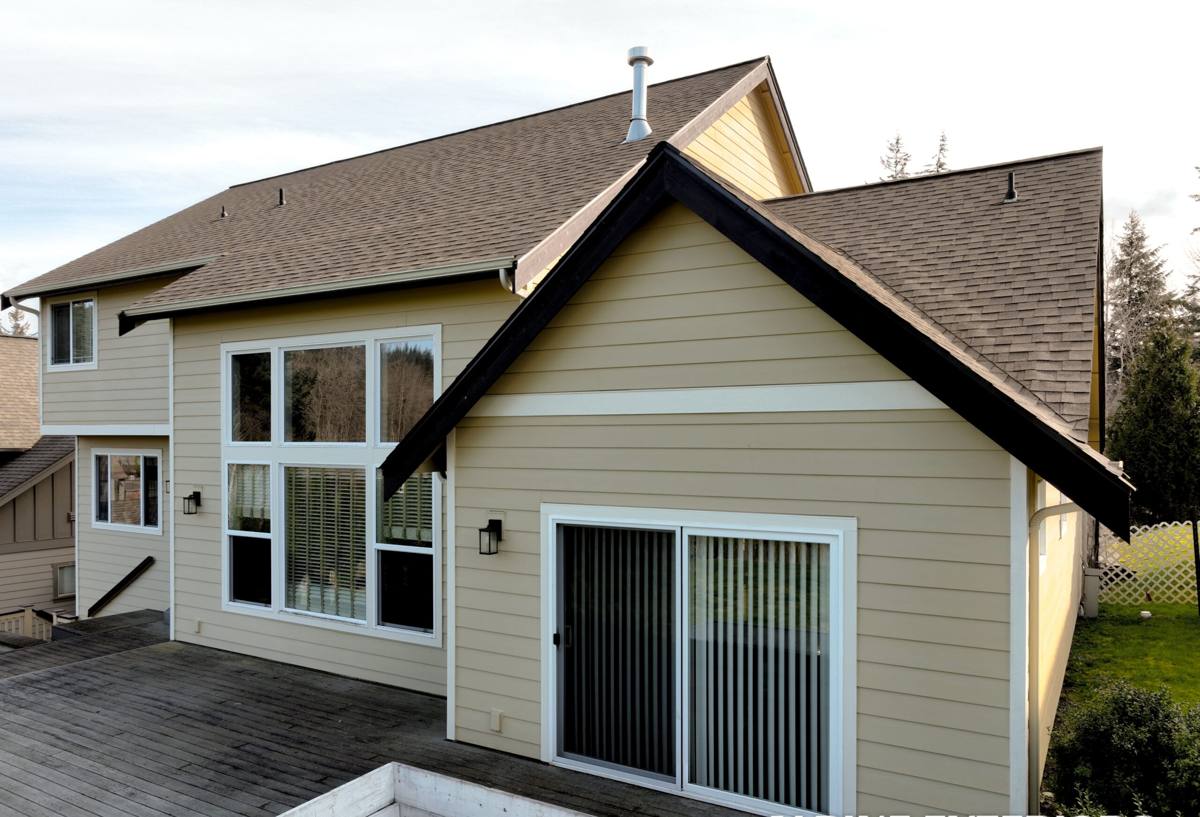
What Salt Air and Driving Rain Actually Do to a Wall
Salt Exposure
Airborne salt is corrosive to exposed metal — fasteners, flashing edges, trim screws — and it accelerates the breakdown of lower-grade paints and coatings. On a waterfront-adjacent property, that process runs faster than it would a mile or two inland. Siding systems that depend on field-applied paint for their weather barrier tend to show chalking, fading, and edge failure sooner in this kind of air.
Driving Rain
Wind-driven rain doesn't just wet a wall — it pushes water sideways and upward, finding any gap at a butt joint, a window trim edge, or a poorly lapped piece of flashing. On an exposed lot, that means water intrusion risk is concentrated at the details, not the flat field of the wall. This is why installation quality matters as much as product choice.
Moss and Sustained Dampness
Shaded, north-facing, and low-airflow wall sections in this part of Skagit County can stay damp for extended periods during the fall and winter. Moss and algae need that sustained moisture to establish, and once they do, they hold even more water against the siding surface — which is a bigger problem for materials that absorb moisture than for ones that don't.
Why We Install Only James Hardie Fiber Cement
We don't install vinyl, LP SmartSide, Cemplank, Allura, primed spruce, or cedar. That's a deliberate standard, not a sales pitch, and it's especially relevant on a site like March Point:
- Non-combustible core: fiber cement doesn't feed a fire the way wood-based products can.
- Doesn't absorb water like wood-based siding: cement fiber resists the kind of moisture uptake that leads to swelling, softening, and rot in engineered wood products.
- Factory-cured ColorPlus finish: the color and protective coating are baked on under controlled conditions, which holds up better against salt air and UV than field-applied paint.
- Climate-engineered HZ product line: Hardie manufactures for specific climate zones rather than a single generic formula.
- Longevity when installed correctly: a properly installed Hardie system is built to go decades between recoats, which matters when repainting means scaffolding a home a few blocks from the water.
We're upfront that this isn't the cheapest siding on the market and it isn't the lightest to install. Vinyl is less expensive up front and never needs paint, but it can warp under sustained heat and doesn't offer the same fire performance or long-term rigidity. Engineered wood products like LP SmartSide use resin-treated wood strand technology that performs reasonably well in moderate climates, but any wood-based product carries more moisture sensitivity at cut edges and joints than fiber cement — a bigger liability on a site with this much sustained dampness. We'd rather explain that trade-off honestly than install something we don't think will hold up here.
The HZ5 System and Why Zone Matters
James Hardie makes different formulations for different climate zones — HZ5 is engineered for the wetter, more temperate zones that describe most of western Washington, including Skagit County. The difference isn't cosmetic. It affects how the board is engineered to handle moisture cycling and freeze-thaw stress over time. Installing the wrong zone product, or installing the right product with the wrong details, is how you end up with a siding job that looks fine for the first year or two and then starts showing problems at the joints.
What a Correct Installation Actually Involves
Fiber cement is only as good as the flashing, gaps, and fastening behind it. On an exposed, wet site like March Point, we hold to these details without exception:
| Detail | Why It Matters Here |
|---|---|
| Weather-resistive barrier + rainscreen gap | Lets any water that gets behind the siding drain and dry instead of sitting against the sheathing |
| Correct clearances at grade, decks, and roof lines | Prevents wicking and splash-back in a location that sees standing moisture more than most |
| Properly lapped and sealed flashing at windows, doors, and penetrations | These are the exact spots driving rain finds first |
| Manufacturer-specified fastener spacing and corrosion-resistant fasteners | Reduces the corrosion risk that salt air accelerates |
| Factory-cut edges primed and sealed on site as required | Field cuts expose the substrate; sealing them protects against moisture uptake |
| Proper caulking joints, not gap-filling | Caulk used correctly seals movement joints; used as a patch, it traps water |
None of this is exotic. It's the manufacturer's installation manual followed to the letter, on every wall, every time — which sounds obvious until you've seen how often it isn't.
Our Process on a March Point Job
- Site walk and exposure assessment: we look at which elevations take the most wind-driven rain, where moss has already established, and where existing trim, flashing, or sheathing shows moisture damage.
- Scope and product plan: we specify the correct Hardie HZ5 profile, plank exposure, and ColorPlus color, and flag any rot or sheathing repair needed before siding goes on.
- Tear-off and substrate check: old siding comes off and we inspect sheathing and framing underneath — this is where hidden moisture damage shows up, and it needs to be dealt with before anything new goes over it.
- Weather barrier and rainscreen install: the drainage plane goes in correctly before a single piece of siding is hung.
- Flashing at every penetration: windows, doors, hose bibs, vents, and light fixtures all get proper flashing detail, not just a bead of caulk.
- Siding installation to manufacturer spec: correct fastening, gapping, and joint treatment throughout.
- Final walkthrough: we go over the finished work with the homeowner and explain what maintenance, if any, the system needs going forward.
What Ongoing Maintenance Looks Like
One of the real advantages of ColorPlus-finished Hardie siding is how little upkeep it needs compared to painted wood or engineered wood siding — but "little" isn't "none," especially in a moss-prone environment. A simple annual routine keeps a March Point home looking right and keeps warranty coverage intact:
- Rinse siding annually with a garden hose and soft brush — avoid high-pressure washing directly at joints and seams
- Trim back vegetation and shrubs to keep airflow moving across shaded wall sections
- Check gutters and downspouts each fall so runoff isn't sheeting down the siding face
- Look at caulking around windows and trim yearly for cracking or separation
- Address moss or algae growth early with a gentle cleaning rather than letting it establish
- Keep an eye on any spot where sprinklers or landscaping keep the wall wet longer than the rest of the house
Why Local Experience on This Specific Site Matters
A crew that already works March Point and the surrounding Anacortes waterfront knows which elevations of a house typically take the worst of the weather, how the local moisture cycle behaves through a Skagit County winter, and what corners get skipped on lower-quality installs that we end up seeing during tear-offs. That's not marketing — it's the difference between a crew guessing at exposure conditions and one that's already seen how this specific stretch of coastline treats a wall over time. It also means realistic scheduling around the weather windows that actually exist here, rather than a generic install calendar that doesn't account for driving rain season.
Ready to Talk About Your Home
If your March Point home has siding that's showing its age — fading, softening at the edges, moss that keeps coming back, or visible gaps at the trim — we're glad to take a look and give you a straight assessment of what's going on and what it would take to fix it right. Reach out for a free, no-pressure estimate using the form below.