 Anacortes
 Fiber Cement Siding Built for March Point
March Point sits out on its own peninsula between Fidalgo Bay and Padilla Bay, and that position means the walls of a house here take on more weather than a similar home tucked into a sheltered Anacortes neighborhood. Salt-laden air moves off open water from more than one direction, driving rain gets pushed sideways into siding joints and fastener lines instead of falling straight down, and the long moss season that covers most of western Washington settles in hardest on shaded, damp walls that don't get much sun to dry them out. Siding on a property like this isn't just a cosmetic decision — it's the first line of defense against a climate that works on a house year-round, not just during the wet months.
We install James Hardie fiber cement siding exclusively, and we size every job on March Point around what this specific stretch of Skagit County does to an exterior wall over ten, twenty, and thirty years, not around what looks good on the day the crew packs up.
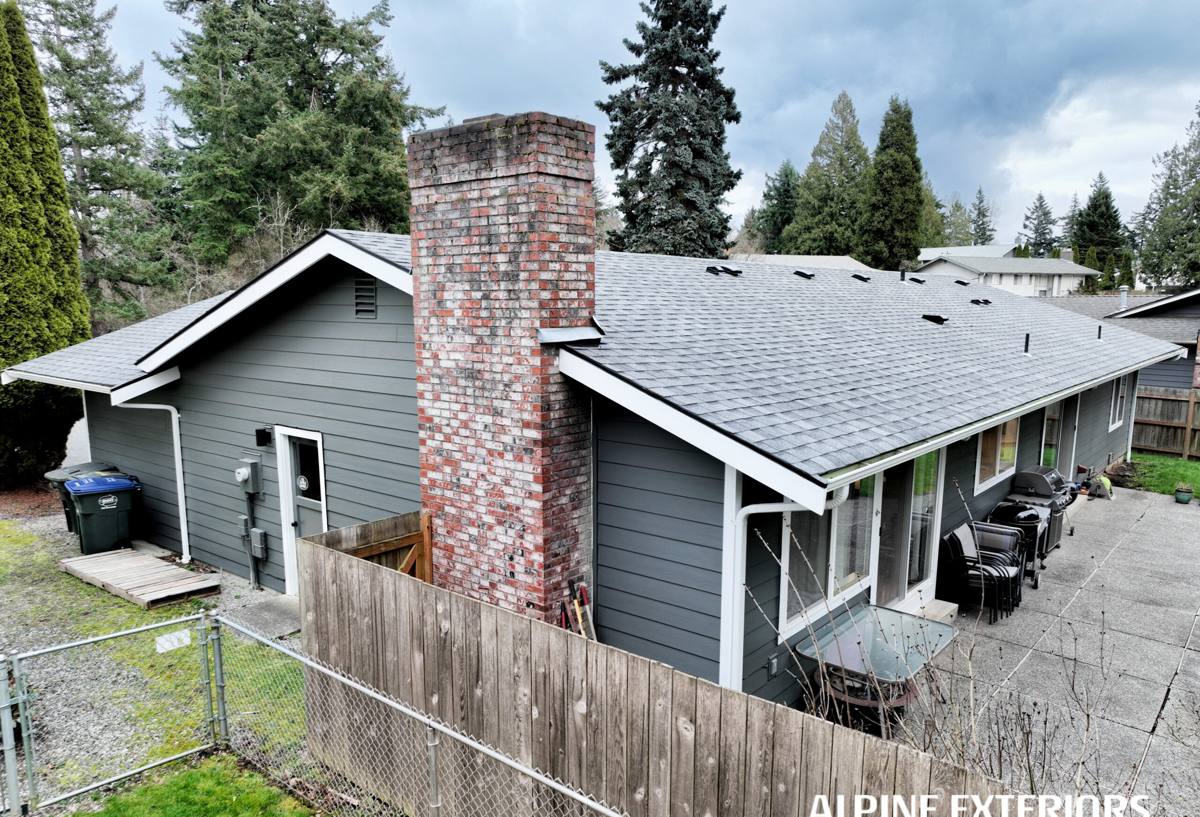
What March Point's Exposure Does to Siding
Salt Air and Coating Breakdown
Being surrounded by water on multiple sides means March Point homes see more consistent salt exposure than properties set back a mile or two inland. Salt accelerates corrosion on exposed fasteners and metal trim, and it breaks down field-applied paint and lesser coatings faster than a drier, more sheltered site would. A siding product that depends on an unbroken paint film to keep water out is under more pressure here than it would be almost anywhere else in the county.
Wind-Driven Rain at Every Joint
Rain on the peninsula rarely falls straight down. Wind off the bay pushes it sideways, and that means horizontal lap joints, corner boards, and trim transitions all take on water from an angle a calm-weather install detail was never designed to handle. Every seam in a siding system is a place water can try to get behind the material, and on an exposed site like this, those seams get tested a lot more often than average.
Moss, Shade, and Standing Moisture
North-facing and tree-shaded walls around March Point stay damp longer between rain events than sun-exposed ones, and that lingering dampness is exactly what moss and mildew need to take hold. Left alone, moss holds moisture directly against the siding surface, which speeds up finish breakdown and, on materials that aren't dimensionally stable, can contribute to softening or swelling underneath.
Why James Hardie Fiber Cement Is What We Install Here
We don't offer vinyl, LP SmartSide, Cemplank, Allura, primed spruce, or cedar siding. That's not because those products are worthless everywhere — plenty of contractors install them competently — it's because on a site with this much combined salt, wind-driven rain, and shade-driven moisture, we've standardized on one fiber cement system we trust completely rather than quoting whichever product happens to be cheapest that week.
| Material | Behavior in Salt Air & Driving Rain | Maintenance Burden Here | Realistic Lifespan |
|---|---|---|---|
| James Hardie fiber cement | Non-combustible, dimensionally stable core; doesn't absorb and swell with moisture | Low; factory finish resists fading and moss staining | 30+ years with correct install |
| Vinyl siding | Can become brittle with age and UV exposure; depends entirely on the barrier behind it | Low upfront, but hidden moisture problems are hard to catch | 20-30 years, variable in coastal exposure |
| LP SmartSide (engineered wood) | Wood-strand core vulnerable if moisture reaches a cut edge or fastener hole | Moderate; edge sealing and caulk need regular upkeep | 15-25 years, climate-dependent |
| Primed wood / cedar | Absorbs moisture readily; swells and can rot without consistent upkeep | High; repainting or resealing on a recurring cycle | 15-25 years with diligent maintenance |
James Hardie's fiber cement core is made from cement, sand, and cellulose fiber rather than wood, so it doesn't expand, contract, or absorb water the way wood-based products do. Hardie also builds climate-specific HZ product lines rather than one generic formulation sold nationwide, and the HZ10 line is engineered for wetter, harsher marine climate zones like ours — a closer match to a peninsula site than a product built primarily for drier inland regions. The factory-applied ColorPlus finish is baked on under controlled conditions rather than brushed on in the field, and it's backed by its own finish warranty separate from the substrate warranty on the board itself, which matters on a house that's going to see more weather cycles per year than one set back from the water.
What a Correct Fiber Cement Install Involves
Fiber cement performs the way it's supposed to only when it's installed to manufacturer spec. On an exposed site like March Point, skipping or shortcutting any of the following is where problems start:
- House wrap or weather-resistive barrier installed and correctly lapped before any siding goes up, so water that gets past the surface has somewhere to go besides the sheathing
- Correct fastener spacing and depth using corrosion-resistant fasteners rated for coastal exposure, not standard-grade hardware
- Proper clearance at the bottom of the wall and at all horizontal trim so siding isn't sitting in standing water or wicking moisture from grade
- Flashing correctly lapped at windows, doors, and every roof-to-wall transition, since these are the spots wind-driven rain actually finds a way in
- Joints and butt seams sealed or gapped per Hardie's specification rather than caulked tight in a way that traps moisture behind the board
- Factory-cut ColorPlus boards handled so cut edges are field-primed before installation, keeping the factory finish's protection intact everywhere except the cut line
None of this shows up in a photo of the finished wall. It shows up five, ten, and twenty years later, in whether the siding is still doing its job or starting to show staining, soft spots, and finish failure at the seams.
Our Process for a March Point Siding Project
Walkthrough and Assessment
We start by walking the property and looking at how each wall is actually exposed — which sides take direct wind and water off the peninsula, which are shaded and slower to dry, and whether the existing wall assembly has any moisture damage that needs addressing before new siding goes up. Installing new siding over an already-compromised wall just buries the problem.
Planning the Details Before Install Day
We work out fastening pattern, flashing details, and how the siding will meet trim, windows, and corners before crews start cutting board. On an exposed site, the goal is to have every detail decided on paper, not improvised in the field once material is already on the wall.
Installation to Manufacturer Spec
Every fastener, gap, and flashing lap follows James Hardie's published installation requirements for this climate zone. That's what keeps the manufacturer's warranty valid, and it's the difference between a wall that performs for decades and one that only looks right for the first year or two.
Final Walkthrough
We walk the finished job with you, explain what little maintenance fiber cement actually needs, and make sure you know what to look for if you ever want to check the wall yourself down the road.
Why Hire a Crew That Already Works March Point
March Point is a small area, and it doesn't see the volume of contractor traffic that busier parts of Anacortes and the rest of Skagit County do. That can mean homeowners here end up with a crew that's never had to think hard about wind off two directions of open water, or one that applies the same install approach they'd use on a sheltered inland lot. A crew that's worked this peninsula before already knows which walls take the worst of the exposure, what an underspecified install actually looks like a few years in on a house nearby, and where it's worth spending extra time on flashing and fastener choice. That kind of judgment doesn't show up on an estimate sheet, but it shows up in how the siding looks and performs a decade after installation.
Cost Factors for Fiber Cement Siding on a Peninsula Property
Fiber cement siding costs more upfront than vinyl and can run comparable to or above engineered wood, largely because of the material itself and the labor involved in correct installation. A few things move the price on a specific March Point home beyond base square footage:
| Factor | Why It Matters |
|---|---|
| Wall exposure and orientation | Sides facing open water or prevailing wind often warrant extra flashing and fastener attention |
| Existing wall condition | Rot or moisture damage found during tear-off needs repair before new siding goes on |
| Siding profile | Lap, panel, and shingle-style profiles differ in material use and installation labor |
| Trim and window count | More openings mean more flashing and finish detail work around each one |
| Access and site conditions | Height, slope, and how close a crew can get equipment to the house all affect labor time |
We'll walk your specific home and give you real numbers based on its actual walls and condition rather than a rough square-footage estimate — two houses of the same size on March Point can have very different scopes of work depending on how many of these factors apply.
Signs Existing Siding on March Point Needs Attention
Because peninsula homes take on more combined moisture and wind load than a typical inland Skagit County property, problems tend to surface earlier and in predictable spots. Worth checking before they turn into something bigger:
- Persistent moss or dark staining on shaded walls that keeps coming back shortly after cleaning
- Soft spots, bubbling, or visible swelling anywhere near the base of the wall or around window trim
- Paint or finish that's chalking, peeling, or fading noticeably faster on the wind-facing side of the house than elsewhere
- Gaps opening up at seams, corner boards, or trim that weren't there when the siding was newly installed
- Rust streaking below fasteners or metal trim, a sign salt air is working on the hardware
What This Means for Your Home
Every property on March Point sits a little differently relative to wind, water, and sun, and the right siding scope depends on the specific house — its age, orientation, and the actual condition of what's on it now. We're not going to recommend a full re-side if a targeted repair and some corrected flashing will do the job, and we're not going to install a product we don't think will hold up in this exposure. If you're weighing what your home's siding needs, we're happy to take a look and give you a straight answer.
If you'd like an honest assessment of your home's siding, reach out for a free, no-pressure estimate. We'll walk the property, talk through what we see, and lay out your options — no pressure either way.