 Anacortes
 Why March Point Decks Wear Out Faster
March Point sits out on open water, which means homes here take a different kind of weather beating than a deck a few miles inland in Anacortes. Wind off Fidalgo Bay and the surrounding waterways carries salt-laden moisture that settles on wood, metal, and concrete day after day. Add Skagit County's long stretch of driving rain each fall and winter, and you have a recipe for decks that rot, rust, and grow moss years before a similar structure would fail somewhere drier and more sheltered.
Most homeowners don't notice the damage until it shows up as something obvious — a soft board, a wobbly railing, a stair that flexes underfoot. By the time it's visible, the problem is usually further along underneath than it looks on the surface. That's the nature of deck damage in a marine climate: the parts doing the real structural work are hidden, and they're exactly the parts salt air and standing moisture attack first.
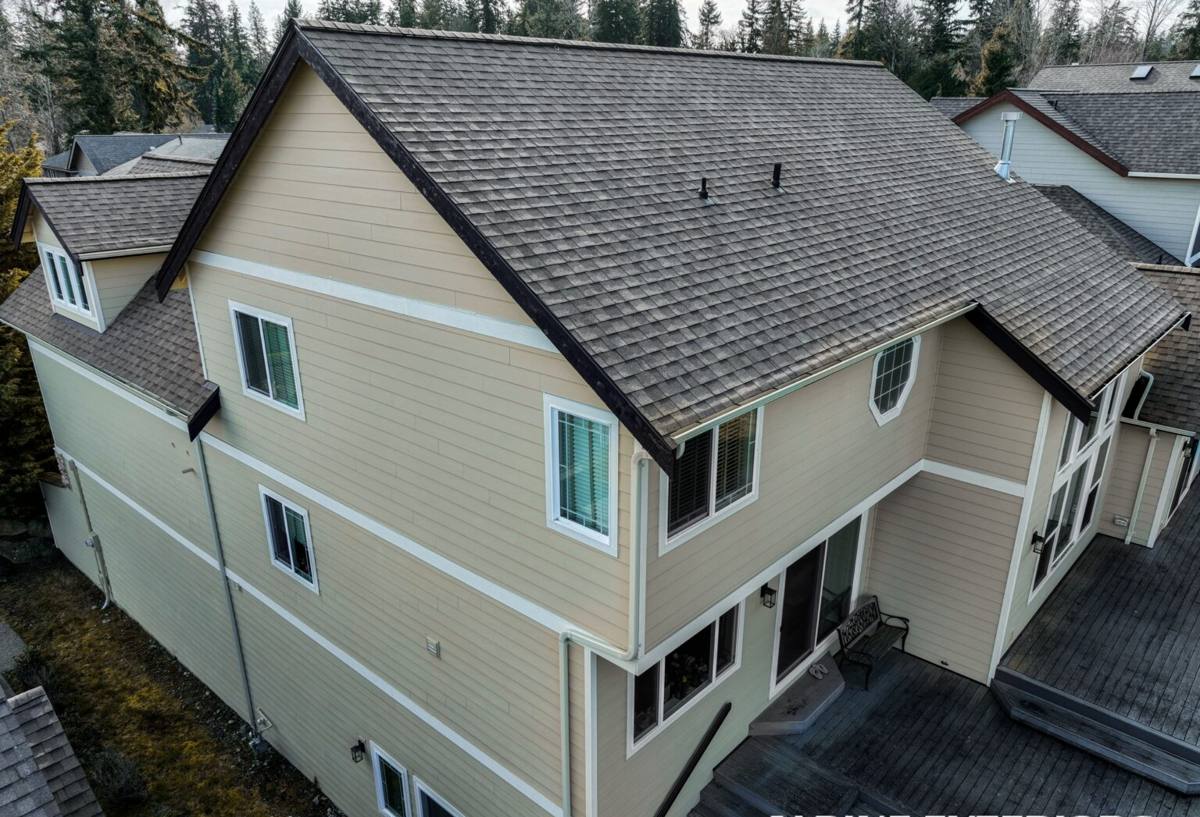
What Salt Air and Rain Actually Do to a Deck
Wood
Untreated or under-maintained wood absorbs moisture at the end grain, around fasteners, and anywhere a coating has worn thin. In a coastal setting, that wood rarely gets a full chance to dry out between rain events, especially through a Pacific Northwest winter. Repeated wet-dry cycling breaks down wood fiber, and rot sets in from the inside before it's visible on the surface.
Metal hardware
Joist hangers, bolts, screws, and post bases are often the first thing to fail on a deck exposed to salt air, well before the wood around them gives out. Standard zinc-coated fasteners corrode faster near open water, and once a fastener rusts and loses grip, the connection it was holding starts to move — which accelerates wear on the wood around it too.
Concrete and footings
Footings and post bases near grade take on splash-back moisture and, in low spots, standing water. Cracked or undersized footings combined with a wet base is a common reason posts rot from the bottom up on properties in this area.
Common Repairs We See on March Point Decks
Every deck is different, but a handful of problems show up again and again on homes exposed to this kind of weather:
- Rotted ledger boards where the deck attaches to the house — often the most serious issue because it's a structural connection, not just cosmetic
- Rusted or failing joist hangers and fasteners that need to be replaced with corrosion-rated hardware
- Soft, cupped, or splintering deck boards from repeated moisture exposure
- Post bases and stair stringers rotting near ground contact
- Railings that have loosened because the posts or connections underneath have weakened
- Moss and algae buildup making the walking surface slippery and holding moisture against the wood
Some of these are straightforward board-and-hardware fixes. Others — particularly ledger rot or failing footings — are structural issues that need to be corrected properly, not patched, because they affect whether the deck is safe to use.
The Long Moss Season and Why It's More Than Cosmetic
Anacortes and the rest of Skagit County go through an extended stretch of the year where decks rarely get a full day of direct sun and drying wind. That's exactly the environment moss and algae need. On a deck surface, moss does two things: it makes the boards dangerously slick when wet, and it holds moisture against the wood far longer than open air would. A deck that's shaded, close to grade, or tucked near landscaping will grow moss faster than one that's open and elevated — and once moss has been established for a season or two, the boards underneath it are usually already softer than they should be.
Cleaning moss off the surface is only half the job. If we find moss cover that's been there a while, we check the boards underneath for soft spots before doing any cosmetic work, because a fresh coat of sealer over a rotting board doesn't fix anything — it just hides it for a while.
Materials That Actually Hold Up Here
Not every decking or fastener option performs the same way this close to the water. Part of doing this job right is steering clients toward materials that are a good match for the exposure their specific deck gets, rather than defaulting to whatever is cheapest or most common.
| Material | How It Handles This Climate | Trade-Off to Know |
|---|---|---|
| Pressure-treated wood | Holds up well if sealed and maintained on a regular schedule | Needs re-sealing every few years; skipped maintenance shortens lifespan fast in salt air |
| Cedar | Naturally rot-resistant, ages well with upkeep | Softer wood, more prone to surface wear near grade and high-traffic areas |
| Composite decking | Doesn't absorb moisture the way wood does; low maintenance | Higher upfront cost; substructure underneath still needs to be real, rot-resistant wood or approved framing |
| Standard zinc-coated fasteners | Fine in low-exposure, inland settings | Corrodes noticeably faster in direct salt air — not our first choice this close to the water |
| Stainless or hot-dip galvanized fasteners | Built for coastal exposure, holds connection strength much longer | Costs more per fastener, but it's a small line item against the cost of redoing a repair |
Our standard is to use corrosion-rated hardware on any repair work this close to the water, even if the original build didn't. It costs a little more up front and it's the difference between a repair that lasts and one you're paying for again in a few years.
How We Approach a Deck Repair
1. Inspect before we quote
We walk the deck, check board condition, and get underneath to look at joists, the ledger connection, posts, and footings. Surface problems and structural problems get very different fixes, and we want to know which one we're dealing with before we give you a number.
2. Separate cosmetic wear from structural issues
A weathered but sound deck might just need cleaning, board replacement, and re-sealing. A deck with a rotted ledger or compromised posts needs those addressed first — everything else is secondary until the structure underneath is solid.
3. Repair with materials suited to the exposure
We match materials and hardware to where the deck sits — how exposed it is to wind and rain off the water, how much shade it gets, how close it is to grade. A deck tucked against the house gets different treatment than one standing open to the weather.
4. Explain what we found and why
Before any work starts, you'll know what's wrong, why it happened, and what the repair involves — no surprises added to the invoice partway through.
Repair or Replace? What Actually Drives That Decision
Homeowners often ask whether it's worth repairing an older deck or better to start over. The honest answer depends on a few specific factors, not the age of the deck alone.
| Factor | Leans Toward Repair | Leans Toward Replacement |
|---|---|---|
| Ledger board condition | Solid, minor surface wear only | Rotted or pulling away from the house |
| Footings and posts | Sound, properly sized | Undersized, cracked, or rotted at the base |
| Extent of board damage | Scattered boards need replacing | Most of the surface is soft or splintering |
| Framing layout | Meets current spacing and span needs | Undersized joists or spacing for the deck's actual use |
| Age and history | Well-maintained, sealed on a regular schedule | Years of deferred maintenance across the whole structure |
In a lot of cases, the frame and footings are still sound and it's the surface boards and hardware that need attention — that's a straightforward, cost-effective repair. When the structural connections are compromised, patching around them isn't a real fix, and we'll tell you that plainly instead of billing for a temporary solution.
Why Local Experience on March Point Matters
A deck a mile inland in Anacortes and a deck sitting exposed on March Point can wear at very different rates even if they're the same age and built from the same materials. Knowing how much exposure a given property actually gets — how much wind, how much salt spray, how much shade and standing moisture — changes what materials and hardware make sense for that specific job. A crew that regularly works properties in this part of Skagit County isn't guessing at that; they've seen how decks in this exact setting hold up over time and what tends to fail first.
It also means knowing what a proper repair looks like versus a quick patch that won't survive another wet season. That distinction matters more here than in a lot of places, simply because the weather doesn't give a poor repair much time to show its weaknesses.
Signs Your Deck Needs a Look
- Boards that feel spongy, soft, or spring back slowly when you step on them
- Visible rust streaks around fasteners or hardware
- Railings or posts that wobble or feel less solid than they used to
- Gaps or separation where the deck meets the house
- Persistent moss or dark staining that keeps coming back after cleaning
- Stairs that flex or feel less sturdy underfoot
Any one of these is worth having looked at before it turns into a bigger repair — especially the ones involving the ledger connection or posts, since those affect the safety of the whole structure, not just its appearance.
If you're noticing any of these signs on a March Point deck, or just want an honest read on where things stand, we're happy to take a look. Use the form below to request a free, no-pressure estimate.