 Anacortes
 Ship Harbor Sits Right at the Edge of the Weather
Homes near Ship Harbor in Anacortes take on a specific combination of punishment that inland Skagit County properties don't see nearly as much of: salt-laden air off the water, wind-driven rain that hits siding sideways instead of just running down it, and a shoulder season that stretches long and damp with moss and algae looking for anywhere to take hold. Add in the marine haze that keeps humidity high even on days it isn't actively raining, and you've got an exterior envelope that's working harder than siding on a house twenty minutes inland.
None of that is unusual for this part of Washington. But it does mean the siding choice and the installation details matter more here than they do in a lot of places, and it's why we don't treat every job the same regardless of address.
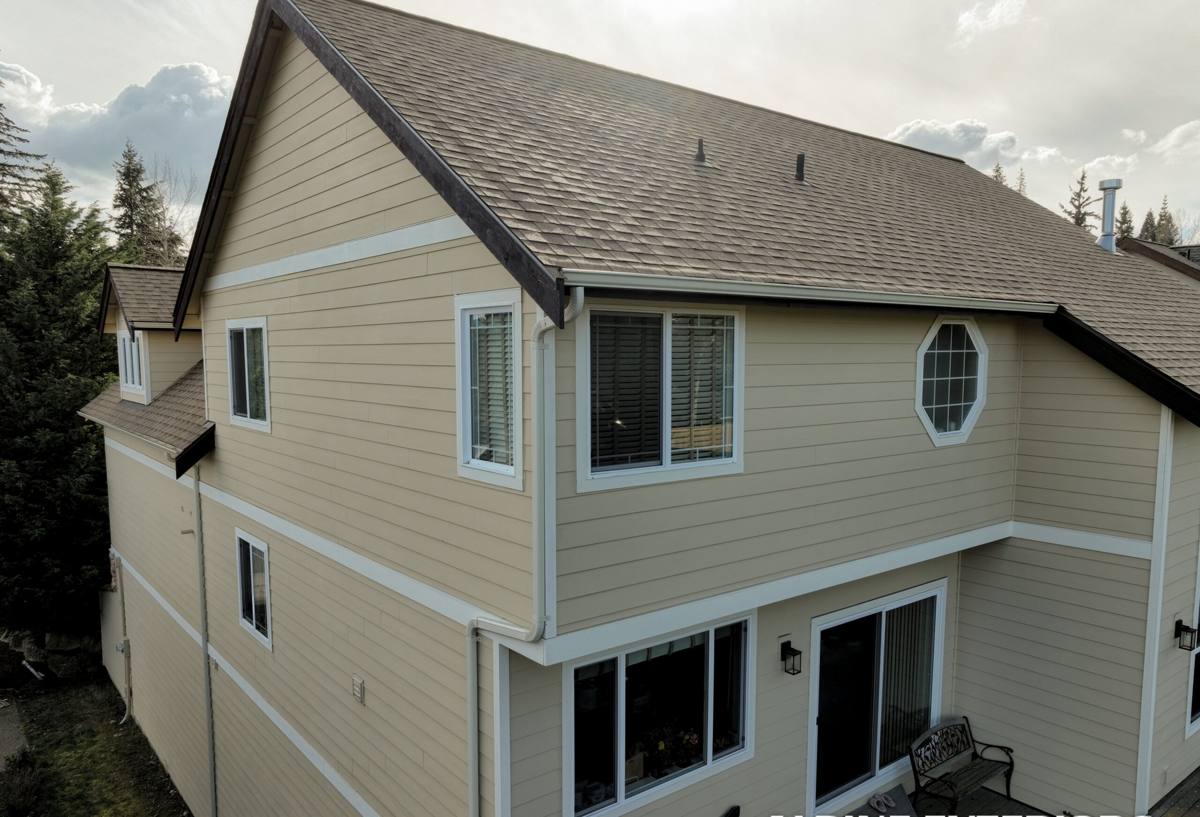
What Wood-Based and Vinyl Siding Struggle With Here
We don't install vinyl, cedar, primed spruce, LP SmartSide, or composite panel products like Cemplank or Allura, and the Ship Harbor exposure is a good illustration of why. Wood-based siding, whether it's solid cedar or an engineered wood panel, depends on its coating and sealed edges to keep moisture out. Salt air accelerates the breakdown of caulk and paint film, and once water gets behind a wood-based product in a damp environment like this, it doesn't dry out quickly — it swells, delaminates at cut edges, or invites rot and moss growth in shaded, north-facing walls that never get direct sun to dry them out.
Vinyl doesn't rot, but it moves. Temperature swings and wind loading near open water cause more expansion and contraction than vinyl sees inland, and over time that stresses fastener points and seams. It also doesn't hold up structurally in a fire, which matters more every year as wildfire smoke and ember exposure become a bigger part of the conversation on the west side of the state.
Fiber cement doesn't have either of those failure modes. It's non-combustible, it doesn't expand and contract with the seasons the way vinyl or wood do, and it doesn't rot. That's the baseline reason we standardized on James Hardie products rather than offering a menu of options.
Why James Hardie's HZ5 Line Is the Right Call for This Exposure
James Hardie engineers its siding in regional formulations, and the HZ5 line is built for climates that combine moisture with temperature swings and freeze-thaw cycling — which describes the Skagit County coastline well. The fiber cement formulation is designed to resist moisture-related damage, and because the material is cement-based rather than wood-based, it doesn't provide a food source for the moss and algae that thrive in Anacortes's long wet season.
That doesn't mean a Hardie wall never gets algae or moss on its surface — anything exposed to constant damp shade can accumulate surface growth. The difference is that growth stays cosmetic, sitting on top of the material and coming off with a wash, rather than working into the substrate the way it can with wood-based products.
ColorPlus Factory Finish vs. Field Paint
Near salt air, the finish on your siding is doing as much work as the substrate underneath it. James Hardie's ColorPlus finish is baked on at the factory in a controlled environment, which gives it more consistent coverage and adhesion than a field-applied paint job can match, especially on cut edges and in the kind of damp, cool conditions that are common on installation days here. It also carries its own finish warranty separate from the substrate warranty. We recommend ColorPlus for Ship Harbor jobs specifically because it reduces the number of touch-up and repaint cycles a homeowner has to manage over the life of the siding — one less maintenance task in a climate that already asks a lot of an exterior.
What a Correct Installation Looks Like on This Kind of Site
Fiber cement is only as good as the installation behind it, and that's doubly true in a wind-and-rain exposure like Ship Harbor. The details we hold to on every job here:
- Proper clearance and flashing: Siding held off decks, patios, and grade per manufacturer spec, with flashing at every horizontal transition so wind-driven rain has somewhere to go besides behind the board.
- Correct fastening pattern: Hardie specifies fastener type, spacing, and placement by product line and exposure category — we don't freelance this, because under-fastened siding is a common cause of call-backs in high-wind coastal spots.
- Weather-resistive barrier done right: House wrap lapped correctly, taped at seams, and integrated with window and door flashing so the drainage plane actually drains instead of trapping water against the sheathing.
- Butt joint and caulk discipline: Joints sealed with a quality sealant rated for the exposure, not just whatever's on the truck, and staggered so the whole wall isn't relying on one seam line.
- Ventilation behind the cladding: A drainage gap so any moisture that does get past the surface has a path to escape rather than sitting against the wall assembly.
Any one of these done wrong won't necessarily show up in year one. It shows up in year five or six, usually as staining, a soft spot near a bottom course, or paint failure at a joint — right when a homeowner assumes their siding should still be trouble-free.
Problem Areas We Pay Extra Attention to in Ship Harbor
Every neighborhood has its own quirks based on orientation, tree cover, and exposure to prevailing weather. On homes in and around Ship Harbor, we specifically check:
- North and west-facing walls that stay shaded and damp longest after storms — highest risk for moss and mildew buildup on any exterior surface.
- Areas near ground-level vegetation or retaining walls where splash-back keeps the lower courses of siding wetter than the rest of the wall.
- Corners and window trim exposed directly to wind-driven rain off the water, where flashing and sealant quality matter most.
- Older trim and fascia that may already show wear from decades of the same salt-air exposure the new siding will face.
Our Process, Start to Finish
We keep the process the same on every Ship Harbor job so nothing gets skipped under time pressure:
- On-site assessment: We look at the existing siding, sheathing condition where accessible, drainage around the foundation, and any trouble spots specific to the home's orientation and site.
- Product and color selection: We walk through Hardie's plank profiles, panel options, and ColorPlus palette so the choice fits the home and the neighborhood.
- Tear-off and inspection: Removing old siding gives us a look at the sheathing and framing underneath — this is where hidden moisture damage from a prior installation often turns up, and we address it before anything new goes up.
- Weather barrier and flashing installation: Done to spec before a single piece of siding goes on, since this layer is what actually keeps water out long-term.
- Siding installation: Installed to Hardie's fastening and clearance requirements for the HZ5 exposure zone.
- Final detailing and walkthrough: Caulking, touch-up, and a walkthrough so you know what to expect from the finish over time.
What Drives Cost on a Ship Harbor Siding Job
| Factor | Why It Matters Here |
|---|---|
| Tear-off vs. new construction | Removing existing siding adds labor but lets us inspect and correct the weather barrier underneath — important given the exposure |
| Siding profile (lap, shingle, panel) | Lap siding is the most common choice; shingle profiles take more labor per square foot |
| Trim and accent detailing | More trim lines mean more joints and flashing details, which take time to do correctly in this exposure |
| Home size and number of stories | Multi-story homes near open water often need additional access equipment and wind-related scheduling flexibility |
| Sheathing repair, if found | Not knowable until tear-off; salt-air exposure over decades can mean hidden repair needed on older homes |
A Simple Maintenance Checklist for Owners
- Rinse siding annually, more often on shaded north/west walls, to keep moss and algae from building up.
- Keep gutters clear so overflow doesn't run down the wall face repeatedly during heavy rain events.
- Check caulking at trim and window joints every couple of years and have any cracked sealant replaced promptly.
- Trim back vegetation and shrubs so air can circulate against the wall and dry it out between storms.
- Have a professional check flashing and clearance points periodically, especially after major wind events.
Why Local Installation Experience Matters
A crew that's installed siding across Anacortes and the rest of Skagit County knows which details matter more on a Ship Harbor lot than they would on a job in a more sheltered part of town — where wind-driven rain typically comes from, which walls stay wet longest, and how the local moisture cycle behaves across the year. That's not something a manufacturer spec sheet alone tells you; it's learned by doing the work on homes with the same exposure, year after year. It's also why we stick to one product system we know thoroughly rather than installing whatever a homeowner asks for — consistency in the material lets us focus entirely on getting the installation right for the conditions this area actually sees.
If you're weighing a siding project on a Ship Harbor home, we're glad to take a look and walk you through what we'd recommend for your specific house — no pressure, no obligation. Use the form below to request a free estimate.