 Anacortes
 Mount Vernon Siding Has to Answer to Skagit County Weather
Mount Vernon sits in the Skagit Valley, close enough to the water that homes here deal with the same marine air, driving rain, and long wet winters that shape building decisions all along this stretch of Washington. Add river-valley humidity to that mix and you get a climate that's genuinely hard on exterior materials — not dramatic, just relentless. Siding here doesn't fail because of one big storm. It fails a little at a time, over years, from moisture that never fully dries out between rain events and a moss season that can stretch from October well into spring.
We install James Hardie fiber cement siding exclusively, and we do it because it's the product we've found actually holds up to this pattern of weather without turning into a maintenance project every couple of years. This page is about what that looks like specifically for a Mount Vernon home — not a generic siding pitch, but the real considerations for this area.
What the Local Climate Actually Does to a House
Moisture That Doesn't Fully Leave
Skagit County doesn't get extreme downpours as often as it gets steady, soaking rain paired with high humidity. That combination matters more than storm intensity. Wood-based siding products absorb moisture during wet stretches and need real drying time to release it — and in a valley climate, that drying window is often shorter than the next rain event. Over years, that cycle is what causes swelling, delamination, and paint failure at seams and butt joints.
Moss and Organic Growth
North-facing walls, areas shaded by trees, and anywhere siding stays damp longer than the rest of the house are prone to moss and algae growth here. This isn't just cosmetic — organic growth holds moisture against the siding surface, which accelerates whatever underlying moisture problem already exists. Products that are more porous or that rely on a field-applied paint film tend to show this first.
Salt-Influenced Air
Proximity to Puget Sound means the air carrying moisture inland also carries a degree of salt content. It's not the same direct salt spray you'd get right on the waterfront, but it's enough over a couple of decades to matter for fasteners, flashing, and any siding material with a finish that isn't built to resist it.
Why We Only Install James Hardie in This Area
We've made a deliberate call to install one product system rather than offer a menu of siding options. James Hardie fiber cement is manufactured from cement, sand, and cellulose fiber — it doesn't absorb and release moisture the way wood-based products do, and it's non-combustible, which is a real consideration given wildfire smoke seasons have become part of Pacific Northwest summers even here in the wetter western part of the state.
We don't install vinyl, LP SmartSide, cedar, primed spruce, or comparable fiber cement alternatives like Cemplank or Allura. That's not a knock on every homeowner who has one of those products — plenty of them get a normal service life with regular upkeep. It's that when we weigh moisture behavior, long-term appearance, and what a Mount Vernon roofline and wall assembly actually go through over 20-plus years, Hardie is what we're willing to put our name on and warranty.
The HardieZone HZ5 System — Built for This Region
James Hardie engineers its siding by climate zone, and the Pacific Northwest falls under the HZ5 designation — the wetter, more moisture-exposed end of their product spectrum. HZ5 panels and lap siding are formulated with that climate in mind, which is a meaningful distinction from siding designed for drier, more moderate regions.
| Product Line | Common Use on Mount Vernon Homes | Why It Fits |
|---|---|---|
| HardiePlank lap siding | Primary wall cladding, most common choice | Traditional lap look, engineered for wet-climate durability |
| HardiePanel vertical siding | Accent walls, gables, modern facades | Clean lines, fewer horizontal joints to manage water at |
| HardieTrim boards | Corners, window and door trim, fascia | Matches siding density and finish, resists the same moisture that attacks wood trim |
| HardieShingle siding | Accent gables, craftsman-style detailing | Textured look without the upkeep of cedar shingle |
All of it comes with ColorPlus Technology as an option — a factory-baked finish that's more consistent and more resistant to fading and moisture intrusion at the finish layer than field-applied paint, which matters when you're trying to minimize repainting cycles in a climate that doesn't offer many good drying days.
What a Correct Installation Actually Involves
Fiber cement siding is only as good as the installation behind it. A rushed or by-the-book-minimum job on a Mount Vernon home can fail in the exact ways homeowners were trying to avoid by choosing Hardie in the first place. Here's what we treat as non-negotiable:
- Removing existing siding down to the sheathing so we can actually inspect for hidden rot or moisture damage, rather than siding over a problem
- Installing a code-compliant water-resistive barrier with correctly lapped, shingle-style flashing at every window, door, and penetration
- Maintaining proper clearance between the bottom of the siding and grade, decks, or roof lines so water has somewhere to go
- Following James Hardie's fastener spacing and type specifications exactly — this is one of the most common places corners get cut
- Caulking and sealing only where Hardie's installation guidelines call for it, not everywhere, since over-sealing can trap moisture instead of shedding it
- Back-priming or factory-finishing cut edges so raw, absorbent edges aren't left exposed to the weather
Skipping any one of these doesn't show up on day one. It shows up in year five or six, usually as a moisture problem at a window head or a bottom course that never quite dries out.
Our Process for Mount Vernon Projects
1. On-Site Assessment
We walk the exterior, check for existing moisture or rot damage, and look at how the house is currently handling water — gutters, downspouts, grading, and roof-to-wall transitions all factor into what the siding needs to do.
2. Tear-Off and Sheathing Inspection
We remove the old siding rather than installing over it. This is when hidden problems — soft sheathing, failed old flashing, past water intrusion — actually surface, and it's the only point where they can be fixed before new siding goes on.
3. Water Management First
Weather barrier and flashing details go in before a single piece of Hardie siding is hung. Given how much of this region's siding failure traces back to water finding a way behind the cladding, this step gets as much attention as the visible finish work.
4. Installation to Manufacturer Spec
Fastener pattern, spacing, and clearances follow James Hardie's published installation requirements — this is also what keeps the manufacturer's warranty valid, which matters if you ever need to make a claim.
5. Final Walkthrough
We go over the finished work with the homeowner, confirm trim and caulking lines, and make sure everything matches what was agreed on before we call the job done.
Choosing Colors and Textures That Hold Up Locally
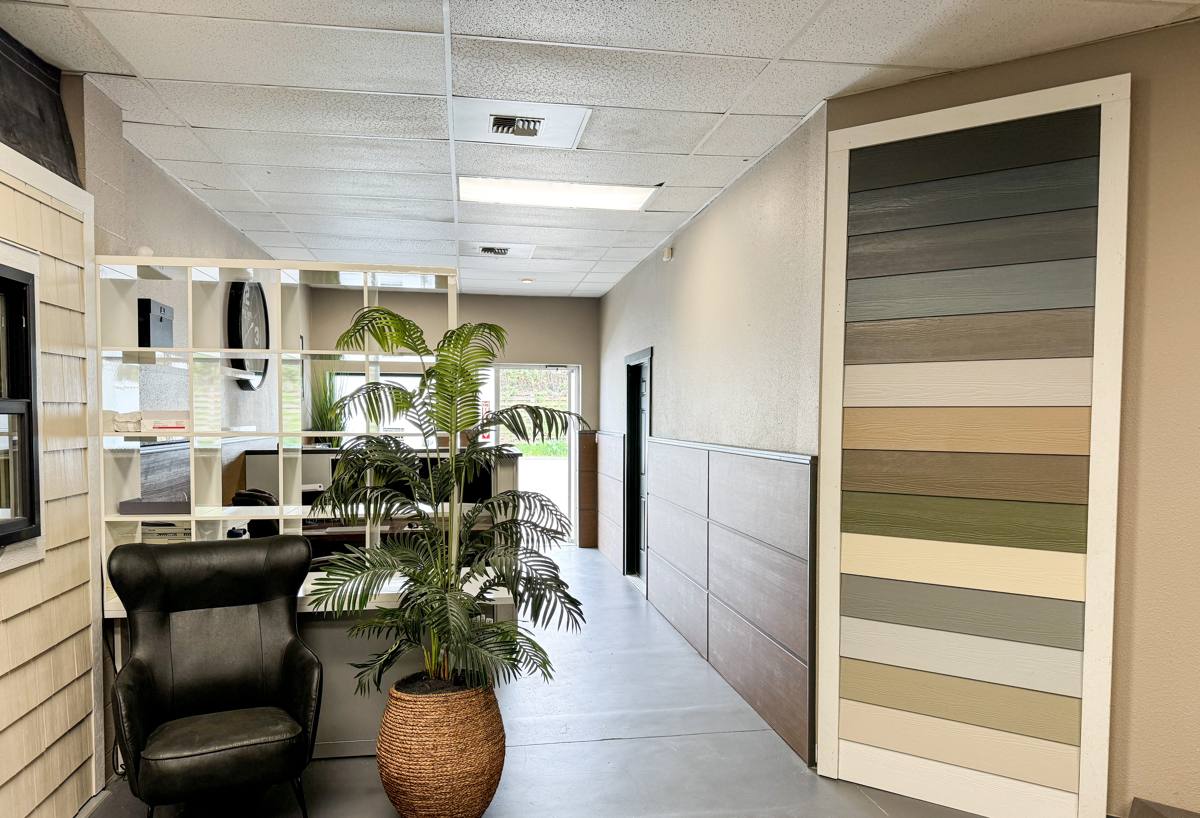
ColorPlus finishes come in a range of tones, and for this area we generally steer homeowners toward finishes that show moss and water streaking the least on north- and shade-exposed walls — lighter, cooler tones tend to hide the early stages of organic growth better than deep, saturated colors, though the finish itself resists staining regardless of shade. Smooth or cedar-textured lap profiles are both common choices in Mount Vernon; the decision usually comes down to whether the home is going for a clean modern look or a more traditional Pacific Northwest exterior.
What Siding Replacement Costs Depend On
We don't publish blanket per-square-foot pricing because it genuinely varies by house, but these are the factors that move a quote up or down on a typical Mount Vernon project:
| Factor | How It Affects Cost |
|---|---|
| Existing siding removal | Multiple layers or asbestos-era materials add labor and disposal cost |
| Sheathing or framing repair | Hidden moisture damage found at tear-off adds material and labor |
| Home size and story count | More wall area and higher work (scaffolding, lifts) increase cost |
| Trim and architectural detail | Gables, dormers, and multiple corners take more time than flat wall runs |
| Product line and profile | Panel vs. lap vs. shingle accents, and factory finish vs. field paint |
| Color and finish selection | Standard ColorPlus palette vs. custom or premium finishes |
The only way to get real numbers is a walk-through of your specific house, which is what our estimate covers.
Maintenance Once It's Installed
James Hardie siding is low-maintenance, not no-maintenance. In this climate, a few habits go a long way toward getting the full service life out of it:
- Rinse the exterior once or twice a year, focusing on north-facing and shaded walls where moss and algae take hold first
- Keep gutters clear so overflow doesn't run down the siding face repeatedly
- Trim back vegetation and tree limbs that keep a wall shaded and damp longer than the rest of the house
- Check caulking at trim joints and penetrations every year or two and have any gaps resealed
- Address any moss buildup promptly rather than letting it establish — it's far easier to rinse off early than remove once it's rooted in
Why It Matters That We Already Work in Mount Vernon
A crew that's already worked on homes in this specific area knows the failure patterns before they show up — which wall orientations moss hits first, how local roof and gutter setups tend to dump water, and what flashing details actually hold up through a Skagit Valley winter versus what looks fine on install day. That local pattern recognition is worth more than it sounds like, because it changes small decisions throughout the job that a crew unfamiliar with the area might not think twice about.
It also means we're a known, local point of contact if a warranty question ever comes up years down the road, rather than a company that did one job in the area and moved on.
If you're weighing a siding replacement or repair on a Mount Vernon home, we're happy to come take a look and give you a straightforward, no-pressure estimate — no obligation, just an honest read on what your house actually needs.