 Anacortes
 Guemes Island sits just across the water from Anacortes, close enough that most of the same weather rolls straight over it, but far enough that getting a crew and materials there means working around a ferry schedule instead of just driving over. When a windstorm rips shingles loose or a tree limb comes down on a roof out here, that logistics gap is the first thing that separates a contractor who actually works this island from one who's only ever seen it from the mainland side of the channel. This page covers what storm damage roof repair actually involves for a Guemes Island home — what the local climate and island access do to a repair job, what a correct fix looks like, and how we run the work from the first call to the final walkthrough.
What Storms Do to a Guemes Island Roof
Guemes Island catches weather off the water from more than one direction, and a lot of the island's homes sit on lots with heavy tree cover — fir, cedar, and alder that shed limbs in a hard blow and hold shade and moisture on the roof planes underneath them for much of the year. That combination of open-water wind exposure on some lots and dense tree cover on others means storm damage here doesn't look the same from one property to the next. A waterfront home might take a straight hit of wind-driven rain and lose shingles at a ridge or eave. A wooded interior lot is more likely to see a punctured roof deck or crushed section from a falling limb, with the surrounding shingles already weakened by years of moss and shade before the storm ever hit.
Salt air off the water is a slower factor, but it matters just as much. It works on exposed fasteners, flashing, and metal drip edge year-round, so a roof that's already lost some corrosion resistance goes into a storm in worse shape than its age alone would suggest. And Skagit County's long moss season means a lot of shaded roof sections are already holding extra moisture weight and losing granule protection before a storm ever adds wind and impact damage on top of it.
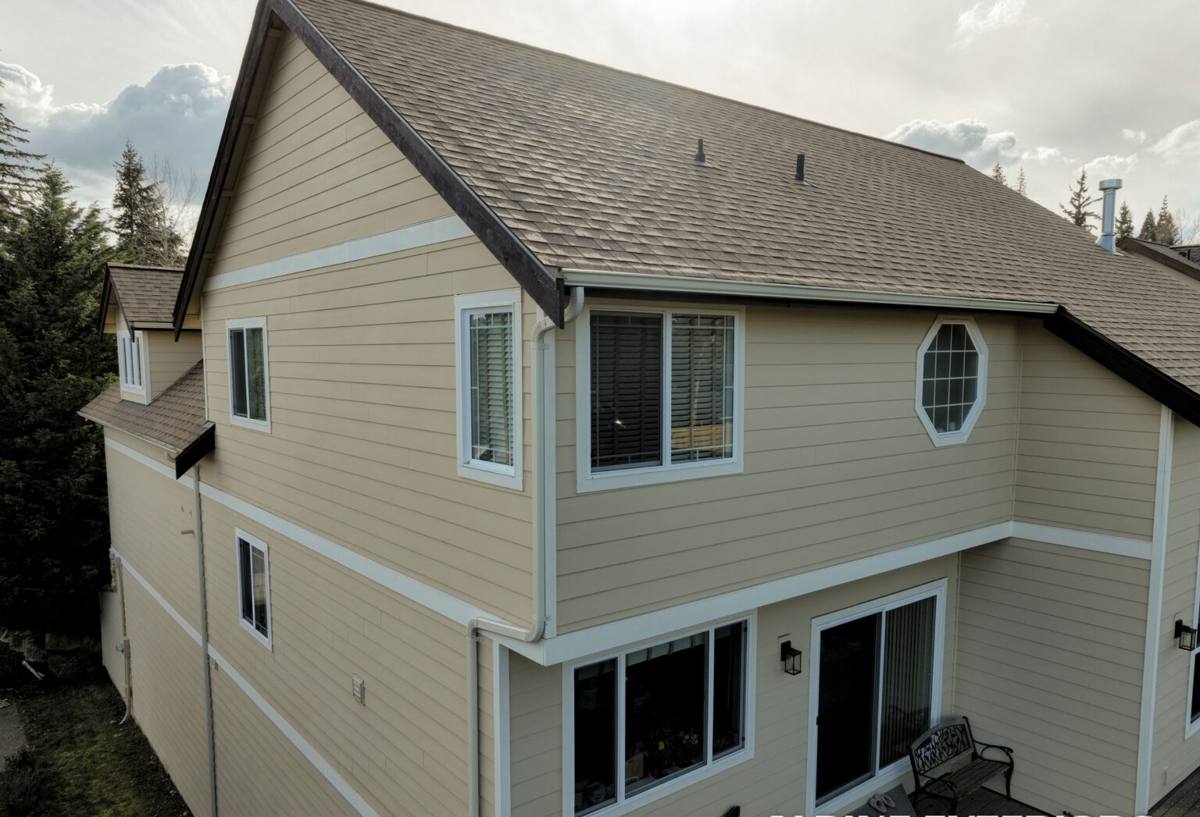
Why Ferry Access Changes How a Storm Repair Gets Handled
An island community changes the practical side of storm response more than most homeowners expect. A crew that shows up without pre-loaded tarps, fasteners, and enough material to finish a section repair in one trip either has to leave a roof partially exposed overnight or wait for the next scheduled ferry crossing to bring back what's missing. Neither is a good position to be in when more rain is still in the forecast.
We build Guemes Island calls around that reality instead of learning it on site. That means loading trucks with a wider margin of tarping material, fasteners, and common flashing stock than we would for a mainland job, and being realistic with homeowners up front about what can be finished same-day versus what needs a scheduled follow-up trip. It also affects debris hauling — getting torn-off roofing material and broken limbs off the island takes planning around ferry capacity, not just a quick trip to a dumpster.
Emergency Tarping vs. Permanent Repair
The first call after storm damage is almost always about stopping active water intrusion, not finishing the whole job. Emergency tarping is meant to buy time safely — a properly secured tarp, tucked and fastened correctly rather than just draped and weighted down, keeps water out until a full repair can be scoped and scheduled. A poorly secured tarp can do more harm than the original damage, either by trapping moisture against the deck or by tearing loose in the next round of wind and leaving the hole open again.
Permanent repair is a separate step that needs a clear-eyed look at the roof once things have calmed down: how much of the surrounding roofing was compromised beyond the obvious impact point, whether the deck itself needs replacement, and whether flashing at nearby valleys or penetrations was disturbed in the same event. Rushing straight to a patch without that assessment is how a storm repair turns into a repeat call a year or two later.
What a Correct Storm Damage Repair Involves
Assessing the Full Extent of the Damage
Storm damage rarely stays inside the boundaries of the obvious hole or missing section. Wind that lifted one area of shingles has usually stressed the fasteners and seals on adjacent courses too, even where nothing looks visibly wrong yet. A proper inspection checks the roof deck for soft spots, looks at flashing near the damaged area, and checks the attic from underneath for water tracking that's already made its way past the surface.
Matching Materials and Blending the Repair
Where a section repair makes more sense than a full replacement, matching shingle profile, color, and where possible manufacturer helps the repaired section age at the same rate as the rest of the roof instead of standing out and weathering differently. Older roofs with discontinued color runs sometimes can't be matched exactly, and it's worth an honest conversation about that before work starts rather than after.
Documentation for Insurance
Photos of the damage before any tarping or repair work begins, along with a written scope describing what was found and what's being done about it, make the insurance claims process considerably smoother. We document as a normal part of the job, not as an extra step tacked on only when a homeowner asks for it.
Common Storm Damage We See on Guemes Island Roofs
- Shingles lifted or torn loose along ridges, eaves, and exposed slopes facing open water
- Punctured or crushed roof sections from fallen limbs on wooded lots
- Flashing pulled loose or bent at valleys, chimneys, and wall intersections after high wind
- Granule loss and exposed underlayment on sections that took direct debris impact
- Water staining on interior ceilings or in the attic that shows up days after the storm, once water has had time to track through
- Gutters and downspouts torn loose or clogged with storm debris, backing water up under the roof edge
Repair Approaches Compared
| Approach | When It Fits | What to Know |
|---|---|---|
| Emergency tarp only | Immediately after the storm, before a full assessment is possible | A temporary measure meant to stop water intrusion, not a finished repair — should always be followed by a permanent fix |
| Section repair | Damage is contained to a limited area and the rest of the roof is in reasonably sound condition | Faster and less costly than full replacement, but depends on being able to match materials and confirm surrounding roofing wasn't compromised |
| Full roof replacement | Damage is widespread, the roof was already near the end of its service life, or underlying deck damage is extensive | Addresses the whole roof system at once, including underlayment and flashing that a section repair would leave untouched |
Working With Insurance on a Storm Claim
Most storm damage claims move faster when the homeowner has documentation in hand before the adjuster visit — photos, a written repair scope, and a clear timeline of when the damage was discovered. We're glad to walk through what we found on the roof with an adjuster directly if that's useful, and to provide a written estimate that itemizes the work rather than a vague lump sum, since that's usually what claims processing actually needs to move forward.
It's also worth being cautious after any major storm about contractors who show up door-to-door on the island offering fast, cash-only repairs. Storm damage draws that kind of activity in a lot of coastal communities, and a repair done by someone who won't be reachable in six months isn't much of a repair at all if something goes wrong later.
How Our Process Works
- Initial call and triage: We ask what you're seeing and how urgent the water intrusion is, and get a ferry crossing scheduled as quickly as the situation calls for.
- On-site inspection and emergency tarping if needed: We assess the damage in person and get any active leak stopped safely before anything else.
- Written estimate: A clear scope covering what was found, what's being repaired or replaced, and the materials involved — with photos included for your records and any insurance claim.
- Scheduled repair: We plan the crossing and materials needed to complete the work in as few trips as possible, and keep you informed if weather or ferry timing shifts the schedule.
- Final walkthrough: We review the completed repair with you, confirm the roof is fully sealed and sound, and do a full site cleanup, including hauling debris back off the island.
Why Hiring a Crew That Already Works Guemes Island Matters
A contractor who regularly works on the island already knows how to plan around ferry crossings, how much material to bring on the first trip, and which parts of Guemes Island tend to take the harder hits in a given storm depending on which direction it came from. That kind of practical knowledge shortens the gap between "roof is damaged" and "roof is dry and secure," which matters most in the hours right after a storm.
It also matters for accountability afterward. A workmanship warranty only means something if the company behind it is still doing business in the area and can get a crew back out to the island if a question comes up later, rather than a contractor who worked the island once during a bad storm season and was never seen again.
Questions Worth Asking Before You Hire
- Have they done actual roofing work on Guemes Island before, or would this be their first trip out?
- Do they carry current Washington contractor licensing, liability insurance, and workers' compensation?
- Will they document damage with photos and a written scope for insurance purposes?
- Is emergency tarping treated as a real, properly secured fix, not just a tarp thrown over the hole?
- Do they explain the difference between a section repair and full replacement for your specific situation, rather than defaulting to whichever is more profitable?
If a recent storm has left your Guemes Island roof with missing shingles, a leak, or visible damage, we're glad to get out to the island and take an honest look — including emergency tarping if water intrusion is active. Use the form below to request a free, no-pressure estimate.