 Anacortes
 Guemes Island Asks More of Your Siding Than a Typical Skagit County Lot
Guemes Island sits close enough to Anacortes to feel like a neighborhood, but it lives by different rules. Almost every home here is within a few hundred yards of saltwater, and most are wrapped in trees that hold shade and moisture long after the rest of Skagit County has dried out. That combination — salt-laden air, wind-driven rain off Rosario Strait and Guemes Channel, and a moss season that can run eight or nine months on the shaded sides of a house — puts real wear on exterior cladding that a lot of siding products simply aren't built to handle for the long haul.
We install siding on Guemes Island regularly enough to know what actually fails out here, and it's rarely the wall itself. It's the material choice, the flashing details, and the gaps left at trim and penetrations where moisture gets a foothold and never fully leaves.
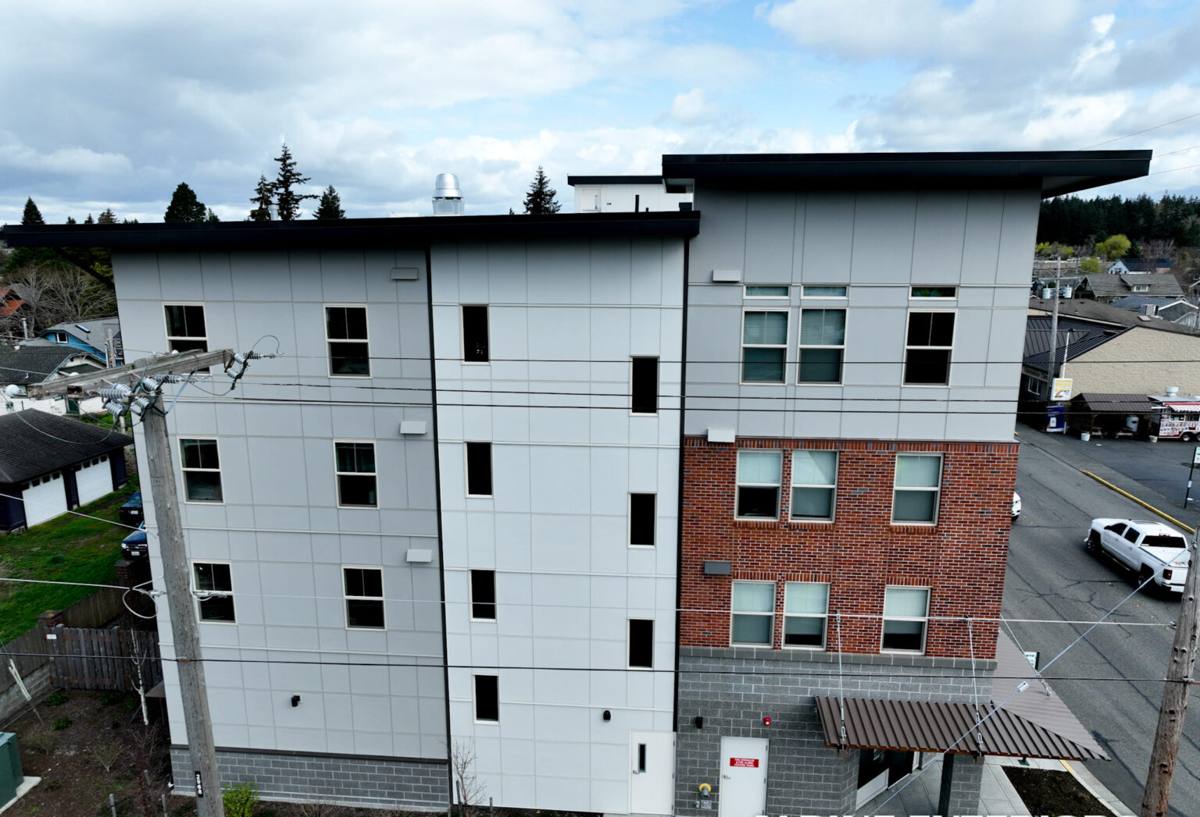
What Salt Air, Rain, and Moss Actually Do to a Wall Over Time
Salt air
Airborne salt is corrosive to exposed metal fasteners, flashing, and hardware, and it accelerates the breakdown of coatings that aren't rated for marine exposure. On an island lot, that corrosion pressure is constant, not occasional — it's not just the homes facing open water that feel it, since salt-laden air moves with the wind across the whole island.
Wind-driven rain
Guemes Island catches weather from multiple directions depending on the storm track, which means siding here often has to shed rain that's hitting the wall at an angle rather than falling straight down. That puts extra load on lap overlaps, butt joints, and any spot where two pieces of siding or trim meet. A gap or reverse lap that would be a non-issue in a sheltered inland yard can become a water entry point on an exposed island wall.
Moss and shade
Wooded, shaded lots — common on Guemes — stay damp longer after rain than open lots do. Moss and algae take hold on north-facing walls and under tree canopy, and if the siding surface underneath isn't dense and stable, sustained dampness works its way into the material over years, not weeks. It's a slow problem, which is exactly why it gets ignored until it's expensive.
Why We Install Only James Hardie Fiber Cement Here
We don't install vinyl, LP SmartSide, primed wood, or the other fiber cement brands on the market, and Guemes Island's environment is a big part of why. Fiber cement as a category resists moisture, insects, and fire far better than wood-based or vinyl products, but not all fiber cement is engineered the same way. We standardized on James Hardie because of the factory-applied ColorPlus finish (which holds color and resists fading better than field-applied paint), the HZ5 product engineering built specifically for wet, marine-influenced climates like ours, and a transferable warranty backed by a manufacturer with decades of Pacific Northwest installations behind it.
That doesn't mean every other product is bad — it means we've made a professional call to install one system we can stand behind fully, install correctly every time, and warranty with confidence, rather than splitting our crews across several product lines with different installation rules and different failure points.
What a Correct Installation Involves on an Island Lot
Fiber cement siding is only as good as the water management system behind it. On Guemes Island, where the margin for error is smaller than inland, we don't skip steps:
- Full removal of old siding down to the sheathing so we can actually see the wall condition, not guess at it
- Repair of any rot or soft sheathing found during removal before a single new panel goes up
- A continuous weather-resistive barrier, lapped correctly from bottom to top so water is directed out, not in
- Rigid or fiber cement trim and correctly flashed window and door openings, with attention to head flashing that actually sheds water outward
- Proper fastener spacing and depth per Hardie's installation specs — overdriven or underdriven nails are one of the most common causes of early siding failure
- Correct clearance at the bottom of the wall, decks, and roof lines so siding never sits in standing water or constant splash-back
- Caulking and sealant only where Hardie's install guide calls for it — not as a substitute for proper flashing
Skipping any one of these doesn't usually show up in year one. It shows up in year five or eight, as a soft spot, a stain, or a section of siding that's failing while the rest of the wall looks fine.
Working on Guemes Island: Logistics That Affect Your Project
Getting a crew and a full load of materials onto Guemes Island isn't the same as pulling up to a job in town. Ferry scheduling shapes the workday — crews and equipment cross on a set schedule, not on demand, so we plan material deliveries and crew arrivals around ferry timing rather than treating it as an afterthought. That means a Guemes Island project benefits from a contractor who already has a rhythm for it, instead of one working it out for the first time on your dime.
We also plan around the island's narrower, sometimes tree-lined driveways and the realities of septic systems and wells near the work area — staging materials and running a job site here takes more forethought than a typical mainland lot.
How Our Process Works, Start to Finish
1. On-site assessment
We walk the exterior with you, check the condition of the existing siding, sheathing, and trim, and look specifically at moisture-prone areas: north-facing walls, shaded sections under tree cover, and any spot near grade or a deck ledger.
2. Scope and estimate
You get a written scope covering removal, any sheathing repair allowance, the Hardie product and profile, trim details, and color — with the ferry and access logistics already factored into scheduling, not sprung on you later.
3. Material staging
Because a second unplanned ferry run costs a full day, we over-plan material counts and stage deliveries so the crew isn't waiting on supplies mid-project.
4. Removal and repair
Old siding comes off, sheathing is inspected, and any rot or damage is repaired and documented before new siding goes up.
5. Installation
Weather barrier, flashing, trim, and Hardie panels or lap siding go on to manufacturer spec, with fastening and clearances checked as the crew works — not just at the end.
6. Final walkthrough
We walk the finished job with you, cover basic care, and make sure everything meets the standard we'd want on our own home.
Comparing Siding Options for an Island, Coastal-Exposure Home
| Material | Salt air / corrosion resistance | Moisture and moss resistance | Typical lifespan in this climate |
|---|---|---|---|
| Vinyl | Can become brittle and discolor faster under UV and salt exposure | Doesn't rot, but trapped moisture behind it goes unnoticed | Shorter service life before warping or fading is visible |
| Primed wood / cedar | Fasteners and coatings degrade faster in salt air | Absorbs moisture; needs frequent repainting and is prone to moss growth | Shortest, without aggressive maintenance |
| LP SmartSide / other engineered wood | Moderate; still wood-based at the core | Engineered to resist moisture better than raw wood, but edge sealing is critical | Moderate, dependent on installation and upkeep |
| James Hardie fiber cement | Factory finish and non-organic material hold up well to salt exposure | Dense, non-combustible material resists moisture intrusion and moss adhesion better than wood-based products | Longest, when installed to spec and maintained normally |
These are general characteristics, not guarantees — every material's real-world performance still comes down to installation quality and ongoing upkeep.
Living With Hardie Siding on Guemes Island
Once it's installed correctly, Hardie siding on an island lot doesn't need much. An occasional rinse to clear off salt residue and pollen buildup, a look at caulk joints every year or two, and keeping vegetation trimmed back from walls to reduce shade and trapped moisture are the main things worth staying on top of. Because the color is baked into the ColorPlus finish rather than painted on after installation, you're not signing up for a repaint cycle the way you would with wood siding exposed to this much salt and shade.
What to Check Before Hiring Anyone for a Guemes Island Siding Job
- Do they have documented experience working on the island, including managing ferry-dependent scheduling?
- Will they inspect and repair sheathing before installing new siding, not just cover over existing conditions?
- Are they installing to the manufacturer's published fastening and flashing specifications, not a shortcut version?
- Is the warranty actually transferable, and does it cover both material and workmanship?
- Do they give you a real material list and staging plan so the job isn't delayed waiting on a second ferry trip?
Let's Look at Your Guemes Island Home
Every island property carries its own mix of sun, shade, and wind exposure, and that mix should shape the install details, not just the product choice. If your siding is showing moss buildup, soft spots, or age that doesn't match the rest of the house, we're glad to come take a look. Request a free, no-pressure estimate using the form below and we'll walk the property with you and lay out exactly what a correct James Hardie installation would involve for your home.