 Anacortes
 Guemes Island Roofs Work Harder Than Most
A roof on Guemes Island earns its keep. Sitting out in Rosario Strait, homes here take a steadier beating from salt-laden air, wind-driven rain, and shade-heavy tree cover than most roofs a few miles inland in Anacortes proper. Asphalt shingles can absolutely hold up to that environment for their full service life — but only if the installation accounts for the specific conditions the island throws at it, not a generic Skagit County job spec.
We've been doing roofing work across Anacortes and the surrounding islands long enough to know that a "standard" install and a "Guemes-ready" install aren't the same thing. This page covers what actually matters for asphalt shingle roofing on Guemes Island: the climate factors, what a correct job includes, how our process runs, and why local, island-experienced crews get better long-term results than a mainland outfit doing a one-off job.
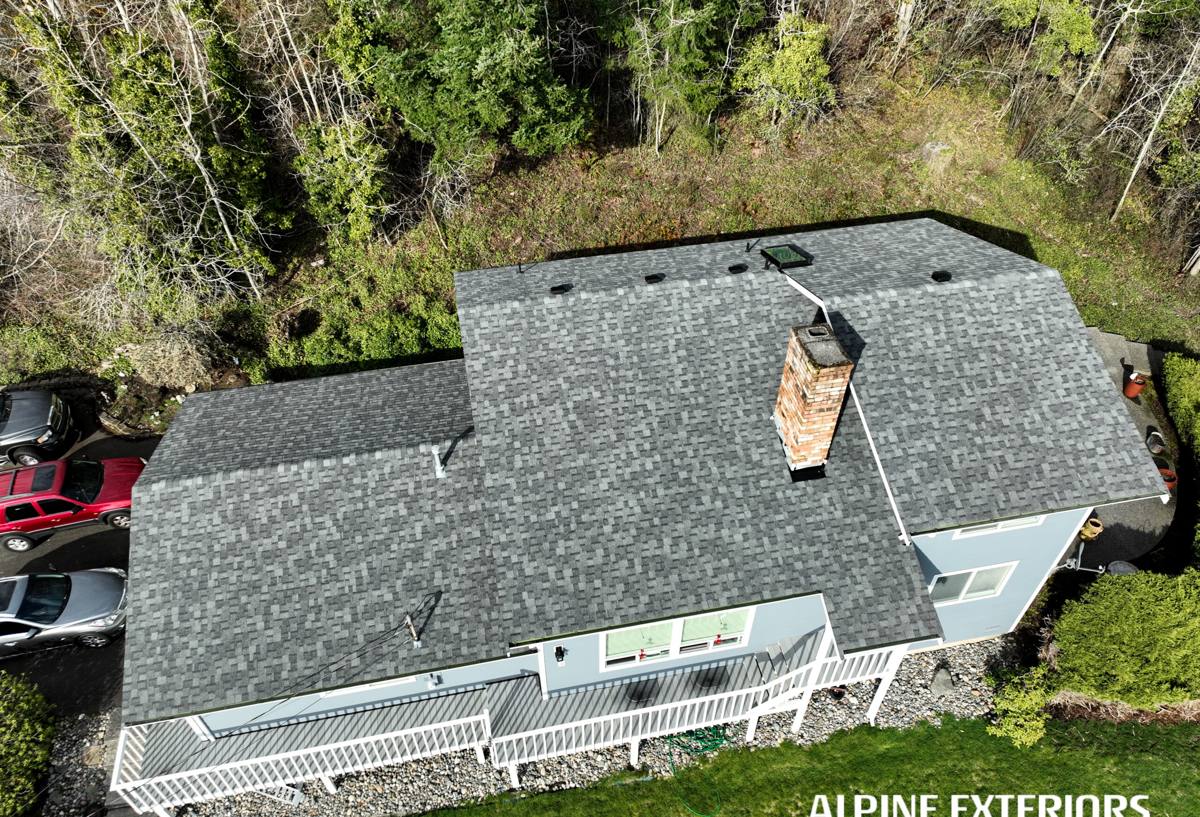
What the Island Climate Actually Does to a Roof
Salt Air and Metal Components
Being surrounded by saltwater doesn't touch the shingle mat itself much, but it accelerates corrosion on every metal component of the roof system — nails, flashing, drip edge, vent stacks, and any exposed fasteners. On a mainland roof a few miles east, a mid-grade fastener might be fine for decades. On Guemes Island, salt-air exposure means those same components corrode faster, and once flashing or fasteners start failing, water finds its way underneath the shingles long before the shingles themselves look worn out.
Driving Rain and Wind Exposure
Open water exposure means wind-driven rain hits roof edges, valleys, and rake lines at an angle instead of falling straight down. That matters because a roof built to shed vertical rain can still leak under horizontal, wind-pushed rain if the underlayment, flashing laps, and shingle sealant strips aren't detailed for it. Homes closer to the water or on more exposed lots feel this the most.
The Long Moss Season
Skagit County's wet, mild winters are long, and shaded, tree-covered lots — common on Guemes Island — stay damp for months at a stretch. That's exactly the environment moss and algae need to establish. Left unchecked, moss doesn't just look bad; it lifts shingle edges, holds moisture against the roof deck, and shortens the life of an otherwise sound roof. Moss resistance has to be designed into the roof, not treated as an afterthought.
What a Correct Asphalt Shingle Job Actually Includes
A roof that's going to perform under these conditions needs every layer working together, not just a nice-looking shingle on top. The components that matter most for island homes:
- Synthetic underlayment rated for extended UV and moisture exposure, lapped and fastened to shed wind-driven rain, not just gravity-fed runoff.
- Ice-and-water shield at eaves, valleys, and any low-slope transitions, since these are the spots wind-driven rain and ponding moss debris cause the most trouble.
- Corrosion-resistant flashing and fasteners — stainless or hot-dip galvanized where it counts, particularly on homes closer to the shoreline.
- Balanced attic ventilation (intake at the eaves, exhaust at the ridge) so trapped moisture doesn't condense under the deck and accelerate rot from the inside.
- Shingles with an algae-resistant (AR) rating, which use copper-containing granules to slow moss and algae growth on shaded, damp roofs.
- Wind-rated shingle installation — correct nail count, placement, and sealant activation — matched to the exposure the specific roof faces.
Skip any one of these and the roof will likely still look fine for a few years. The problems show up later, as leaks, granule loss, or moss damage that's harder and more expensive to fix than it would have been to prevent.
Choosing Shingles for an Exposed Island Roof
Not every asphalt shingle product is built the same way, and the right choice depends on how exposed the specific roof is — waterfront lot versus tree-sheltered interior lot, steep pitch versus low-slope sections, and how much shade the roof holds onto moisture.
| Factor | 3-Tab Shingles | Architectural (Dimensional) Shingles |
|---|---|---|
| Wind resistance | Lower rating, more vulnerable on exposed sites | Higher rating, better fit for open water exposure |
| Moss/algae resistance options | Limited AR options | Widely available in AR-rated lines |
| Expected lifespan | Shorter, especially under harsh exposure | Longer, better suited to island conditions |
| Upfront cost | Lower | Moderate to higher |
| Best fit for Guemes Island | Sheltered, low-exposure lots only | Most homes, especially shoreline or shaded lots |
We'll walk through these trade-offs honestly during the estimate rather than defaulting to whatever's cheapest to install. A slightly higher upfront cost on a better-rated shingle usually pays for itself by avoiding a second roofing job a decade early.
Our Process for a Guemes Island Roofing Project
1. On-Site Inspection
We look at the whole system, not just the shingles — deck condition, existing flashing, ventilation, moss buildup, and how exposed the roof is to wind and salt air given its orientation and tree cover. This is also where we check for soft spots or rot that a shingle-only quote would miss.
2. Straightforward Estimate
You get a clear, itemized estimate covering tear-off, underlayment, flashing, shingle product, and ventilation work — no vague lump-sum number that hides what you're actually paying for.
3. Tear-Off and Deck Check
Old roofing comes off down to the deck so we can actually see what's underneath. Any rotted or soft sheathing gets flagged and replaced before a single new shingle goes down — covering up a bad deck is how roofs fail early.
4. Installation
Underlayment, ice-and-water shield, flashing, and shingles go in, in that order, detailed for the specific wind and rain exposure of that roof. Ventilation gets balanced as part of the job, not bolted on afterward.
5. Cleanup and Walkthrough
We clear debris and nails from the site and walk the finished roof with you so you know what was done and what to expect going forward.
Why an Island-Experienced Crew Matters Here
Guemes Island is only reachable by ferry, and that changes how a roofing job actually gets run in practice. A contractor who hasn't planned around ferry schedules can end up wasting a homeowner's time — or worse, leaving a job half-tarped overnight because materials or crew got stuck on the wrong side of the water.
Working the island regularly means we already account for:
- Staging materials and scheduling crew arrival around ferry sailing times, so a job doesn't stall mid-day.
- Ordering enough material up front to avoid a second ferry trip for a forgotten item, which can cost real time on a small crew's schedule.
- Weather windows — knowing when a tear-off can safely happen without leaving a roof exposed if conditions turn before the return ferry.
- Familiarity with the kind of tree cover, lot exposure, and moss patterns common on the island, instead of guessing at it on a first visit.
None of that shows up on a shingle brochure, but it's the difference between a roofing job that goes smoothly and one that turns into a logistics headache.
Maintaining an Asphalt Shingle Roof on Guemes Island
A correctly installed roof still benefits from some upkeep, especially given the moss season. A simple annual routine goes a long way:
- Have gutters and downspouts cleared before the wet season sets in, since clogged gutters back water up under the shingle edge.
- Watch for moss buildup on shaded slopes and have it removed gently — never pressure-washed, which can strip granules and shorten shingle life.
- Check flashing around chimneys, vents, and skylights periodically, since these are the first spots corrosion or sealant failure shows up.
- Trim back overhanging branches where possible to cut down on shade, debris, and the moisture that moss needs to take hold.
- Schedule a roof check after any unusually severe wind event, since wind-driven rain exposure can loosen shingle edges even on a well-installed roof.
Warranty and Manufacturer Considerations
Manufacturer warranties on asphalt shingles typically cover material defects, but most also require the installation to follow the manufacturer's specifications — correct nailing pattern, ventilation, and underlayment — to stay valid. That's part of why cutting corners on installation isn't just a quality issue; it can quietly void the coverage you thought you had. We install to manufacturer spec on every job and can walk you through what your specific warranty does and doesn't cover before work starts.
Ready for an Honest Look at Your Roof?
If you're dealing with moss buildup, a leak that showed up after a windstorm, or you're just planning ahead for a roof that's getting up there in years, we're happy to come take a look. We'll give you a straightforward assessment of what your Guemes Island home actually needs — no pressure, no inflated scare tactics. Reach out for a free estimate using the form below.