 Anacortes
 Why Flounder Bay Homes Wear Differently
Flounder Bay sits close enough to the water that its homes take on weather most inland Anacortes properties don't deal with in the same combination or intensity. Salt-laden air off the bay, wind-driven rain that hits siding sideways instead of straight down, and a moss season that stretches through most of the wet months all work on exterior walls at once. A siding repair here isn't the same job as a repair on a sheltered lot a few miles inland — the exposure is different, and the repair has to account for it or it won't hold.
This page covers what that means specifically for siding repair on Flounder Bay homes: what actually causes the damage, what a correct repair involves, and why it matters that the crew doing the work already understands this stretch of Anacortes.
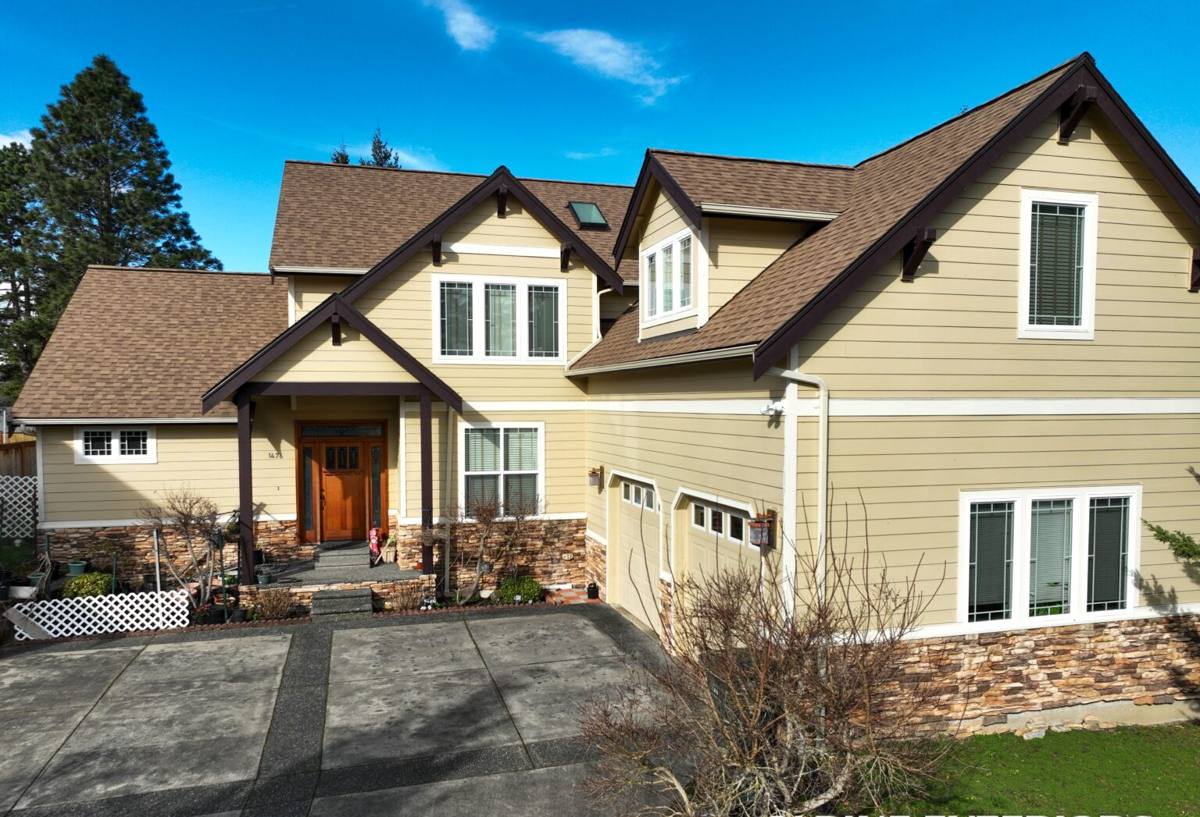
What Salt Air, Driving Rain, and Moss Season Actually Do
Salt Air and Fasteners
Airborne salt doesn't just sit on the surface of your siding — it settles into seams, fastener heads, and any spot where the finish has thinned or worn. Over years, that exposure accelerates corrosion on exposed nail heads and metal trim, which is often the real starting point of a repair that looks, at first glance, like simple cosmetic wear. Once a fastener corrodes and loosens, the siding panel around it starts to move, and movement opens up water paths that weren't there before.
Wind-Driven Rain
Rain that comes in at an angle, rather than falling straight down, pushes water up under laps, into butt joints, and behind trim in a way that vertical rain rarely does. Homes on more open, water-facing lots around Flounder Bay catch more of this than a comparable house tucked into a sheltered inland yard. Siding and flashing details that would be perfectly adequate elsewhere in Skagit County can be marginal here, which is why repairs that only patch the visible damage — without correcting how water was getting in — tend to fail again within a season or two.
Moss and Algae Season
Western Washington's wet season is long, and on shaded or north-facing walls near the water, moss and algae growth can persist for most of the year. Beyond the cosmetic staining, sustained moisture against a wall keeps siding and the material behind it damp for longer stretches, which is exactly the condition that lets rot take hold in wood-based products and lets water tracks develop behind poorly sealed joints in any siding type.
Signs Your Siding Needs a Repair Inspection
Some of these are obvious; others are easy to write off as cosmetic until they've been developing for a while. Worth checking for on a Flounder Bay home at least once a year:
- Soft or spongy spots when you press on siding, especially near the bottom courses and around windows
- Paint or finish that's bubbling, peeling, or visibly different in one section versus the rest of the wall
- Persistent moss or dark staining that comes back quickly after cleaning
- Visible gaps, cracks, or separation at seams, corners, and trim joints
- Rust streaks below nail heads or metal flashing
- Warping, buckling, or panels that no longer sit flat against the wall
- Interior signs — musty smell, discoloration on interior walls, or peeling interior paint on an exterior-facing wall
- Higher-than-expected moisture readings near window and door openings, if you've had an inspection done
Repair vs. Replace: How We Make the Call
Not every damaged section needs a full re-side, and not every "small" repair should be treated as small. The right call depends on how far the damage extends and what's underneath it, not just how it looks from the yard.
| Factor | Usually points to repair | Usually points to replacement |
|---|---|---|
| Extent of damage | Isolated to one or two areas | Spread across multiple walls or elevations |
| Underlying sheathing/framing | Sound, dry once opened up | Soft, discolored, or already rotting |
| Cause | Isolated flashing or caulk failure | Systemic water-management failure behind the siding |
| Age and material of existing siding | Newer, still within useful life | Original material near or past its service life |
| Match availability | Profile and finish can be reasonably matched | Discontinued product or heavy fading elsewhere on the wall |
We won't push a full replacement when a proper repair will genuinely hold, and we won't patch over a problem that's going to reopen the wall again in two years. Once siding is opened up, the sheathing and any water intrusion path tell us which side of that table we're really on.
What a Correct Siding Repair Actually Involves
Diagnosing the Moisture Path
The visible damage is rarely the whole story. Before anything gets patched, we trace where water is actually getting in — a failed seam, a gap in flashing, a caulk joint that's dried out and cracked — because repairing the surface without correcting the entry point just delays the same failure. This is especially important on Flounder Bay's more exposed walls, where wind-driven rain can push water well past a small, seemingly minor gap.
Matching Material and Finish
A repair that's structurally sound but obviously mismatched isn't a finished job. On homes sided in James Hardie ColorPlus products, matching an existing color and texture is far more reliable than on siding with field-applied paint that's faded unevenly over the years — one more reason repairs on Hardie siding tend to blend in cleanly rather than leaving a visible patch.
Flashing and Sealant Done Right
Most repeat siding failures trace back to flashing and sealant details that were rushed or skipped the first time — around windows, at wall-to-roof transitions, and at inside and outside corners. We rebuild those details to manufacturer specification, not just to whatever gets the panel back on the wall, because these are the details that determine whether a repair lasts five years or fifteen.
Why We Repair and Rebuild With James Hardie
When a repair opens into more than a patch — a full section, a corner, an entire elevation — we use James Hardie fiber cement to do it, and it's worth explaining why. We don't install vinyl, LP SmartSide, Cemplank, Allura, primed spruce, or cedar, on repairs or new installs. Each of those products has legitimate strengths, but on a site like Flounder Bay, where salt air, wind-driven rain, and prolonged damp seasons all stack up, we've seen the trade-offs that come with them: wood-based products are vulnerable to the same moisture and rot cycle that caused the original damage, vinyl can warp and doesn't hold a factory finish the way fiber cement does, and mixing in a different fiber cement brand mid-repair risks a visible mismatch against Hardie's ColorPlus finish.
James Hardie's fiber cement is non-combustible, engineered for climates like ours in its HZ5 product line, and holds its factory-applied ColorPlus finish far longer than field-applied paint on wood siding. For a repair, that means the patched section is built from a material that's actually suited to the conditions that caused the original failure — not just a like-for-like swap of whatever was there before.
Our Repair Process on Flounder Bay Homes
- Inspection. We look at the damaged area and the surrounding siding, not just the spot you called about, since related wear often shows up nearby before it's obvious.
- Opening it up. We remove enough siding to see the sheathing and framing underneath — this is where we find out if we're dealing with a contained repair or something larger.
- Root-cause correction. Flashing, house wrap, and sealant details get rebuilt properly before any new siding goes back on.
- Repair or replace. Damaged material gets replaced with matched or compatible product, following the table above as a general guide, adjusted to what we actually find.
- Finish and cleanup. Trim, caulking, and paint or ColorPlus touch-up are finished to blend with the surrounding wall, and the work area is cleaned up before we leave.
Why a Crew That Already Works Flounder Bay Matters
A contractor who works this part of Anacortes regularly already knows how differently exposed Flounder Bay's waterfront lots can behave compared to a sheltered lot a mile inland, and adjusts the repair accordingly instead of applying a generic fix. That includes knowing which wall orientations on this kind of site tend to take the worst of the wind-driven rain, how aggressively moss reestablishes itself in the shadier spots, and what permitting and code requirements apply in Anacortes and Skagit County for exterior repair work. It also means fewer surprises: a crew that's opened up walls in this area before has a realistic sense of what they'll find once the siding comes off, rather than guessing.
Get a Straight Answer on Your Siding
If you're seeing soft spots, persistent moss, or damage that keeps coming back after cleaning, it's worth having someone look at it before it spreads further into the wall. We offer free, no-pressure estimates for Flounder Bay homeowners — an honest look at whether you're dealing with a straightforward repair or something that calls for more, with no obligation either way. Use the form below to get started.