 Anacortes
 Windows Built for a Waterfront Address
Flounder Bay sits right on the water on Fidalgo Island, and that location is exactly what makes window work here different from a job three miles inland. Homes facing the bay take on salt-laden air almost daily, catch wind-driven rain off the water during fall and winter storms, and sit under enough shade and moisture through Skagit County's long wet season to grow moss on anything that stays damp too long. Windows are one of the first things on a house to show that wear — cloudy glass seals, corroded hardware, swollen sashes, or trim that's gone soft. A window that would last two decades in a drier, more sheltered part of Anacortes can start failing years earlier on a waterfront lot in Flounder Bay if it wasn't specified and installed with that exposure in mind.
This page is about what a correct custom window job looks like specifically for this neighborhood — not a generic rundown of window types, but what actually holds up here, what a proper install requires, and why local experience with this exact kind of exposure matters.
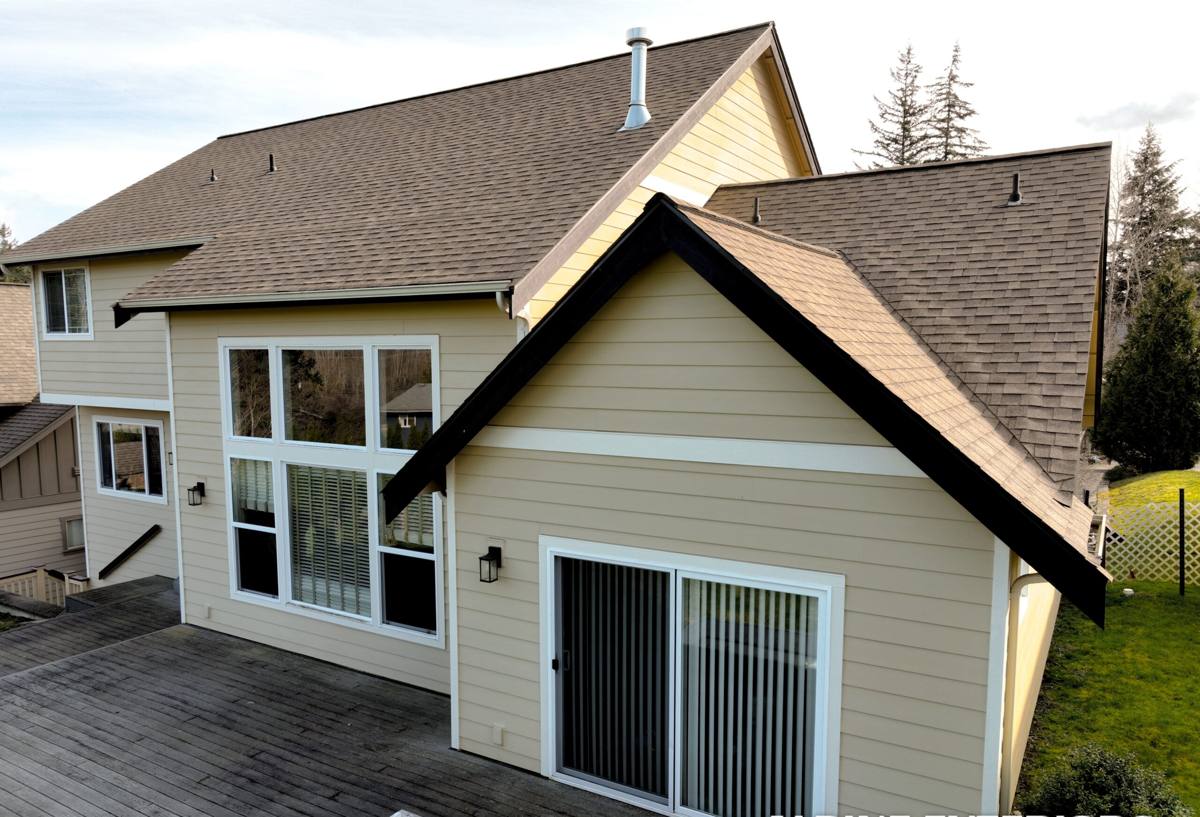
What Salt Air, Driving Rain, and Moss Season Actually Do
Salt air and corrosion
Airborne salt from the bay settles on everything within a few hundred yards of the water, and it's most aggressive on metal. Window hardware — locks, hinges, balance mechanisms, and screen frames — is where salt exposure shows up first. Once corrosion starts pitting a lock or a hinge, the window stops operating smoothly long before the glass or frame itself is a problem. Aluminum-clad and lower-grade steel hardware are the most vulnerable; this is a real factor in hardware selection for a Flounder Bay home, not a cosmetic detail.
Wind-driven rain
Storms off the water don't just drop rain straight down — wind pushes it sideways and up under trim, sills, and poorly lapped flashing. A window that would stay dry in a calm rain can leak in a Flounder Bay southwester if the flashing sequence around it wasn't built for wind-driven water in the first place. This is almost always where leaks in older or poorly installed windows start: not the glass unit failing, but water finding a path in around the frame.
Moss and sustained moisture
Skagit County's moss season is long, and shaded, north-facing, or tree-adjacent walls in Flounder Bay stay damp for extended stretches through fall, winter, and spring. Wood trim and sills that hold moisture support moss and mildew growth, which traps even more moisture against the material. Over years, that cycle softens wood, degrades paint and caulk, and eventually opens gaps that let water behind the window assembly.
What a Correct Custom Window Install Involves Here
"Custom" doesn't just mean a non-standard size or shape — for a waterfront home it means the whole assembly is chosen and installed to handle this specific exposure, not a generic climate.
- Frame material matched to salt and moisture exposure, not just budget or looks
- Corrosion-resistant hardware — locks, hinges, and cranks rated for coastal or marine use
- A proper flashing sequence that sheds wind-driven rain rather than just standard vertical rain
- Sill pans or sloped sills that direct any water that does get past the outer seal back outside instead of into the wall
- Sealant and backer rod appropriate for the gap size and movement, not just a bead of caulk around the trim
- Glass and gas-fill spec matched to the home's actual sun and wind exposure, not a one-size default
Skip any one of these and the window may look fine for a year or two before the shortcuts show up as fogged glass, soft trim, or water stains on an interior wall.
Choosing a Frame Material for This Exposure
There's no single "best" frame material for every house — it depends on how exposed the wall is, how much upkeep the homeowner wants to do, and the look they're after. Here's how the common options actually hold up on a waterfront lot like Flounder Bay:
| Frame Material | Salt Air / Moisture Behavior | Maintenance | Typical Fit |
|---|---|---|---|
| Vinyl | Doesn't corrode; seams and welded corners are the weak point if not installed cleanly | Low — occasional cleaning | Good value, reliable in coastal exposure |
| Fiberglass | Very stable in moisture and temperature swings; holds paint and seals well over time | Low to moderate | Strong long-term choice for direct water exposure |
| Wood (unclad) | Handsome, but needs consistent upkeep to resist moss, rot, and swelling in a wet, shaded spot | High — regular painting/sealing | Best on protected elevations, not full bay exposure |
| Wood-clad (vinyl or aluminum exterior) | Combines interior wood look with a weather-resistant exterior shell | Low exterior, some interior upkeep | Good middle ground for character homes |
| Aluminum | Prone to corrosion and condensation in salt air unless thermally broken and properly finished | Moderate — watch for pitting over time | Use selectively; not our default for bay-facing walls |
We don't push one material on every job. We look at which elevation the window sits on, how much direct salt spray and wind it takes, and how much upkeep the homeowner realistically wants to commit to, then recommend accordingly.
How Our Process Works
1. On-site assessment
We look at the specific wall the window sits on — sun exposure, wind direction, proximity to the water, and any existing moisture or corrosion damage — not just the window opening itself.
2. Measurement and product selection
Custom windows are measured to the actual opening, accounting for any settling or squaring issues in older framing, and matched to a frame material, glass package, and hardware finish suited to that wall's exposure.
3. Removal and prep
Old windows come out carefully so we can inspect the framing, sill, and sheathing underneath for hidden rot or water damage before anything new goes in. Waterfront homes in this area sometimes have moisture history behind the trim that isn't visible until the window is out.
4. Flashing and installation
This is the step that determines whether a window stays dry through a wind-driven storm off the bay. Flashing is layered correctly — from the bottom up — with sill pans or sloped sills where called for, then the window is set, shimmed level and square, and sealed with the right sealant for the gap.
5. Finish and cleanup
Trim, caulking, and hardware are finished and tested for smooth operation before we walk the job with the homeowner.
Signs Your Current Windows Are Already Struggling
Because of the exposure here, window problems in Flounder Bay tend to show up earlier and more visibly than inland. Worth checking for:
- Locks, cranks, or hinges that feel gritty, stiff, or corroded
- Fogging or moisture between panes of double- or triple-glazed glass (a failed seal)
- Soft, spongy, or moss-covered trim and sills
- Drafts or a cold line felt near the frame in windy weather
- Paint that's bubbling, peeling, or won't hold near the sill
- Water staining on interior drywall or trim below or beside a window
- Windows that are difficult to open, close, or latch fully
Any one of these on its own isn't necessarily urgent, but two or more on the same window usually means moisture has already gotten past the seal, and that's worth having looked at before it spreads to the framing.
Living With Windows in a Marine Climate
Even a well-installed window benefits from a bit of seasonal attention in a spot like Flounder Bay. Rinsing hardware and tracks periodically helps clear salt residue before it pits metal. Keeping gutters and downspouts clear reduces the amount of water running down the wall near window openings during heavy rain. And checking exterior caulk lines once a year, especially after the wettest months, catches small gaps before moss and moisture turn them into bigger ones. None of this replaces a correct install, but it extends the life of one significantly.
Why Local, Flounder Bay-Specific Experience Matters
A window contractor who mostly works inland may install a perfectly good window that's simply not specified for salt air and wind-driven rain — the wrong hardware finish, a flashing detail that works fine in a sheltered yard but not on an open bay-facing wall, or a frame material that looks right but wasn't chosen with corrosion in mind. Crews who regularly work waterfront properties in and around Anacortes and Skagit County recognize these conditions on sight and build the job around them from the start, rather than discovering the exposure was a problem after the fact.
If you're weighing a custom window project for a Flounder Bay home, we're glad to take a look, walk the exposure on your specific walls, and put together a straightforward, no-pressure estimate using the form below.