 Anacortes
 Why Roofs on Fidalgo Island Take More Punishment
Fidalgo Island sits surrounded by saltwater, which sounds scenic until you look at what it does to a roof over ten or fifteen years. Salt-laden air moving off the water accelerates corrosion on anything metal — nail heads, drip edge, flashing, gutter hangers — long before those same parts would give out on a roof twenty miles inland. Add the driving rain that comes with Pacific storms rolling through Skagit County, often pushed sideways by wind off the Strait, and you get water finding its way into laps and seams that would stay dry in a gentler climate. Then there's moss. Mature evergreen cover, shaded north-facing slopes, and a long stretch of wet, mild weather each fall through spring add up to a moss season that runs longer here than in drier parts of the state.
None of this means a roof on Fidalgo Island is doomed — it means the repair work has to account for these three things specifically. A patch job that would hold up fine in a dry, low-wind climate can fail here in a single wet season if it doesn't address corrosion-prone fasteners, wind-driven water paths, and moss-related moisture retention. That's the lens we bring to every repair call in this area.
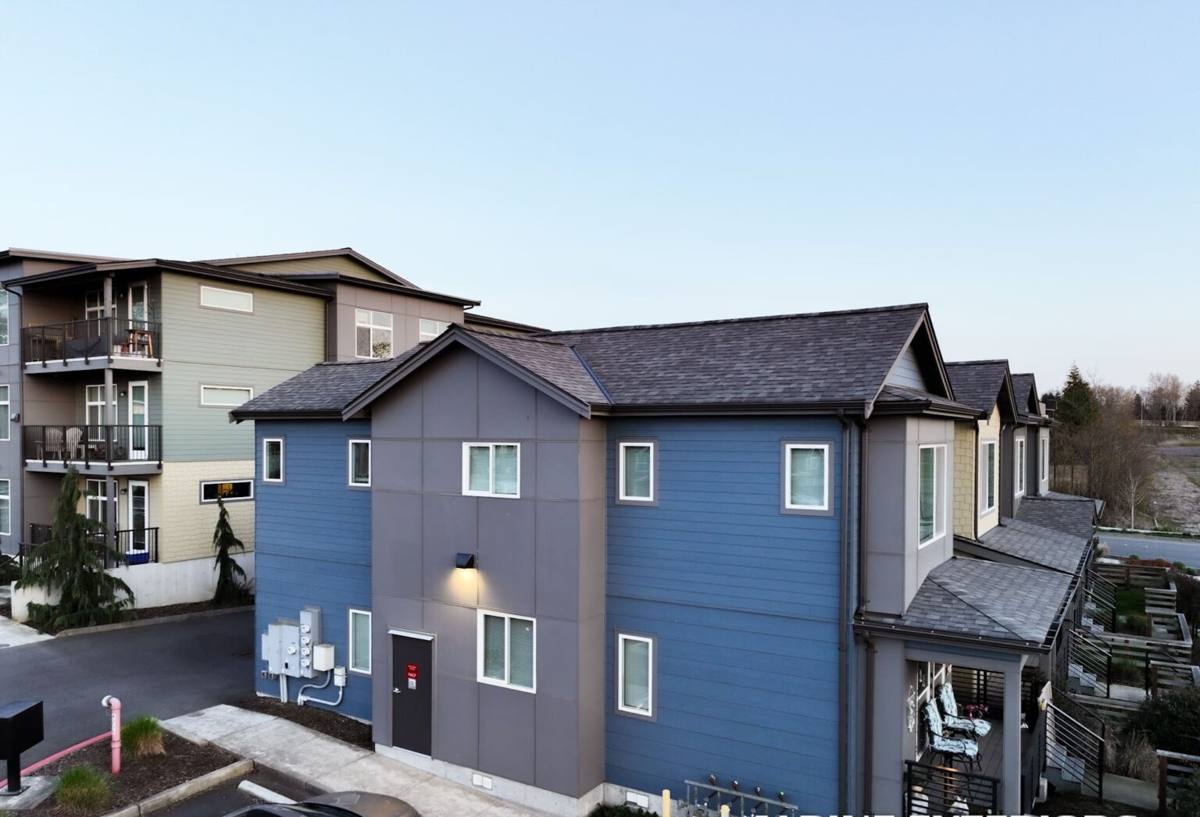
Signs a Roof Repair Is Overdue
Most roof problems on the island show themselves in small ways well before there's a leak inside the house. Catching them early is what keeps a repair a repair, instead of turning it into a deck replacement or an interior drywall repair.
- Granules collecting in gutters or at downspout outlets — a sign shingles are breaking down under moss and moisture
- Dark streaking or thick moss growth on north-facing or heavily shaded slopes
- Rusty streaks below nail heads or flashing, especially on older galvanized metal
- Curling, cupping, or lifted shingle edges, particularly along ridges and hips exposed to wind
- Soft or spongy spots when walking the roof, which usually means the decking underneath has absorbed water
- Daylight visible through the roof deck from inside an unfinished attic
- Water stains on interior ceilings near chimneys, skylights, or valleys — almost always a flashing issue, not a "roof is worn out" issue
- Gutters pulling away from the fascia or sagging, which lets water back up under the first course of shingles
If you're seeing more than one of these, it's worth having someone look before the next round of driving rain finds the weak spot for you.
What a Correct Roof Repair Actually Involves
A lot of roof "repairs" amount to caulking a visible gap and calling it done. That approach doesn't hold up on Fidalgo Island, because the caulk itself becomes brittle and fails under UV and salt exposure faster than it would elsewhere. A repair that's actually going to last addresses the cause, not just the symptom.
Flashing First
The majority of roof leaks we trace back start at a flashing detail — chimneys, skylights, sidewall step flashing, valleys, or vent boots — not in the open field of shingles. Corroded or improperly lapped flashing lets wind-driven rain track sideways under the roofing material, sometimes traveling several feet before it shows up as a stain inside. Correct repair means removing the failed flashing, checking the decking underneath for rot, and reinstalling flashing that's properly lapped with the surrounding shingle courses — not just sealed over the top.
Decking and Underlayment
If water has been getting in for a while, the plywood or OSB decking underneath is often softened or delaminating in that spot. Patching shingles over rotten decking is a short-term fix at best. A proper repair replaces any compromised decking and re-establishes a continuous underlayment layer so water has a backup path off the roof even if a shingle later fails.
Ventilation Tie-In
Repairs near ridge vents or soffit intake need to preserve airflow through the attic. Blocking ventilation to patch a leak can trade one problem for a worse one — trapped moisture that feeds mold and accelerates decking rot from underneath, which is a particular risk given how much of the year is damp here.
Moss and Organic Debris Removal
Before any shingle repair goes in, the surrounding moss, moss residue, and trapped debris need to come off. Moss holds water directly against the shingle surface, and nailing a patch on top of it just seals moisture in rather than out.
Common Roofing Materials We Repair on Fidalgo Island
Repair details differ depending on what's already on the roof. Here's how the materials we see most often on the island tend to age and what that means for repair work.
| Material | Common Issue in This Climate | Repair Consideration |
|---|---|---|
| Asphalt composition shingle | Granule loss under moss, nail corrosion | Match existing shingle color/profile; replace corroded fasteners with corrosion-resistant ones |
| Standing seam / metal roofing | Fastener and seam corrosion near saltwater exposure | Use marine-grade or coated fasteners; check panel seams for wind-driven infiltration |
| Cedar shake or shingle | Moss retention, moisture-driven splitting | Requires moss removal and airflow correction before any patch, or rot spreads under adjacent shakes |
| Low-slope / membrane roofing | Ponding water, seam separation | Seam and flashing repair rather than patching, since membrane systems fail at transitions first |
Whatever is currently on your roof, the repair should use materials rated for coastal, high-moisture exposure rather than the lowest-cost general-purpose option — the price difference is small compared to redoing the same repair in five years.
Our Repair Process, Step by Step
We keep the process straightforward so you know what's happening at each stage and why.
- Inspection and diagnosis. We walk the roof and the attic where accessible, tracing any interior leak back to its actual entry point rather than assuming it's directly above the stain.
- Written scope and estimate. You get a clear explanation of what's failing, what needs to be repaired, and what it will cost — before any work starts.
- Removal of the affected area. Damaged shingles, flashing, or membrane are removed along with any moss or debris in the surrounding area, not just the immediate spot.
- Decking assessment. Any soft, delaminated, or rotted decking is identified and replaced before new roofing material goes back down.
- Flashing and underlayment repair. New flashing is properly integrated with the surrounding roofing, and underlayment is restored as a continuous water barrier.
- Matching materials installed. We install shingles, panels, or membrane matched as closely as possible to the existing roof, using fasteners suited for salt-air exposure.
- Cleanup and final check. Gutters and downspouts near the repair are checked to confirm they're clear and functioning, since a blocked gutter can undo an otherwise good repair.
Moss Season: Why Timing the Work Matters
Moss on Fidalgo Island isn't a one-time nuisance — it's a recurring cycle tied to the wet season that runs from fall through spring. Roofs under mature fir or cedar cover, or on shaded north sides, will regrow moss faster than open, sun-exposed slopes no matter how thorough a cleaning is. That doesn't mean moss removal isn't worth doing during a repair; it means it's worth pairing with a maintenance plan.
Zinc or copper control strips near the ridge, installed during a repair, allow rainwater to carry trace metal down the roof slope and slow regrowth over time. They're not a permanent fix, but they meaningfully extend the time between moss treatments. We'll flag whether your roof's exposure and tree cover make this worth adding when we're already up there for a repair.
Repair or Replace? How We Help You Decide
Not every roof problem calls for a full replacement, and not every leak can be reliably fixed with a patch. The honest answer depends on the roof's age, how widespread the damage is, and whether the underlying decking is still sound.
| Factor | Leans Toward Repair | Leans Toward Replacement |
|---|---|---|
| Age of roofing material | Under 60-70% of its expected service life | At or past expected service life for the material |
| Extent of damage | Isolated to one or two areas (a valley, a chimney, a section of ridge) | Spread across multiple slopes or recurring in different spots each year |
| Decking condition | Solid, no widespread soft spots | Rot or delamination found in more than one location |
| Moss history | Recently treated or minimal buildup | Long-term heavy moss with granule loss across large areas |
We'll always tell you when a repair is the right call, even if a replacement would be a bigger job for us — a roof that's still structurally sound doesn't need to be torn off just because it's convenient to sell that way.
Why a Crew That Already Works This Island Matters
Anacortes and the rest of Fidalgo Island have their own microclimate compared to inland Skagit County — more direct salt exposure, different wind exposure depending on which side of the island a house sits on, and tree cover patterns that affect moss growth differently street by street. A crew that repairs roofs across this specific area day in and day out knows which fastener grades hold up near the water, which flashing details tend to fail first on older island homes, and how aggressive the moss problem typically is on a given exposure before we've even climbed the ladder. That familiarity shows up in fewer callbacks and repairs that are sized correctly the first time, instead of a patch that has to be redone once the next round of driving rain finds what it missed.
If you're seeing early signs of a roof problem, or you already have an active leak, we're happy to take a look and give you a straightforward, no-pressure estimate — just fill out the form below.