 Anacortes
 Why Fidalgo Island Puts a Roof Through More Than Most
Fidalgo Island sits right where Skagit County meets the Salish Sea, and that location shapes everything about how a roof ages here. Homes get a steady mix of salt-laden air off Rosario Strait and Guemes Channel, wind-driven rain that finds its way under poorly lapped flashing, and a wet, shaded season long enough for moss and moisture to work into materials that would hold up fine somewhere drier. A roof that's correctly designed and installed for this environment will outlast one that was built to a generic spec and shipped up from a warmer, drier region.
None of this means Fidalgo Island roofs need to be exotic or overbuilt. It means the details that are easy to skip — underlayment choice, fastener type, ventilation balance, flashing sequence — actually matter here in a way they might not inland. A new roof installation done right the first time saves a homeowner from chasing leaks and moss damage for the next decade.
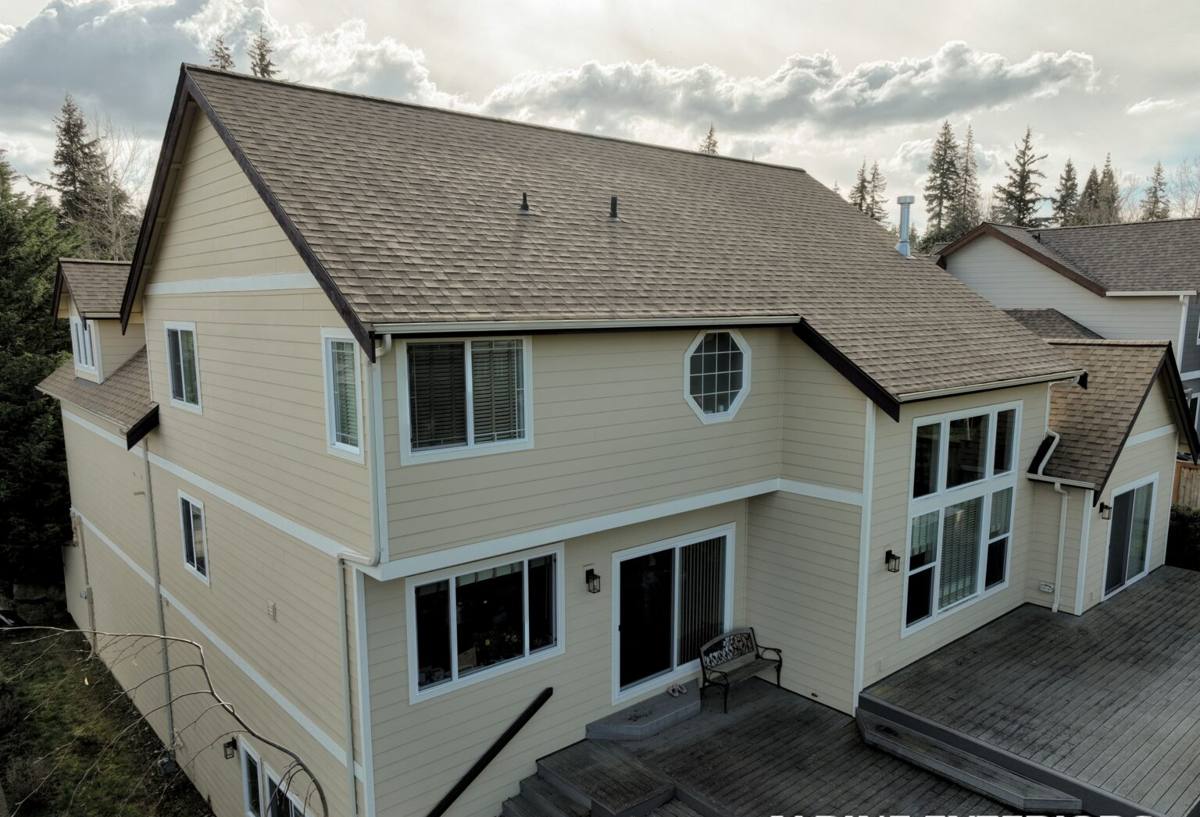
What Salt Air, Rain, and Moss Actually Do to a Roof
Salt Air and Metal Components
Coastal salt exposure accelerates corrosion on unprotected or poorly coated metal — fasteners, flashing, vents, and drip edge. Cheap galvanized fasteners can start rusting years before the shingles around them are due for replacement, and once a fastener corrodes and loosens, water finds a path underneath. We spec corrosion-resistant fasteners and flashing metals on every install specifically because of the marine air here.
Driving Rain and Wind
Storms off the Strait don't always come straight down — wind-driven rain hits roofs at an angle and can push water sideways under shingle tabs, around chimneys, and into valleys if the underlayment and flashing aren't layered correctly. This is a workmanship issue more than a material one: the right shingle installed with sloppy flashing will still leak.
Moss and Prolonged Moisture
Anacortes gets a long stretch of overcast, damp weather every year, especially on shaded, north-facing slopes and under tree cover common on the island. Moss thrives in that moisture, and once it takes hold it lifts shingle edges, holds water against the roof deck, and shortens the life of the roofing material underneath it. A new roof is the right time to address the conditions that let moss get a foothold in the first place, not just cover them up.
What a Correct New Roof Installation Involves
A new roof is more than swapping old shingles for new ones. On Fidalgo Island, we treat these as the non-negotiable layers of a correct install:
- Deck inspection and repair — any soft, rotted, or delaminated sheathing gets replaced before anything new goes down; roofing over a bad deck just hides the problem.
- Ice-and-water shield at vulnerable points — eaves, valleys, and around penetrations get a self-adhering waterproof membrane, not just felt paper.
- Synthetic underlayment across the field — a water-resistant layer that also gives the deck some protection during the install itself, which matters when weather can turn quickly.
- Balanced ventilation — intake at the eaves and exhaust at the ridge, sized to the attic, so moisture doesn't get trapped under the deck.
- Corrosion-resistant flashing and fasteners — around chimneys, skylights, sidewalls, and at all roof-to-wall transitions.
- Proper starter strip and ridge detailing — the edges and ridge are where wind-driven rain and wind uplift do the most damage if they're installed wrong.
Choosing the Right Roofing Material for a Marine Climate
There isn't one "correct" material for every Fidalgo Island home — it depends on the roof's slope, sun and shade exposure, budget, and how the house looks. Here's how the common options compare for this specific climate:
| Material | Salt Air / Moisture Behavior | Moss Resistance | Typical Lifespan Here |
|---|---|---|---|
| Architectural (dimensional) asphalt shingles | Good, with corrosion-resistant fasteners and metal flashing | Moderate — benefits from good ventilation and periodic cleaning | 25–30 years |
| 3-tab asphalt shingles | Fair — thinner profile, less wind and impact resistance | Moderate, same care needed | 15–20 years |
| Standing seam metal | Very good when properly coated and fastened for coastal exposure | High — smooth, steep panels shed moss more easily | 40–50+ years |
| Composite/synthetic shake or slate | Good, low water absorption | Moderate to high depending on profile | 30–50 years |
For most Fidalgo Island homes, a quality architectural asphalt shingle with the right underlayment and ventilation package is the most cost-effective choice. Homeowners on more exposed, wind-heavy sites or those planning to stay long-term often look at metal for the added durability against the driving rain and salt air.
Signs a Roof Needs Full Replacement, Not Another Repair
Not every roof problem calls for a full tear-off. We'd rather tell a homeowner honestly that a repair will hold than sell an install that isn't needed yet. That said, these are the signs that usually mean it's time for a new roof rather than another patch:
- Granule loss heavy enough that shingles look bald or patchy in several areas, not just one spot
- Shingles that are curling, cracking, or brittle across large sections of the roof
- Soft or spongy spots in the decking when walked, or visible sagging
- Repeated leaks in different locations after previous patch repairs
- Heavy, established moss or moisture staining across multiple slopes rather than isolated shaded corners
- The roof is at or past its material's expected lifespan and repairs are becoming frequent
Our Installation Process on Fidalgo Island
1. On-Site Assessment
We walk the roof and attic, check the deck condition, current ventilation, flashing points, and any moss or moisture history specific to the property's exposure and tree cover. This is also where we talk through material options honestly based on the home's slope, sun/shade, and the homeowner's budget.
2. Clear, Written Estimate
The homeowner gets a written scope covering materials, tear-off, deck repair allowances, flashing detail, and ventilation plan — no vague line items and no surprise add-ons discovered mid-project without a conversation first.
3. Tear-Off and Deck Inspection
Old roofing comes off down to the deck so we can actually see what's underneath. Any damaged sheathing gets replaced before new roofing goes down — this is the step that gets skipped by crews trying to move fast, and it's the one that determines whether the new roof lasts.
4. Underlayment, Flashing, and Ventilation Install
Ice-and-water membrane at vulnerable points, synthetic underlayment across the field, corrosion-resistant flashing at every transition, and a balanced intake/exhaust ventilation system sized correctly for the attic.
5. Roofing Material Installation
Installed to manufacturer specification for wind and moisture exposure, with attention to starter strips, ridge caps, and valley detailing — the areas most exposed to wind-driven rain off the water.
6. Final Walkthrough and Cleanup
We walk the finished roof with the homeowner, cover care and maintenance specific to their site (including moss prevention if the roof has shaded slopes), and do a full magnetic sweep and debris cleanup of the property.
What Drives the Cost of a New Roof
Every roof is priced on its own specifics, but these are the main factors that move the number up or down on Fidalgo Island homes:
| Factor | How It Affects Cost |
|---|---|
| Roof size and number of slopes/valleys | More cuts, flashing, and labor time |
| Deck condition | Rotted or soft sheathing adds repair cost once uncovered |
| Material choice | Asphalt, metal, and composite options span a wide price range |
| Roof pitch and access | Steep or hard-to-access roofs take longer and need more safety setup |
| Ventilation upgrades needed | Adding proper intake/exhaust may require extra vents or baffles |
| Tear-off layers | Removing multiple existing layers of roofing adds labor and disposal cost |
We'd rather walk a homeowner through these factors in person than throw out a number that doesn't reflect their actual roof. A written estimate after an on-site look is the only honest way to price a new roof.
Why a Crew That Already Works Fidalgo Island Matters
A roofing crew that regularly works Anacortes and the surrounding Skagit County coastline already knows which fastener grades hold up against the salt air, which slopes on the island tend to hold moss longest, and how to sequence flashing so wind-driven rain off the water doesn't find a way in. That's not something a crew unfamiliar with this specific coastal exposure picks up on the first job. It shows up in the small decisions — the flashing detail around a chimney, the ventilation balance for a shaded attic — that determine whether a roof is still performing well fifteen years from now or already showing problems.
It also matters for scheduling and follow-up. A local crew can respond quickly if a question comes up after the install, stands behind the workmanship, and isn't disappearing to the next region once the job is done.
What to Expect and Questions Worth Asking
Before signing a contract for a new roof on Fidalgo Island, it's worth confirming a few things with any contractor:
- Are they licensed and insured to work in Washington State, and will they provide proof?
- Does the written estimate specify underlayment type, flashing material, and ventilation plan — not just "shingles and labor"?
- How do they handle unexpected deck damage found during tear-off, and is that spelled out before work starts?
- What's the manufacturer's warranty on the material, and is the installer certified to honor it?
- Do they have experience specifically with coastal, marine-exposure installs — not just roofing in general?
If you're planning a new roof on Fidalgo Island, we're glad to come take a look and walk you through what your home actually needs — no pressure, no upsell, just a straight assessment and a written estimate. Use the form below to request a free estimate.