 Anacortes
 Asphalt Shingle Roofing Built for Fidalgo Island's Weather
Fidalgo Island sits right where Puget Sound weather gets serious about testing a roof. Homes here take on salt-laden air off the water, driving rain that comes in sideways during winter storms, and long stretches of shade and dampness that keep moss growing nearly year-round. An asphalt shingle roof that would hold up fine in a drier inland climate can start showing problems early here if it wasn't installed with this specific environment in mind. We install and repair asphalt shingle roofs across Fidalgo Island and the rest of Anacortes, and we build every job around what actually happens to a roof in Skagit County's marine climate — not a generic install.
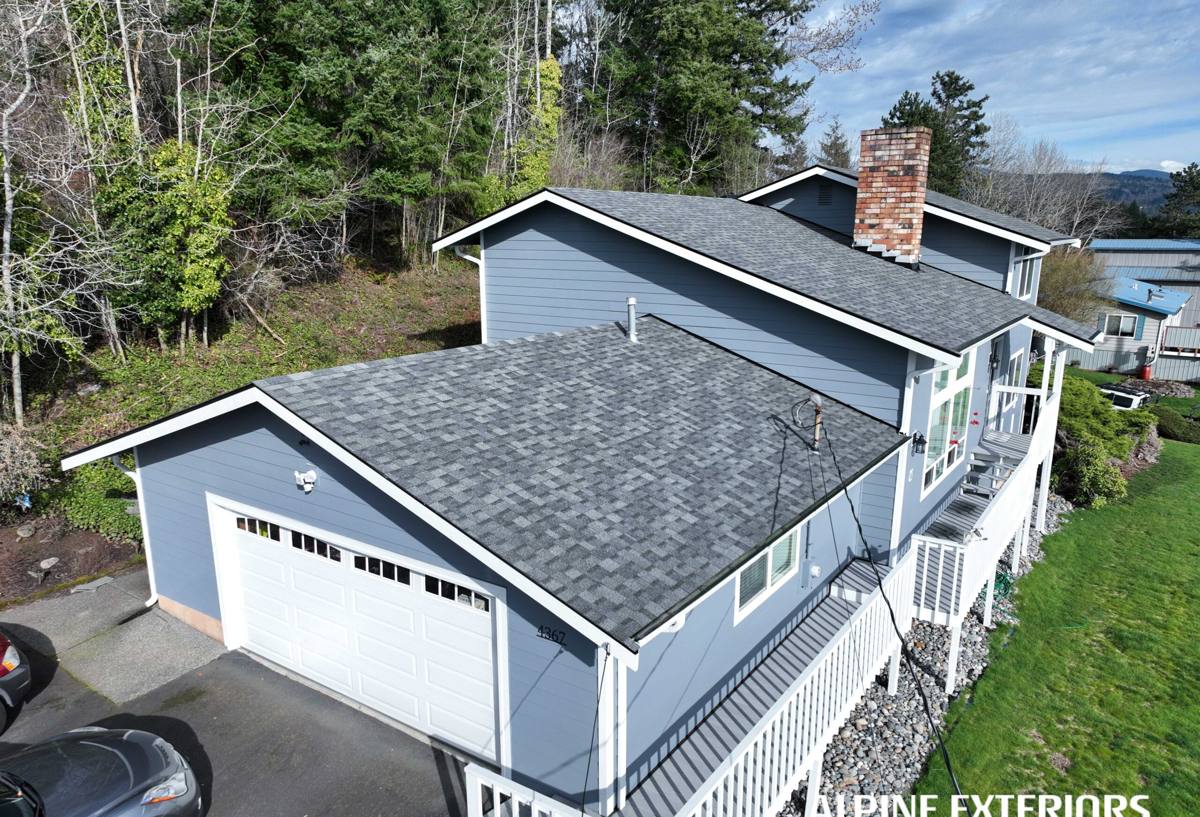
What Salt Air, Rain, and Moss Actually Do to a Roof
Salt Air and Metal Components
Asphalt shingles themselves handle salt exposure reasonably well, but the metal parts of a roofing system — flashing, drip edge, nails, vents, and fasteners — are the pieces that corrode first near the water. Once flashing starts to pit or a nail head rusts through, water finds a path underneath the shingles long before the shingles themselves look worn out. This is why the metal we use and how it's protected matters as much as the shingle brand on a Fidalgo Island roof.
Driving Rain and Wind-Driven Water
Winter storms off the Sound don't just drop rain straight down — wind pushes it sideways and up under shingle edges, especially at eaves, valleys, and anywhere two roof planes meet. A roof that's only built to shed water moving downhill will eventually leak at these transition points. Correct underlayment and flashing details at these spots are non-negotiable here, not an upgrade.
Moss and Extended Shade
Between tree cover, cooler temperatures, and long damp stretches, moss finds a foothold on north-facing slopes and shaded sections faster here than in sunnier parts of the state. Moss holds moisture against the shingle surface, works its way under tabs, and over years can lift and loosen shingles even if it never causes an obvious leak. Left unmanaged, it shortens the life of an otherwise good roof.
What a Correct Asphalt Shingle Installation Includes
A shingle roof is a system, not just a layer of shingles nailed to plywood. On Fidalgo Island, we treat every one of these components as essential:
Underlayment and Ice-and-Water Protection
We use synthetic underlayment across the full roof deck as the primary water barrier beneath the shingles, with self-adhering ice-and-water membrane at eaves, valleys, and around any penetration where wind-driven rain is most likely to get underneath the shingle field. This is the layer that keeps a roof dry even if a shingle is damaged or lifted later.
Flashing at Every Transition
Step flashing at walls, valley flashing sized for real water volume, and properly sealed flashing around chimneys, skylights, and vent stacks are where most leaks actually start on an older roof. We replace flashing during a reroof rather than reusing old pieces — it's inexpensive relative to the labor already underway and it's the part most likely to fail first.
Starter Strip and Drip Edge
A proper starter course along eaves and rakes, combined with corrosion-resistant drip edge, keeps wind from getting under the first course of shingles — a common failure point in exposed coastal locations.
Nailing Pattern and Wind Rating
Shingles are only as wind-resistant as their installation. We follow manufacturer nailing patterns exactly — correct nail count, placement, and fastener type — because a shingle roof's actual wind performance depends on this more than the shingle's rated wind speed on the wrapper.
Attic Ventilation
Balanced intake and exhaust ventilation keeps moisture from condensing under the deck in our damp climate and helps shingles run cooler, which extends their service life. We check existing ventilation on every reroof and correct it when it's inadequate, rather than covering over the problem.
Choosing the Right Shingle for a Marine Climate
Not every asphalt shingle line performs the same way in a shaded, damp, salt-air environment. Here's how the main options compare for a Fidalgo Island home:
| Shingle Type | Moss/Algae Resistance | Wind Performance | Best Fit |
|---|---|---|---|
| Standard 3-tab | Lower — no algae-resistant granules | Adequate on protected slopes | Budget projects, low-exposure roofs |
| Architectural (laminated) | Moderate, better with algae-resistant option | Higher wind rating, heavier profile | Most Fidalgo Island homes |
| Algae-resistant architectural | Highest — copper/zinc granules resist streaking and growth | Same as standard architectural | Shaded lots, north-facing roofs, near-water homes |
| Impact-resistant (Class 4) | Varies by line, often paired with algae resistance | Highest durability, best long-term value | Homes prioritizing longevity over upfront cost |
For most Fidalgo Island homes, we recommend an architectural shingle with algae-resistant granules as the baseline — the added cost over standard shingles is modest, and it directly addresses the moss and dark-streaking problem that's common on shaded roofs in this area.
Repair or Full Replacement?
Not every roof problem on Fidalgo Island calls for a full reroof. We look at a few honest indicators before recommending either path:
- Isolated leak with sound shingles elsewhere: usually a flashing or penetration repair, not a replacement.
- Granule loss concentrated in one area: often points to a localized wind or debris issue rather than end-of-life shingles.
- Widespread curling, cracking, or moss lifting shingles across multiple slopes: a sign the roof is past the point where spot repair makes financial sense.
- Roof age near or past the shingle's rated lifespan combined with any active leak: replacement is usually the more cost-effective long-term choice.
We'll always tell you plainly which category your roof falls into and why — including when a repair is genuinely the right call, even though it's the smaller job.
What Affects the Cost of a Fidalgo Island Reroof
| Factor | Why It Matters |
|---|---|
| Roof pitch and access | Steeper roofs and limited equipment access increase labor time and safety setup |
| Number of existing layers | Tear-off of old layers adds disposal and labor cost versus a single-layer roof |
| Decking condition | Rotted or soft sheathing found during tear-off needs replacement before shingles go down |
| Valley and flashing complexity | Roofs with multiple valleys, dormers, or chimneys need more custom flashing work |
| Ventilation upgrades | Adding or correcting intake/exhaust venting is easiest to do during a full tear-off |
| Shingle tier selected | Standard, algae-resistant, and impact-resistant lines carry different material costs |
We walk every roof in person and price based on what we actually find — not a phone estimate — because decking condition and flashing complexity vary a lot from house to house even on the same street.
Our Process, Start to Finish
- On-site inspection: we walk the roof, check the attic for ventilation and moisture signs, and photograph problem areas.
- Written estimate: a clear scope of work and price, including shingle options and any decking or ventilation recommendations.
- Scheduling around weather: we plan tear-off and dry-in around Skagit County's rain patterns to minimize the time your roof deck is exposed.
- Tear-off and deck inspection: old roofing removed, decking checked and repaired as needed before anything new goes down.
- Underlayment, flashing, and shingle installation: installed to manufacturer spec, with extra attention to eaves, valleys, and wall transitions.
- Cleanup and final walkthrough: magnetic sweep for nails, debris hauled off, and a walkthrough so you can see the finished work before we consider the job done.
Maintenance That Actually Extends Roof Life Here
A well-installed shingle roof still needs some seasonal attention in this climate. A short checklist we give Fidalgo Island homeowners:
- Keep gutters and valleys clear of needles and debris, especially under overhanging trees
- Have moss treated or gently removed before it spreads across a full slope, rather than after
- Trim back branches that keep a roof section shaded and damp longer than the rest of the house
- Check attic ventilation isn't blocked by insulation, which can trap moisture against the deck
- Have flashing and penetrations inspected every few years, since these fail before shingles typically do
Why Local Experience on Fidalgo Island Matters
A roofing crew that works Anacortes and Fidalgo Island regularly already knows which slopes on this island hold moss the longest, which exposures take the worst of the winter wind off the water, and what a normal permitting timeline looks like with the local jurisdiction. That familiarity means fewer surprises during the job and a roof detailed for the conditions it will actually face, not a generic spec sheet. We're not visiting from out of the area for one job — this is the climate we build for every day.
If you're dealing with an aging shingle roof, a persistent leak, or just want an honest read on how much life is left in your current roof, we're glad to take a look. Reach out using the form below for a free, no-pressure estimate.