 Anacortes
 Why Similk Beach Homes Need a Different Approach to Siding
Similk Beach sits close enough to the water that salt air is part of daily life, not an occasional weather event. Add in the driving rain that rolls off the Salish Sea during fall and winter storms, plus a moss season that can stretch from October well into spring, and you have a set of conditions that punishes the wrong siding choice fast. Homes here don't fail because owners neglected them — they fail because the material or the installation wasn't matched to what this stretch of Skagit County actually throws at a house.
We install James Hardie fiber cement siding exclusively, and Similk Beach is one of the areas where that decision matters most. Wood-based products, vinyl, and even some competing fiber cement brands behave differently once salt-laden moisture and prolonged dampness are part of the equation. This page walks through what a correct fiber cement siding job looks like specifically for a home in this neighborhood.
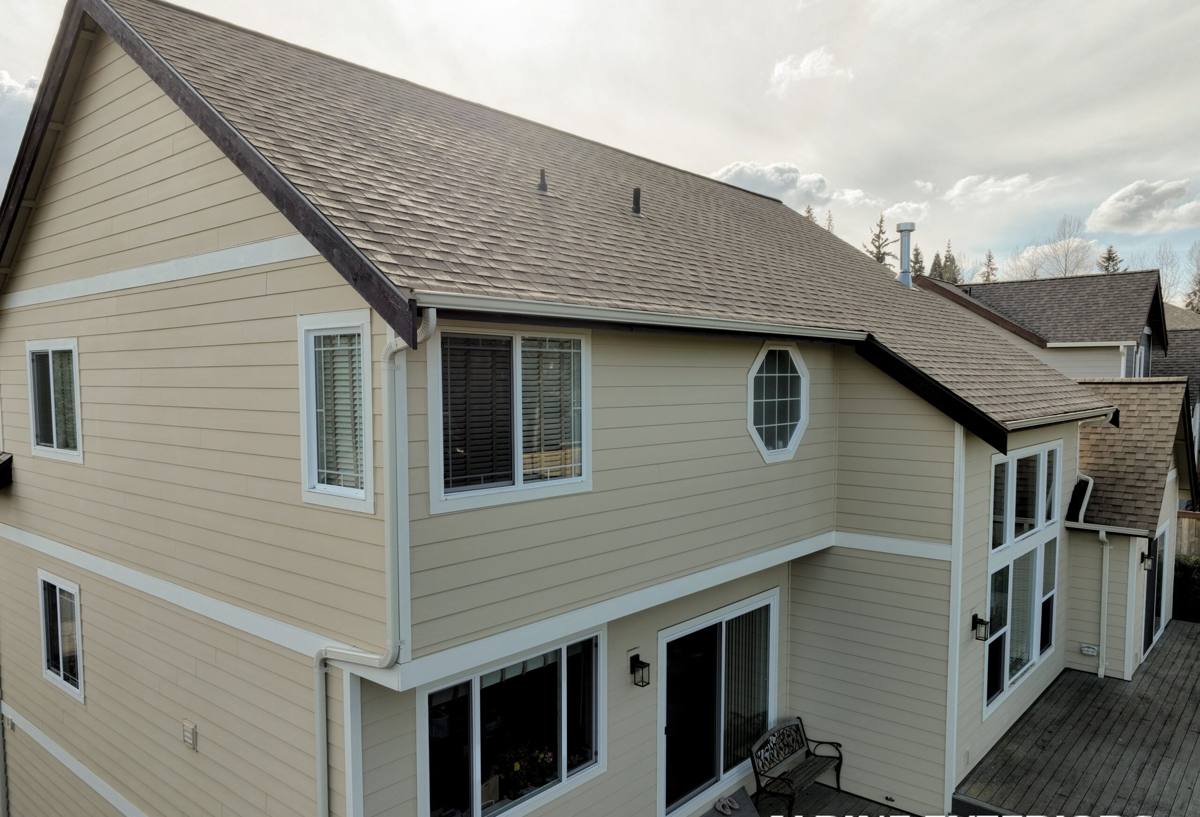
What Salt Air and Coastal Moisture Actually Do to Siding
Salt air doesn't just sit on a surface — it works its way into fasteners, seams, and any exposed edge where a coating has thinned or worn through. Over years, that steady exposure accelerates corrosion in metal components and speeds up the breakdown of finishes that weren't engineered for a marine-influenced climate. Combine that with the near-constant humidity swings of a Puget Sound shoreline property, and you get a house that's wet more often, and dries more slowly, than one a few miles inland.
This is why fastener choice, flashing details, and coating quality matter more in Similk Beach than they would on a similar home in a drier part of the state. A siding system that's merely adequate elsewhere can underperform here within a decade.
The Moss Factor
Anacortes' long moss season is driven by the same shade, moisture, and mild temperatures that make the region beautiful — and hard on exteriors. Moss and algae need sustained dampness to establish, and siding that holds water against its surface (through poor drainage detailing, tight-to-grade installation, or a porous substrate) gives them exactly that. Once moss gets a foothold, it holds even more moisture against the wall assembly, which compounds the original problem.
Why We Only Install James Hardie in This Climate
We don't install LP SmartSide, vinyl, Cemplank, Allura, primed spruce, or cedar. That's a deliberate standard, not a lack of options. In a coastal, moss-prone climate like Similk Beach's, the trade-offs of those products show up sooner and cost more to manage:
- Wood-based products (primed spruce, cedar, LP SmartSide): organic material that needs consistent maintenance to resist moisture intrusion and rot — a heavier burden in a climate this damp.
- Vinyl: can warp or become brittle with temperature swings and UV exposure, and its seams and J-channels give moisture more places to collect in a wet climate.
- Other fiber cement brands (Cemplank, Allura): not necessarily poor products, but we've standardized on one system so our crews master one set of installation details, one flashing approach, and one warranty structure — consistency that protects the homeowner.
James Hardie fiber cement is non-combustible, dimensionally stable, and its ColorPlus factory finish is baked on under controlled conditions rather than field-applied — a real advantage when a big part of coastal siding failure traces back to coating breakdown at the surface.
James Hardie's Climate-Engineered Product Lines
Hardie doesn't make one generic siding board for the whole country. The company engineers its HZ5 product line specifically for regions with real weather — freeze-thaw cycles, sustained moisture, and coastal exposure all included. For a Similk Beach home, that means a board formulated to resist moisture-related damage better than a one-size-fits-all product, paired with a factory finish designed to hold its color and integrity through repeated wet-dry cycles rather than fading or chalking prematurely.
| Factor | Why It Matters in Similk Beach |
|---|---|
| HZ5 climate-engineered formulation | Built to perform in regions with sustained moisture and coastal exposure |
| ColorPlus factory finish | Reduces the field-applied paint failures common near salt air |
| Non-combustible core | Doesn't feed or spread flame like wood-based sidings |
| Dimensional stability | Resists the swelling and warping that humidity cycles cause in wood products |
| Transferable warranty | Backed by the manufacturer, not just the installer's word |
What a Correct Fiber Cement Install Looks Like Here
Fiber cement is only as good as the installation behind it. In a climate like this one, a handful of details separate a siding job that lasts decades from one that develops problems in five to seven years.
Water Management Comes First
Before a single course of siding goes up, the water-resistive barrier, flashing at windows and doors, and kick-out flashing at roof-wall intersections all need to be correct. Fiber cement doesn't rot the way wood does, but water that gets behind it and can't drain out will still damage sheathing, framing, and insulation. In a driving-rain climate, this hidden layer of the job matters as much as the visible siding itself.
Fastening and Clearances
Corrosion-resistant fasteners, correct nailing patterns, and proper clearance between the bottom edge of the siding and grade, roofing, or decking all reduce the chances of trapped moisture. Hardie publishes specific clearance and fastening requirements for a reason — skipping them is one of the most common causes of premature failure we see on homes that weren't installed to spec.
Caulking and Joint Treatment
Every seam, joint, and penetration is a potential entry point for moisture. Correct caulking practices, factory-primed cut edges, and proper joint flashing keep water on the outside of the wall assembly where it belongs, rather than working its way behind the siding over a wet Anacortes winter.
Our Process for a Similk Beach Project
- On-site assessment: we walk the exterior, check existing siding and trim condition, and look at drainage, grade, and moisture exposure specific to the property's position relative to the water.
- Product and color selection: we walk through Hardie's HZ5 lines and ColorPlus palette suited to coastal exposure and help match the home's style and HOA or neighborhood expectations where applicable.
- Prep and removal: old siding comes off, and we inspect the sheathing underneath for any moisture damage that needs addressing before new siding goes on — a step that's especially important on older homes near the water.
- Weather barrier and flashing: a correctly detailed water-resistive barrier and flashing system goes in before siding, protecting the wall assembly for the life of the job.
- Installation to manufacturer spec: fastening, clearances, and joint treatment follow Hardie's published installation requirements — not shortcuts.
- Final walkthrough: we review the completed work with the homeowner and confirm everything meets both our standard and the manufacturer's requirements for warranty coverage.
Maintenance Expectations for a Coastal Skagit County Home
Even the right siding benefits from a bit of homeowner attention in a salt-air, high-moss climate. None of this is heavy lifting, but skipping it lets small issues turn into bigger ones.
- Rinse siding periodically to clear salt residue and organic buildup, especially on north-facing or shaded walls where moss favors growth.
- Keep gutters clear so water sheets away from the wall rather than overflowing onto siding courses below.
- Trim back vegetation and tree cover that keeps siding shaded and damp longer than necessary.
- Inspect caulking at trim, windows, and doors every year or two, since UV and salt exposure can break down sealants faster here than in a drier climate.
- Address any moss or algae growth early with gentle cleaning rather than pressure-washing, which can force water behind siding if aimed incorrectly.
Why Hiring a Crew That Already Works This Area Matters
Siding installation isn't identical from town to town. A crew that regularly works Anacortes and the surrounding Skagit County shoreline already understands how far salt exposure typically travels inland from the water, how local moss and mildew patterns behave through the wet season, and how driving rain off the Salish Sea tends to hit different wall orientations. That translates into better decisions on flashing details, fastener selection, and finish choices — decisions that are harder to get right for a crew unfamiliar with this specific coastal environment.
It also means a contractor who's seen how older homes in this area have weathered over time, and who can spot early warning signs — soft trim, early moss colonization, fastener staining — that a less experienced eye might miss.
Cost Factors for a Similk Beach Fiber Cement Project
Every home is different, but a few factors consistently move the price of a fiber cement siding project in this area, more than they might elsewhere.
| Factor | Impact on Similk Beach Projects |
|---|---|
| Extent of existing moisture damage | Coastal homes more often need sheathing repair before new siding goes on |
| Home's proximity and exposure to the water | Higher salt exposure can call for additional flashing and detailing attention |
| Trim and architectural detail | More corners, windows, and transitions mean more flashing and labor |
| Siding profile and finish choice | Different HZ5 profiles and ColorPlus finishes carry different material costs |
| Access and site conditions | Waterfront lots and slopes can affect equipment access and staging |
Signs a Similk Beach Home May Need Siding Attention Soon
- Visible moss or algae staining that returns quickly after cleaning
- Soft or spongy spots around trim, corners, or lower courses
- Paint or finish that's chalking, peeling, or fading unevenly
- Rust streaking near fasteners or metal flashing
- Gaps, warping, or separation at seams and joints
If any of these sound familiar, it's worth having the siding looked at before the next wet season rather than after damage has spread to the sheathing underneath.
If you're weighing a siding project for a Similk Beach home, we're happy to walk the exterior with you, talk through what this climate demands, and put together a free, no-pressure estimate for a correctly installed James Hardie system.