 Anacortes
 Burlington sits inland from the water on the flats of the Skagit Valley, and while it doesn't take the direct salt spray that Anacortes properties do, it deals with its own version of the same problem: a lot of moisture, for a lot of the year, that doesn't let up. Valley fog settles in low over Burlington on cool mornings, driving rain rolls through off the Salish Sea, and shaded lots hold onto damp longer than homes on higher, more open ground. We install James Hardie fiber cement siding throughout Skagit County, and Burlington is a place where the material's moisture performance matters just as much as it does on the coast, even if the exposure looks a little different.
What Burlington's Climate Actually Does to Siding
The Skagit Valley is flat, low-lying, and close to the river system that gives the valley its farmland — all of which means moisture sits in the air here longer than it does on a breezier, higher-elevation site. Morning fog is common through the fall and winter months, and a lot of Burlington properties have mature trees or neighboring structures that keep parts of the exterior shaded and slow to dry out after a storm. Add in a long stretch of gray, wet weather most winters, and you get conditions that are hard on any siding material that isn't built to handle sustained dampness.
Moss and algae are the most visible sign of this. North-facing walls, areas under eaves that don't get direct sun, and siding near dense landscaping tend to stay damp longest and show growth first. Less visible, but more serious, is what happens behind the siding when a wall assembly isn't detailed to shed water correctly — trapped moisture doesn't announce itself until there's staining, soft trim, or a mold problem discovered during a remodel. A siding material's job in this climate isn't just to look good; it's to manage water correctly for decades, not just the first few years.
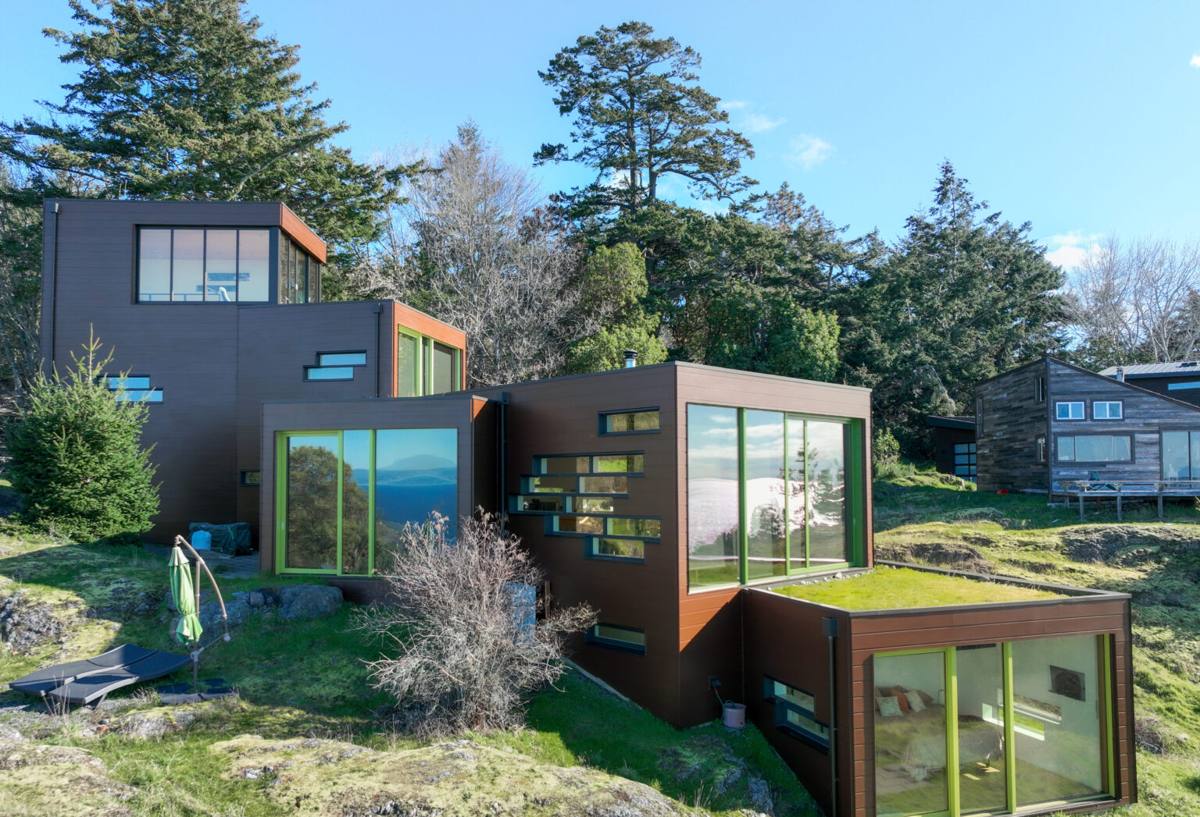
Why Fiber Cement Fits a Burlington Home
Fiber cement is a mix of cement, sand, and cellulose fiber, pressed and cured into a rigid, dimensionally stable board. Unlike wood, it doesn't swell, rot, or feed fungal growth the way untreated cellulose does. Unlike vinyl, it's rigid enough to be fastened directly and consistently, rather than hung loose and left to depend entirely on whatever is behind it. And unlike engineered wood products, it isn't vulnerable to the edge-swelling and moisture wicking that can happen when the factory-sealed edges get compromised on site.
That combination matters in a valley climate with persistent dampness. Fiber cement resists moisture absorption at the board level, which means it isn't itself becoming a moisture reservoir against the wall. It also holds paint and factory finishes far better over time than wood, which matters when a home is going to spend a good chunk of the year under cloud cover and light rain rather than dry, UV-heavy sun that would otherwise help a wall dry out and stay ahead of mildew.
Where We See the Difference on Older Burlington Homes
- Wood or engineered-wood siding with soft, swelling seams near ground level or under downspouts, where splash-back keeps the material wet longer than it can dry
- Vinyl panels that have gone brittle or faded unevenly on sun-exposed elevations, with no way to touch up or repaint the color
- Caulk joints and trim that have opened up from repeated wet-dry cycling, giving water a path behind the cladding
- Moss and algae staining concentrated on shaded north and east walls that rarely get direct sun to dry them out
What a Correct Fiber Cement Installation Actually Involves
Fiber cement performs the way it's supposed to only when it's installed to the manufacturer's specifications — a lot of the material's reputation problems in the field trace back to installation shortcuts, not the product itself. A correct job accounts for several details that are easy to skip and hard to notice until years later:
Clearance and Drainage
Siding needs proper clearance from grade, roofing, decks, and other horizontal surfaces so water has somewhere to go instead of wicking up into the bottom edge of the boards. On a Burlington lot with flat grading or limited slope away from the foundation, getting this right is one of the most important — and most commonly shortcut — details in the whole job.
Fastening and Flashing
Fiber cement needs to be fastened per Hardie's specifications for the specific product and exposure, with corrosion-resistant fasteners driven correctly, not overdriven or underdriven. Flashing at windows, doors, and any wall penetration has to integrate with the weather-resistive barrier behind the siding, not just sit on top of it. This is where a rushed install fails first, and it's usually invisible until there's a water problem inside the wall.
Joints, Caulking, and Finish
Butt joints, seams, and trim intersections need to be treated correctly — sealed where the manufacturer calls for sealant, left to shed water where it doesn't. Factory-applied ColorPlus finish should be used at cut edges with the matching touch-up product, not left raw where it can absorb moisture. These are small steps that take extra time on a job and are exactly the kind of thing that gets skipped when a crew is moving fast.
Hardie Product Lines We Work With
| Product Line | Typical Use | Notes for Burlington Homes |
|---|---|---|
| HardiePlank Lap Siding | Most homes, traditional and modern styles | Smooth or cedar-textured finish, wide color range, our most common install |
| HardiePanel Vertical Siding | Accent walls, gables, modern designs | Often paired with lap siding for contrast on a single elevation |
| HardieTrim Boards | Corners, window and door surrounds, fascia | Resists the swelling and rot issues that plague wood trim in a damp valley climate |
| HZ10 Climate-Engineered Formulation | Homes with sustained moisture exposure | Formulated for wetter regional climates like ours rather than a generic national spec |
All of it comes with Hardie's ColorPlus factory finish as an option, which is baked on under controlled conditions and backed by its own finish warranty — a real advantage over field-applied paint in a climate that doesn't give paint much dry time to cure properly.
Fiber Cement Against the Alternatives
| Material | Moisture Behavior in a Valley Climate | Long-Term Maintenance |
|---|---|---|
| James Hardie fiber cement | Rigid, dimensionally stable, doesn't absorb and hold moisture the way wood does | Occasional wash-down; factory finish resists fading and chalking |
| Vinyl siding | Not a water barrier itself; relies entirely on the assembly behind it, and seams are common failure points | Can't be repainted once faded; brittle panels crack and are hard to color-match later |
| Cedar or primed wood | Absorbs moisture readily; prone to rot and swelling in shaded, damp areas | Regular repainting or staining, ongoing vigilance for soft spots |
| Engineered wood (LP SmartSide-type products) | Better than raw wood, but edge-swelling risk if cut edges or damage aren't sealed correctly | Depends heavily on installer discipline around sealing and touch-up |
We only install James Hardie, so we're not the right call if you've already decided on one of the alternatives above. But if you're still weighing options for a Burlington home, this is the honest comparison we'd walk you through in person, based on what actually holds up in this specific climate rather than what's cheapest to buy off the shelf.
How We Approach a Burlington Job
- Walk the property and assess current siding, trim, and any moisture damage already present, paying close attention to shaded and low-drainage areas
- Confirm the weather-resistive barrier condition once old siding comes off, and repair or replace it before anything new goes up
- Install fiber cement to Hardie's fastening, clearance, and flashing specifications for our climate zone
- Detail all window, door, and penetration flashing so it integrates properly with the barrier and the new siding
- Finish joints, corners, and cut edges correctly, including touch-up on any field-cut ColorPlus edges
- Final walk-through so you understand what was done and what routine upkeep, if any, to expect
Cost Factors on a Burlington Siding Project
| Factor | Why It Matters |
|---|---|
| Tear-off and disposal of existing siding | Older wood or vinyl often needs full removal, and hidden moisture damage found underneath can add scope |
| House size and wall complexity | Multiple gables, dormers, and cutouts take more labor and trim work than a simple rectangular footprint |
| Weather-resistive barrier condition | A barrier that's failed or was never installed correctly needs to be addressed before new siding goes on, not after |
| Product mix | Lap siding alone costs less than a job combining lap, panel accents, and custom trim details |
| Access and site conditions | Tight lots, mature landscaping, or limited equipment access can add time to prep and staging |
We don't publish blanket pricing because these factors genuinely change the number from one Burlington home to the next — a walk-through and written estimate is the only honest way to get a real figure.
Why a Crew That Already Works the Skagit Valley Matters
Burlington's mix of flat farmland, older neighborhood streets, and newer developments means siding conditions vary more than people expect within just a few miles. A crew that hasn't worked the valley regularly can miss things a local crew catches automatically — which lots hold fog and moisture longer, which older homes are more likely to have outdated or missing weather barriers, and which drainage patterns actually matter versus which are just code minimums. We work Burlington alongside the rest of Skagit County often enough to know what a given property is likely dealing with before we even finish the walk-around.
That familiarity also shows up in permitting and scheduling — knowing what the local jurisdiction expects, and planning around the valley's wetter stretches so a tear-off doesn't sit exposed to weather longer than it has to.
What to Expect From an Estimate
- An honest inspection of your current siding, trim, and any visible moisture or moss issues
- A clear read on what's cosmetic versus what points to a real moisture problem behind the wall
- An explanation of why we recommend James Hardie fiber cement for your specific property and exposure
- A written scope and estimate, with no pressure to sign anything on the spot
If you own a home in Burlington and you're dealing with fading, moss buildup, soft trim, or siding that's simply reaching the end of its life, we're glad to take a look. Reach out for a free, no-pressure estimate — we'll give you a straight answer about what your home needs and why.