 Anacortes
 Why Ship Harbor Windows Wear Out Differently
Ship Harbor sits close enough to the water that homes here take a different kind of weathering than houses further inland in Skagit County. Salt-laden air off Rosario Strait works into window hardware and finishes faster than it does even a few miles east. Combine that with the driving, wind-pushed rain that comes through in fall and winter storms, plus a moss and mildew season that can stretch from October well into spring, and you get windows that fail on a shorter timeline than the manufacturer's brochure assumes. Seals give out early. Aluminum hardware pits and sticks. Wood sashes that aren't detailed correctly hold moisture against the frame and start to soften from the inside out, long before it shows on the surface.
None of that means Ship Harbor is a bad place to own a house with wood or vinyl trim — it just means the windows and the install details need to be chosen for this specific exposure, not for a generic "Pacific Northwest" spec. That's the difference between a window that performs for fifteen years and one that's fogging and drafting in five.
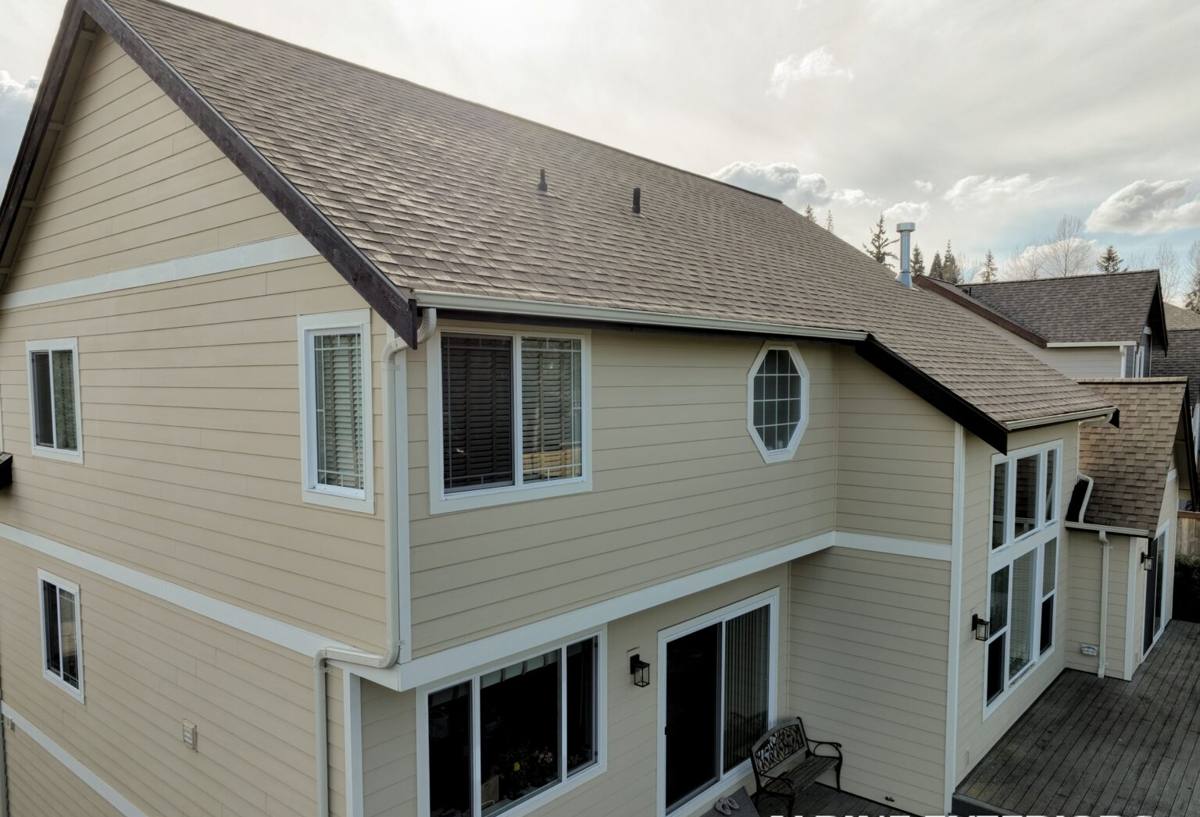
What "Energy-Efficient" Actually Means Here
Energy-efficient window shopping usually gets reduced to a single sticker number, but for a marine-exposed neighborhood like Ship Harbor, three separate numbers matter, and they matter for different reasons.
U-Factor
This measures how well the window resists heat loss — lower is better. In Anacortes, where winters are mild but persistently damp and cool, a low U-factor keeps interior glass surfaces warmer, which directly reduces condensation. That matters more here than the raw heating-bill savings, because condensation on cold glass is what feeds mildew growth on sills and trim.
SHGC (Solar Heat Gain Coefficient)
This measures how much solar heat passes through the glass. Skagit County doesn't get intense summer sun compared to inland Washington, so an overly aggressive low-SHGC glass package isn't always worth the added cost here — a moderate SHGC often strikes the better balance between winter warmth and summer comfort.
Condensation Resistance and Air Infiltration
These two numbers get overlooked but matter as much as the first two in a wind-driven-rain environment. A window with poor air infiltration control doesn't just waste energy — it's usually the same window that lets moisture past the frame during a real storm.
Frame Material: What Holds Up Near the Water
Frame choice is where a lot of window jobs go wrong in a salt-air setting. Here's how the common options actually behave under Ship Harbor conditions, not just in a showroom.
| Frame Material | How It Handles Salt Air & Moisture | Maintenance Load | Typical Lifespan Here |
|---|---|---|---|
| Vinyl (quality, welded corners) | Doesn't corrode or absorb moisture; stable in salt exposure | Low — occasional cleaning | 20–30+ years |
| Fiberglass | Excellent — dimensionally stable, resists moisture and salt pitting | Low | 30+ years |
| Aluminum (non-clad) | Prone to pitting and corrosion in salt air; hardware sticks | High — needs regular attention | Shortened in this exposure |
| Wood (unclad) | Needs disciplined finish maintenance or moisture gets in fast | Very high | Depends heavily on upkeep |
| Wood-clad (aluminum or vinyl exterior) | Good — exterior face is protected, interior stays natural wood | Moderate | 25–30+ years with proper flashing |
We're not against wood windows on principle — plenty of Ship Harbor homes have architecture that calls for a wood interior look. Our standard, though, is that any wood component facing this exposure needs a protected exterior face and correct flashing detail, because bare wood siding-to-window transitions are one of the most common places we find hidden rot on service calls in this area.
Signs Your Current Windows Are Already Costing You
Most homeowners don't replace windows because of one dramatic failure — they replace them because a slow list of small problems finally adds up. Walk your house and check for these:
- Cold drafts you can feel with a hand near the sash, even when the window is latched shut
- Condensation or fogging between the glass panes (a sign the seal has failed)
- Sashes that are hard to open, stick, or won't stay up on their own
- Visible rust, pitting, or chalky corrosion on aluminum hardware or frames
- Soft or discolored wood trim around the window opening, inside or out
- Black or green staining on the sill or lower sash — early moss or mildew growth
- Noticeably higher heating bills compared to a similar-sized neighboring home
- Street noise or wind noise that seems louder than it should be
Any one of these on its own isn't an emergency. Several of them together, especially fogged glass plus soft trim, usually means the window and its surrounding flashing have been letting moisture in for a while.
What a Correct Installation Actually Involves
The window unit itself is only part of the job. In a driving-rain climate, how the window is integrated into the wall is what determines whether it stays watertight. A correct install includes:
Removal Without Collateral Damage
Old sashes and frames come out carefully so we can inspect the rough opening underneath before anything new goes in — this is where hidden rot or old moisture damage actually gets found.
Sill Pan Flashing
A sloped, sealed sill pan under the window opening gives any water that does get past the window a way out, instead of a place to sit and soak into framing. This single detail is one of the biggest predictors of whether a window installation lasts.
Proper Weather-Resistive Barrier Integration
Flashing tape and house wrap need to be layered correctly — upper layers overlapping lower ones — so water sheds down and out, never behind the barrier. Get the sequence backwards and you've built a path for water to travel straight into the wall cavity.
Air Sealing and Insulation Around the Frame
The gap between the window frame and rough opening needs to be sealed and insulated correctly — not overpacked with rigid foam (which can bow the frame) and not left loose (which drafts and lets moisture-laden air condense inside the wall).
Exterior Trim and Caulking
The final exterior seal has to be done with a caulk or sealant rated for the surface and the marine exposure, applied at the right joints — not everywhere, which can trap moisture instead of shedding it.
Our Process
We keep the process straightforward and give you a clear picture before anything is removed:
- On-site assessment — we look at your current windows, note any signs of existing moisture damage, and measure openings.
- Product recommendation — we walk through frame material and glass package options suited to your home's exposure and your budget, no upselling to a spec you don't need.
- Written estimate — clear pricing, timeline, and scope before you commit to anything.
- Careful removal and inspection — old units come out, and we check the rough opening for hidden issues before installing anything new.
- Installation with proper flashing and sealing — done to the standard described above, not just "set it and caulk it."
- Final walkthrough — we test operation, check seals, and clean up the work area before we consider the job done.
Why Local Ship Harbor Experience Matters
A window crew that mostly works dry, inland jobs will often use the same install details everywhere, because they usually get away with it. In a Ship Harbor exposure, cutting a corner on sill pan flashing or barrier sequencing doesn't show up as a problem right away — it shows up two or three winters later as soft trim or a musty smell near the window. Crews who work this specific stretch of Skagit County regularly have already seen where those shortcuts fail, because they're the ones who get called back to fix them. That experience shapes which frame materials we recommend, how we detail flashing, and which sealants actually hold up to salt air rather than just looking good on installation day.
Living With Salt Air and Moss Season: Ongoing Care
Even the best window install benefits from a little seasonal attention in this environment:
- Rinse frames and glass periodically to clear salt residue, especially on homes with direct water exposure
- Keep weep holes on vinyl and fiberglass frames clear of debris so water can drain properly
- Check exterior caulk lines once a year for cracking or separation, and touch up before the wet season
- Wipe down and lightly lubricate hardware on operable windows if you notice stiffness
- Clear moss or algae buildup on nearby trim and siding promptly so it doesn't spread onto window surrounds
None of this is a heavy maintenance schedule — it's the difference between a window system that reaches its full lifespan and one that starts fighting the climate from year one.
Get a Straight Answer for Your Home
Every house in Ship Harbor sits a little differently relative to wind and water exposure, and the right window and installation approach can vary block to block. If you're dealing with drafts, fogged glass, or trim that's starting to look tired, we're glad to come take a look and give you a straightforward, no-pressure estimate — no guesswork, no upsell, just what your home actually needs. Use the form below to get started.