 Anacortes
 Why Fidalgo Island Homes Need a Different Approach to Windows
Fidalgo Island sits surrounded by water on nearly every side — the Rosario Strait, Guemes Channel, Similk Bay, and Padilla Bay all press in close to Anacortes neighborhoods. That geography is part of what makes the area beautiful, and it's also exactly why windows here take more abuse than windows a few miles inland in the rest of Skagit County. Salt-laden air, wind-driven storms, and a wet season that can stretch from October well into May don't just make a home less comfortable — they shorten the working life of ordinary windows and quietly drive up heating costs year after year.
When we talk about "energy-efficient windows for Fidalgo Island," we're not describing a generic upgrade. We're describing windows and an installation method chosen specifically to hold up against salt exposure, resist wind-driven rain intrusion, and keep interior humidity in check through a long, gray, damp season. Get any one of those wrong and you end up with a window that looks fine for a year or two but underperforms — or fails outright — well before it should.
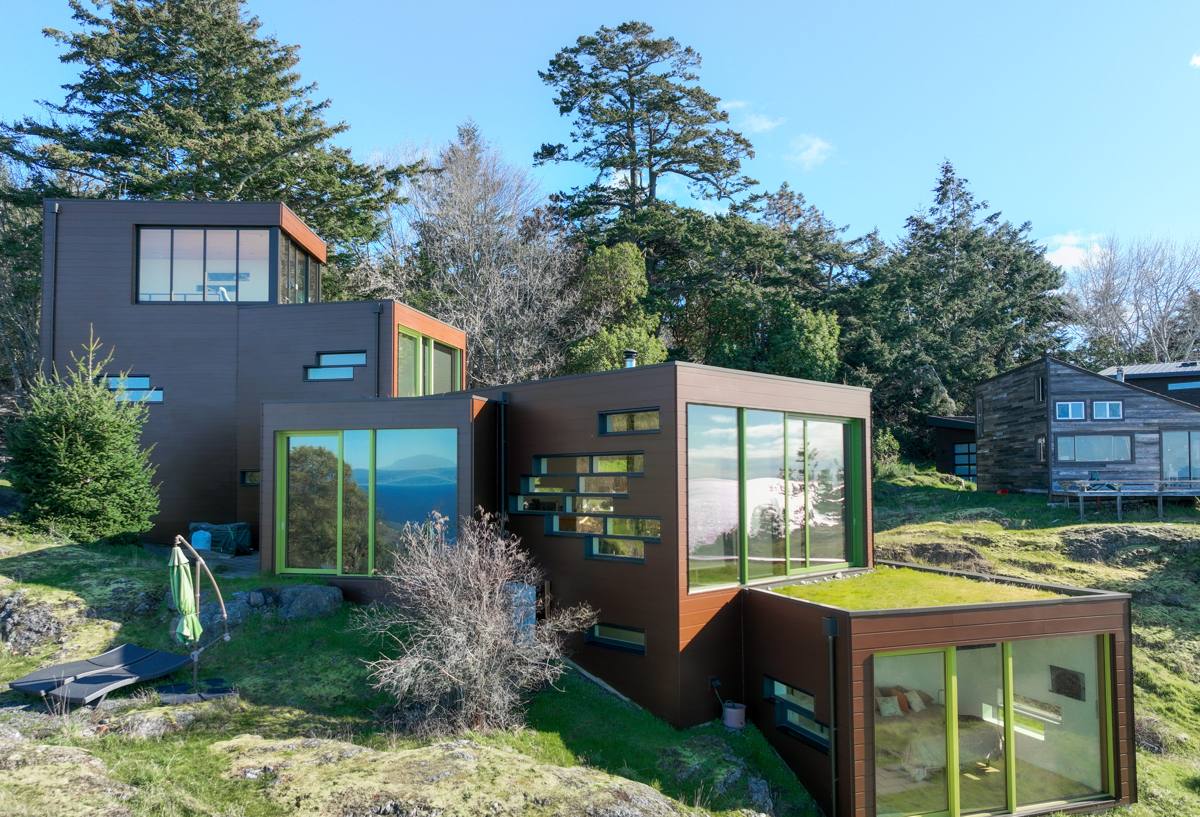
The Three Things Working Against Your Windows Here
Salt Air and Corrosion
Homes close to the water deal with airborne salt settling on everything outside, including window frames, hardware, and fasteners. Over time, salt exposure accelerates corrosion on lower-grade metal components — screws, balance springs, cranks, and cladding fasteners in particular. This doesn't mean every window near the water is at risk, but it does mean frame material and hardware quality matter more here than they would for the same house set back from the coast.
Wind-Driven Rain
Storms moving through the Strait push rain sideways, not just straight down. Wind-driven rain finds gaps that a calmer climate would never expose — a slightly under-sealed nailing flange, a sill without proper slope, a gap in flashing tape. In a lot of homes we look at, the window itself isn't the actual problem; water worked its way behind the frame through a detail that was never sealed correctly in the first place.
The Long Moss and Moisture Season
Anacortes gets a genuine wet season, and it runs long. That extended stretch of damp, cool weather raises the odds of condensation forming on interior glass and frames when a window isn't performing the way it should. Persistent condensation is more than a nuisance — it's a steady moisture source for the mildew and soft-wood damage that shows up on window sills and trim after a few winters.
What "Energy-Efficient" Really Means in a Marine Climate
Out here, energy efficiency isn't primarily about surviving deep cold snaps the way it might be in a continental climate. Western Washington's marine climate zone is milder in raw temperature, but it makes up for that with near-constant dampness and long heating seasons at moderate outdoor temperatures. That changes what actually matters in a window:
- U-factor — how much heat the window lets escape. Lower is better, and it matters here because the heating season is long even if it's rarely extreme.
- Solar Heat Gain Coefficient (SHGC) — how much solar warmth passes through the glass. Useful for capturing what sun you do get, without turning a west-facing room into a greenhouse on the rare hot afternoon.
- Air leakage rating — how much outside air sneaks past the frame and sash. This is often the single biggest factor in how drafty an older window feels, and it's directly tied to wind exposure off the water.
Look for windows carrying an ENERGY STAR rating for the Northern climate zone, along with an NFRC label showing the actual U-factor and SHGC numbers rather than marketing claims. Those numbers are independently tested and give you something concrete to compare between options, instead of relying on a salesperson's description of "energy-efficient."
Frame Materials: What Holds Up on the Island
There's no single "best" frame material for every home — it depends on exposure, budget, and how the house is built. But some trade-offs matter more here than they would inland.
| Frame Material | Salt Air / Corrosion Resistance | Maintenance | Typical Cost |
|---|---|---|---|
| Vinyl | Good — won't corrode, but hardware quality still varies by manufacturer | Low | Lower |
| Fiberglass | Very good — stable in temperature swings and moisture, minimal corrosion risk | Low | Higher |
| Aluminum-clad wood | Fair — cladding protects the wood, but fasteners and joints need attention near salt air | Moderate | Higher |
| Painted wood | Weakest without diligent upkeep — most exposed to both moisture and salt over time | High | Varies widely |
Our standard is to steer waterfront and near-waterfront Fidalgo Island homes toward vinyl or fiberglass frames with corrosion-resistant hardware, not because wood or aluminum-clad products are bad products, but because they demand a maintenance commitment that most homeowners underestimate once salt air is part of the equation. If you already have wood windows you want to preserve for character or historic reasons, that's a legitimate choice too — it just means budgeting for more frequent inspection and refinishing.
Glass Packages That Make Sense Here
Most Fidalgo Island homes do well with a double-pane, Low-E coated unit with an argon gas fill between the panes. That combination handles the everyday job — cutting heat loss, reducing condensation risk, and holding up to normal temperature swings — without the added cost of triple-pane glass.
Triple-pane glass is worth discussing for specific situations: homes on directly exposed north or west-facing walls that take the brunt of wind off the Strait, rooms where highway or ferry-traffic noise is a real annoyance, or homeowners who've had ongoing condensation problems even after a previous window upgrade. It's not a universal upgrade — it adds weight (which matters for larger openings and older frame structures), cost, and in some cases isn't a meaningfully better choice than a well-specified double-pane unit. We'll tell you honestly when triple-pane is worth the difference and when it isn't for your specific exposure.
Installation Details That Matter More Here Than Elsewhere
A lot of window failures we get called out to look at aren't failures of the window itself — they're failures of the installation. In a climate that drives rain sideways into wall assemblies, the details around the window matter as much as the window.
- Sill pan flashing — a sloped, sealed pan under the window directs any water that does get past the frame back outside instead of into the wall cavity.
- Flashing tape sequencing — flashing has to be layered correctly (shingle-style, working top over bottom) so water always sheds outward, never traps behind the siding.
- Sealants rated for marine exposure — not every exterior sealant holds up the same way under constant damp and salt air; the wrong one degrades and cracks years before it should.
- Proper shimming and fastening — a window that's out of square or under-fastened will flex in wind, opening gaps that let both air and water through.
This is the part of the job that's invisible once the trim is back on — and it's exactly why the installation crew matters as much as the window brand. A premium window installed with rushed flashing will underperform a mid-range window installed correctly.
Our Process for a Fidalgo Island Window Project
We keep the process straightforward and grounded in what this climate actually requires:
- Walk-through and assessment. We look at each opening, check existing frames and sills for water staining, soft wood, or corrosion, and note which walls take the most direct wind and rain exposure.
- Product selection matched to exposure. Not every window on the house needs the same spec — a sheltered opening and a wall facing straight into the Strait can reasonably get different glass or frame choices.
- Measurement and ordering. Precise measurements matter for a tight, properly sealed fit — this isn't a step we shortcut.
- Careful removal and framing inspection. Old windows come out cleanly so we can actually see the condition of the rough opening before anything new goes in. If we find rot or prior water damage, we address it before installing — covering it up only guarantees a repeat problem.
- Installation with full flashing and sealing detail. Sill pans, properly sequenced flashing tape, marine-rated sealant, and correct shimming — every time, not just on the openings that are hardest to reach.
- Interior finish and final check. Trim, insulation around the frame, and a full operation check on every window before we consider the job done.
Warning Signs and Cost Factors
Signs Your Windows Are Already Behind
Most homeowners don't think about window replacement until something forces the issue. These are the signs worth acting on before they turn into a bigger repair:
- Fogging or a hazy film between the panes of a double-pane window (the seal has failed)
- Noticeable drafts near the frame, especially during Strait wind events
- Sashes that are painted shut, swollen, or hard to open and close
- Visible rust or corrosion on hardware, cranks, or balances
- Soft spots, discoloration, or peeling paint on the interior sill or exterior trim
- Condensation building up on the glass or frame through the wet season
- Heating bills that keep climbing without an obvious explanation
- Original single-pane windows that have never been upgraded
What Drives the Cost
Every window project is different, and we won't quote a number without seeing the actual openings. In general, these are the factors that move the price up or down:
| Factor | Effect on Cost |
|---|---|
| Frame material (vinyl vs. fiberglass vs. clad wood) | Moderate to significant |
| Glass package (double-pane vs. triple-pane) | Moderate |
| Number and size of openings | Direct, scales with the job |
| Accessibility (second story, tight sightlines, water-side exposure) | Moderate |
| Condition of existing framing (rot repair needed or not) | Can be significant if repair is needed |
| Interior trim and finish work | Minor to moderate |
As a broad guideline, a straightforward single-window replacement typically runs in the low thousands of dollars, with whole-house projects scaling from there depending on the count and specification of openings. The only way to get an honest number is a walk-through of your specific home.
Why a Crew That Already Works Fidalgo Island Matters
Permitting and inspection can differ slightly depending on whether a property sits inside Anacortes city limits or in unincorporated Skagit County, and a crew that already works this area knows which applies before the project starts, not after a delay. Beyond paperwork, familiarity with the island's housing stock helps too — a lot of homes here were built in different eras with different framing and siding methods, and knowing what's typically behind the wall on a given street or in a given neighborhood saves time and surprises once removal starts.
There's also a simple practical reason to hire local: weather windows for exterior work on the coast are narrower than they are inland, and a crew that lives and works here plans installation timing around the Strait's wind and rain patterns instead of learning them on your job. If a warranty question or a sealant issue comes up two winters later, a local crew is easy to reach and has a reason to stand behind work done in the community they live in.
If you're weighing a window project for a Fidalgo Island home, we're happy to walk through it with you and give you a straight, no-pressure estimate — just fill out the form below.