 Anacortes
 Why Windows Take a Different Kind of Beating in Edison
Edison sits out on the flats near Samish Bay, in the part of Skagit County where the wind has nothing to slow it down before it hits a house. That open exposure means driving rain comes in sideways more often than it falls straight down, and it means the salt-laden air off the bay works its way into window hardware, frame seams, and exterior trim year-round. Add in the long, wet moss season that Western Washington is known for, and you've got a climate that is genuinely harder on windows than what you'd find twenty miles inland.
Older farmhouse-style homes and cottages around Edison were often built with single-pane or early double-pane windows that were never designed for this kind of exposure. Even newer vinyl windows installed without the right flashing and sealing details can fail early here — not because the glass is bad, but because water and salt air find the gaps. Energy-efficient window work in this area has to account for both the energy side (keeping heat in, keeping drafts out) and the durability side (keeping moisture and salt from breaking the window down from the outside in).
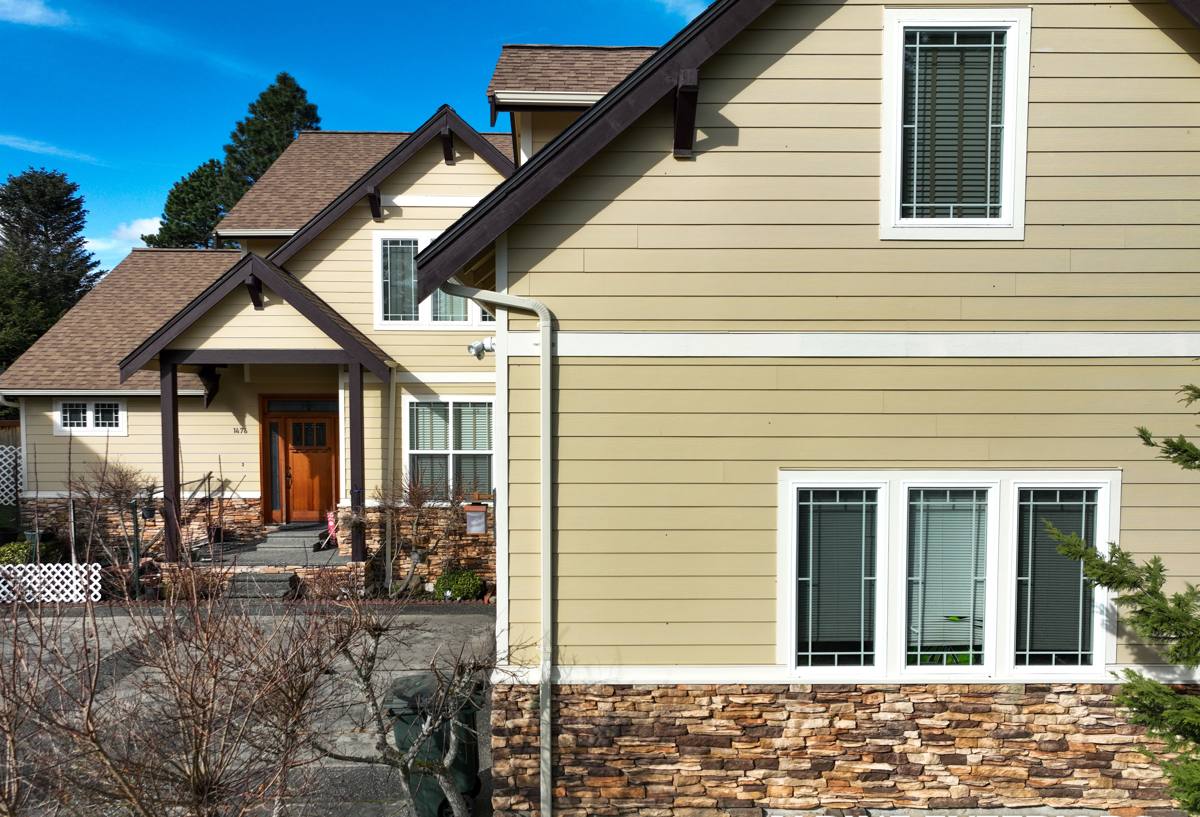
What "Energy-Efficient" Actually Means for a Window
It's a phrase that gets used loosely, so it's worth being specific about what it covers. A genuinely energy-efficient window is a combination of several factors working together, not just a sticker on the glass:
- U-factor — how well the window resists heat transfer. Lower is better for our cool, wet winters.
- Solar Heat Gain Coefficient (SHGC) — how much solar heat passes through the glass. Matters less here than in sunnier climates, but still affects comfort on south and west-facing walls.
- Air infiltration rate — how much air leaks around the sash and frame when the window is closed. This is often the biggest source of comfort complaints in older Edison homes.
- Glass package — double-pane with low-E coating and argon gas fill is the practical standard for this climate; triple-pane is available but adds cost and weight that isn't always justified for a single-story home.
- Frame material and construction — how well the frame itself resists moisture, warping, and corrosion over time, which matters more here than in a drier inland climate.
A window can have great glass and still perform poorly if the frame is cheap, the weatherstripping is thin, or the installation lets air bypass the frame entirely. That last point is where a lot of "energy-efficient" window jobs quietly fall short.
Signs Your Current Windows Are Working Against You
Homeowners in and around Edison usually notice a handful of the same warning signs before they call about replacement or repair:
- Visible fog or moisture trapped between panes — the seal has failed and the insulating gas has escaped
- A noticeable draft near the frame even when the window is latched shut
- Windows that are difficult to open, close, or lock — often a sign the frame has swollen or warped from moisture
- Cold spots on the wall or floor near the window in winter
- Visible mildew, staining, or soft wood at the sill or bottom corners
- Condensation forming on the inside of the glass regularly during cooler months
- A jump in heating costs without any other obvious cause
Any one of these can usually be diagnosed on site. Not every symptom means full replacement is the right call — sometimes it's a resealing or hardware repair — but a straight answer either way is part of a proper assessment.
Frame Materials: What Holds Up Near Salt Air and Moisture
Frame material choice matters more in a place like Edison than it does in a drier, inland part of the state. Here's how the common options compare for this specific climate:
| Frame Material | Moisture & Salt Air Performance | Maintenance | Typical Fit for Edison Homes |
|---|---|---|---|
| Vinyl | Good — won't rot or corrode, handles damp climates well | Low — occasional cleaning | Solid, cost-effective choice for most homes |
| Fiberglass | Very good — dimensionally stable, resists warping in wet/dry cycles | Low | Strong option for exposed, wind-heavy sites |
| Wood (unclad) | Poor without diligent upkeep — vulnerable to rot in this rainfall pattern | High — regular painting/sealing | Best reserved for interior-facing trim, not full coastal exposure |
| Wood-clad (exterior clad in vinyl/aluminum/fiberglass) | Good on the exposed face; interior wood still needs some care | Moderate | Good where a wood interior look is wanted |
| Aluminum | Fair — can corrode near salt air over time and conducts more cold | Moderate | Generally not our first recommendation this close to the bay |
None of these are "bad" products — every material has situations where it makes sense. Our job is to steer each homeowner toward what will actually hold up on their specific house, given its exposure, rather than defaulting to whatever is cheapest or most common.
Why We're Selective About Frame Recommendations Near the Water
We've seen enough window installs around Skagit County to know that a frame's lab-rated performance and its real-world performance near open water aren't always the same thing. Salt air accelerates corrosion on metal hardware and components, and driving rain finds any gap in a poorly flashed installation. That's why we lean toward vinyl and fiberglass for most Edison homes, and why we're upfront when a homeowner's preferred product isn't the best match for their site's exposure.
What a Correct Window Installation Actually Involves
The window unit itself is only part of the job. Most premature window failures we see in this area trace back to installation shortcuts, not product defects. A correct install includes:
- Removing the old window and inspecting the rough opening for hidden rot, water staining, or framing damage
- Repairing any damaged sheathing or framing before the new window goes in — installing over a compromised opening just hides the problem
- Integrating proper flashing (head flashing, sill pan, and side flashing) so water is directed out and away from the wall assembly, not into it
- Tying the window's flashing correctly into the house's weather-resistive barrier and siding, so the whole wall system sheds water as one unit
- Air-sealing the gap between the window frame and the rough opening with appropriate sealant and backer rod — this is where a large share of drafts originate
- Insulating the shim space without over-packing it, which can bow the frame and affect operation
- Setting the window level, square, and plumb, and testing operation before final trim goes back on
Because we do siding work throughout Skagit County, we pay particular attention to how a window ties into the surrounding wall — the flashing and water management details at that junction are exactly the kind of thing that determines whether a wall stays dry for twenty years or starts hiding rot in five.
How We Approach a Window Project in Edison
Our process is the same whether it's one window or a whole house, scaled to the size of the job:
- On-site assessment — we look at existing windows, check for rot or moisture damage around openings, and talk through what's actually bothering you (drafts, condensation, appearance, or all three)
- Honest recommendation — replacement where it makes sense, repair where it doesn't; we'll say so either way
- Accurate measurement — every opening gets measured individually since older homes rarely have perfectly uniform openings
- Written estimate — clear about product, scope, and what's included so there are no surprises later
- Installation — following the flashing and sealing sequence above, with attention to how the window meets your siding and trim
- Cleanup and walkthrough — testing every window with you before we consider the job finished
What Drives Window Project Costs
Costs vary house to house, but a few factors consistently move the number up or down:
| Factor | Effect on Cost |
|---|---|
| Number of windows being replaced | More units per visit typically lowers the per-window cost |
| Frame material chosen | Vinyl is generally the most economical; fiberglass and wood-clad cost more upfront |
| Glass package (double vs. triple-pane) | Triple-pane adds cost and weight, worthwhile mainly on especially exposed or noisy walls |
| Condition of the rough opening | Hidden rot or framing repair adds labor and material beyond the window itself |
| Window size and configuration | Large picture windows, bays, and custom shapes cost more than standard operable units |
| Access and site conditions | Second-story or hard-to-reach windows can add time and equipment needs |
We don't quote by phone for this reason — an accurate number depends on seeing the actual openings and their condition.
Maintaining Energy-Efficient Windows in a Wet, Salty Climate
New windows still need some upkeep to get their full lifespan out here. A simple seasonal routine goes a long way:
- Rinse frames and hardware periodically to clear off salt residue, especially on sides facing open water or exposed to prevailing wind
- Check and clear weep holes at the bottom of the frame so water can drain rather than pool
- Inspect exterior caulking and sealant annually and touch up before gaps widen
- Keep gutters and downspouts clear so runoff doesn't sheet across window heads
- Watch for moss or algae buildup on nearby siding and trim, which holds moisture against the wall longer than clean surfaces do
- Operate each window a few times through the year so hardware doesn't seize up between uses
- Address any soft trim or staining near a window promptly rather than waiting for it to spread
Why Local Experience in Edison and Skagit County Matters
Window products are rated in a lab, but they perform in your actual wall, on your actual house, in this actual climate. A crew that's worked wall assemblies throughout Anacortes and the surrounding Skagit County communities has a feel for how driving rain moves across an exposed elevation near the bay, which flashing details actually hold up through a full moss season, and which frame materials are worth the extra cost versus which are overkill. That local pattern-recognition is hard to replicate if a crew is seeing this climate for the first time.
It also means we're not starting from a blank page when we look at your house — we've likely already seen a similar layout, a similar exposure, or a similar age of construction somewhere nearby, and we bring that context into the recommendation instead of a one-size-fits-all answer.
If your windows are drafty, fogged, hard to operate, or just due for an honest second opinion, we'd be glad to take a look. Reach out for a free, no-pressure estimate using the form below — we'll walk your windows with you and give you a straight read on what's worth doing now and what can wait.