 Anacortes
 Siding Built for Edison's Corner of Skagit County
Edison sits low in the Samish River delta, surrounded by open farmland and tidal flats, with Samish Bay and Padilla Bay both close enough to shape the weather every home in the area deals with. That combination — flat, exposed land, salt-laden air moving in off the water, and long stretches of gray, wet weather — is a tougher environment for exterior siding than most homeowners realize until they're dealing with premature failure. A siding installation done right in Edison has to account for all of it, not just look good on install day.
We install siding across Skagit County, and jobs in and around Edison get planned differently than jobs in a sheltered subdivision closer to town. The wind has fewer obstructions to slow it down before it hits a house. Moisture off the delta and nearby sloughs lingers in the air longer than it does a few miles inland. And moss, which is a nuisance everywhere in western Washington, gets an especially long growing season here because shaded, damp conditions persist through so much of the year. None of that is a reason to avoid siding work — it's just a reason to do it correctly.
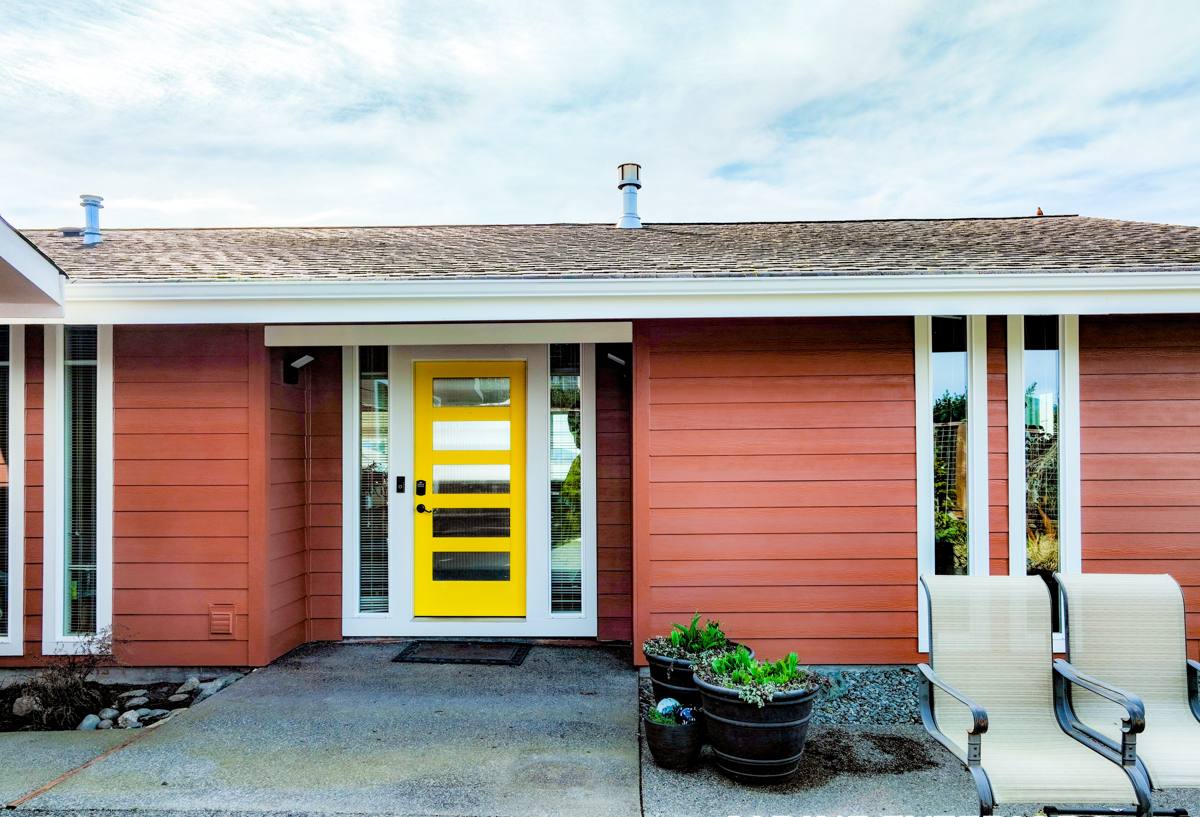
What Edison's Climate Actually Does to Siding
It helps to understand the specific mechanisms at work, because they explain why some siding materials hold up here and others quietly fail from the inside out.
Salt Air and Fastener Corrosion
Homes near Samish and Padilla Bay are exposed to airborne salt that settles on exterior surfaces and works into any exposed metal — nail heads, trim flashing, hose bibs, light fixtures. Over years, that corrosion can stain siding, weaken fastener holding power, and create small points of water entry that are hard to spot from the ground.
Driving, Wind-Driven Rain
Flat, open terrain means less wind resistance from trees and topography, so rain arrives at siding walls at an angle rather than falling straight down. Wind-driven rain finds every gap in lap joints, butt seams, and trim intersections that a calmer climate would never test. Siding that isn't installed with correct overlaps, flashing, and sealant becomes a slow water intrusion problem, not a sudden one — which is exactly why it often goes unnoticed until there's rot behind the wall.
Extended Moss and Algae Season
Shaded north- and east-facing walls, plus the ambient moisture from nearby wetlands and farmland, give moss and algae a long runway to establish themselves on exterior surfaces. On porous or absorbent siding materials, moss holds moisture directly against the substrate for months at a time, accelerating decay. On a dense, factory-finished material, it's mostly a surface issue that a wash and some maintenance keep in check.
Why We Install James Hardie Fiber Cement — and Nothing Else
We made a deliberate decision to install James Hardie fiber cement siding exclusively. We don't install vinyl, LP SmartSide, Cemplank, Allura, primed spruce, or cedar. That's not a marketing position — it's the product we're willing to warranty our labor against in a climate like Edison's.
- Non-combustible core: fiber cement doesn't feed a fire the way wood-based products can, which matters on rural properties near agricultural land and open fields.
- ColorPlus factory finish: baked-on color that resists fading and chipping far better than field-applied paint, which matters when a house is going to see years of salt air and UV exposure.
- Climate-engineered HZ formulation: James Hardie builds its siding in different formulations for different climate zones, and the Pacific Northwest's damp, freeze-capable weather calls for a different product than what's sold in the desert Southwest.
- Dense, moisture-stable substrate: fiber cement doesn't swell, cup, or absorb water the way wood and some engineered wood products can, so it holds paint and caulking lines the way they were installed.
- Transferable, manufacturer-backed warranty: when it's installed to spec, the product warranty and our labor warranty work together instead of leaving gaps.
We're upfront that other products have real strengths — vinyl is inexpensive and low-maintenance in mild climates, cedar has a genuine natural look, LP SmartSide is easier on a tight budget than fiber cement. But in a marine, moss-prone, wind-exposed climate like Edison's, those products ask homeowners to accept trade-offs in moisture performance, finish durability, or long-term maintenance that we're not willing to install and stand behind.
How Siding Materials Compare in Edison's Climate
| Factor | Vinyl | Wood / Cedar | James Hardie Fiber Cement |
|---|---|---|---|
| Wind-driven rain resistance | Moderate — seams can flex and open over time | Depends heavily on maintenance and finish | High when installed with correct flashing and overlap |
| Salt air / coastal durability | Can become brittle and discolored | Prone to weathering, checking, and rot near fasteners | Dense, stable material designed for coastal exposure |
| Moss and algae resistance | Surface growth, easy to clean | Growth can hold moisture against wood fibers | Surface growth only; factory finish resists staining |
| Fire performance | Melts and can contribute to fire spread | Combustible | Non-combustible core |
| Finish longevity | Can fade; color is through the panel, not a finish coat | Requires repainting or restaining every few years | ColorPlus finish rated for decades before repaint |
| Typical lifespan when correctly installed | 20-30 years | 15-30 years, maintenance dependent | 30-50+ years |
What a Correct Siding Installation Involves
Fiber cement siding performs the way it's designed to only when the installation underneath it is done correctly. The siding itself is only part of the system — the water management behind it matters just as much.
Weather-Resistant Barrier and Drainage Plane
Every wall gets a continuous weather-resistant barrier before any siding goes up, lapped correctly at seams and around every penetration. In a climate that sees as much wind-driven rain as Edison, a properly built drainage plane behind the siding is what actually keeps incidental moisture from reaching the sheathing.
Flashing at Every Transition
Windows, doors, roof-to-wall intersections, and any horizontal trim need flashing detailed to shed water outward, not trap it. This is where a lot of premature siding failures actually start — not with the siding material itself, but with a missed or shortcut flashing detail at a transition point.
Correct Fastening and Clearance
James Hardie specifies fastener type, spacing, and placement for a reason — done wrong, siding can crack, blow off in wind, or fail to hold its factory finish correctly. We also hold proper clearance from grade, roof lines, and decks so the bottom edge of the siding isn't sitting in standing moisture, which is a common problem on older homes in low-lying areas like the Samish flats.
Joint Treatment and Caulking
Butt joints, trim intersections, and penetrations get sealed with products compatible with the ColorPlus finish, following manufacturer joint treatment guidance rather than just running a bead of generic caulk down every seam.
Our Process for an Edison Siding Installation
- On-site assessment: we walk the exterior, check for existing moisture damage, evaluate wind and moss exposure on each elevation, and look at trim, window, and roofline conditions before pricing anything.
- Scope and product selection: we go over James Hardie profile and color options and explain how the plan addresses this specific home's exposure — a shaded north wall gets treated differently than an open south-facing wall.
- Tear-off and substrate check: once old siding comes off, we inspect sheathing for hidden rot or moisture damage before closing anything back up — this is often the first real look anyone's had at that wall in years.
- Weather barrier and flashing installation: the drainage plane and flashing details go in before a single piece of visible siding is hung.
- Siding installation to manufacturer spec: correct fastening, spacing, and joint treatment, following James Hardie's published installation requirements so the product warranty stays intact.
- Final detailing and walkthrough: trim, caulking, and touch-up are finished, and we walk the property with the homeowner before calling the job done.
Signs Edison Homeowners Should Watch For
- Soft or spongy spots when pressing on siding near the base of walls
- Persistent moss or dark staining that returns quickly after cleaning
- Visible gaps, warping, or cupping at panel seams
- Peeling or chalking paint on wood or engineered wood siding
- Rust streaks below nail heads or trim fasteners
- Rising utility bills that may point to compromised wall insulation behind failing siding
Cost Factors for Siding Installation in This Area
| Factor | Why It Matters in Edison |
|---|---|
| Home size and wall complexity | More corners, dormers, and trim details mean more flashing and cutting time |
| Substrate condition | Hidden rot from years of wind-driven rain exposure adds repair work before new siding goes on |
| Siding profile chosen | Lap, shingle-style, and panel profiles have different material and labor costs |
| Access and site conditions | Rural lots, long driveways, or septic/well placement can affect staging and equipment access |
| Trim and accessory scope | Fascia, soffit, and window trim replacement alongside siding changes overall project cost |
Why Hire a Crew That Already Works in Edison
A siding crew that regularly works Skagit County's coastal and delta properties already knows what a farmhouse foundation on the Samish flats tends to look like after a few decades of moisture exposure, and where wind-driven rain typically finds its way into a wall on an exposed elevation. That's not something you can fully substitute with a generic installation checklist — it comes from having actually pulled siding off enough local homes to know where the recurring problems hide.
It also matters for something more basic: showing up. Rural properties around Edison aren't always a quick stop for crews based well outside the area, and siding work depends on dry weather windows that are already limited enough in a region that sees this much rain. Working with a contractor who already routes through Skagit County regularly means fewer scheduling gaps and a crew that isn't learning the area's quirks on your project.
Maintenance After Installation
Correctly installed James Hardie siding is low-maintenance, not no-maintenance. A yearly rinse to knock off accumulated salt residue and moss spores, a visual check of caulking at trim and window edges, and prompt attention to any impact damage will keep the system performing the way it's designed to for decades. None of this compares to the repainting, restaining, or seam-sealing schedule that wood or vinyl siding typically demands in this same climate.
If you're weighing a siding project on a home in Edison, we're glad to come take a look and talk through what your specific walls are dealing with — no pressure, no obligation. Use the form below to request a free estimate.