 Anacortes
 Decks Built for Ship Harbor's Marine Climate
Ship Harbor sits on Fidalgo Island's western shoreline, close to the Washington State Ferry terminal and exposed to wind and salt spray off Rosario Strait. That location is part of what makes the neighborhood special — and part of what makes an outdoor deck harder on materials than it would be twenty miles inland. Salt-laden air corrodes fasteners and hardware faster than most homeowners expect, driving rain off the water finds every gap in a ledger flashing detail, and the shade and moisture that come with our Skagit County winters keep deck surfaces damp long enough for moss and algae to take hold. A deck built here needs to be specified for this exposure from the start, not treated like a generic backyard project.
This page focuses specifically on deck building for homes in and around Ship Harbor — material choices, structural details, and maintenance realities that matter more here than they would in a drier, more sheltered part of the county.
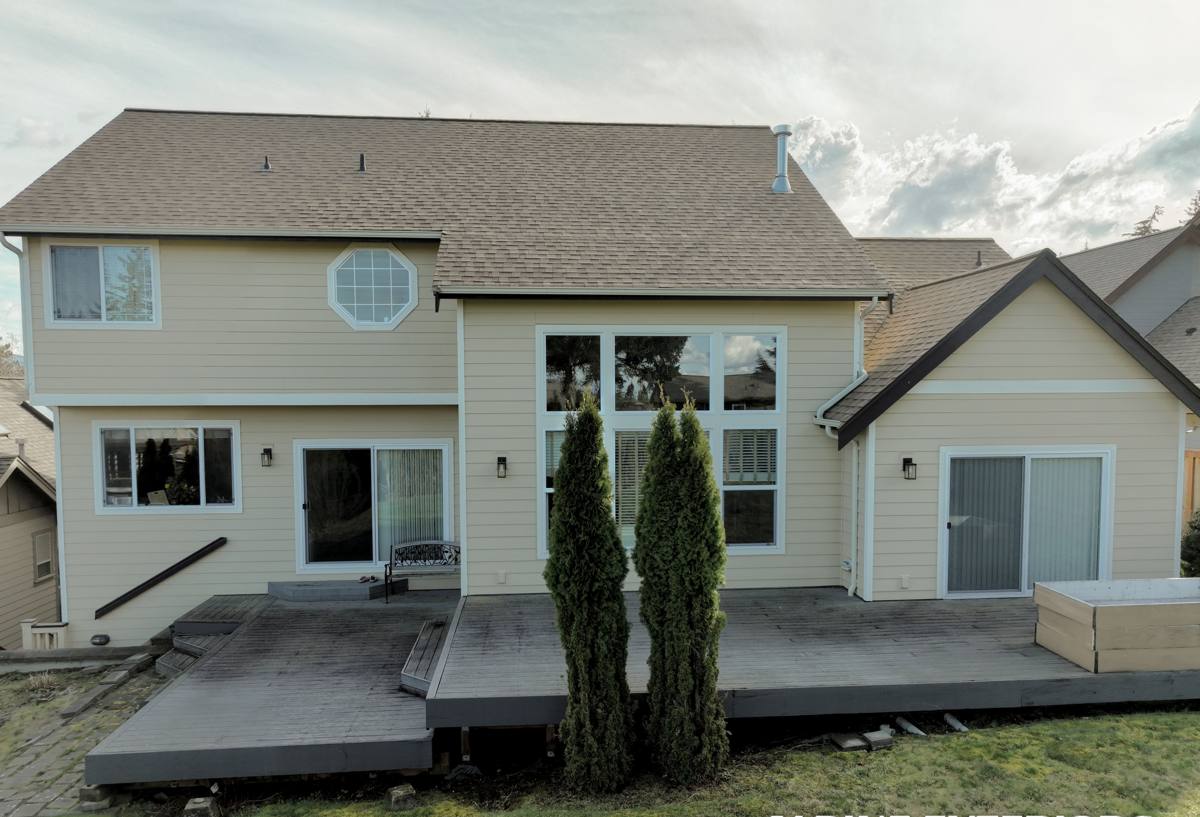
What Salt Air and Driving Rain Actually Do to a Deck
It helps to understand the specific failure points before talking about how to avoid them.
Corrosion
Standard electro-galvanized screws, nails, and joist hangers hold up fine in a lot of inland climates. Near the water, that thin zinc coating breaks down faster, and once it does, rust spreads into the wood fibers around the fastener and weakens the connection. This shows up first at joist hangers, ledger bolts, and any hardware that stays wet longer than it can dry.
Moisture intrusion
Wind-driven rain off the water doesn't fall straight down — it gets pushed sideways into ledger boards, stair stringers, and any spot where the deck meets the house. A flashing detail that would be adequate in a calmer microclimate can still let water track behind it here, and that's where rot starts, usually hidden until a board or ledger connection has already been compromised.
Moss and biological growth
Long, wet winters and shaded lots mean deck surfaces can stay damp for days at a stretch. Moss, algae, and mildew don't just look bad — they hold moisture against the decking surface and make boards slippery, which is a real safety issue on stairs and landings.
Choosing the Right Decking Material for This Location
There's no single "best" decking material for every home — it depends on budget, how much maintenance you want to do, and how exposed the deck is. Here's how the common options actually perform in a Ship Harbor-type marine environment.
| Material | Moisture & Salt Air Behavior | Moss/Algae Resistance | Maintenance | Relative Cost |
|---|---|---|---|---|
| Pressure-treated fir/hem-fir | Treated for rot resistance but fasteners and hardware still need to be corrosion-rated | Low — needs regular cleaning and sealing | Annual cleaning, periodic sealing | Lowest upfront |
| Western red cedar | Naturally rot- and insect-resistant; still needs sealing to hold its color and shed water | Moderate — better than untreated fir, still needs upkeep | Sealing every 1-2 years | Mid-range |
| Composite decking | Doesn't absorb water or rot; performs well in salt air | Better than wood, but grooved/textured boards can still hold moss in deep shade | Periodic washing, no sealing | Higher upfront, lower long-term |
| Tropical hardwoods (ipe, cumaru) | Very dense, excellent moisture resistance | Good, but surface can still get slick when wet | Occasional oiling to maintain color | Highest |
We don't push one product on every job. A shaded, close-to-the-water lot in Ship Harbor is a different conversation than a sunny, open one a few blocks inland, and we'll walk through the real trade-offs — not just the sales pitch — before you commit to a material.
Framing and Fasteners That Actually Hold Up
The decking surface is the part homeowners see, but the framing underneath is what determines how long the deck lasts. For a marine-exposed build, we treat a few details as non-negotiable:
- Stainless steel or heavy hot-dip galvanized fasteners and joist hangers rated for coastal exposure, not standard electro-galvanized hardware
- Self-adhered flashing tape on top of every joist before decking goes down, so water that gets between boards can't sit directly on bare framing
- Proper ledger board flashing where the deck attaches to the house, including step flashing integrated with the existing siding — not just caulk over a butt joint
- Structural screws or through-bolts at the ledger connection rather than nails alone, since this connection carries real structural load
- Air gaps and drainage paths at the ledger so moisture doesn't get trapped between the deck framing and the house wall
None of this is visible once the deck is finished, which is exactly why it matters to hire a crew that does it right the first time rather than cutting corners on hardware that "should be fine."
Footings and Drainage on Fidalgo Island Soil
Soil conditions vary block to block on Fidalgo Island, but a common thread near the water is a mix of glacial till, sand, and clay that can drain unevenly. Footings that sit in a low spot or a pocket of poorly draining soil are prone to frost heave and settling over time, which shows up years later as a deck that's started to rock or pull away from the house. We dig footings to the depth required by code for this area, and we pay attention to how water moves across the lot before we decide where posts land — not just where the design drawing puts them. Good drainage away from the footings and the base of the house is as much a part of a correctly built deck as the decking itself.
Permits, Code, and Guardrail Requirements
Most deck projects in Anacortes and unincorporated Skagit County require a building permit, and the requirements aren't just paperwork — they cover things that genuinely matter for safety and longevity:
- Joist size and spacing based on span tables for the decking material and expected load
- Guardrail height and baluster spacing for any deck above the code threshold height
- Stair rise, run, and handrail requirements
- Ledger attachment method, especially for decks attached to existing structures
- Footing depth and size for the local soil and frost conditions
We handle the permit process as part of the job — pulling permits, building to the approved plan, and getting the final inspection signed off. Skipping that step might save a little time upfront, but it leaves you with a deck that can complicate a future home sale or insurance claim if something goes wrong.
Our Deck Building Process
Every deck we build goes through the same basic sequence, adjusted for the specific home and site:
- On-site consultation. We look at the lot, sun and shade patterns, drainage, and how the deck will connect to the house before talking materials.
- Design and material selection. We walk through the real trade-offs between decking materials for your budget and exposure, not just a catalog pitch.
- Permitting. We prepare and submit the permit package and build to the approved plan.
- Site prep and footings. Excavation, footing placement, and structural post setting, checked against the soil conditions on your lot.
- Framing. Joists, ledger attachment, flashing, and hardware installed to marine-exposure standards.
- Decking, railing, and finish work. Surface installation, guardrails, stairs, and any trim or skirting.
- Final walkthrough and inspection. We review the completed deck with you and coordinate the final building inspection.
Living With Your New Deck: Moss and Seasonal Maintenance
No deck in this climate is maintenance-free, but a well-built one is manageable. A basic seasonal routine goes a long way:
- Sweep debris off the deck regularly, especially in fall when leaves and needles trap moisture against the surface
- Clean moss and algae with a deck-safe cleaner before it builds up — pressure washing alone can damage wood fibers and composite surfaces if done incorrectly
- Check and clear drainage gaps between boards so water isn't pooling
- Reseal wood decking on the schedule appropriate to the species (typically every one to two years)
- Inspect railings, stair connections, and ledger flashing once a year for any signs of movement or water staining
- Keep gutters and downspouts near the deck clear so roof runoff isn't dumping extra water onto the structure
We're happy to walk any homeowner through a maintenance schedule specific to the material we install, so the deck actually gets the lifespan it's built for.
Why Hire a Crew That Already Works Ship Harbor
A lot of deck problems we get called to fix didn't come from bad workmanship in the obvious sense — they came from a design that would've been fine in a drier, more sheltered part of the state but wasn't specified for salt air and driving rain off the water. Fastener grade, flashing details, and material choice all need to account for this specific exposure, and that only happens reliably when the crew building your deck already understands what Ship Harbor's climate does to a structure over time. We build decks across Anacortes and the rest of Skagit County, and we bring the same attention to marine-grade hardware and drainage detailing to every project near the water.
If you're planning a new deck or need to replace one that hasn't held up, we're glad to take a look and give you an honest read on what your home needs. Request a free, no-pressure estimate using the form below and we'll go from there.