 Anacortes
 Building a Deck That Holds Up in Edison
Edison sits low in the Skagit Valley, close enough to the tidal flats and Samish Bay that salt-laden air is part of daily life, and surrounded by open farmland that keeps humidity and fog lingering longer than it would a few miles inland. A deck built here has to deal with things a deck in a dry inland town never faces: metal that corrodes faster, wood that stays damp longer, and moss and algae that get a real foothold on any surface that doesn't drain and dry quickly. We've built and repaired decks throughout this part of Skagit County long enough to know which shortcuts show up as problems in year two, not year twenty.
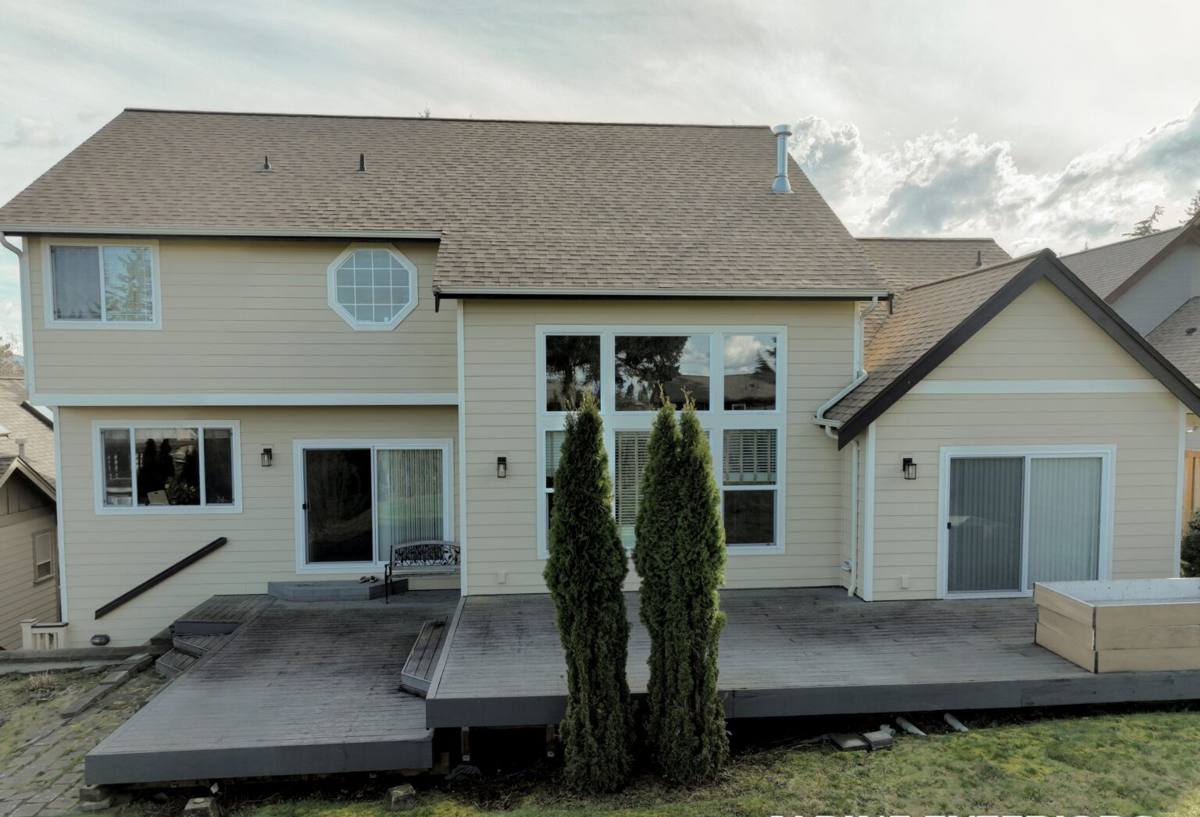
This page is about one job, done right, for this one area: new deck construction (and deck rebuilds) for homes in and around Edison. Not a general overview of decking — the specific choices that matter when your deck sits a short drive from open water and farmland moisture.
What Edison's Climate Actually Does to a Deck
Salt Air
You don't have to be right on the water to get salt exposure — coastal air carries fine salt particulate well inland, and Edison's proximity to the bay means fasteners, hinges, and any exposed metal hardware corrode faster than manufacturer ratings assume for a "typical" installation. Standard galvanized fasteners can start showing rust streaks and pitting years ahead of schedule in this kind of environment. It's a slow problem, which is exactly why it's easy to miss until a railing post connection or a joist hanger has already lost strength.
Driving Rain
Storms coming off the water don't fall straight down — wind-driven rain gets pushed sideways into ledger connections, under railing caps, and into any gap where end grain is exposed. A deck built without real attention to water shedding will trap moisture in exactly the spots that are hardest to inspect: behind ledger boards, inside post bases, under decking where boards are laid tight.
A Long Moss Season
Cool, damp, and shaded conditions for much of the year mean moss and algae get established fast on any decking surface that stays wet — especially the north or shaded side of a house, or decks tucked under tree cover, which is common on the larger, more wooded lots around Edison. Beyond looking bad, a mossy deck surface holds moisture against the wood and turns slick and genuinely dangerous underfoot.
Choosing the Right Decking Material
There's no single "best" decking material — the right call depends on your budget, how much upkeep you're willing to do, and how exposed the deck is to weather. Here's how the common options actually perform under Edison's conditions:
| Material | Upfront Cost | Maintenance | How It Handles This Climate |
|---|---|---|---|
| Pressure-treated pine | Lowest | Annual cleaning, re-sealing every 1-2 years | Workable if sealed consistently; skipped maintenance lets moss and rot take hold fast |
| Cedar | Mid | Cleaning plus periodic oil or sealer | Naturally rot-resistant and handles moisture well, but still needs upkeep to fight graying and moss in shaded spots |
| Composite decking | Higher | Occasional washing, no sealing or staining | Doesn't absorb water or feed rot the way wood does; still needs regular cleaning since moss and algae can grow on any surface that stays damp |
| PVC/capped polymer | Highest | Lowest — mostly rinsing | Fully sealed surface resists moisture and staining best of the options here; best choice for shaded, low-airflow decks that stay wet longest |
We don't push one material on every job. A sunny, open deck on a well-drained lot can do fine in cedar with a homeowner who's willing to maintain it. A shaded deck tucked against tree cover, where moss is going to be a constant fight, is usually money better spent on composite or PVC up front rather than fighting the climate every spring.
What's Under the Decking Matters More Than the Decking
Homeowners naturally focus on the surface material, but the framing and connections underneath are what actually determine whether a deck lasts. This is where we see the most corner-cutting in decks that get torn out early:
Ledger Attachment and Flashing
The ledger board — where the deck attaches to the house — is the single most common point of hidden water damage on any deck, anywhere. It has to be properly flashed so wind-driven rain can't work its way behind it and into the house's rim joist. This is not optional trim work; it's the difference between a deck that's solid in fifteen years and one that's rotting the house behind it.
Fasteners and Hardware
Given the salt exposure here, we don't use standard-grade galvanized fasteners and connectors. Stainless steel or heavy-duty coated fasteners rated for coastal and treated-lumber use cost more up front but avoid the corrosion that weakens a structure from the inside, in places you can't see without pulling boards.
Footings and Framing for This Soil
Skagit County's low-lying, historically agricultural ground can hold moisture differently than higher, better-drained sites. Footings need to go to proper frost depth and bear on solid ground, and post bases need to keep wood posts elevated off concrete so they don't wick moisture. On wetter or lower sites we pay extra attention to drainage around footings so standing water isn't sitting against the structure through the wet months.
Airflow Underneath
A deck built low to the ground with poor ventilation underneath stays damp longer after every rain, which accelerates rot in framing and encourages moss on the decking above. Where deck height allows, proper spacing and airflow planning underneath makes a real difference over the life of the structure.
Our Process for an Edison Deck Project
Every deck we build or rebuild in this area follows the same sequence, adjusted for your specific lot and layout:
- On-site evaluation of sun/shade exposure, drainage, and existing structure (for rebuilds)
- Material recommendation based on how exposed the deck will be to shade, moisture, and wind-driven rain
- Permitting through the appropriate county or city process — required for most new decks and many rebuilds
- Proper ledger flashing and house-side waterproofing before any framing goes up
- Footings set to proper depth, with attention to drainage on lower or wetter sites
- Stainless or coated corrosion-resistant fasteners and structural hardware throughout
- Decking installed with correct spacing for drainage and airflow
- Railing and guard systems built to current code for height and baluster spacing
- Final walkthrough covering care and maintenance specific to the material you chose
Railings, Codes, and Getting Inspections Right
Guardrail height, baluster spacing, and stair requirements are governed by building code, and inspectors in this area know exactly what they're looking for. Getting this right the first time isn't just about passing inspection — a railing system with the correct post spacing and connection hardware is what keeps it rigid and safe for years, not just on installation day. We handle the permitting and inspection process as part of the job, not as an afterthought.
Living With a Deck in a Moss-Prone Climate
No deck material is maintenance-free in this climate — some just need less. A few habits go a long way regardless of what you build:
- Sweep leaves and debris off regularly, especially in fall — trapped organic matter is what moss and algae feed on
- Rinse or wash the surface a couple of times a year, more often on shaded sections
- Keep nearby vegetation trimmed back so more sun and airflow reach the deck surface
- Check railing posts and stair connections annually for movement or corrosion at the hardware
- Re-seal wood decking on the schedule the product calls for — skipping a year is when problems start
If moss is already established on an older deck, pressure-washing without the right technique can gouge softwood and actually create more grooves for moss to regrow in. A gentler wash approach paired with an appropriate deck cleaner does a better job long-term.
Why Hire a Crew That Already Works Edison
A deck built to a generic spec — the kind you'd get from a contractor who mostly works drier, inland areas — is exactly the deck that runs into trouble here first: the fasteners that weren't rated for salt exposure, the ledger flashing that was adequate but not built for driving rain off the water, the shaded layout nobody planned drainage for. Working this part of Skagit County regularly means we're not guessing at what the climate will do to a project — we've already seen how the last one held up.
We also know the local permitting process for this area, which keeps your project moving instead of stalling on paperwork we're seeing for the first time.
Ready to Talk About Your Deck?
If you're planning a new deck or need to replace one that's showing its age, we're glad to come take a look and give you a straightforward, no-pressure estimate. Use the form below to get started.