 Anacortes
 "Custom windows" covers more ground than most homeowners expect. It's any window that isn't a standard stock size or shape sitting on a manufacturer's shelf — an odd-sized opening in an older farmhouse near the edge of town, a bay window built out to catch a view of the valley or the foothills, an arched or oversized unit matched to a newer build, or a replacement that simply has to fit a rough opening nothing in a catalog quite matches. In Sedro-Woolley, where older rural homes and farmhouses sit alongside newer construction spreading out from town toward the foothills of the North Cascades, we run into all of these situations regularly. Each one comes with its own fit problem and its own weatherproofing problem, and in this particular stretch of Skagit County, the weatherproofing side deserves just as much attention as the fit.
Why Sedro-Woolley Homes End Up Needing Custom Windows
A handful of things push window projects here out of stock-size territory more often than in a lot of towns. Sedro-Woolley has a real stock of older farmhouses and outbuildings framed decades before window manufacturers settled on today's standard dimensions, so a straight swap often means either ordering a custom unit or reframing the opening — and reframing adds its own cost, timeline, and disruption to the project. Additions and remodels create openings that don't match anything original to the house. And because a fair number of properties around Sedro-Woolley sit on larger, more rural lots with room to build out, we see more bay windows, picture windows, and oversized units aimed at valley or foothill views than you'd find on a tight in-town lot elsewhere.
None of that makes a project unusual for us — it's routine work in this part of Skagit County. But it does mean the job starts differently than a same-size swap: careful field measurement, an honest conversation about what the opening can actually support, and realistic expectations on lead time, since custom units are built to order rather than pulled off a shelf.
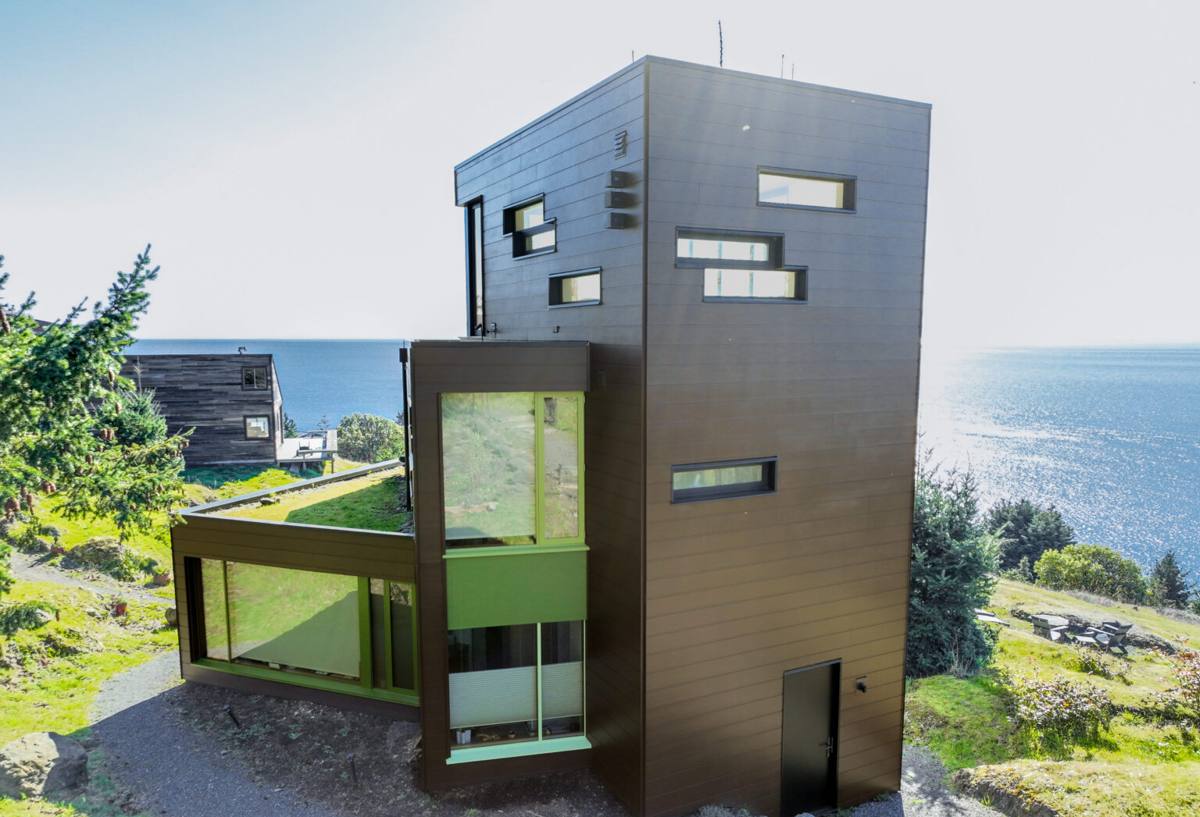
The Climate Factor Custom Windows Can't Ignore
Sedro-Woolley sits at the edge of the Skagit Valley, where weather systems moving in off Puget Sound get funneled and intensified as they push up the valley toward the foothills. That means driving rain here isn't just falling straight down — it's often pushed sideways into seams, sills, and trim joints, which is exactly where a poorly detailed custom opening starts to leak first. The valley also holds humidity longer after a storm than more open, breezier parts of the county, so window openings rarely get a full stretch of dry weather to recover between weather events, especially from fall through winter. Layer in the long moss and mildew season that mild temperatures and filtered tree shade support through most of the year, and you've got a climate that's steadily hard on trim and sills even when it's never especially dramatic on any given day. Salt-laden air off Puget Sound reaches inland on windier patterns too — it's a smaller factor here than in towns sitting right on the water, but it still adds a slow corrosion load to hardware and fasteners over time, especially on lower-grade components.
Custom windows raise the stakes on all of that. A bay window projection has more perimeter to flash correctly than a simple rectangular opening. A picture window or oversized unit has more glass area for wind to push against and a wider sill to keep water from pooling on. An arched or angled opening has curved or angled cuts in the wall assembly that are harder to flash cleanly than a straight run. None of that means custom windows are a bad fit for Sedro-Woolley — it means the install has to account for the added complexity instead of treating it like routine stock work.
Where the Risk Actually Lives
It's rarely the glass or the frame material that fails first on a custom unit around here. It's the transition points — where a bay window's roof ties into the main wall, where a wide picture-window sill meets the siding below it, where an arched top gets cut into the surrounding wall assembly. Those are the spots that need extra flashing time, and they're also the spots a rushed installer is most likely to shortcut, because they take longer than a standard opening and don't show a problem until a wet season or two has passed.
Custom Window Types We Build For
Custom doesn't mean one thing — the approach changes depending on what's actually being built or replaced.
- Non-standard replacement sizes — matching an existing opening in a farmhouse or older home built before modern window sizing was standardized
- Bay and bow windows — projecting units that add interior space and valley or foothill views, but need their own roof, support, and flashing system
- Picture and large-format windows — fixed units used to open up a view, with more glass area to manage structurally and more sill length to keep dry
- Arched, angled, or specialty-shaped openings — architectural details that need custom-cut units and matching custom flashing
- Egress and code-driven openings — additions or remodeled bedrooms where the opening size is set by code minimums, not convenience
- Matched sets for additions — new windows sized and sightlined to match existing windows elsewhere on the house
What a Correct Custom Window Job Involves
Measuring and Ordering
Custom work starts with precise field measurement, not a catalog lookup. We measure the actual opening, note any out-of-square or out-of-level conditions common in Sedro-Woolley's older housing stock, and account for what the finished trim and flashing will need in terms of clearance. Because custom units are built to order, this step also sets honest expectations on lead time — custom windows generally take longer to arrive than stock sizes, and we'll give you a real timeline before you commit rather than a best-case guess.
Opening Prep and Structural Considerations
Larger custom units, bay windows especially, sometimes need structural support beyond what a standard opening requires, since they carry more weight and project outward from the wall plane. We evaluate that during the assessment, not as a surprise mid-project. On older Sedro-Woolley homes, this is also usually where we find out whether the original framing or flashing around the opening needs correction before a new unit goes in — a fairly common finding on farmhouses that have had informal repairs done over the years.
Flashing and Weatherproofing
This is the step that matters most given Sedro-Woolley's valley weather. Every custom shape changes how flashing has to be sequenced — a bay window's roof needs its own weatherproofing separate from the wall flashing below it, a wide picture-window sill needs to shed water outward instead of letting it pool, and an arched top needs flashing cut and lapped to follow the curve rather than a straight run. We build the flashing plan around the specific shape of the opening in front of us, not a generic template pulled from a manual written for a drier climate.
Finish and Trim Integration
Custom windows often sit in the most visible spots on a house — a bay window facing the road, a picture window centered on a valley view — so the trim and finish work has to match the rest of the exterior cleanly. We plan that integration before the window arrives so the finished result looks intentional rather than added on as an afterthought.
A Quick Checklist Before You Order
- Confirm the opening has been field-measured, not estimated from old plans or a rough guess
- Ask what the flashing plan looks like for your specific shape, not a generic answer
- Get a realistic lead time in writing before you commit to a schedule
- Ask whether the opening needs structural review, especially for bay or oversized units
- Confirm what's covered under warranty — the window unit and the installation labor are often separate
- Ask how trim and finish will be matched to the rest of the exterior
Our Process, Start to Finish
- On-site assessment — we measure the opening, check square and level, and evaluate any structural or flashing concerns specific to the shape or size involved
- Honest recommendation — custom order, modified stock size, or opening reframe, explained with the reasoning, not just whatever's fastest to sell
- Ordering and lead time — a realistic timeline for the custom unit to arrive, since it isn't a same-week job
- Removal and opening prep — the old unit comes out carefully, and any hidden issues with the existing opening get addressed before the new window goes in
- Installation and flashing — the new unit is set, shimmed, and flashed to a sequence built for its specific shape and size
- Trim and finish — exterior trim is integrated to match the surrounding siding and architecture
Costs and Trade-Offs: Custom vs. Stock
What Actually Changes
| Factor | Stock Window | Custom Window |
|---|---|---|
| Lead time | Often available quickly from stock | Built to order — weeks, not days, depending on complexity |
| Fit | Standard sizes only — reframing needed if the opening doesn't match | Matched to the exact opening or design intent |
| Flashing complexity | Straightforward, well-documented rectangular details | Shape-specific — bay roofs, arched cuts, or wide sills each need their own plan |
| Structural review | Rarely needed for a like-for-like swap | Often needed for bay, bow, or oversized units |
| Cost | Lower, especially for common sizes | Higher — reflects manufacturing and installation complexity |
| Best fit | Simple replacements in standard openings | Older farmhouses, additions, architectural features, or view-driven designs |
What Drives Cost
We won't quote a number without seeing the opening, but the factors that move price on custom work are consistent from house to house:
| Factor | Why It Matters |
|---|---|
| Size and glass area | More glass and larger units cost more to manufacture and are heavier to install |
| Shape complexity | Arched, angled, or curved units need specialty manufacturing and more flashing labor |
| Structural work | Bay and bow windows sometimes need added support framing |
| Frame material | Vinyl, fiberglass, and wood-clad units differ in both material cost and long-term maintenance |
| Opening condition | Rot, old flashing failures, or out-of-square framing add repair work before the new unit goes in |
| Number of units | A matched set for an addition or full-house project usually has better per-unit economics than a single window |
Frame Materials for This Climate
Frame material matters even more on a custom unit, since a larger or more exposed window has more surface area for the valley's rain and moisture cycles to work against. We'll walk through the honest trade-offs for your specific opening rather than defaulting to whatever's easiest to install. In general, vinyl and fiberglass frames hold up to sustained wet-dry cycling and freeze-thaw stress with less ongoing maintenance than an all-wood exterior finish, which is why we lead with them on weather-facing custom installs — wood-clad interiors with a low-maintenance exterior cladding can still be the right call when the interior look matters and the exterior is properly protected and detailed.
Why Local Experience Matters for This Kind of Work
Manufacturer installation guides are written for average, standard-size conditions in a generic climate. Custom windows in Sedro-Woolley rarely fit that description, and neither does the local weather — driving rain funneled up the valley, a long moss season, freeze-thaw cycling off the foothills, and a lower but real dose of inland salt air all stack the deck against a shortcut installation more than they would in a drier, calmer market. A crew that's actually built out bay windows, flashed arched openings, and reframed odd-sized rough openings in this specific part of Skagit County knows which details in a manufacturer's guidance are non-negotiable here, and where extra time on flashing or sealant is worth it even when it's not strictly required elsewhere.
That experience shows up in decisions that never make it into a sales pitch — how a bay window's roof ties into the main wall's water management, how much lap a flashing course needs on an arched opening, when a sill needs a sloped composite cap instead of relying on caulk to do the job. Those are the details that decide whether a custom window is still performing cleanly in fifteen years or showing rot and drafts in five.
Ready When You Are
If you're planning an addition, replacing an odd-sized opening in an older Sedro-Woolley home, or considering a bay or picture window to make the most of a valley or foothill view, it's worth having someone look at the specific opening before you start pricing units. We offer free, no-pressure estimates for custom window projects in Sedro-Woolley and the surrounding Skagit County area — use the form below to get a time on the schedule.