 Anacortes
 Burlington's Climate Puts Real Stress on an Outdoor Deck
Burlington sits in the Skagit Valley lowlands, close enough to Anacortes and the Salish Sea that salt-tinged marine air moves through on a regular basis. Add the valley's driving winter rain, heavy overnight dew, and a moss season that can stretch from early fall well into spring, and an outdoor deck here spends most of the year under some kind of moisture load. Fasteners corrode faster than they would inland, framing connections are usually the first place to soften when water gets trapped, and any spot where water can pool turns into a foothold for moss and algae within a season or two.
None of that means a deck can't last for decades in Skagit County. It means the details that get skipped in a drier climate — flashing, fastener choice, drainage slope, airflow underneath — can't be skipped here without paying for it a few years later in rot, soft framing, or a slick, moss-covered surface.
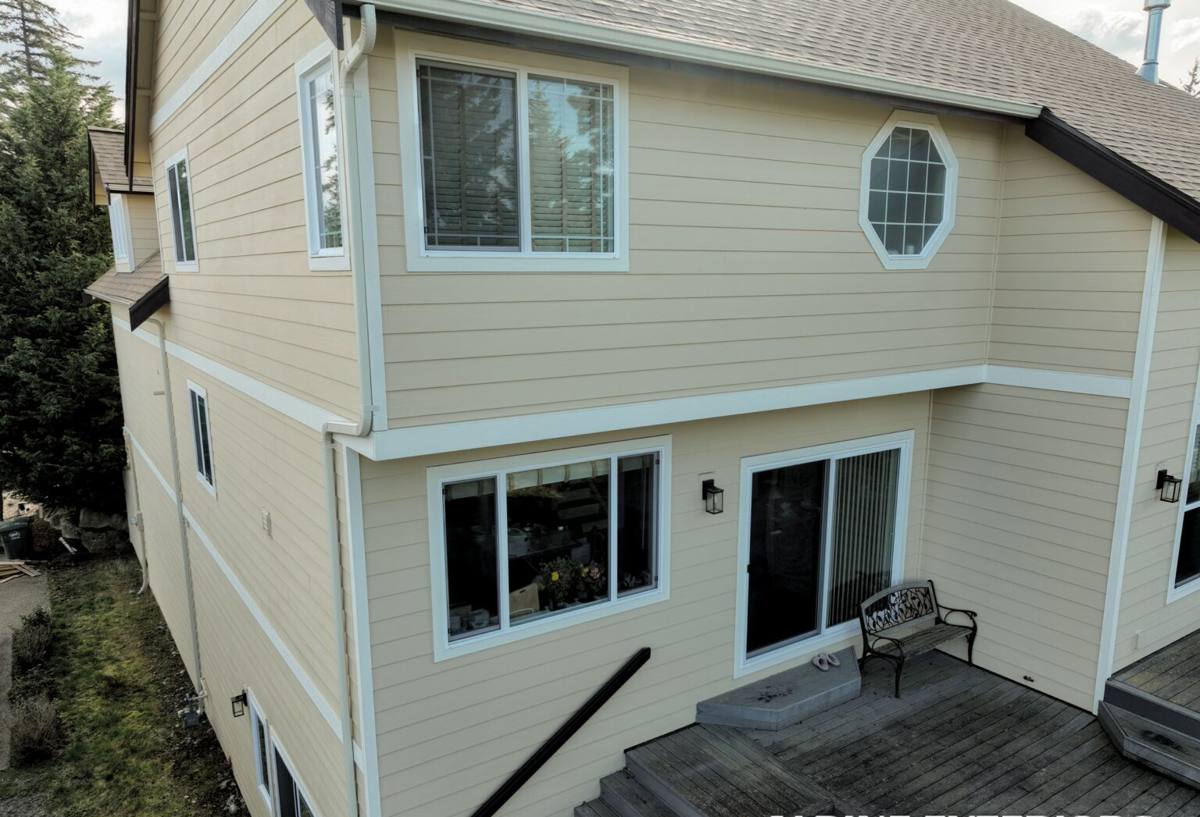
What Correct Framing and Footings Look Like in This Valley
Footings Sized for Saturated, Flood-Prone Ground
Much of the Burlington area sits in or near the Skagit River's historic floodplain, and the soil here tends to hold water longer than ground further up toward the hills around Anacortes. Footings need to be dug to the depth and bearing capacity the local building department calls for, based on the actual soil and drainage conditions on that lot — not just poured to a spec that happened to work on a different job across town. We check ground conditions on-site before we finalize a footing plan rather than assuming one size fits every yard in the valley.
Ledger Attachment and Flashing
Where a deck ties into the house, the ledger board and its flashing are the single most common failure point we find on older decks in this region — not because the framing was undersized, but because water was allowed to sit behind the ledger against the house's rim joist. Correct flashing (metal flashing paired with a self-adhering membrane, installed in the right layered order) combined with proper standoff spacing keeps driving rain from tracking back into the structure. On some homes, especially where the existing rim joist or siding is already showing wear, a freestanding deck design that doesn't attach to the house at all is the more honest answer — it trades a little bit of footprint for one less place water can get in.
Choosing a Decking Material That Matches the Climate
Material choice is the biggest decision a homeowner makes on a custom deck, and it's also where climate should carry real weight. Every option below can work in Burlington — the differences are in how much upkeep you're signing up for and how the surface behaves once moss and algae start looking for a place to grow.
| Material | Upfront Cost | Maintenance | Moisture & Moss Behavior | Realistic Lifespan |
|---|---|---|---|---|
| Pressure-treated lumber | Lowest | Annual cleaning and periodic resealing | Treatment protects the core, but the surface checks and splinters over time, giving moss more to grip | 10-15 years before major repair |
| Cedar | Mid-range | Regular oiling or sealing to hold color and grain | Naturally decay-resistant, but will gray and can host moss if it isn't cleaned on a schedule | 15-20 years |
| Composite decking | Mid to upper | Occasional washing; no staining or sealing | Won't rot and resists moss buildup well with a routine rinse | Manufacturer warranties commonly in the 25-30 year range |
| PVC decking | Highest | Lowest — wash only | Fully moisture-proof core, best resistance to moss and mildew staining | Manufacturer warranties commonly 25+ years |
Our professional standard leans toward composite or PVC on decks that sit low to the ground, get heavy shade, or face north — the conditions where moss and mildew take hold fastest in this valley. That's a maintenance-burden and moisture-behavior call, not a knock on wood; a well-built cedar or treated-lumber deck that gets cleaned and resealed on schedule holds up fine. The honest tradeoff is simply how much of that upkeep you want to take on yourself.
Designing Out Moss, Mildew, and Standing Water
A deck that resists moss isn't just about the decking material — it's about how the whole thing is built to shed water and breathe underneath.
- Board spacing gapped correctly so water drains through instead of sitting on the surface
- A slight slope built into the frame so water runs off rather than pooling near the house
- Joist tape over the framing so fasteners aren't sitting in standing moisture
- Enough clearance and airflow underneath the deck so the underside can actually dry out between storms
- Gutters and downspouts routed away from the deck footprint instead of dumping onto it
- Nearby shrubs and low branches trimmed back so sun and air can reach the surface
Skip any one of these and the deck can still look fine the first year or two — the moss just shows up sooner than it should.
Railings, Stairs, and Code Requirements Around Burlington
Washington's residential building code sets baseline requirements for guardrails, baluster spacing, and stair dimensions, and local building departments enforce and sometimes add to those minimums. As a general guide: guardrails are typically required once a deck surface is a certain height above grade, baluster spacing is kept narrow enough that a small child can't pass through, and stair rise and run have to stay within a consistent range from step to step. Exact numbers can shift with code updates, so we confirm current requirements with the local building department on every project rather than working from memory.
Most decks of any real size in Burlington need a permit before work starts, with an inspection at the footing stage and again once framing is up. That process is part of why hiring a crew that already knows the local department's expectations saves time — plans that are formatted the way that office wants to see them move through review a lot faster than ones that aren't.
Our Custom Deck Process, Start to Finish
- On-site consultation. We walk the property, look at drainage and sun exposure, and talk through how the deck will actually be used.
- Design and material selection. Layout, railing style, and decking material get chosen together, with the climate tradeoffs above laid out plainly.
- Permit submittal. We handle the paperwork and drawings the local building department requires.
- Footings and framing. Footings are dug and poured to the depth the soil and code call for, then framing goes up and gets inspected before decking starts.
- Decking, railings, and finish work. Surface material and railings go on, with fastener choice and flashing details matched to the climate factors covered above.
- Final walkthrough. We go over the finished deck together and cover the maintenance steps that matter most for your specific material.
A Practical Maintenance Checklist for Burlington Deck Owners
- Sweep leaves and debris out of board gaps each fall before the rains set in
- Rinse off the pollen and algae film that builds up each spring
- Check ledger board flashing and caulking once a year for gaps or wear
- Reseal wood decking every one to two years — composite and PVC don't need this step
- Keep nearby vegetation trimmed back so the surface gets sun and airflow
- Clear gutters and downspouts near the deck so runoff isn't draining onto it
- Inspect fasteners and metal connectors annually for early signs of corrosion
- Check that stair and railing connections are still tight, especially after a hard winter
Why Hiring a Crew That Already Works Burlington Matters
A deck built to a generic spec sheet can look right and still fail early in this valley if it wasn't designed for the moisture load Burlington actually sees. A crew that already works in this part of Skagit County knows what the local building department expects on a permit set, has already seen how salt-tinged air and a long moss season treat different fastener and decking choices over time, and isn't guessing at footing depth for ground that stays wet longer than it does elsewhere. That local track record is also what makes warranty and follow-up service straightforward — we're not driving in from out of the area to look at a callback.
If you're planning a new deck or replacing one that's showing its age, we're happy to walk the property with you and put together a free, no-pressure estimate — just fill out the form below.