 Anacortes
 Why Bow Decks Need More Than a Standard Build
Bow is a quieter stretch of Skagit County — mostly rural properties, larger lots, and homes that sit closer to open water and farmland than the denser parts of Anacortes. That openness is part of what makes it a good place to live, but it also means decks here take a beating that a sheltered suburban deck never sees. Wind off Samish Bay carries salt, storms roll through with real driving rain rather than a light drizzle, and the shade from surrounding trees and fields keeps everything damp long after the rain stops. A deck built to a generic spec sheet will show problems within a few years. One built for this specific stretch of coastline and farmland won't.
We treat a Bow project differently from a deck we'd build a few miles inland, and we treat it differently from a downtown Anacortes lot, too. The site conditions, the exposure, and the typical lot size out here all change what "correct" actually means for the build.
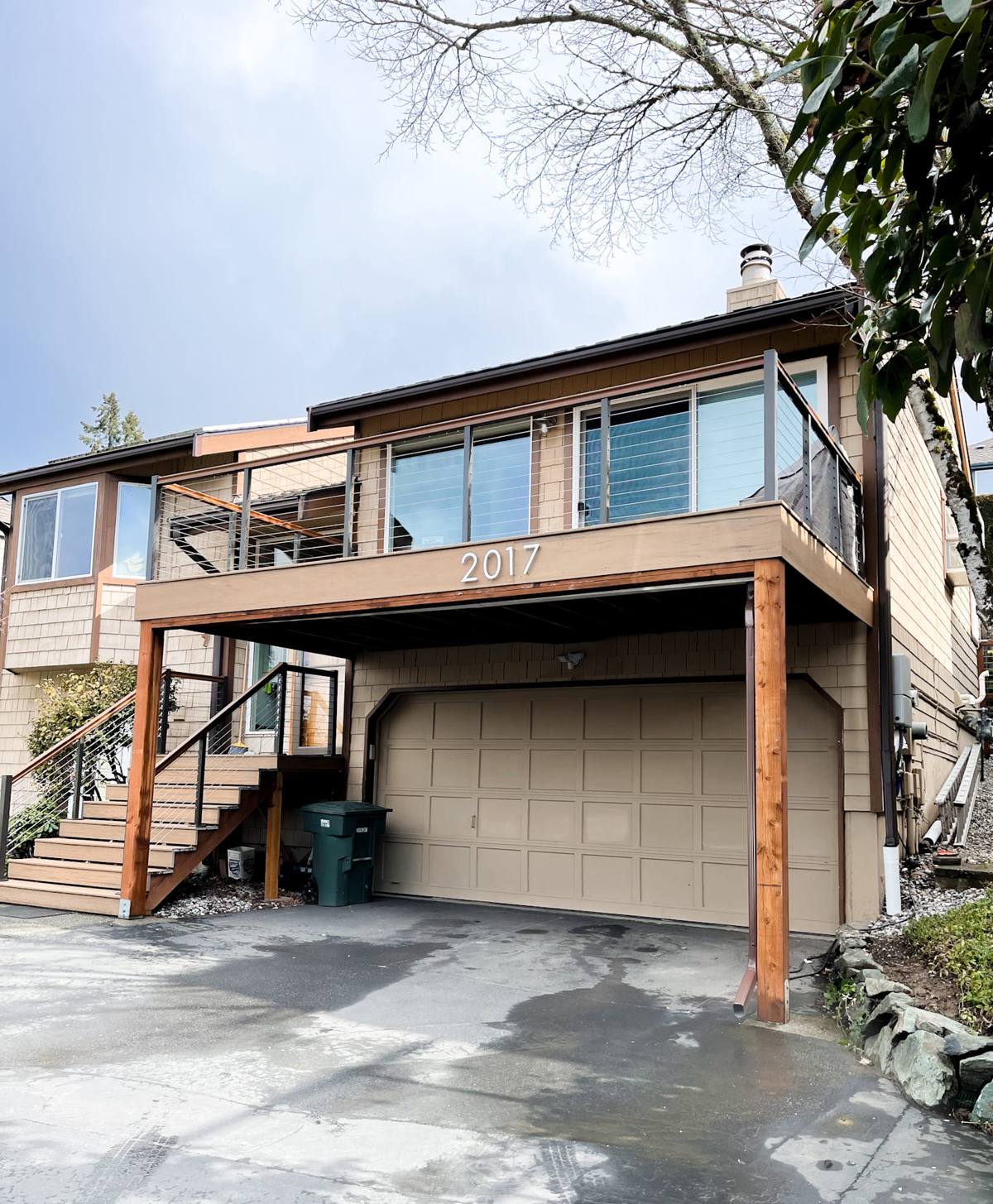
The Weather Bow Decks Actually Deal With
We don't guess at what a deck needs to survive out here — we've seen what several Skagit County winters do to a poorly built one. Three things drive almost every repair call we get in this area.
Salt Air and Corrosion
Being close to Samish Bay means the air carries salt even a few miles inland, and that salt finds every piece of exposed metal on a deck — nails, screws, joist hangers, bolts. Standard electro-galvanized fasteners corrode faster here than they would further inland, and once a fastener starts rusting, it stains the wood around it and eventually loses grip strength. We use stainless steel or heavy hot-dip galvanized hardware rated for coastal exposure on every Bow project, not just where it's visible, and we apply the same standard to railing hardware and structural connectors alike.
Driving Rain and Water Management
Rain here doesn't fall straight down — wind pushes it sideways into ledger boards, under flashing, and into any gap that isn't properly sealed. The ledger board connection, where the deck attaches to the house, is the single most common failure point we find on older decks in this area, because water gets behind improperly flashed ledgers and rots the rim joist and sheathing behind it, often for years before anyone notices. Correct flashing detail at that connection matters more here than almost anywhere else in the build, and it's one of the first things we check when we're asked to look at an existing deck.
Moss, Algae, and Shade
Between the tree cover, the farmland humidity, and our long wet season, moss and algae growth on horizontal wood surfaces is close to guaranteed if the deck isn't built and finished with that in mind. Moss holds moisture against the board, and moisture against wood for months at a time is what leads to soft spots and premature decay — not the rain itself. Board spacing, airflow underneath the deck, and material choice all affect how much moss becomes a maintenance problem versus a minor one.
Decking Material Options for Bow Properties
There's no single right answer for every Bow property — it depends on budget, how much upkeep you want to do, and how shaded the site is. Here's how the common options actually compare once you factor in this area's climate, not just a showroom description.
| Material | Moss/Algae Behavior | Hardware Needs | Maintenance | Typical Lifespan |
|---|---|---|---|---|
| Pressure-treated wood | Grows moss readily if not cleaned; needs regular attention in shaded spots | Coastal-rated fasteners essential | Annual cleaning, re-staining every 2-3 years | 15-20 years with upkeep |
| Cedar | More rot-resistant naturally but still needs cleaning to prevent surface moss | Coastal-rated fasteners essential | Regular oiling/sealing, moderate effort | 15-25 years with upkeep |
| Capped composite | Algae can still grow on the surface but doesn't compromise the board itself | Coastal-rated fasteners for framing underneath | Occasional wash, no sealing or staining | 25-30+ years, manufacturer warranty |
| PVC/cellular decking | Best moisture resistance, least affected by prolonged dampness | Coastal-rated fasteners for framing underneath | Occasional wash | 25-30+ years, manufacturer warranty |
Whatever decking material sits on top, the framing underneath is almost always pressure-treated lumber, and that framing needs the same coastal-grade hardware regardless of what the walking surface is made of. Railings are worth the same scrutiny — wood rail systems need the same upkeep as wood decking, while aluminum or composite rail systems hold up with less attention in this air. We'll walk you through the honest trade-offs for your specific site rather than pushing whatever has the best margin.
What a Correctly Built Deck Involves Underneath
The part of a deck nobody sees is the part that determines whether it lasts. On a property like the ones common around Bow — often larger lots, sometimes uneven ground, sometimes closer to the water table — that starts with the footings and the framing decisions that follow from the site itself.
- Footings sized and set below frost depth, in soil that's actually load-tested rather than assumed
- A properly flashed ledger board connection, or a freestanding design where a ledger isn't appropriate for the house structure or setback
- Joist hangers and structural screws in stainless or heavy-duty coated steel, not standard interior-grade hardware
- Joist spacing appropriate to the decking material — composite and PVC boards often need tighter spacing than wood
- Proper board gapping for drainage and airflow, adjusted for wet-season swelling
- Clearance and grading underneath the deck so water actually drains away instead of pooling against the framing
Larger rural lots also mean we more often build freestanding decks rather than ledger-attached ones, especially on uneven ground or where the existing house framing isn't a good match for a ledger connection. A freestanding deck stands on its own footings independent of the house, which sidesteps the ledger-flashing issue entirely but requires its own engineering for stability. Skip any of these structural details and the deck might look fine for a season or two — the failures we get called out for are almost always in this hidden structure, not the decking boards themselves.
Permits and Site Considerations Around Bow
Because Bow is unincorporated, permitting for a deck build here typically runs through Skagit County rather than the City of Anacortes, and the requirements can differ — setbacks, height triggers for a permit, and inspection steps aren't always identical to what applies inside city limits. If your property is closer to Samish Bay or on a lot with critical areas like wetlands, steep slopes, or shoreline buffers, there can be additional review involved before a permit is issued. Larger rural parcels sometimes also carry septic or well setbacks that affect where a deck can legally go. We handle that permitting process as part of the job, including figuring out which jurisdiction's rules actually apply to your parcel, so it's not something you have to sort out on your own.
Our Process, Start to Finish
We keep this straightforward because most homeowners have never gone through a deck build before and don't need to learn the whole trade to get a good result.
- Site visit: We look at your existing structure or building site, check grade, sun and shade exposure, soil conditions, and how close you are to water or tree cover.
- Design and material selection: We walk through the honest trade-offs between wood, composite, and PVC for your specific site, budget, and how much maintenance you want to take on.
- Permitting: We prepare and submit what Skagit County requires for your project, including any additional review your parcel needs, before any work starts.
- Build: Footings, framing, and decking installed to the coastal-grade standard described above — not a generic inland spec pulled off a shelf.
- Final walkthrough: We go over drainage, railing, and finish details with you before calling the job done, and explain what upkeep the specific materials you chose will actually need.
Keeping a Bow Deck Looking Good Year-Round
A well-built deck still needs some seasonal attention in this climate. Here's the basic upkeep worth doing regardless of what material you chose:
- Sweep leaves and debris off the deck surface before fall rains set in — trapped organic matter is what feeds moss growth
- Rinse or lightly scrub visible moss or algae in spring before it spreads across the whole surface
- Check the ledger board area and any visible flashing once a year for staining or soft wood
- Inspect exposed fasteners and railing hardware for rust streaking, especially on stair stringers
- Keep gutters and downspouts near the deck clear so runoff isn't dumping extra water onto or under it
- Reapply sealant or stain on wood decking on the schedule the product actually calls for, not just when it looks faded
Why Work With a Crew That Already Builds in Bow
A contractor who mostly works drier, more sheltered sites will often spec a deck the way a textbook says to, without accounting for what Skagit County's salt air and driving rain actually do to fasteners and ledger connections over several years. We've built and repaired decks throughout this area long enough to know which details actually matter here versus which ones are just upsells. That's not a sales pitch — it's the difference between a deck that needs real repair work in year five and one that's still solid at year twenty.
If you're planning a new deck or replacing one that's showing its age, we're happy to come take a look and give you a straight answer about what your site needs. There's no cost and no pressure for an estimate — just an honest assessment based on what actually works in Bow.