 Anacortes
 Roofing in Conway: Built for the Wet Side of Skagit County
Conway sits in the low, damp stretch of Skagit County where marine air off the Sound and the Skagit River delta mixes with heavy tree cover and a long, gray wet season. That combination is hard on a roof in ways that don't show up right away. Salt-laden air accelerates corrosion on exposed metal. Driving rain finds every weak seam, nail pop, and short flashing lap. And a moss season that can run eight months or more keeps organic growth working at the surface of the roof year-round, not just in a few soggy weeks. A new roof here isn't just a cosmetic upgrade — it's a system that has to keep shedding water and drying out correctly for 20, 30, or more years under those conditions.
When we install a roof in Conway, we're building for that specific environment, not for a generic dry-climate spec sheet. That means paying close attention to underlayment choice, flashing details, and ventilation — the parts of the job that don't show once the shingles or panels go down but decide whether the roof performs.
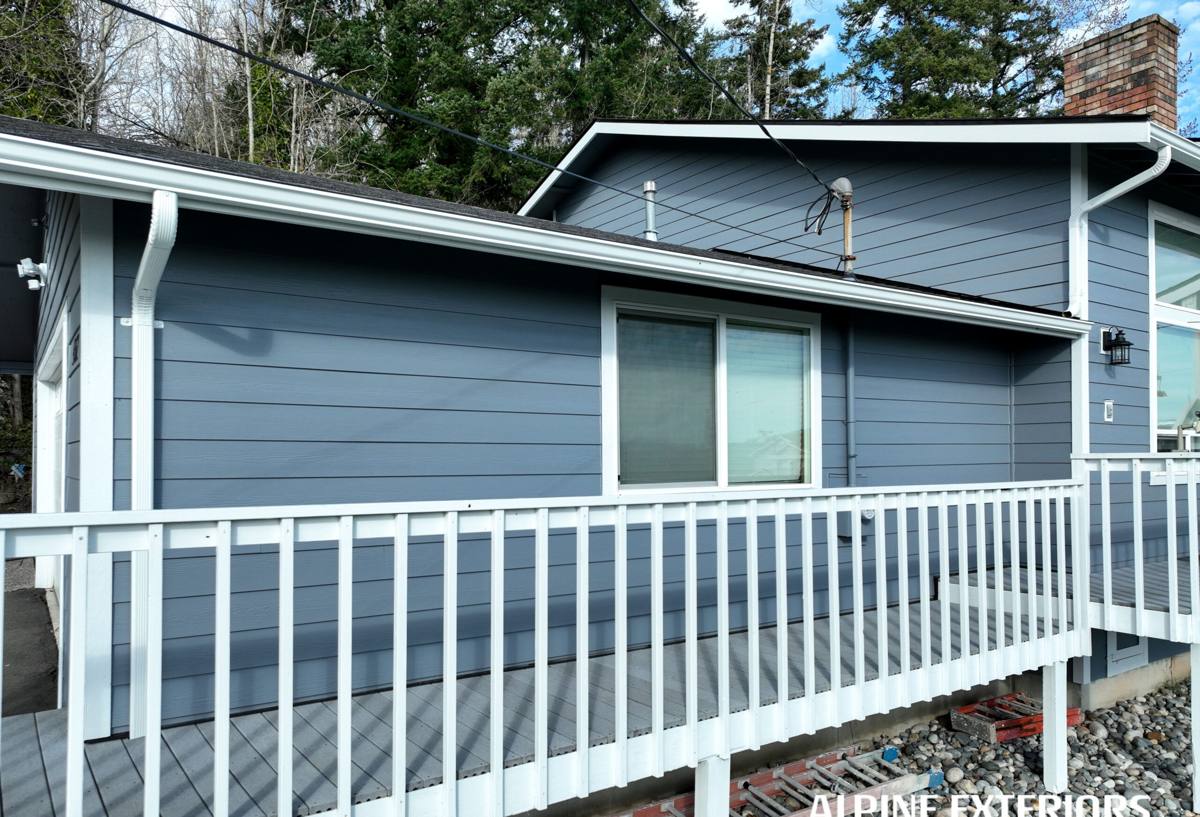
What a Conway Roof Actually Needs to Handle
Sustained moisture, not just rain events
The difference between a roof that lasts and one that fails early usually isn't the storm — it's the weeks of low-grade dampness between storms. Wood decking that stays slightly wet for months at a time is what leads to soft spots, delaminating sheathing, and premature failure at fastener points. A correct installation manages this with proper underlayment coverage and a deck that's fully dried in before anything gets covered.
Wind-driven rain
Rain that comes in sideways off open fields and waterways doesn't behave like rain falling straight down. It gets pushed under shingle tabs, up under ridge caps, and into any flashing lap that's too short. Fastening patterns, flashing overlaps, and sealant use all need to account for wind-driven exposure, not just standard drainage.
Salt air and corrosion
Being close to Puget Sound and the river delta means airborne salt reaches roofing metal — flashing, fasteners, vent caps, and any exposed trim. Lower-grade or unprotected metal components corrode faster here than they would further inland, which shows up as rust streaks, failed sealant at fastener heads, and eventually leaks at those points.
Moss, algae, and organic buildup
Shade from surrounding trees plus near-constant moisture makes Conway roofs prone to moss and algae growth almost year-round. Left unmanaged, moss holds water against the roofing material, lifts shingle edges, and works its way into seams — turning a surface issue into a moisture problem underneath.
Roofing Materials That Actually Hold Up Here
There's no single "right" roofing material for every Conway home — it depends on budget, roof pitch, tree cover, and how long you plan to own the home. Here's how the common options compare for this specific climate:
| Material | Moisture & Moss Resistance | Salt Air Durability | Typical Lifespan Here |
|---|---|---|---|
| Architectural asphalt shingle | Good with proper ventilation; moss-resistant granule options help | Good — coated fasteners and flashing matter more than the shingle itself | 20–30 years |
| Standing seam metal | Excellent — sheds water fast, little surface for moss to grip | Depends heavily on finish quality; needs a coastal-rated coating | 40–50+ years |
| Synthetic composite (shake-look) | Good — engineered not to absorb moisture like wood shake | Good | 30–40 years |
| Cedar shake | Requires ongoing maintenance to resist moss and rot in this climate | Fair — untreated fasteners corrode over time | 15–25 years with upkeep |
We don't push one product line as a cure-all. Every material on that list can perform well in Conway — or fail early — depending entirely on how it's installed and maintained. We'll walk through the honest trade-offs for your roof's pitch, tree exposure, and budget before you decide.
What a Correct Installation Actually Involves
A new roof is only as good as what's underneath the visible layer. On every Conway installation, the sequence matters:
- Full tear-off — we don't install over old layers. That's the only way to actually inspect the deck.
- Deck inspection and repair — any soft, delaminated, or water-stained sheathing gets replaced before anything else happens.
- Ice-and-water shield at eaves, valleys, and around penetrations — these are the highest-risk spots for wind-driven rain intrusion.
- Synthetic underlayment across the full deck for a second line of defense under the roofing material.
- Flashing at every wall intersection, chimney, skylight, and valley — cut and lapped correctly, not just caulked over gaps.
- Balanced ventilation — intake at the eaves and exhaust at the ridge, sized to the attic volume, so moisture doesn't get trapped underneath.
- Fastening to spec for wind exposure, using corrosion-resistant fasteners appropriate for a salt-air environment.
Skipping or shortcutting any one of these is usually invisible on install day and shows up as a leak, a moss colony, or a warranty denial two to five years later.
Our Process for a Conway Roof Replacement
The job runs the same way every time, because consistency is what prevents mistakes:
- On-site inspection of the current roof, attic, and ventilation before any quote is written
- A written estimate that lays out material options and honest cost ranges — no pressure to decide on the spot
- Permitting handled through Skagit County before work begins
- Tear-off and deck inspection scheduled around realistic weather windows, not just a fixed date
- Daily site cleanup, including magnetic sweeps for nails and debris control near gardens or livestock areas common on rural Conway properties
- A final walkthrough covering flashing, ventilation, and cleanup before we consider the job done
Ventilation and Attic Moisture in a Marine Climate
Attic ventilation gets overlooked more than any other part of a roofing job, and it matters more in a wet marine climate than almost anywhere else. Without balanced intake and exhaust airflow, humid air from the living space and damp outside air both get trapped in the attic. Over a Conway winter, that trapped moisture condenses on the underside of the deck — leading to mold, rot, and reduced insulation performance, all before the roofing material itself ever fails. Every new roof installation is a chance to correct ventilation problems that may have shortened the life of the previous roof.
Moss and Algae: Ongoing Care, Not a One-Time Fix
No roofing material is permanently moss-proof in a climate this wet and shaded. What changes with the right materials and installation is how much maintenance it takes to stay ahead of growth. A few habits keep a new Conway roof performing for its full expected lifespan:
- Keep overhanging branches trimmed back to reduce shade and leaf litter on the roof
- Clean gutters at least twice a year so water isn't backing up under the roof edge
- Have moss physically removed rather than pressure-washed, which can strip granules and shorten shingle life
- Schedule a roof check after major windstorms to catch lifted flashing or displaced shingles early
- Watch for dark streaking or green growth as an early sign, not a wait-and-see situation
Cost Factors for a Conway Roof Replacement
Pricing depends on more than square footage. The factors that move the number most in this area are:
| Factor | Why It Matters Here |
|---|---|
| Roof pitch and complexity | Steeper or multi-plane roofs take longer and need more flashing detail to shed wind-driven rain |
| Deck condition | Rural, older homes near the delta often need more sheathing replacement from long-term moisture exposure |
| Material choice | Metal and synthetic composites cost more upfront but need less moss-related maintenance over time |
| Access and site conditions | Larger rural lots, tree cover, and gravel driveways can affect staging and disposal logistics |
| Ventilation upgrades | Correcting inadequate intake/exhaust airflow adds labor but prevents repeat attic moisture problems |
We give real ranges during the on-site inspection once we've actually seen your roof's pitch, deck condition, and access — not a number pulled from a square-footage calculator.
Why a Crew That Already Works in Conway Matters
Conway isn't downtown Anacortes, and roofing here comes with its own practical realities: county permitting steps, rural access and staging, tree cover that affects both moss exposure and safe work conditions, and weather windows that a crew unfamiliar with the area might misjudge. A contractor who already works this part of Skagit County knows how to time tear-off around the wet season, what deck conditions to expect in older delta-area homes, and how to get permitting and inspections handled without added delay. That local familiarity is what keeps a roof replacement on schedule and installed correctly the first time — not redone a season later.
If you're planning a new roof for your Conway home, we're glad to come take a look and give you a straightforward, no-pressure estimate. There's a form below — reach out and we'll get a time on the calendar.