 Anacortes
 Why Conway Homes Need Windows Built for This Climate
Conway sits in the low, damp river-and-farmland stretch of Skagit County between Anacortes and Mount Vernon, close enough to Puget Sound and the Skagit River delta that homes here deal with a specific mix of weather: salt-tinged marine air, long stretches of driving rain off the water, heavy fog that settles into the lowlands, and a moss season that can run most of the year on shaded or north-facing walls. Windows in this environment are doing more work than windows in a drier inland climate. They're expected to keep conditioned air in, keep wind-driven moisture out, and hold up to daily condensation cycles without their seals, frames, or sills breaking down early.
When we talk about "energy-efficient windows" for a Conway home, we're not just talking about a lower utility bill, though that matters. We're talking about a window system — glass, frame, flashing, and installation — that's matched to this specific corner of Skagit County. A window that performs well in a dry climate can still fail here if it's not installed with the right moisture management, and a window with great efficiency numbers on paper won't help much if air is leaking around a poorly sealed frame.
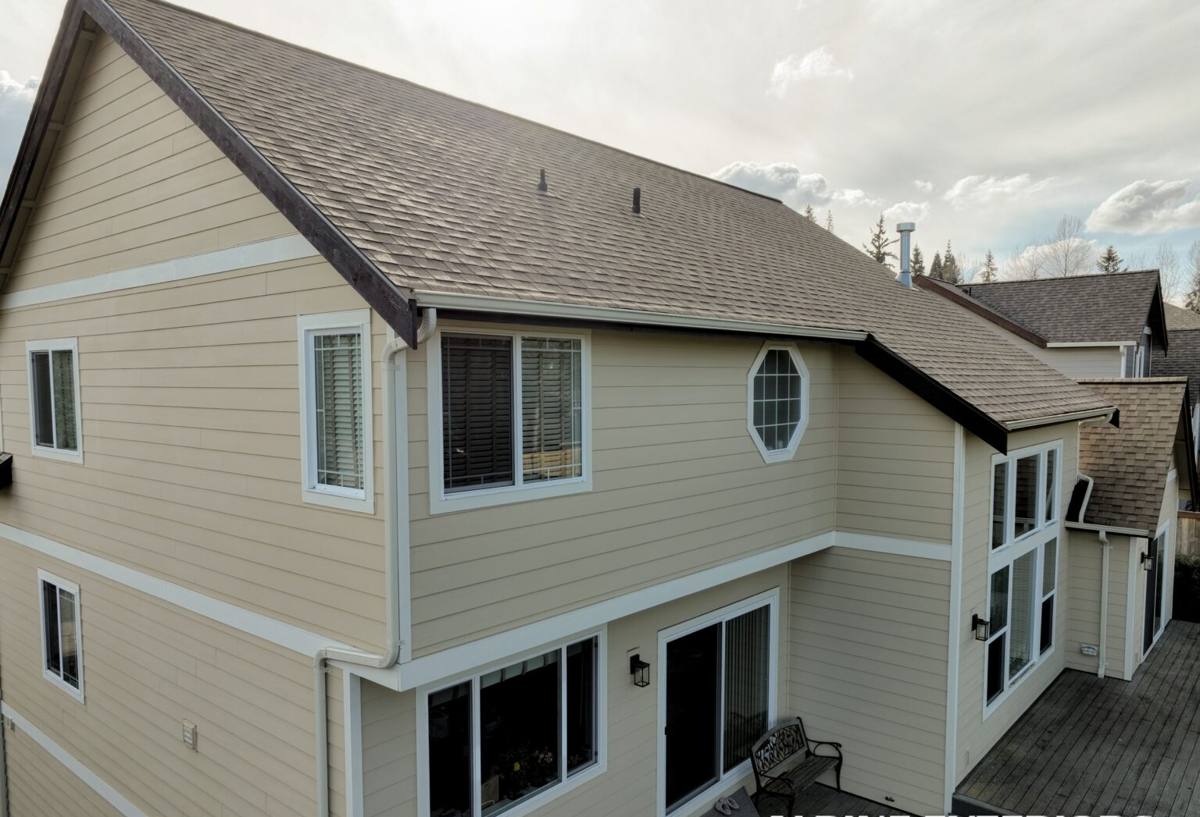
What "Energy-Efficient" Actually Means for a Skagit County Home
Efficiency in a window comes down to a handful of measurable properties, and understanding them helps you make a real decision instead of just picking based on price or appearance.
U-Factor, SHGC, and Why They Matter Here
U-factor measures how much heat a window lets escape — lower is better for our cool, wet winters. Solar Heat Gain Coefficient (SHGC) measures how much solar heat comes through the glass. In this region, where we get long stretches of overcast, low-angle winter sun, a moderate SHGC that lets in some free solar warmth without overheating south-facing rooms in summer is usually the right balance. Air leakage rating matters just as much as either of those, because a well-insulated window with a poor seal will still let cold, damp marine air infiltrate around the frame.
For a Conway home, we also weigh water resistance and structural performance ratings more heavily than a contractor working in a dry climate would. Wind-driven rain off the Sound and the open farmland exposure common in this area put real pressure on window seals during winter storms, so a window rated for that kind of weather event is not an upgrade — it's the baseline.
Common Window Problems We See in Conway and Nearby Communities
Most of the calls we get from homeowners in this area fall into a few repeating categories:
- Condensation building up between panes, which usually means a failed seal on an older double-pane unit
- Soft or discolored wood trim around window openings from years of moisture creeping in past worn caulk or flashing
- Drafts around the frame that get noticeably worse during winter storms, not just cold weather in general
- Moss or algae staining on the frame, sill, or the wall directly below the window, a sign that water is running down the exterior and not shedding cleanly
- Aluminum-frame windows from older construction that feel cold to the touch and sweat heavily on the inside during winter
None of these are unusual for a home in this climate. They're the predictable result of years of salt air, rain, and shade doing what they do. The question isn't whether a window will eventually show wear here — it's whether the frame, seal, and flashing were built and installed to slow that process down as much as possible.
Choosing the Right Window Type and Frame Material
There's no single "best" window for every home, but there are frame materials that consistently perform better in a wet, salt-exposed, moss-prone environment than others.
| Frame Material | Moisture Behavior | Maintenance | Typical Fit for Conway-Area Homes |
|---|---|---|---|
| Vinyl | Won't rot; handles damp well | Low — occasional cleaning | Strong all-around choice for most homes |
| Fiberglass | Very stable in wet/humid swings | Low | Good for homes with heavy sun/shade contrast on different walls |
| Aluminum | Conducts cold, prone to condensation | Low, but thermal performance suffers | Generally not our first recommendation for full-time living space here |
| Wood | Needs consistent upkeep to resist rot | High — regular refinishing | Workable with a disciplined maintenance routine, especially clad options |
We're not against wood or aluminum windows as a category — they have their place, and clad-wood units in particular can look excellent. But when a homeowner asks us for our honest recommendation for a house exposed to this area's rain and salt air, vinyl and fiberglass frames tend to hold their performance longer with less upkeep, which matters if you don't want to be re-caulking and refinishing every couple of years.
Our Installation Process
The window unit itself is only part of the job. In our experience, most premature window failures in this region trace back to installation shortcuts, not a bad product. Here's how we approach it:
- Remove the old window and inspect the framing and sheathing underneath for any hidden rot or moisture damage before anything new goes in
- Repair or replace any compromised framing — installing a new window over damaged wood just hides the problem
- Install flashing that directs water down and out and integrates properly with your existing weather-resistive barrier or siding
- Set the new window level, plumb, and square, then shim and fasten according to the manufacturer's specifications so the warranty stays valid
- Insulate the gap between the frame and rough opening without overpacking, which can bow the frame
- Seal and caulk the exterior with products rated for our climate, and finish interior trim
Flashing and Moisture Management
This is the step that gets skipped most often by crews trying to move fast, and it's the one that matters most in a place like this. Proper flashing — a drip cap above the window, side flashing that laps correctly with the wall's water-resistive barrier, and a sill pan that catches and directs any water that does get past the outer seal — is what keeps driving rain from finding its way into your wall framing over the years. It's not a visible detail once the job is done, but it's the difference between a window that performs for twenty-plus years and one that causes hidden rot in a decade.
Signs Your Current Windows Are Costing You Money
Not every window problem is obvious. A quick self-check before calling for an estimate:
- You can feel a draft near the window frame even when it's fully latched
- Fog or moisture collects between the panes of a double-pane window
- The room near the window is noticeably colder than the rest of the house in winter
- You notice condensation on the inside of the glass or frame most winter mornings
- The window is difficult to open, close, or lock, suggesting the frame has shifted or swollen
- You see staining, softness, or moss growth on the exterior trim or the wall below the window
Any one of these on its own might not mean much. Several of them together, especially on the same window, usually mean the unit is past the point where caulk and weatherstripping can fix it.
Maintenance in a Damp, Mossy Climate
Even the best window benefits from a little seasonal attention in this environment. Rinse salt residue and grime off exterior glass and frames a couple times a year, especially on walls facing open exposure. Keep gutters and downspouts clear so water isn't sheeting down over window trim. Check caulking annually for cracking or gaps, particularly after a hard winter, and address moss or algae growth on nearby siding or trim promptly rather than letting it spread onto the window frame itself. None of this is difficult work, but skipping it is how a well-installed window ends up with an avoidable problem five or ten years down the road.
Why Hire a Crew That Already Works in Conway
A window installer who mostly works in drier parts of the state may do fine work in general but won't necessarily think in terms of wind-driven rain exposure, salt air corrosion, or the moss growth patterns specific to shaded, damp Skagit County lots. Knowing which walls in this area typically take the worst weather, how local moisture patterns behave against different siding types, and what flashing details actually hold up here isn't something you pick up from a product catalog — it comes from doing the work in this specific climate, on homes with the same conditions as yours. That local knowledge shows up in the small decisions during installation that you won't notice at the time but will appreciate years later when the window is still performing the way it should.
Getting Started
If you're dealing with drafty, foggy, or aging windows in a Conway-area home, we're happy to take a look and give you a straightforward, no-pressure assessment of what's going on and what your realistic options are. There's no obligation — just an honest read on your windows and a free estimate using the form below.