 Anacortes
 Decks in Conway Take a Different Kind of Beating
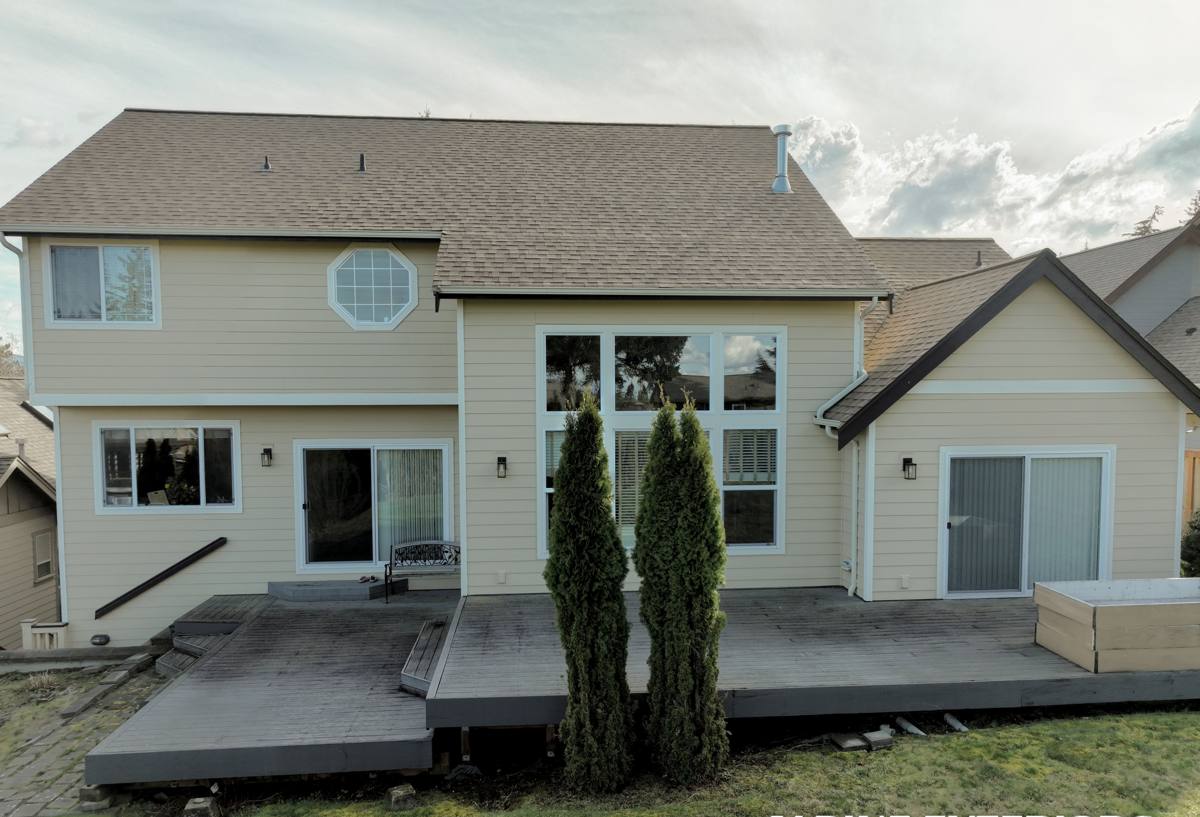
Conway sits in the low, flat country between Anacortes and the water, and that location shapes how a deck ages here. Homes in this part of Skagit County deal with a combination most decking materials and most builders simply aren't built around: salt-laden air drifting in off the water, long stretches of driving rain, and a moss and algae season that can run most of the year in shaded yards. None of that is dramatic on its own. Together, over ten or fifteen years, it's what turns a solid deck into a soft, spongy, slippery one.
A deck built for a dry inland climate — standard fasteners, minimal ventilation, decking laid tight with no thought to drainage — will often look fine for the first few years in Conway. The problems show up later, and by then they're usually structural, not cosmetic. Replacing a deck the right way here means designing for the moisture and salt exposure from day one, not just picking attractive boards.
Repair or Replace? How to Tell
Not every tired-looking deck needs a full replacement. But there's a point where patching boards or sistering a joist is just delaying a bigger, more expensive failure. Here's what tells us a deck has crossed that line:
- Soft or spongy spots underfoot, especially near the house or around posts
- Visible rot, dark staining, or crumbling wood at the ledger board (where the deck attaches to the house)
- Posts or footings that have shifted, settled unevenly, or show cracking at the base
- Persistent moss or algae growth that comes back within weeks of cleaning
- Fasteners that are rusted, bleeding stains into the wood, or backing out
- Railings that flex or wobble when leaned on
- A deck older than 15-20 years that has never had the substructure inspected
If you're seeing two or more of these, especially anything involving the ledger board or footings, repair is usually a short-term fix on a long-term problem. That's the point where a full replacement, done correctly, actually saves money over time.
What a Correct Deck Replacement Involves
A deck is only as good as what's underneath it. Most of the failures we see in this area trace back to shortcuts in three places: the footings, the ledger connection, and the fasteners. Get those right and the rest of the deck has a real chance at a long service life in this climate.
Footings and Posts
Footings need to be sized and set to local frost depth and soil conditions, not just poured to whatever looked adequate on the old deck. On lower, flatter lots where drainage is slower, we pay close attention to how water moves around and away from footings, since standing moisture at the base of a post is one of the most common causes of early post failure. Post bases should sit above grade on proper hardware, never buried directly in soil or concrete where they can wick moisture continuously.
Ledger Board and Flashing
The ledger board — where the deck bolts into the house — is the single most common failure point on decks in wet climates, and it's almost always a flashing problem, not a wood problem. Proper flashing directs water away from the house band joist and the ledger connection instead of letting it sit and soak in. This is also where a lot of rain gets driven sideways by wind here, so the detailing at this joint matters more than it would in a drier region.
Framing and Fasteners
Joist hangers, screws, and structural connectors need to be rated for the exposure — hot-dip galvanized or stainless, matched correctly to the wood treatment being used, since mismatched metals accelerate corrosion. We also space and brace framing with enough airflow underneath to let the structure dry out between rain events, rather than trapping moisture against the wood.
Choosing the Right Decking Material
The decking surface itself is where most homeowners focus, and it's a real decision with real tradeoffs — there isn't one "best" material, only the one that fits your maintenance tolerance, budget, and how much shade and moisture your yard holds onto.
| Material | Moisture & Moss Resistance | Maintenance | Typical Lifespan | Rough Cost Range |
|---|---|---|---|---|
| Pressure-treated wood | Fair — needs sealing to perform well | Annual cleaning/sealing | 10-15 years | Lowest |
| Cedar | Good natural resistance, but surface still grays and can host moss in shade | Periodic cleaning and finish | 15-20 years | Moderate |
| Capped composite | Very good — shell resists moisture absorption | Occasional washing | 25-30 years | Moderate-High |
| PVC / cellular decking | Excellent — no wood fiber to hold moisture | Low | 25-30+ years | Highest |
We don't push one product line over another. What we do push back on is installing any material in a way that ignores how it actually behaves in wet, shaded, salt-air conditions — tight board spacing on composite in a damp yard, for instance, is a near-guaranteed moss problem within a couple of seasons no matter how good the product is. Manufacturer warranties on composite and PVC decking are also worth reading closely before you buy; they're usually tied to specific installation methods (fastener type, gapping, ventilation), and cutting corners during install can quietly void coverage you're counting on.
Railings, Stairs, and Code Requirements
Railings and stairs are where inspectors focus the most attention, and for good reason — they're the safety-critical parts of the structure. Guardrail height, baluster spacing, and stair rise/run all need to meet current code, and on a full replacement, code compliance isn't optional even if the old deck predates the current rules. We build railings and stair stringers using the same corrosion-appropriate hardware as the rest of the frame, since these components see constant hand contact and weather exposure and are miserable to redo later if the fasteners fail first.
Drainage, Airflow, and Keeping Moss Off the Deck Long-Term
Moss doesn't grow because a deck is old — it grows because moisture sits somewhere it shouldn't. A well-built deck fights moss in three ways: board gapping that lets water drain through instead of pooling, enough clearance and airflow underneath that the structure actually dries out between rains, and grading or drainage work at ground level so water isn't collecting under the deck in the first place. On decks with skirting, we make sure there's still a path for air movement, since fully enclosed, damp, dark space under a deck is exactly what moss and rot both want.
None of this eliminates cleaning altogether — even the best-built deck in Skagit County benefits from an occasional wash — but a correctly built deck needs that maintenance far less often, and the moss doesn't come back within weeks the way it does on a poorly drained one.
Permits and Local Building Requirements
Full deck replacements typically require a building permit, and the requirements depend on deck height, attachment to the house, and size. Skipping this step is a common shortcut with cheaper bids, but it leaves you without inspection sign-off, which can complicate things at resale and, more importantly, means nobody with code expertise ever verified the footings, ledger connection, or railings were done to standard. We handle permitting as part of the job rather than treating it as an extra, because on a structure people stand on, the inspection is the check that things were actually built the way they were supposed to be.
Our Deck Replacement Process
The process is straightforward, but we don't skip steps to move faster:
- On-site assessment — we inspect the existing deck, posts, footings, and ledger connection to understand what's actually failing and why, not just what's visible on the surface.
- Design and material selection — we walk through decking, railing, and fastener options based on your yard's sun/shade and drainage, your maintenance preference, and your budget.
- Permitting — we prepare and submit what's required before work begins.
- Tear-off — full removal of the old structure, checking the house's band joist and framing behind the old ledger for hidden moisture damage.
- Rebuild — footings, framing, ledger flashing, decking, and railings, built to current code with corrosion-appropriate hardware throughout.
- Inspection and walk-through — final inspection sign-off, followed by a walk-through with you so you know how the new deck is meant to be maintained.
Why a Crew That Already Works Conway Matters
A deck built to a generic spec sheet and a deck built for this specific stretch of Skagit County are not the same project, even if they look identical from the driveway. A crew that already works in and around Conway and Anacortes knows the local permitting process, has already seen how footings perform in this ground, and has made (and fixed) the fastener and flashing mistakes that show up specifically in salt air and heavy rain — so those mistakes don't get repeated on your deck. That familiarity also means someone local is still around years later if a warranty question comes up, rather than a crew that was only ever passing through.
If your deck is showing its age, or you're planning a replacement before it becomes an urgent problem, we're happy to take a look and give you an honest read on what it needs. There's no pressure and no cost to get an estimate — just a straight assessment from a crew that builds decks for this exact climate every week.