 Anacortes
 Building Decks for Conway's Climate, Not Against It
Conway sits in a stretch of Skagit County where river-bottom moisture, coastal air moving up from the Sound, and a long, wet shoulder season all combine to make outdoor structures work harder than they would almost anywhere else in the state. A deck built here isn't just a place to put a grill and a couple of chairs — it's a structure that spends most of the year damp, shaded by surrounding trees and low winter sun angles, and exposed to the kind of driving rain that finds every gap in flashing and every unsealed fastener. We've built and repaired decks throughout this area long enough to know which details matter and which corners always come back to bite a homeowner within a few seasons.
This page is about one thing: deck building for Conway-area homes, done the way the local conditions actually demand. Not a generic overview of decking materials — a straight explanation of what your deck needs to hold up here, what a correct build actually involves, and how we run the job from first look to final walkthrough.
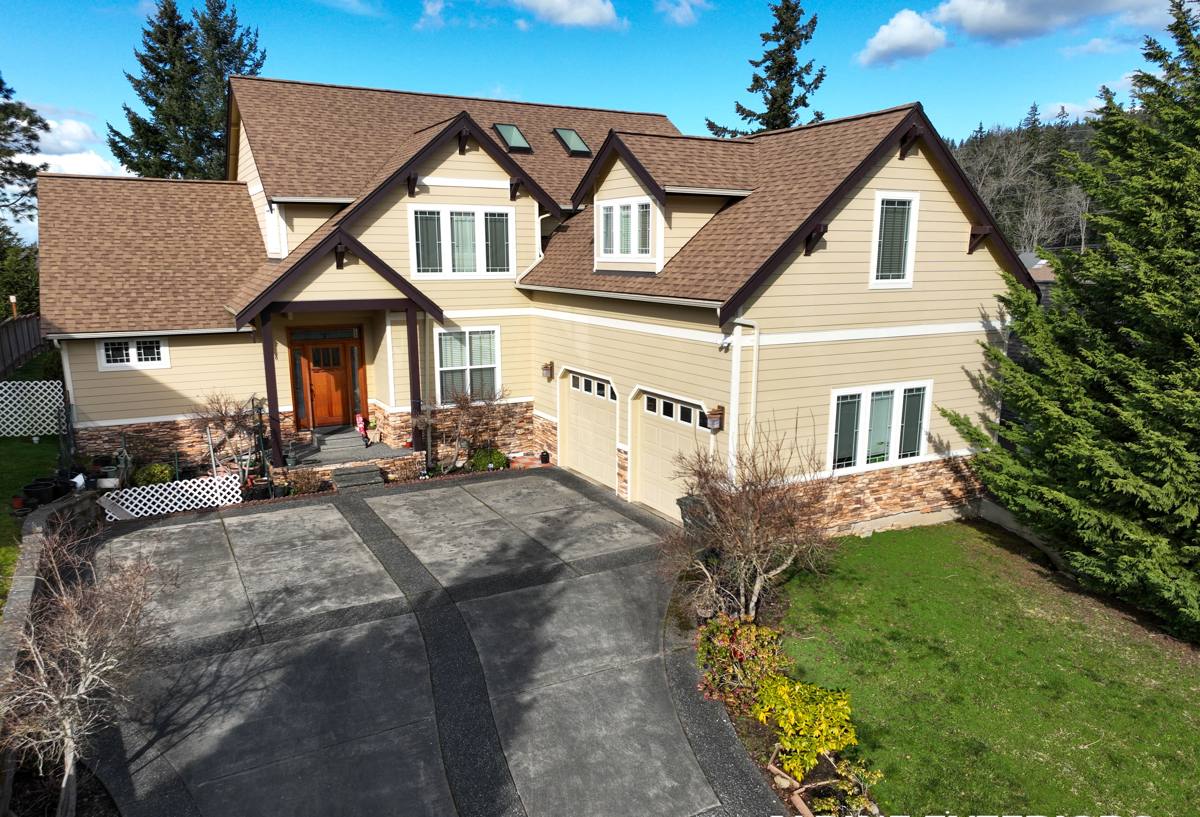
What Conway's Climate Actually Does to a Deck
Homeowners moving to this part of Skagit County from drier regions are often surprised by how much moisture management drives every decision on an outdoor structure. A few specifics worth understanding before you build:
Salt Air and Moisture Combined
Conway isn't right on the open coast, but it's close enough to tidal influence and open water that airborne salt reaches fasteners, flashing, and any exposed metal hardware. Salt-laden moisture accelerates corrosion on anything less than fully rated marine-grade or hot-dip galvanized hardware. Cheap coated screws and standard joist hangers will show rust streaks and pitting well before a deck's structural life is anywhere near over.
Driving Rain, Not Just Rain
This region gets wind-driven rain, not just straight-down drizzle. That means water gets pushed sideways under ledger flashing, into butt joints on fascia boards, and behind any trim that isn't properly lapped and sealed. A deck detailed for a drier climate — or one built without proper flashing behind the ledger board — will let water into the house band joist and rim joist over time, which is one of the most expensive repairs a deck mistake can cause.
The Long Moss Season
Shade, moisture, and mild temperatures for much of the year make this an ideal environment for moss and algae growth on horizontal wood and composite surfaces. Moss holds moisture against decking boards, and on wood decking it accelerates rot at board edges and around fasteners. On any decking material, moss buildup on stairs and walking surfaces becomes a genuine slip hazard, especially through fall and winter.
Freeze-Thaw Cycling
Skagit County doesn't get deep freezes often, but it gets enough freeze-thaw swings each winter to matter. Water that's soaked into end grain, fastener holes, or hairline cracks in composite decking expands when it freezes, which widens the damage a little more each cycle. Over several winters, that's the difference between a deck that needs board replacement at year 12 and one that's still tight at year 20.
What a Correctly Built Deck Requires Here
None of this is exotic — it's standard good practice applied consistently, which is exactly where a lot of decks built by unfamiliar or corner-cutting crews go wrong.
Ledger Attachment and Flashing
The ledger board — where the deck ties into the house — is the single most important connection on the entire structure, and it's also the point most likely to leak if it's done wrong. Correct practice means proper lag bolts or through-bolts rated for the load, a code-compliant flashing detail that directs water out and away from the band joist, and a gap or flashing system that keeps the ledger from sitting wet against the house siding. We don't caulk-and-hope a ledger connection; we flash it properly, every time.
Footings and Framing
Footings need to be sized and set below frost depth with proper concrete work, and post bases should hold the post above grade so it's never sitting in standing water. Joist spacing and beam sizing need to match the actual span and load, not just "what's always been done." We use hardware rated for exterior and, where salt exposure is a factor, hot-dip galvanized or stainless connectors rather than the lighter coated hardware that shows corrosion fastest.
Decking Material Choice
There's no single right answer here — it depends on budget, maintenance appetite, and how much shade and moss exposure the specific site gets. We'll walk through the real trade-offs with you rather than pushing one product.
| Decking Type | Moss/Moisture Behavior | Maintenance | Typical Lifespan Here |
|---|---|---|---|
| Pressure-treated wood | Absorbs moisture; needs sealing to resist moss staining and rot at fasteners | Annual cleaning, re-sealing every 2-3 years | 15-20 years with upkeep |
| Cedar | Naturally rot-resistant but still needs periodic sealing in this climate | Regular cleaning, sealing every 2-3 years | 15-25 years with upkeep |
| Capped composite | Resists moisture absorption well; still needs cleaning to prevent moss film on the surface | Periodic washing, no sealing/staining | 25-30+ years, manufacturer-warrantied |
| Uncapped composite (older style) | More prone to surface moss and algae growth than capped versions | More frequent cleaning | Varies widely by product age |
Drainage Underneath
Water that drips through deck boards has to go somewhere. On low decks or decks over living space, proper grading, gravel, or an under-deck drainage system keeps that water from pooling against the house foundation or turning the space underneath into a permanent mud and moss problem. This is one of the most commonly skipped details on budget builds, and it's one of the more expensive things to retrofit later.
Our Deck Building Process
We keep the process straightforward and communicative, because the worst deck experiences homeowners describe usually come from not knowing what's happening or why.
- On-site assessment. We look at your specific lot — sun exposure, shade pattern, drainage slope, proximity to the house's siding and roofline — because a deck plan that ignores the site's actual microclimate is a plan for early moss and rot problems.
- Design and material walkthrough. We talk through decking material, railing style, and layout with the real maintenance trade-offs on the table, not just the upfront price.
- Permitting. Most deck builds in Skagit County require a permit, particularly for structures above a certain height or attached to the house. We handle that process so you're not the one chasing it down.
- Footings and framing. This is where the structural integrity of the whole project is decided — footing depth, post placement, joist sizing, and ledger flashing all happen at this stage, and we don't rush it.
- Decking, railing, and stairs. Installed with hardware appropriate for salt-air and moisture exposure, with attention to fastener spacing and board gapping for proper drainage and drying.
- Final walkthrough. We go over the finished deck with you, including basic care guidance specific to the material you chose.
Why a Crew That Already Works Conway Matters
A contractor who mostly builds decks in a drier inland climate, or who treats every job the same regardless of site conditions, is more likely to under-detail the flashing, skip the drainage plan, or spec hardware that isn't rated for salt exposure — not out of carelessness, necessarily, but because it's not the habit they've built. Working this specific area regularly means we've already seen how moss establishes on a north-facing deck under mature trees, how driving rain finds a gap in ledger flashing, and how quickly standard coated screws show corrosion in this air. That's not something you can fully substitute with a spec sheet — it comes from building here repeatedly and seeing what holds up.
Repair, Replacement, or New Build
Not every deck problem means starting over. We evaluate:
- Whether the ledger connection and flashing are sound, or need to be redone regardless of what happens to the rest of the deck
- Whether footings and framing are structurally solid, since that's the expensive part to get wrong and the cheap part to get right the first time
- Whether decking boards show surface wear only, or rot and softness that indicates moisture has gotten into the wood itself
- Whether railing and stair hardware meet current code, since older decks are often out of compliance with modern railing height and baluster spacing requirements
- Whether under-deck drainage exists at all, and whether it's actually working
Sometimes the right answer is targeted repair — replacing a rotted ledger flashing detail or swapping corroded hardware. Other times, especially on older wood decks with framing issues, a full rebuild is the more honest recommendation, even if it's not the answer a homeowner was hoping for.
A Practical Checklist Before You Build or Rebuild
- Confirm the ledger board will be properly flashed and bolted, not just caulked to the house
- Ask what hardware grade is being used, especially given the salt air in this area
- Get a straight answer on footing depth and whether it accounts for frost
- Discuss decking material trade-offs honestly, including moss and moisture behavior specific to your site's shade level
- Confirm a drainage plan exists for water that passes through the deck boards
- Check whether a permit is required for your specific project, and who's responsible for pulling it
- Ask how railing and stairs will meet current code requirements
Let's Talk About Your Deck
If you're planning a new deck for a Conway-area property or trying to figure out whether an existing one needs repair or replacement, we're glad to take a look and give you a straight assessment. Reach out for a free, no-pressure estimate using the form below — we'll walk the site, talk through your options, and give you honest numbers before anything gets decided.