 Anacortes
 Siding Repair in Burlington: Built for Skagit Valley Weather
Burlington sits in the flat, low-lying Skagit River valley, a few miles inland from Anacortes and the saltwater shoreline of Fidalgo Bay. That inland position doesn't spare it from the same weather patterns that wear down siding all across Skagit County. Marine air still pushes in off the water, driving rain still comes sideways during winter storms, and the valley's humidity and shade pockets keep siding damp long after a storm passes. Add a long moss season that runs from fall through spring, and you have an environment where even well-installed siding needs attention over time.
Siding repair isn't just patchwork. Done right, it stops a small problem from becoming a bigger one — a cracked board, an open seam, or a soft spot near a downspout can let moisture behind the siding long before it's visible from the yard. Done wrong, a repair just covers up the symptom and the underlying moisture problem keeps working on the wall behind it.
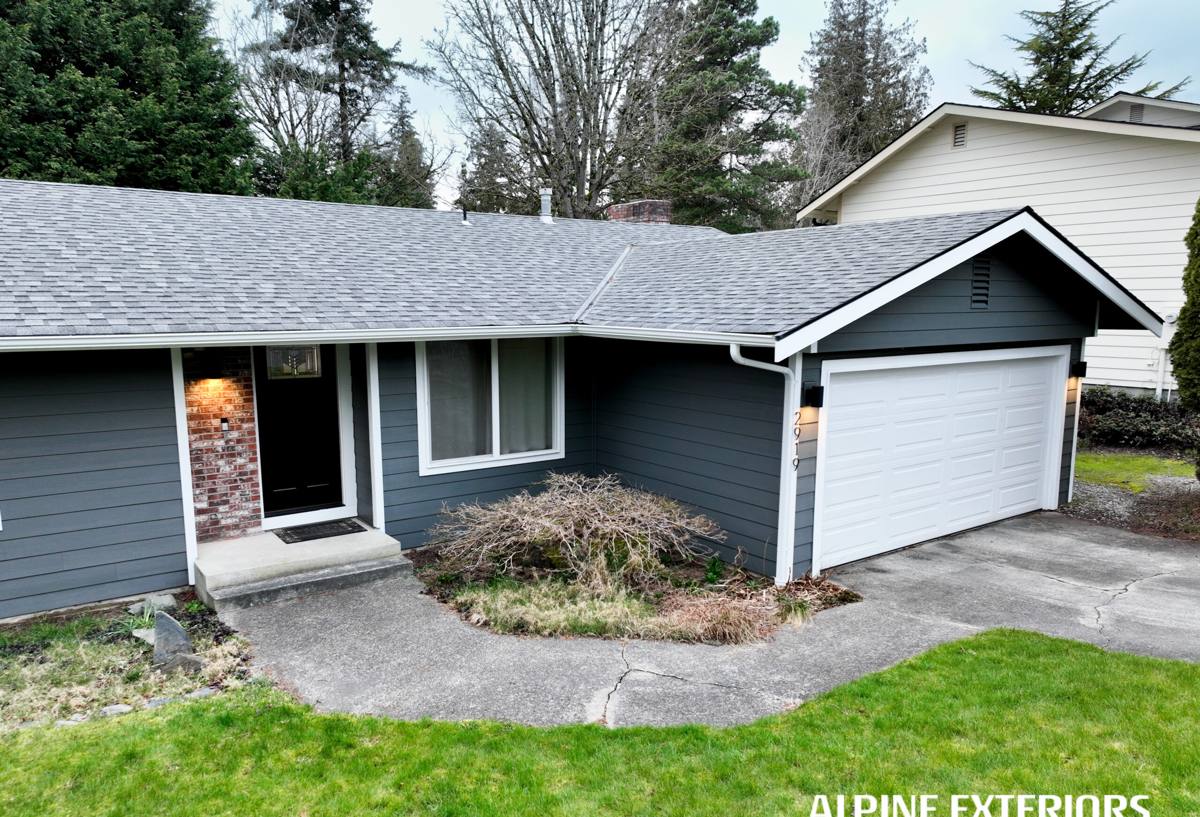
Signs a Burlington Home Needs Siding Repair
Most siding damage in this area shows up gradually. Homeowners often notice the cosmetic issue — a stain, a gap, a warped board — without realizing it's a sign of moisture already at work. Here's what we look for, and what you should watch for between inspections:
- Cracked, split, or visibly warped boards, especially on the side of the house that takes the most wind-driven rain
- Soft or spongy spots when you press on the siding, a sign moisture has gotten underneath
- Persistent green or black staining that comes back shortly after cleaning
- Gaps opening up at seams, corners, or around window and door trim
- Paint that's peeling, bubbling, or failing faster than it should for its age
- Visible daylight or drafts at siding joints from inside the house
- Siding that's pulling away from the wall or has loose fasteners
- Moisture, mustiness, or discoloration on interior walls that back up to exterior siding
Any one of these on its own might be minor. Several at once, or damage concentrated in one area, usually points to a moisture pathway that needs to be traced back to its source, not just patched over.
Common Types of Siding Damage We Repair
Moisture and Rot Damage
This is the most common call we get in this area. Wood-based siding products — cedar, primed spruce, and even some engineered wood — absorb moisture at cut edges, fastener holes, and seams. In a valley climate where things don't dry out quickly between rain events, that moisture sits and works on the material. By the time rot is visible on the surface, it has often spread further into the board and sometimes into the sheathing behind it.
Impact and Physical Damage
Cracked or dented siding from storm debris, ladders, landscaping equipment, or age-related brittleness. Fiber cement handles this differently than vinyl or wood — it doesn't dent, but a hard enough impact can crack a board, and that crack needs to be addressed before water gets behind it.
Failed Caulking and Trim Joints
Caulk isn't a permanent seal. It shrinks, cracks, and pulls away from the surface over years of expansion and contraction, especially at window trim, corner boards, and butt joints. Once a seal fails, water has a direct path behind the siding.
Moss and Organic Growth
Moss doesn't just sit on the surface — it holds moisture against the siding and, over time, can work into seams and fastener points. Shaded, north-facing walls and areas under overhangs are usually the worst offenders in this part of the valley.
Repair or Replace? How We Make the Call
Not every siding problem calls for full replacement, and not every problem should be patched. We look at the extent of the damage, what's causing it, and how much useful life is left in the rest of the siding before recommending either path.
| Factor | Repair Often Makes Sense | Replacement Often Makes More Sense |
|---|---|---|
| Extent of damage | Isolated to one or two boards or a single area | Spread across multiple walls or elevations |
| Cause | Identifiable, fixable issue (impact, failed caulk, one leak point) | Systemic moisture intrusion or original installation defects |
| Material condition | Rest of the siding is sound and holding paint/finish well | Siding is near end of expected service life or failing broadly |
| Underlying material | Fiber cement or sound wood with a fixable defect | Sheathing or framing shows rot from long-term moisture exposure |
| Product match | Existing product/color is still available or a close match is acceptable | Repairs would be visibly mismatched or product is discontinued |
We'll tell you honestly which category your home falls into. We'd rather do a smaller, correct repair than sell a replacement job that isn't needed yet — and we'd rather tell you replacement is the better long-term value than patch something that's going to keep failing.
What a Correct Siding Repair Involves
A repair that actually solves the problem goes further than swapping out the damaged board. Our process on a Burlington repair typically includes:
- Tracing the moisture path. We look past the visible damage to find where water is actually getting in — a failed seal, a flashing gap, a grading issue directing water at the wall.
- Checking what's underneath. Before closing anything back up, we check the house wrap or weather barrier and the sheathing for hidden rot or soft spots that need to be addressed, not just covered.
- Matching materials correctly. Replacement boards need to match the profile, exposure, and finish of the surrounding siding, not just be "close enough."
- Proper fastening and flashing. Repairs are only as good as the flashing and fastener placement behind them — this is where a lot of rushed repair work fails.
- Sealing and finishing to spec. Caulk, paint, or factory-finish touch-up done to manufacturer standards, not just enough to look right from the street.
Our Process for Burlington Siding Repair Jobs
When we get a repair call in Burlington, we start with an on-site inspection, not a phone estimate — siding damage almost always looks different up close than it does from the driveway. We'll walk the affected areas, check for moisture with a meter where it matters, and give you a straight answer on scope: what needs to be repaired now, what to keep an eye on, and what can wait. You get a written estimate before any work starts, and we explain what we're doing and why, not just a line-item invoice.
Because we work this area regularly, we're familiar with the kinds of exposure and drainage issues that come up on homes throughout Skagit County — from wind-driven rain on exposed elevations to shaded walls that stay damp longer through moss season. That local pattern recognition speeds up diagnosis and helps us catch problems that a crew unfamiliar with the area might miss.
Why James Hardie Fiber Cement Repairs Differently
We install and repair James Hardie fiber cement siding exclusively — we don't install vinyl, LP SmartSide, Cemplank, Allura, primed spruce, or cedar, and that shapes how we approach repair work too. Fiber cement doesn't rot, and it resists the kind of moisture absorption that turns a small leak into structural damage in wood-based products. When we do repair Hardie siding, the work is usually addressing an installation detail — a caulk joint, a flashing gap, an impact crack — rather than the material itself breaking down.
If your home currently has a different siding product and the damage points to a pattern of ongoing moisture problems rather than an isolated fix, we'll say so plainly. In some cases, the honest answer is that continuing to patch aging wood or engineered wood siding is a losing game against this climate, and a conversation about replacing it with Hardie's ColorPlus fiber cement — engineered for wet Pacific Northwest conditions and backed by a strong transferable warranty — makes more long-term sense than another round of repairs.
Why Hiring a Crew That Already Works Burlington Matters
Siding repair is detail work, and the details that matter here are shaped by local conditions — how much wind-driven rain a given exposure takes, how long a shaded wall stays wet, where moss tends to establish itself first. A crew that regularly works Burlington and the surrounding Skagit County area has already seen these patterns on other homes and knows what to check for beyond the obvious damage. That local experience shows up in faster, more accurate diagnosis and repairs that hold up through the next wet season instead of needing a repeat visit.
It also means straightforward scheduling and follow-up — someone who's a short drive away, not a crew passing through the area for a single job.
Get a Free, No-Pressure Estimate
If you're seeing cracked boards, failing caulk, moss buildup, or staining that keeps coming back, it's worth having it looked at before the next round of Skagit Valley rain makes it worse. We'll take an honest look at your siding, tell you straight whether repair or replacement makes more sense, and give you a free estimate with no pressure either way. Use the form below to get started.